

Solar power is known as "energy for all," reflecting the simplicity of integrating solar power into home electricity systems, alongside grid electricity or electricity from other sources.
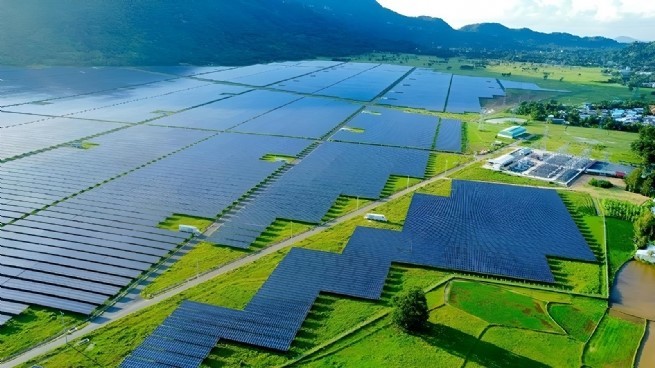 |
| Clean, inexhaustible, and widely available in all regions of the earth are the advantages of renewable energy. |
Renewable energy: A practical perspective
The era of science and technology has created many miracles for humanity, with civilized countries having been ahead for many years and affirming that solar power is a positive development trend in providing energy for private and public needs with many advantages. The most outstanding is the renewable nature of this energy source.
Solar energy production has advantages over hydroelectric, thermal, or wind power. Because it doesn't use internal motors like generators, electricity generation is noiseless and, most importantly, can be produced on a household scale.
This type of technology has a wide range of applications – providing electricity in areas without connection to the national grid; desalinating seawater in many freshwater-scarce African countries; and even powering satellites in Earth orbit.
 |
| The development of renewable energy is an inevitable step for humanity that nothing can stop. |
Fatih Birol, Director of the IEA, emphasized that promoting investment in clean energy offers numerous advantages and opportunities, including expanding access to energy, creating jobs, developing industries, improving energy security, and a sustainable future for all.
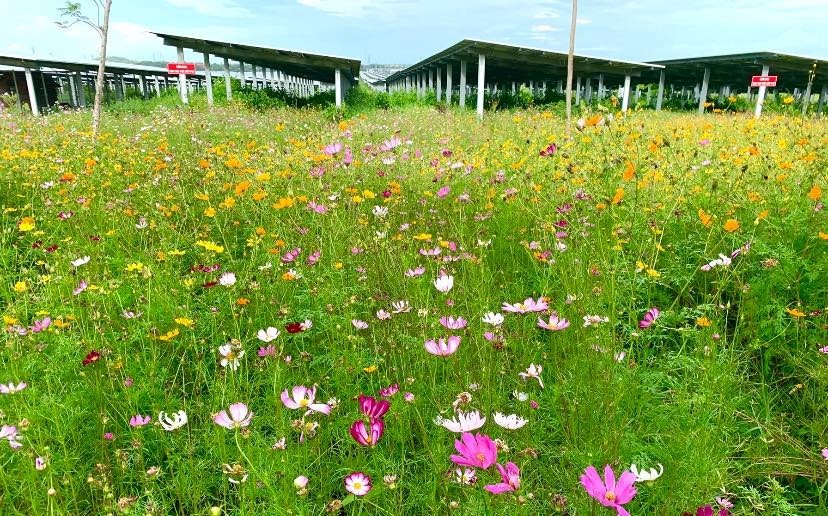 |
| "I have seen yellow flowers and green grass." |
According to the International Energy Agency (IEA) and the International Finance Corporation (IFC), members of the World Bank, “ The clean energy world is developing rapidly today. Investment is key to helping countries benefit from the clean energy economy .”
130 years of coal-fired power and 95 years of hydropower in Vietnam, yet it still cannot be called "energy for the entire population."
In February 1894, the Flower Garden Power Plant – Vietnam's first coal-fired power plant – was built by the French in Hai Phong. The two hydroelectric power plants, Ta Sa and Na Ngan, were constructed between 1927 and 1928 during the second phase of French colonial exploitation.
The primary fuel source for thermal power plants is coal – a fossil fuel with large reserves in politically stable regions such as China, India, and the United States. However, coal is an impure, non-renewable fuel, and its combustion produces greenhouse gas emissions.
The International Energy Agency (IEA) is concerned about the environmental impact of burning fossil fuels. Power plants using these fuels emit pollutants such as NOx, SOx, CO2, CO, PM, organic gases, and polycyclic aromatic hydrocarbons, which contribute to acid rain, air pollution, and are directly linked to global warming.
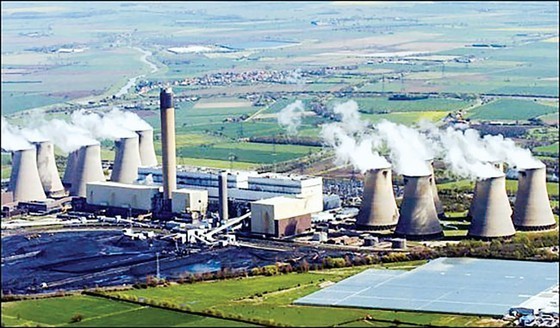 |
| Thermal power plants are one of the sources of toxic gases and particulate pollution. |
Furthermore, a study published in August 2010 reported that coal ash from thermal power plants contained pollutants including toxic arsenic and lead, linked to respiratory illnesses, other health and developmental problems, and disrupting local aquatic life.
Coal, a remnant of the Earth's crust, also contains low levels of uranium, thorium, and other naturally occurring radioactive isotopes. A 1,000MW coal-fired power plant can uncontrollably release up to 5.2 tonnes of uranium and 12.8 tonnes of thorium per year.
Hydroelectric dams are killing hydrology.
Today, with technology making great strides, scientists and environmental researchers assert that hydropower is no longer a clean and cheap energy source. This has been proven in practice by the amount of forest land lost and the number of households whose lives have been disrupted to serve the development of this power source in recent years.
The key concern here is that the rapid and dense development of small and medium-sized hydropower plants is leading to the destruction of river basins and the obstruction of natural downstream flow. In particular, when the delta region is no longer replenished by alluvial deposits, Vietnam will lose its advantage in agricultural development.
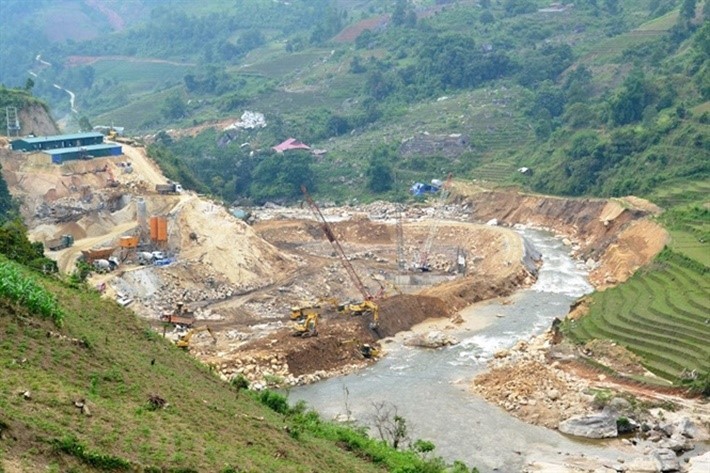 |
| Deforestation for hydroelectric power. (The massive, unauthorized Ban Ho hydroelectric project in Lao Cai). (Photo: Vietnam Agriculture Newspaper) |
"Under the sunlight, everything is revealed in detail."
Scientists and environmental research organizations are increasingly discovering many interesting things about the convenience and advantages of solar power. And the term "energy for all" is a modern and accurate definition that reflects the true nature of this type of energy.
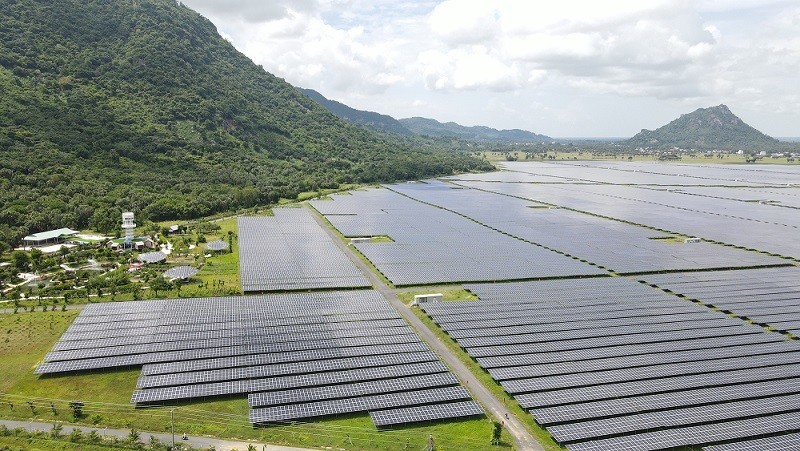 |
| Solar power, or "energy for all," is a definition that needs no further discussion. |
It's not too difficult for the 4.0-5.0 era to completely overcome the limitations of solar power, such as its limited capacity at night or on cloudy and rainy days. Ultimately, wind and solar power still have many advantages, so energy security needs to be understood correctly, fully, and wisely by EVN to overcome these limitations while maximizing the advantages of each energy source.
| “ Emerging and developing economies have enormous potential for clean energy, but the level of investment is far below what is actually needed. To address the urgent energy needs and emission reduction targets in these economies, we need to mobilize private capital at a rapid pace and on a large scale, and urgently develop more investment-worthy projects,” emphasized Makhtar Diop, Director of IFC. |
Source





























































































Comment (0)