


The film is set after the 1967 Cedar Falls operation – a US military campaign to destroy a Viet Cong base in South Vietnam. The film opens with a one-shot scene depicting the devastation of Binh An Dong, Cu Chi, with its forests burned to the ground. Female soldier Ba Huong (played by Ho Thu Anh) dives into the river searching for her comrades, but only finds bodies amidst the water hyacinths.
The somber setting draws viewers into the story of a 21-person guerrilla group led by Bay Theo (Thai Hoa). Following orders from their superiors, they are stationed in Cu Chi to guard medical equipment and supplies for the field hospital.
However, only Bay Theo knew that their real mission was to protect the area where Hai Thung's (Hoang Minh Triet) strategic intelligence group was transmitting top-secret documents via radio waves. This responsibility put the guerrilla team in a life-or-death situation, as the American army located them and launched a major attack on the tunnels.
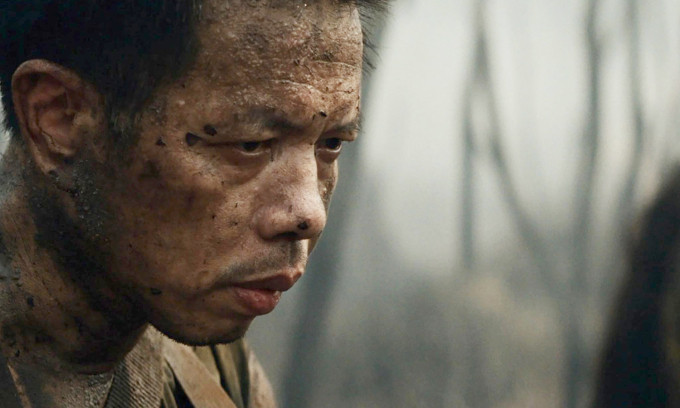
With a running time of 128 minutes, director Bui Thac Chuyen did not aim to portray the entire picture of the tunnels, but rather to recreate small glimpses of each individual's life. He didn't spend much time introducing the portraits and circumstances of the guerrilla group. Regardless of their origin or age, they shared a common ideal: readiness to take up arms to defend the Fatherland.
Many scenes depicting daily life at the base are portrayed with a calm, unassuming tone, avoiding melodramatic elements. Many details are only briefly shown, but enough for viewers to imagine the arduous days endured by the soldiers underground. They carefully conserve muddy water for cooking, their eyes gleaming with joy when a piece of fish is added to their meal. The female soldiers are delighted to receive a comb made from a bomb casing as a gift. They can only remember their fallen comrades in silence, their portraits being the identity cards of the deceased.
Director Trinh Dinh Le Minh - a viewer of the film - commented that the work effectively explores small details of everyday life, blending humor with emotion.
Underground tunnels Instead of adhering to a specific storyline or revolving around a central character, as is the structure of most films, each role is developed with a distinct personality, creating a diverse cast of characters. Ba Huong is a brave and tough soldier, yet gentle enough to be a pillar of support for the younger members of the team. Tu Dap (played by Quang Tuan) represents soldiers who enjoy delving into and researching military weapons. The character is modeled after Hero of the Armed Forces To Van Duc, who contributed to the development of landmines during the Battle of Cu Chi.
The film's emotional narrative unfolds at a gentle pace, just enough for the audience to feel the romance. The love story between Ba Huong and Tu Dap softens the suffocating situations. The work features many meaningful scenes, conveying messages about the human condition during wartime.
Among the characters, Captain Bay Theo stands out with his rationality, decisiveness, and somewhat rough personality, as portrayed by Thai Hoa. Despite having few lines, he leaves a lasting impression with his natural intonation and clear, expressive voice. Many of Bay Theo's lines evoke gentle laughter yet are deeply moving, especially when he admonishes the young soldiers about the life-or-death situation. In one scene where he learns of a fallen comrade, the character doesn't cry, but his gaze is direct and intense, piercing into the camera, conveying his profound grief.
The art design for the sets was an effort by the film crew. Most of the scenes take place underground, making filming in such confined spaces a major challenge . Almost no film crew had ever made a feature film about the battle of Cu Chi, so Bui Thac Chuyen's team had to set up most of the scenes indoors (on the ground).
The biggest challenge for the film crew was that the actual tunnels were too small to place cameras, so the team had to design a 250-meter-long model. On screen, the director recreated the tunnels with three levels, each with a distinct function: The first two levels were guarded by the guerrilla group to protect the bottom level – where the intelligence team was monitoring radio signals. For scenes of bombs exploding on the surface and the tunnels vibrating, the team built a large platform, placed the model on top, and then used a vibration generator with the appropriate frequency. In the scene where the surface is destroyed, the team used explosives to create about 50 bomb craters.
The film also features many large-scale scenes showcasing the battle's magnitude, such as the sequence of tanks, armored vehicles, and helicopters sweeping through the area. The director repeatedly uses contrasting camera angles to highlight the disparity in forces between the guerrilla group and the American soldiers. Towards the end, the pace intensifies as the American army infiltrates the tunnels, cornering each soldier in a life-or-death situation.
The sounds of war are recreated in detail, with the sounds of airplanes, tanks, bombs falling, and bullets exploding, contributing to the intense atmosphere. The film's music – including the theme song – is also featured. The sun in the darkness (Composed by Hứa Kim Tuyền) - evokes moments of emotional stillness. The director pays tribute to cải lương (Vietnamese traditional opera) through this vọng cổ (traditional Vietnamese folk song). Tan Quynh cries for her friend. (composed by Viễn Châu), sung in the voice of Út Khờ, a member of the squad (played by Hằng Lamoon).
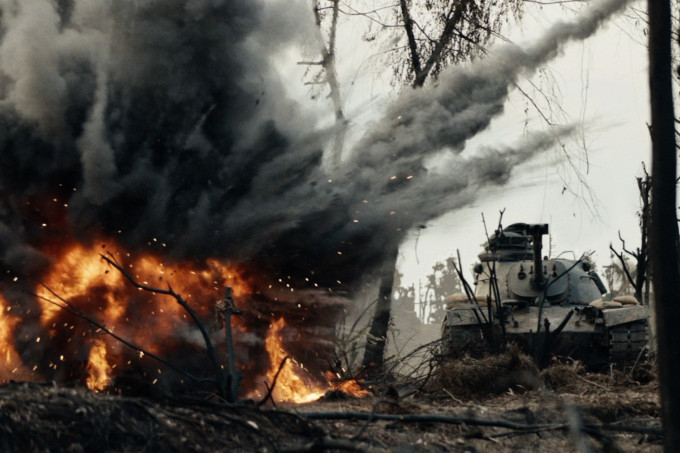
Because it doesn't focus on specific characters, the film lacks the dramatic tension to evoke strong emotions in the majority of viewers. Bui Thac Chuyen explained that this was intentional, as the film was shot in a documentary style, recreating slices of life, rather than exploiting tear-jerking plot points.
"For me, the Cu Chi Tunnels are the 'main face' of the film, while the surrounding characters represent the people of this land. They fought heroically and fell silently, many leaving no trace, only their names," he said. After two days of early screenings, the film attracted box office attention, grossing 15 billion VND before its theatrical release (April 4th).
The Cu Chi Tunnels (Cu Chi District) are a famous historical revolutionary site. Located about 70 km northwest of Ho Chi Minh City, the tunnel system, stretching over 200 km, served as a stronghold for the Regional Military Committee and the Saigon-Gia Dinh Command, contributing to the reunification of the country.
Source: https://baoquangninh.vn/dia-dao-khuc-trang-ca-duoi-long-dat-3351631.html
















































































Comment (0)