

 |
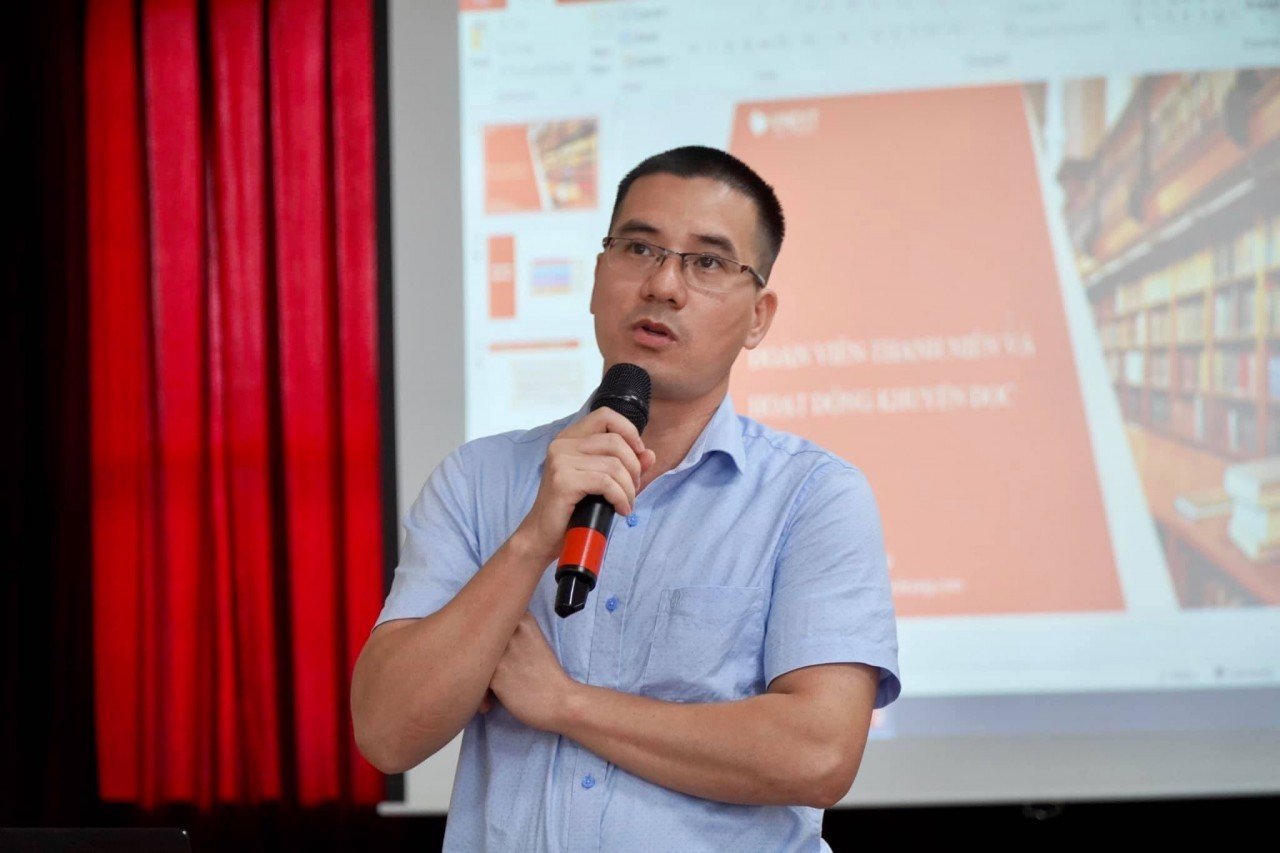
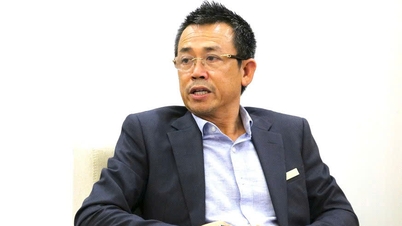
| Researcher and translator Nguyen Quoc Vuong argues that the key to reforming the curriculum and textbooks is creating the right kind of human beings. (Photo: Provided by the interviewee) |
Implementing a one-curriculum-multiple-textbook mechanism is a major policy in the 2018 reform of the general education curriculum. How do you assess the role of textbooks in this reform?
From a theoretical standpoint, when the State accepts a single curriculum with multiple sets of textbooks, it means acknowledging the "relativity" of textbooks. Textbooks are no longer the sole source of "absolute truths." This will serve as a basis for educational administrators, schools, and teachers to recognize the significant role and importance of "educational practice" implemented by teachers in schools, thereby encouraging teacher creativity.
If implemented correctly, textbooks would be just one of the important reference materials in conducting general education. However, in reality, the implementation process, from formulating regulations and conducting evaluations to selecting and publishing textbooks, has encountered many major problems.
The implementation of this mechanism without strong research and communication efforts highlighting the implications of its educational practice has been counterproductive. Consequently, many have suggested returning to the outdated single-curriculum, single-textbook system.
Therefore, it can be said that the success or failure of this reform will depend on how we treat textbooks. Will we continue to consider them the "only absolute truth" or view them as a primary and important reference material for autonomy and creativity in educational practice, with content and methods developed and compiled by ourselves?
According to him, what are the problems in the current landscape of textbook socialization?
"Socialization" is a euphemism commonly used when discussing education in our country. Because of this, it has been misunderstood in many cases. The mechanism of one curriculum - multiple textbooks is essentially a textbook accreditation system that has been implemented worldwide for a long time.
In Japan, this system was implemented during the Meiji era, then interrupted for a period, and resumed after 1945. Under this system, the state and the Ministry of Education only held the power to draft the curriculum, establish regulations for review and evaluation of drafts, request revisions, and make the final assessment to determine whether a draft could become a textbook.
All textbook production is done by private publishing companies. They reap the profits and bear the losses; they do not use any state budget funds, and the government does not interfere in their operations.
In Vietnam, although this mechanism is implemented, it faces difficulties in the legal framework. As a result, despite the use of "multiple sets of textbooks," most of these sets are compiled by the Vietnam Education Publishing House, with one or two remaining sets published by state-owned publishing houses; there is no sign of participation from private book companies.
Thus, despite the "socialization" of the education sector, its dynamic potential has been largely underutilized and underdeveloped. This affects both the quality and cost of textbooks.
If the Ministry of Education and Training were to compile additional textbooks, would the current shortcomings be resolved?
I think the Ministry of Education and Training should not and does not need to compile any textbooks. If the Ministry of Education and Training compiles textbooks, it means that all other textbooks will be rendered ineffective and non-state-owned publishing companies will have no chance of compiling textbooks.
The Ministry of Education and Training is the highest administrative body for education, responsible for setting exam questions, providing answers, conducting inspections, and monitoring assessments… In other words, the Ministry has immense power.
This will lead schools and teachers to implicitly consider textbooks from the Ministry of Education and Training as the standard and the only safe option. They will only choose those textbooks.
This would revert to the previous system of one curriculum and one set of textbooks. Other sets of textbooks would become obsolete and wasteful.
In my opinion, at this time, we should encourage proactive individuals to participate in the compilation and publication of books.
In Japan, how is the "one curriculum - multiple textbooks" system implemented? Could you share some specific details?
In Japan, following the 1947 education reforms, a textbook review system was implemented. Under this system, the Ministry of Education held the authority to determine the curriculum and issue regulations for evaluating textbook manuscripts. However, the selection of authors and the compilation of textbooks were entrusted to private publishers.
Therefore, in Japan, each subject has as many as 8-9 publishers participating. Manuscripts submitted for review are carefully read, commented on, and revised in writing before being deemed acceptable or not. If accepted, they are considered textbooks (with an acceptance stamp on the book).
In Japan, compulsory education lasts 9 years, so the government purchases textbooks from grades 1 to 9 and provides them free of charge to students. Therefore, the choice of textbooks by students does not affect overall finances. Even if siblings in the same family use different textbooks, it doesn't change the total amount spent on textbooks. Japan also provides free tuition for compulsory education.
Some economically prosperous regions offer free tuition and textbooks for all high school students. In Japan, textbooks were initially chosen by the schools themselves, but later the power of selection was delegated to educational committees. In private schools, the principals make their selections based on the school's advisory board.
According to him, what factors should be prioritized in reforming the curriculum and textbooks? How should the impact be assessed? What are the solutions?
First, it's crucial to clarify the philosophy and goals being pursued. What kind of people will innovation create, and what kind of society will those people shape? Only then can concrete designs be made, avoiding getting lost or confused midway.
The process of compiling textbooks requires a transparent mechanism to allow the private sector and private publishing companies to participate. The Ministry of Education and Training only needs to create a good, clear, fair, and legally sound regulation. With a transparent mechanism and a sound legal framework, talented authors and high-quality textbooks will emerge.
The government also needs to set a price ceiling for textbooks to prevent publishing companies from raising prices and affecting the rights of citizens. The government should research and implement a free textbook distribution program for all primary and secondary school students (at least up to the end of lower secondary school) to avoid textbook waste and ensure fairness in education.
Thank you, sir!
Educational researcher and translator Nguyen Quoc Vuong has translated and written approximately 90 books on education, history, and culture. Some of his notable works include: - Translated books: Vietnamese Education Reform, National Dignity, Happiness with Everyday Life... - Books written: Reading books and the arduous journey of a thousand miles, What can Vietnamese education learn from Japan, History is not as boring as you think, Reflecting on Vietnamese education from afar, Searching for the philosophy of Vietnamese education… Award: Best Book Award 2020 for the book "What Vietnam Can Learn from Japan in Education". |
Source

![[Photo] Prime Minister Pham Minh Chinh presides over a meeting on private sector economic development.](/_next/image?url=https%3A%2F%2Fvphoto.vietnam.vn%2Fthumb%2F1200x675%2Fvietnam%2Fresource%2FIMAGE%2F2025%2F12%2F20%2F1766237501876_thiet-ke-chua-co-ten-40-png.webp&w=3840&q=75)






















































Comment (0)