Energy sector
Today, May 5th, the online newspaper Dan Tri published the following information: Minister of Industry and Trade : Fuel reserves have improved significantly.
Speaking at the first regular session of the 16th Government on May 4th, the Minister of Industry and Trade stated that in April, facing a very difficult and volatile situation, the Ministry of Industry and Trade, together with the Ministry of Finance , controlled and ensured the supply of petroleum products. According to the report, one of the notable points is the significant improvement in petroleum reserve capacity, creating more room for proactive management. From previously limited commercial reserves, the scale of reserves has now been significantly increased, contributing to strengthening the ability to respond and increasing the resilience of the energy system against external fluctuations.
Not only is the domestic energy reserve being maintained, but the domestic production system is also operating stably. Oil refineries are organized to operate efficiently, ensuring high capacity utilization and contributing to maintaining domestic supply. Alongside petroleum, electricity supply is also ensured. Total electricity production in April reached approximately 30 billion kWh, equivalent to more than 1 billion kWh per day. Peak load increased to about 52,000 MW, a 12% increase compared to the same period last year, while production increased by nearly 7%. Notably, during the April 30th - May 1st holiday, the power system operated with absolute safety, without any incidents. Minister Le Manh Hung emphasized that we have ensured a sufficient electricity supply and there have been no incidents related to the grid or power sources. These figures show that the national energy system not only meets growth demand but also maintains stability amidst increasing pressure from both external and internal factors.
Despite achieving positive results, the Minister of Industry and Trade frankly acknowledged the challenges ahead, noting that the instability in the Middle East shows no signs of ending anytime soon. The Ministry of Industry and Trade proposed several key directions.
The website vneconomy.vn reported: A series of administrative procedures and business conditions for petroleum products will be reduced starting in 2026.
The government has recently issued Resolution No. 19/2026/NQ-CP, focusing on simplifying and reducing administrative barriers and business conditions in many key sectors, especially petroleum, in order to create a more favorable business environment for enterprises. A notable point in Resolution 19/2026/NQ-CP is the cessation of certain specific administrative procedures for the petroleum distribution agency model. Specifically, the procedures for reissuing Certificates of Eligibility to operate as General Agents for petroleum distribution in two or more provinces or centrally-governed cities will no longer be implemented. The procedures for amending or supplementing Certificates of Eligibility to operate as General Agents for petroleum distribution in two or more provinces or centrally-governed cities will also no longer be implemented.
In addition, the Resolution also stipulates the simplification of several administrative procedures in the petroleum sector, including: procedures for issuing, amending, supplementing, and reissuing Certificates of eligibility to act as primary petroleum traders; procedures for issuing, amending, supplementing, and reissuing Certificates of eligibility to act as petroleum distributors; procedures for issuing, amending, supplementing, and reissuing Certificates of eligibility to operate retail petroleum stores; and procedures for issuing, amending, supplementing, and reissuing Certificates of eligibility to act as retail petroleum agents.
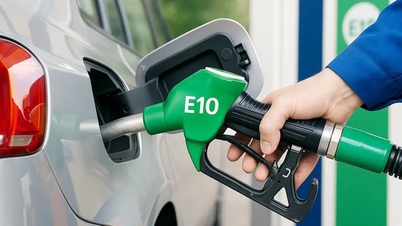
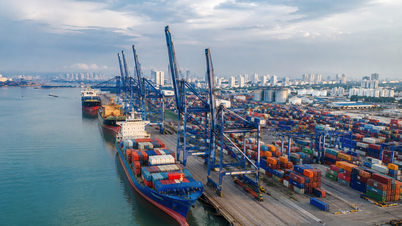
Resolution 19 also specifies the reduction of business conditions for each type of petroleum trader. For wholesale traders, the requirements include a dedicated port (minimum 7,000 tons), a receiving warehouse (minimum 15,000 m3), and a distribution system comprising at least 10 retail outlets (with at least 5 owned) along with 40 general agents/dealers in the system.
The People's Army Newspaper published an article titled: Nghe An, Ha Tinh: Removing the "bottleneck" for the development of solar power.
Amidst increasing electricity demand and the shift towards clean energy, solar power is emerging as a promising direction in Nghe An and Ha Tinh provinces. However, behind the positive signs from practice, there are still many obstacles related to costs, mechanisms, and policies that need to be removed soon so that solar energy can truly be utilized effectively.
First and foremost, the initial investment cost remains high. While most households have relatively low electricity consumption, the payback period is therefore prolonged, making it less attractive. In reality, to install a solar power system that meets technical standards and can withstand the harsh weather conditions of Central Vietnam, each household must spend approximately 50-150 million VND. For businesses, the investment can reach tens of billions of VND, while the payback period extends for many years, even decades, making implementation difficult to consider.
Furthermore, many citizens and businesses believe that some current legal regulations are not aligned with reality. The price of electricity from solar energy is still low, equivalent to the price the electricity sector pays for electricity, thus failing to create sufficient incentives for investment. Although policies for developing renewable energy have offered many incentives, access to and benefit from these policies remain limited due to a lack of specific guidelines.
Import and export sector
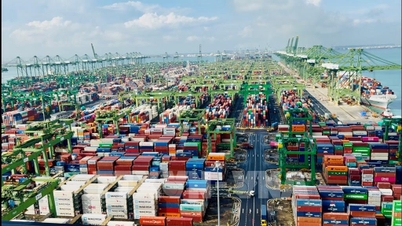
The website znews.vn published the following information: Vietnam-India trade reaches a peak, aiming to reach 20 billion USD.
In 2025, Vietnam's exports to India reached US$10.3 billion (a 14.2% increase), while imports reached US$6.1 billion (a 5% increase). This growth trend is expected to continue in the first quarter of 2026, with total trade reaching US$4.8 billion, a 28% increase year-on-year. Specifically, Vietnam's exports to India are projected at US$2.9 billion (+25%); and Vietnam's imports from India at US$1.8 billion (+34%).
The trade structure between the two countries is clearly complementary. More than 70% of Vietnam's exports to the 1.4 billion-person market are processed and manufactured goods (technology, electronics, machinery). Conversely, Vietnam mainly imports textile raw materials, iron and steel, seafood, and pharmaceuticals from India to serve domestic production and consumption.
Beyond trade, foreign direct investment (FDI) is also flowing strongly between the two countries. Currently, Indian businesses are present in 20 out of 34 provinces and cities in Vietnam.
Conversely, Vietnamese businesses are also expanding their operations internationally with 30 projects in India. The focus is on the Vingroup's "mega-project" electric vehicle factory in Tamil Nadu, with plans to increase total investment to $6.5 billion.
Experts believe that with the current growth rate, the target of $20 billion in bilateral trade is entirely achievable. However, to reach this figure, the two countries need to be more decisive in connecting logistics infrastructure, simplifying payment procedures, and promoting investment in technology sectors.
Hanoi New Newspaper reports: Agricultural, forestry and aquatic product exports in the first four months: Growth amidst challenges.
Overall, in the first four months of 2026, the total export value of agricultural, forestry, and aquatic products still reached approximately US$23.04 billion, an increase of 5.4% compared to the same period last year. This is a relatively positive growth rate in the context of a volatile global economy, with consumer demand not yet fully recovered and increasing competitive pressure.
Faced with intertwined opportunities and challenges, maintaining and promoting the growth of agricultural, forestry, and fisheries exports in the coming period requires synchronized and flexible solutions. According to the Ministry of Agriculture and Environment, first and foremost, it is necessary to continue diversifying export markets, reducing dependence on a few large markets such as China or the US. Expanding into potential markets such as the Middle East, South Asia, or Africa (although declining) remains a necessary direction to mitigate risks.
Furthermore, improving product quality and added value is a key factor. In reality, many products experience a decrease in value despite increased production due to low export prices. Therefore, it is necessary to promote deep processing, brand building, and compliance with international standards to increase selling prices.
Overall, Vietnam's agricultural, forestry, and fisheries exports in the first four months of 2026 maintained positive growth momentum, but faced numerous challenges, particularly downward price pressure and market volatility. In this context, shifting the growth model towards improving quality and value will be key to more sustainable agricultural development...
Domestic market sector
Dong Nai Newspaper published an article titled: OCOP products elevate Dong Nai's agricultural products.
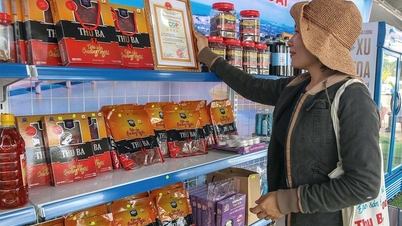
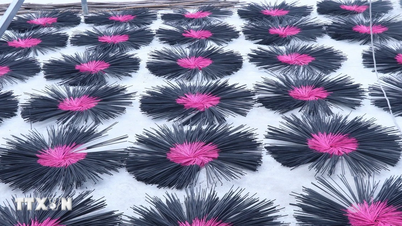
Over the years, the OCOP product development program in Dong Nai has spread widely, attracting the active participation of businesses, cooperatives, and individual producers. From small-scale operations, many establishments have boldly invested in technology and brand building, gradually upgrading their products from 3 stars to 4 stars and 5 stars.
According to Ms. Le Thi Anh Tuyet, Deputy Director of the Department of Agriculture and Environment, the OCOP program has spread widely, unleashing the potential of localities and attracting businesses, cooperatives, and households to participate. Many products have formed value chains, improving quality and competitiveness. Along with this, comprehensive support policies have been implemented, such as: support for packaging, traceability labels, quality standard consulting, trade promotion, credit, and chain linkages… creating conditions for businesses to develop products in a more systematic way.
Not only has the quantity of OCOP products in Dong Nai increased, but their quality has also improved significantly. Many localities such as Binh Phuoc, Xuan Loc, and Trang Bom have proactively developed raw material areas, supported businesses in technological innovation, and aimed for international standards.
To date, Dong Nai has over 450 OCOP-certified products from more than 270 businesses. These include 11 five-star OCOP products, 89 four-star OCOP products, and the remainder are three-star OCOP products. The majority of these products belong to categories such as: food, beverages, medicinal herbs and products derived from medicinal herbs, handicrafts, ecotourism services, and tourist destinations.
According to doanhnhansaigon.vn, the Ministry of Industry and Trade has set a specific deadline for administrative procedure reform.
The Ministry of Industry and Trade has just issued Notice No. 100/TB-BCT, conveying the directives of Minister Le Manh Hung regarding the implementation of government resolutions related to reducing and simplifying administrative procedures and business conditions. Accordingly, Minister Le Manh Hung requested affiliated units to urgently and comprehensively implement the tasks, ensuring a smooth implementation process that does not disrupt the operations of businesses and citizens.
One of the key tasks is to review and republish all administrative procedures under their management after the resolutions come into effect. Units must complete the compilation and submission for issuance before May 10, 2026.
Simultaneously, the dissemination of information and guidance on implementation has also been intensified. Units are required to proactively develop detailed and publicly available content through official channels so that localities and businesses can access and apply it promptly. For in-depth content, training sessions, both in-person and online, should be implemented flexibly to ensure effective implementation.
The announcement also highlighted specific timelines: completing the publication of administrative procedures before May 10, 2026; completing the dissemination of information before May 15, 2026; preparing the infrastructure for online public services before May 30, 2026; and finalizing the legal framework before March 1, 2027. This is considered an important step to accelerate administrative procedure reform and create a more favorable environment for production and business activities.

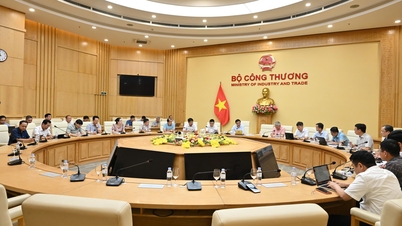
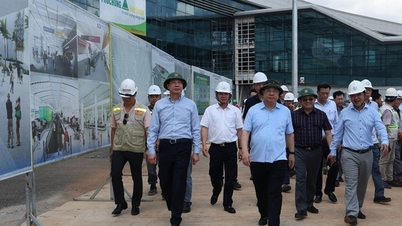
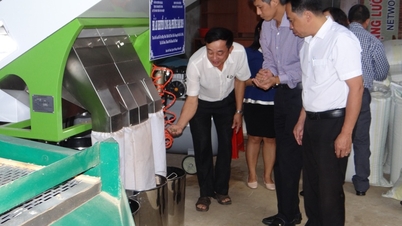
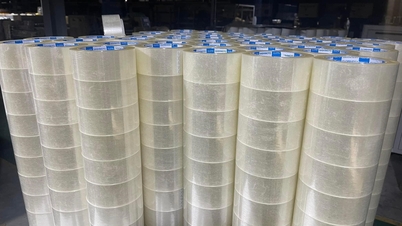
The Ministry of Industry and Trade has set a specific deadline for administrative procedure reform. (Illustrative image)
Trade defense sector
The website doanhnhansaigon.vn published the following information: Australia initiates anti-dumping investigation into galvanized steel from Vietnam.
According to information from the Vietnam Trade Office in Australia, this market has officially launched an anti-dumping investigation into galvanized steel products imported from Vietnam and South Korea. Specifically, on April 30, 2026, the Australian Anti-Dumping Commission (ADC) announced the commencement of an investigation into galvanized steel products originating from the two aforementioned countries.
The scope of investigation includes flat-rolled steel products of iron or steel, with or without alloys, with a thickness from 0.3 mm to 3.5 mm, without width limitations, in coil or sheet form. These products are zinc-plated or coated, in which the zinc content accounts for at least 50% of the total coating composition; the remainder may be other alloying elements.
Previously, on April 7, 2026, the Australian Government announced that the Australian Control Department (ADC) had received a request for an anti-dumping investigation into galvanized steel imported from Vietnam and South Korea. The products in question are classified under the following tariff codes: 7210.49.00, 7212.30.00, 7225.92.00, and 7226.99.00.
To proactively respond, the Trade Remedies Department (Ministry of Industry and Trade) recommends that export businesses closely monitor developments and prepare comprehensive plans. The immediate focus should be on reviewing all export activities related to the investigated product codes, especially the data system on selling prices and production costs.
Source: https://moit.gov.vn/tin-tuc/diem-bao-nganh-cong-thuong-ngay-5-5-2026.html





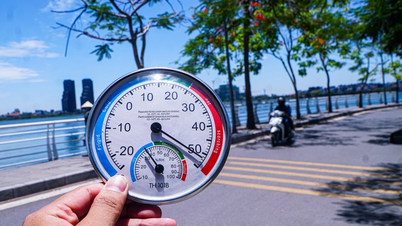
![[Image] Hanoi's urban life under the challenge of a "scorching hot" environment](https://vphoto.vietnam.vn/thumb/1200x675/vietnam/resource/IMAGE/2026/05/25/1779706979265_nang-nong-t5-2026-minh-duy-7-4636-jpg.webp)







































































Comment (0)