From the Cambodian market, many Vietnamese rural industrial products are facing opportunities to expand their market share and participate more deeply in the ASEAN supply chain if they meet the requirements for quality standards, green transformation, and competitiveness.
Bộ Nông nghiệp và Môi trường•26/05/2026
Promoting the participation of typical rural industrial products (RISEP) in the export market is becoming an important direction to expand development space for local businesses in the context of increasingly fierce market competition and the strong development of green consumption trends.
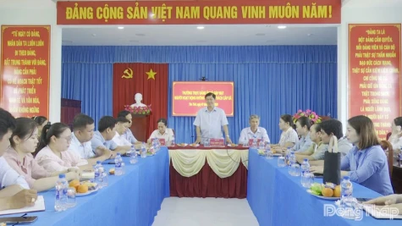
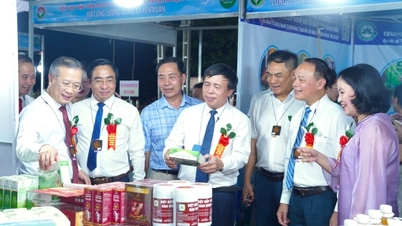
Speaking at the Vietnam-Cambodia Trade Cooperation Promotion Conference held in Dong Thap in mid-May 2026, Ms. Do Thi Minh Tram, Deputy Director of the Department of Innovation, Green Transformation and Industrial Promotion (Department of Innovation and Green Transformation), Ministry of Industry and Trade , stated that the development of...
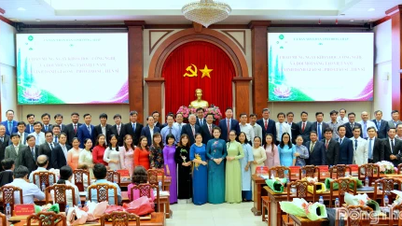
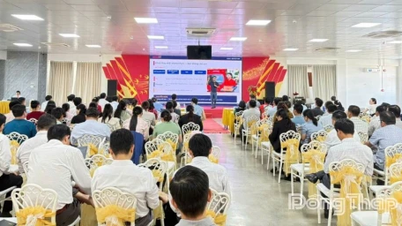
The Ministry of Industry and Trade, in coordination with the People's Committee of Dong Thap province and the Cambodian Ministry of Commerce, organized a Trade Promotion Conference to boost import and export in the Southern region, with the theme "Strengthening supply chain connectivity and sustainable trade development between Vietnam and Cambodia".
n RISEP Adopting an export-oriented approach not only helps increase output for businesses but also creates momentum for rural industrial establishments to innovate technology, improve product quality, and participate more deeply in regional and international supply chains.
Cambodia is a market with great potential for Vietnamese goods.
According to Ms. Do Thi Minh Tram, Cambodia is a neighboring market with traditional trade cooperation with Vietnam and still has great growth potential for Vietnamese goods.
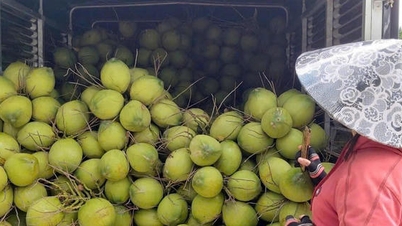
In particular, rural industrial products from the southern region, especially processed agricultural products, food, and consumer goods, which are the strengths of RISEP entities, have a high degree of similarity and suitability with Cambodian consumer tastes. This is considered an advantage for Vietnamese businesses to expand their presence in this market.
However, to exploit the market sustainably, businesses need to proactively shift from informal to formal export channels, while focusing on standardizing quality, packaging, and labeling, and meeting food safety and hygiene standards to enhance competitiveness in the ASEAN market.
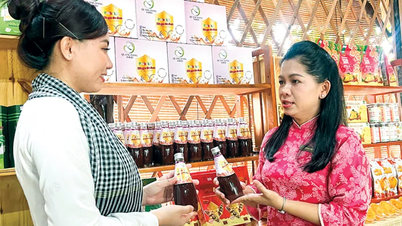
According to a representative of Tri Son Trading and Service Company Limited. (Dao Thanh Ward, Dong Thap Province) With over 20,000 m2 of swiftlet farming facilities, Cambodia is a major producer and distributor of bird's nest products in the Western region of Vietnam. Cambodia is a promising market for processed foods, health gifts, and products with clear origins. Its geographical proximity and the growing consumer interest in food quality and safety are creating opportunities for many Vietnamese rural industrial products to penetrate this market more deeply.
Meanwhile, Xuan Ron Cho Gao Cocoa Company Limited (Binh Ninh commune, Dong Thap province) Specializing in the production and deep processing of cocoa products, the company believes this is an opportunity for local brands to gradually assert their position in the regional supply chain, especially with products that embody local values, regional stories, and sustainable development. According to the company, consumers are now not only concerned with quality but also with the origin and environmental responsibility behind each product.
According to experts, Cambodia is not only a potential consumer market but can also become a "stepping stone" for Vietnamese rural industrial goods to participate more deeply in the regional supply chain.
Ms. Do Thi Minh Tram - Deputy Director of the Department of Innovation, Green Transformation and Industrial Promotion, Ministry of Industry and Trade (photo: dongthap.gov.vn)
Standardizing products for participation in the international market.
To realize the goal of bringing RISEP Aiming towards the export market, the leaders of the Department of Industry and Trade have proposed several key solutions to enhance the competitiveness of rural industrial enterprises.
The top priority in this context is promoting innovation and the application of technology in production.
According to Ms. Do Thi Minh Tram, in the coming time, the Customs Department will continue to prioritize allocating resources to support small and medium-sized enterprises and rural industrial establishments in investing in machinery and equipment modernization, applying advanced technology, and promoting digital transformation in production, management, and distribution of goods.
This is considered an important solution to standardize production processes, improve productivity and product quality, reduce costs, and better meet the increasingly stringent technical standards of import markets.
According to experts, the biggest challenge today is not a lack of potential products, but a lack of standardization capacity. Many rural industrial products still develop on a small scale, lacking traceability data, commercial packaging, and a stable distribution system. Therefore, the process of bringing RISEP to the international market is essentially a transformation from a local production mindset to a mindset of meeting global standards.
To meet the demands of the export market, a representative from Tri Son Trading and Service Co., Ltd. stated that the company has invested in modern production technology, perfected its quality control process, improved packaging, and enhanced traceability to better meet the requirements of the ASEAN market.
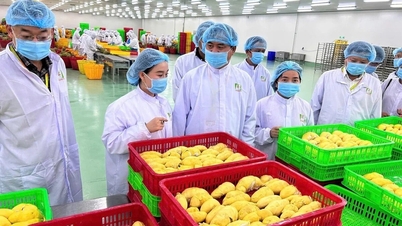
Furthermore, Xuan Ron Cho Gao Cocoa Company Limited is developing a "bean-to-bar" production model, controlling quality throughout the entire process from raw materials to finished products, prioritizing local raw materials and sustainable production processes. According to the company, the trend of green consumption and increasingly stringent international standards are forcing rural industrial production facilities to change towards greater professionalism if they want to expand. export market .
Xuan Ron Cho Gao Cocoa Company Limited is developing a production model based on the "bean-to-bar" approach.
Green transformation paves the way for Vietnamese products.
Along with technological innovation, green transformation is becoming an essential requirement for rural industrial products to participate in the international market.
According to the head of the Department of Science and Technology, in the coming time, the Department will strengthen guidance and support for businesses to apply cleaner production solutions, use energy efficiently, and develop circular economy models.
Ms. Do Thi Minh Tram emphasized that meeting green standards is not only a condition for participating in the international market but also an opportunity to enhance the value, reputation, and competitiveness of Vietnamese rural industrial products in regional and global supply chains.
The green consumption trend is currently booming in many countries, leading to increasingly stringent requirements regarding traceability, carbon emissions, and environmental standards. This necessitates a shift in the production mindset of rural industrial enterprises if they want to expand their export markets.
In addition, improving the effectiveness of industrial promotion activities and developing the market for RISEP products is also one of the key directions set by the Department of Industrial Parks and Quarantine.
Accordingly, the Department of Industry and Trade of Vietnam requested the Departments of Industry and Trade of the provinces to closely coordinate in linking the RISEP voting activities with national trade promotion programs to expand opportunities for promotion and market connection for businesses.
At the same time, the Customs Department will strengthen support for businesses to apply cross-border e-commerce to expand distribution channels, promote products, and directly access foreign partners.
In the context of increasingly fierce market competition, integrating rural industrial products into export chains is not just about expanding outlets, but also about comprehensively upgrading standards in technology, quality, and branding. Starting from the Cambodian market, many RISEPs (Regional Industrial Production Enterprises) are now presented with opportunities to penetrate deeper into the ASEAN supply chain if they can meet the increasingly stringent requirements of the international market.









![[Photo] General Secretary and President To Lam presides over the meeting to approve the draft report on the results of the second inspection by the Politburo of the Standing Committee of the Hanoi City Party Committee.](https://vphoto.vietnam.vn/thumb/1200x675/vietnam/resource/IMAGE/2026/05/26/1779789811432_a2-bnd-4430-9620-jpg.webp)































































Comment (0)