

The central exchange rate remained unchanged; the interbank overnight VND interest rate traded around 0.18%; the VN-Index decreased by 5.83 points (-0.49%) compared to the end of the previous week... These are some of the notable economic news items from the week of January 22-26.
 |
Overview
Data shows that gold prices climbed to $2,125 per ounce in mid-December 2023, setting the highest price since 2020. Gold closed the final trading session of 2023 at $2,030 per ounce, a 13% increase compared to the end of 2022.
According to the World Gold Council (WGC) Gold Outlook 2024 report, in 2023, three key events were considered to have the strongest impact on gold prices: October 7th, the outbreak of the Israel-Hamas war; November 14th, the release of US inflation data showing a faster-than-expected decline, raising the possibility of earlier monetary policy easing; and December 13th, the Federal Reserve's dovish message regarding monetary policy.
In addition, there are three factors that strongly impacted gold demand in 2023: the collapse of Silicon Valley banks, and the Hamas-Israel conflict; the WGC estimates that these two factors contributed approximately 3-6% to the increase in gold prices last year; the third factor relates to the message from the FED.
Furthermore, central banks in many countries, especially the G7 countries and China, have increased their gold purchases to supplement their reserves, totaling over 800 tons of gold in the first three quarters of 2023, 14% higher than the same period last year. JP Morgan Research estimates that global central bank purchases this year will reach 950 tons.
Global gold prices are projected to reach a record high in 2024, potentially as high as $2,300 per ounce. This forecast is based on the Federal Reserve's message that it will cut interest rates at least three times next year; geopolitical instability due to Israel-Palestine tensions in the Middle East shows no signs of abating in the short term; and central banks continue to purchase physical gold at a steady pace.
Domestic gold prices fluctuated unusually throughout the year, and especially at the end of 2023, at times the price of SJC gold in Vietnam was nearly 20 million VND/ounce higher than the world price, with a buy-sell spread of up to 3 million VND/ounce.
According to the General Statistics Office, the gold price index in December 2023 increased by 3.98% compared to the previous month; increased by 13.13% compared to the same period last year; and the average gold price in 2023 increased by 4.16%. Domestic gold prices fluctuated sharply last year due to dependence on two factors: fluctuating in the same direction as world gold prices and factors from the domestic market.
Specifically, domestic market factors including low savings interest rates and a struggling real estate market have led to gold becoming a popular safe haven, creating significant demand. While Vietnam is not producing more SJC gold bars, the increased demand has strained the liquidity of SJC gold bars, further driving up their price.
On December 27th, Prime Minister Pham Minh Chinh signed Directive 1426/CD-TTg on solutions for managing the gold market. Accordingly, the Prime Minister requested the State Bank of Vietnam to urgently implement effective solutions to manage and regulate domestic gold prices according to market principles, preventing the high price difference between domestic and international gold prices, as seen in recent times, from negatively impacting macroeconomic management. A report on the implementation results should be submitted in January 2024.
At the same time, strengthen inspection, examination, control, and supervision of the gold market, the activities of gold trading businesses, gold shops, distributors and dealers, and other entities participating in the market; promptly detect loopholes and shortcomings to handle them proactively, effectively, and efficiently within their authority, and report issues beyond their authority, proposing appropriate and legally compliant solutions to higher authorities…
The Prime Minister also instructed the State Bank of Vietnam to conduct a comprehensive assessment of the domestic gold market situation and state management of the gold market; to summarize the implementation of Government Decree No. 24/2012/ND-CP dated April 3, 2012, on the management of gold business activities, in order to promptly propose to competent authorities for consideration amendments and additions to regulations, ensuring improved effectiveness and efficiency of state management tools for the gold market, and developing a transparent, healthy, efficient, and sustainable market, to be completed by January 2024.
Summary of the domestic market from January 22nd to January 26th.
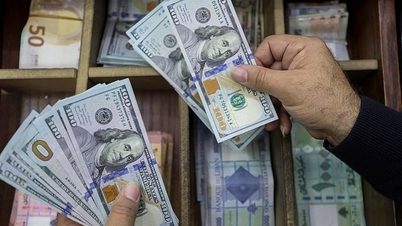
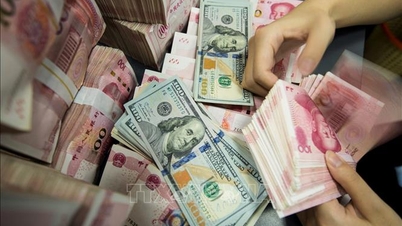
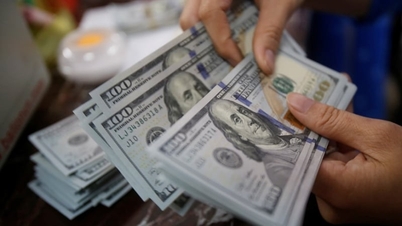
Foreign Exchange Market: During the week of January 22nd - 26th, the central exchange rate was slightly adjusted downward at the beginning of the week by the State Bank of Vietnam (SBV), then increased again in the last two sessions. At the close of trading on January 26th, the central exchange rate was listed at 24,036 VND/USD, showing little change from the end of the previous week. The SBV continued to list the spot buying rate at 23,400 VND/USD. The spot selling rate at the end of the week was listed at 25,187 VND/USD, 50 dong lower than the exchange rate ceiling.
The interbank exchange rate continued its upward trend last week. At the close of trading on January 26th, the interbank exchange rate settled at 24,598 VND/USD, a further increase of 62 dong compared to the end of the previous week.
The exchange rate on the free market has tended to increase sharply over the past week. At the close of trading on January 26th, the free market exchange rate increased by 265 VND on the buying side and 235 VND on the selling side compared to the end of the previous week, trading at 25,065 VND/USD and 25,115 VND/USD respectively.
Interbank money market: During the week of January 22nd - 26th, VND interbank interest rates tended to decrease slightly across most maturities. As of the close of trading on January 26th, VND interbank interest rates were around: overnight 0.18% (-0.01 percentage points); 1 week 0.30% (unchanged); 2 weeks 0.53% (-0.05 percentage points); 1 month 1.13% (-0.13 percentage points).
USD interbank interest rates increased slightly for short-term maturities while remaining unchanged for the 1M maturity. At the close of trading on January 26th, USD interbank interest rates were: overnight 5.13% (+0.03); 1 week 5.24% (+0.03 percentage points); 2 weeks 5.30% (+0.01 percentage points) and 1 month 5.39% (unchanged).
Open Market : In the open market during the week of January 22nd - 26th, in the collateralized lending channel, the State Bank of Vietnam offered 7-day bonds with a volume of VND 5,000 billion at an interest rate of 4.0%. There were no successful bids and no maturing bonds from the market.
The State Bank of Vietnam (SBV) continued not to offer SBV bills for auction last week. There are no SBV bills in circulation on the market.
Bond market: On January 24th, the State Treasury successfully raised VND 7,244 billion out of VND 8,500 billion in government bonds offered, equivalent to an 85% successful bid rate. Specifically, the 10-year, 20-year, and 30-year bonds were fully raised, with amounts of VND 2,000 billion, VND 1,000 billion, and VND 1,500 billion respectively; the 5-year bonds raised VND 1,634 billion out of VND 2,000 billion, and the 15-year bonds raised VND 1,110 billion out of VND 2,000 billion. The winning bid interest rates were 1.37% for 5-year bonds (-0.02 percentage points compared to the previous auction), 2.23% for 10-year bonds (+0.03 percentage points), 2.43% for 15-year bonds (+0.03 percentage points), 2.65% for 20-year bonds (-0.10 percentage points), and 2.85% for 30-year bonds (unchanged).
This week, on January 31st, the State Treasury is offering 10,000 billion VND in government bonds, including 3,500 billion VND for 5-year bonds, 3,000 billion VND each for 1-year and 1-year bonds, and 500 billion VND for 30-year bonds.
The average trading value of Outright and Repos transactions in the secondary market last week reached VND 9,440 billion per session, an increase compared to VND 8,651 billion per session the previous week. Government bond yields fluctuated throughout the week. At the close of trading on January 26th, government bond yields were trading around: 1 year 1.12% (-0.01 percentage point); 2 years 1.14% (-0.01 percentage point); 3 years 1.19% (-0.01 percentage point); 5 years 1.40% (-0.02 percentage point); 7 years 1.82% (-0.01 percentage point); 10 years 2.28% (+0.04 percentage point); 15 years 2.48% (+0.04 percentage point); 30 years 3.01% (unchanged).
Stock market: During the week of January 22nd - 26th, the stock market experienced alternating periods of gains and losses. At the close of trading on January 19th, the VN-Index stood at 1,175.67 points, down 5.83 points (-0.49%) from the previous week; the HNX-Index fell slightly by 0.05 points (-0.02%) to 229.43 points; and the UPCom-Index edged up slightly by 0.24 points (+0.27%) to 87.70 points.
Market liquidity fell to 15,700 billion VND/session from 18,200 billion VND/session the previous week. Foreign investors were net buyers of over 26 billion VND across all three exchanges.
International News
The US economy received several important indicators, most notably a much stronger-than-expected Q4/2023 GDP. Specifically, the US Census Bureau announced that the country's GDP increased by 3.3% quarter-on-quarter in Q4 2023, a slowdown from the 4.9% of the previous quarter, but significantly exceeding the forecast of only 2.0%. Thus, the US economy grew by approximately 2.5% for the entire year 2023.
Regarding inflation, the core personal consumption expenditure (PCE) index in the US rose 0.2% month-on-month in December after a 0.1% increase in the previous month, matching analysts' forecasts. Compared to the same period in 2022, the core PCE increased 2.9% year-on-year, the lowest level since March 2021. In the labor market, the number of initial jobless claims in the US for the week ending January 20th was 214,000, up from 187,000 the previous week, and exceeding the forecast of 199,000.
The average number of orders over the last four weeks was 202,500, a slight decrease of 1,500 compared to the previous four weeks. Furthermore, core durable goods orders in the US increased by 0.6% month-on-month in December, continuing the 0.4% increase in November and exceeding the forecast of a 0.2% increase. However, overall durable goods orders remained flat (0.0% month-on-month) in December after a strong 5.5% increase in November, contrary to forecasts of a continued 1.2% increase.
Finally, regarding the real estate market, pending home sales in the US surged 8.3% month-on-month in December after a slight 0.3% decline in the previous month, exceeding the forecast of a 2.1% increase. New home sales in December were also positive, recording 664,000 units, higher than the 615,000 in November and also exceeding the expected 648,000. This week, the market awaits the first meeting of the year by the US Federal Reserve. The results of the meeting will be announced early morning on February 1st, Vietnam time.
The European Central Bank (ECB) did not change the interest rate cut at its first meeting of the year, and the Eurozone also received several notable economic indicators. Regarding the ECB, in its meeting on January 26th, the institution noted that inflation in the Eurozone is cooling down, but remains high. The ECB affirmed its commitment to bringing inflation to its medium-term target of 2.0% in a timely manner, avoiding persistent risks to consumers and the economy.
Accordingly, the ECB decided not to change the interest rate on loans at this meeting in order to achieve the aforementioned objective. The refinancing rate, marginal lending rate, and deposit rate at the ECB are currently at 4.5%, 4.75%, and 4.0%, respectively, effective from September 20, 2023. The ECB stated that it will ensure the interest rate on loans remains sufficiently restrictive for the necessary period, and will continue to rely on inflation and economic data to make further decisions regarding the interest rate on loans.
Regarding the Eurozone economy, the manufacturing PMI in the region stood at 46.6 points in January, up from 44.4 points the previous month, and exceeding the forecast of 44.8 points.
Conversely, the Eurozone services PMI this month was 48.4 points, down from 48.8 points last month, contrary to forecasts of an increase to 49.1 points. Finally, the Eurozone consumer confidence index was -16 points in January, down from -15 points the previous month and contrary to forecasts of an improvement to -10 points.
Source link

![[Photo] Admire the coral "masterpiece" amidst the million-year-old heritage of Dak Lak province.](https://vphoto.vietnam.vn/thumb/1200x675/vietnam/resource/IMAGE/2026/05/31/1780221235105_anh-man-hinh-2026-05-31-luc-16-53-27.png)

![[Photo] The General Secretary, President and his wife begin their state visit to the Philippines.](https://vphoto.vietnam.vn/thumb/1200x675/vietnam/resource/IMAGE/2026/05/31/1780230559452_anh-man-hinh-2026-05-31-luc-19-28-11.png)
![[Photo] Solemn bathing ceremony and Buddha procession in Hue](https://vphoto.vietnam.vn/thumb/1200x675/vietnam/resource/IMAGE/2026/05/31/1780228263543_1-jpg.webp)

















![[Video] Sunset at Lap An Lagoon – Where the sun sets over the fishing nets](https://vphoto.vietnam.vn/thumb/340x192/vietnam/resource/IMAGE/2026/05/31/1780192137701_beach-landscape-sea-water-nature-grass-745871-pxhere-com.jpeg)










































![[Photo] Admire the coral "masterpiece" amidst the million-year-old heritage of Dak Lak province.](https://vphoto.vietnam.vn/thumb/402x226/vietnam/resource/IMAGE/2026/05/31/1780221235105_anh-man-hinh-2026-05-31-luc-16-53-27.png)




































Comment (0)