

The central exchange rate decreased by 77 dong, the VN-Index fell by 3.12 points compared to the end of last week, and the consumer price index (CPI) in January 2024 increased by 3.37% compared to the same period in 2023... These are some of the notable economic news items from the week of January 29th to February 2nd.
| Review of economic news on January 31st. Review of economic news on February 1st. |
 |
| Review of economic news |
Overview
The Consumer Price Index (CPI) in January 2024 increased slightly compared to the previous month. Many experts predict that inflation for the whole year will be controlled below the threshold allowed by the National Assembly ; however, many risks still remain.
According to the General Statistics Office's announcement on the CPI for January 2024, the main reasons for the 0.31% increase in the CPI in January 2024 compared to the previous month were the increase in healthcare service prices in some localities according to Circular No. 22/2023/TT-BYT, the adjustment of the average retail electricity price by Vietnam Electricity Corporation, and the continued increase in domestic rice prices following export rice prices. Compared to the same period in 2023, the CPI in January increased by 3.37%; core inflation increased by 2.72%.
In the 0.31% increase in the CPI in January 2024 compared to the previous month, 9 groups of goods and services saw price increases, while 2 groups experienced price decreases. The groups with price increases include: Medicines and medical services, which saw the highest increase at 1.02% (contributing 0.05 percentage points to the overall CPI); Housing and construction materials, which increased by 0.56%, contributing 0.11 percentage points to the overall CPI, due to a 1.29% increase in household electricity prices in January 2024 compared to the previous month and increased demand for electricity for heating as the weather turned colder, and a 1.69% increase in gas prices; Transportation, which increased by 0.41%, contributing 0.04 percentage points to the overall CPI; and Food and food services, which increased by 0.21%, contributing 0.07 percentage points to the overall CPI. The culture, entertainment, and tourism group increased by 0.11%, mainly driven by package tours (up 0.7%); books, newspapers, and magazines (up 0.43%); and hotels and guesthouses (up 0.13%).
Two groups of goods and services saw a decrease in price index: the postal and telecommunications group decreased by 0.05% due to companies implementing promotional programs offering discounts on certain types of mobile phones; and the education group decreased by 0.12%, with educational services decreasing by 0.15%.
According to the General Statistics Office, the main reason is that on December 31, 2023, the Government issued Resolution No. 97/2023/ND-CP requiring tuition fees for public preschool and general education to remain stable from the 2023-2024 school year at the same level as the 2021-2022 school year. Therefore, some localities have adjusted tuition fees downwards after collecting them according to Decree No. 81/2021/ND-CP.
Core inflation in January 2024 increased by 0.21% compared to the previous month and by 2.72% compared to the same period last year. According to the General Statistics Office, the lower-than-average increase in core inflation (3.37%) was mainly due to the price of medical services, which contributed to the CPI increase but is excluded from the calculation of core inflation.
Many experts predict that inflation in 2024 will only be around 3.2-3.5%. Agreeing with this view, the General Statistics Office noted that, regarding domestic factors, in 2023, many solutions were actively implemented, such as reducing lending interest rates, stabilizing the foreign exchange market; reducing value-added tax from 10% to 8% from July 1, 2023; reducing environmental tax on aviation fuel; exempting, reducing, and extending taxes, fees, land use fees, and supporting businesses...
Therefore, inflation has been controlled, although it was quite high at the beginning of the year. These measures will continue to be implemented from the beginning of 2024, so inflationary pressure in the first few months of this year is not as intense as last year and is likely to be maintained until the end of the year.
Regarding the global market, aggregate demand is unlikely to increase significantly this year, making it difficult for raw material and fuel prices, especially gasoline and oil, to rise as the global economy, including leading economies like the US, China, and Europe, is unlikely to experience strong growth. Furthermore, central banks in leading economies such as the US, EU, and UK have temporarily halted interest rate hikes, but interest rates in these economies remain at their highest levels in decades to control inflation and show no signs of a sharp decline. High interest rates, coupled with reduced investment and consumption demand, make it unlikely for global inflation to rise as sharply as in 2023, thus supporting inflation control domestically.
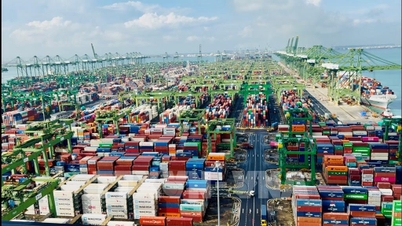
However, several factors remain that could put pressure on domestic inflation. Escalating geopolitical tensions and disruptions to vital global shipping routes are driving up maritime and logistics costs. Even if demand for raw materials and consumer goods decreases, prices could still rise. The impact of climate change and extreme weather events is causing food shortages, putting pressure on global food prices. Although Vietnam is a self-sufficient food producer, rising global prices could also push domestic prices up.
Regarding domestic factors, in 2024, Vietnam Electricity Group (EVN) and the Ministry of Industry and Trade planned to submit to the Government a proposal to further increase electricity prices. This, combined with the two price increases in 2023, will have a strong impact on the CPI, especially during the summer months when electricity demand increases due to the heat.
Tuition fees for the 2023-2024 school year in the public sector have not yet increased according to Decree 81/2021/ND-CP, but they may increase in the 2024-2025 school year if inflationary pressure is not significant. In addition, in 2024, the new salary reform and the increase in the regional minimum wage (6% increase) will take place simultaneously on July 1st, 2024, creating inflationary pressure; for example, hospital fees at public facilities will increase when the salary reform is implemented.
Summary of the domestic market from January 29th to February 2nd.
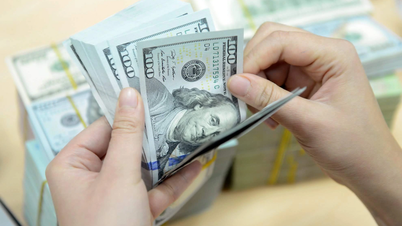
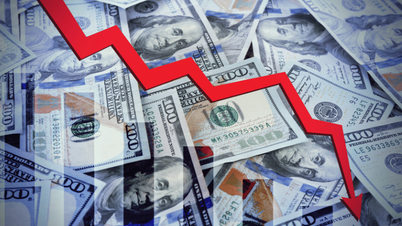
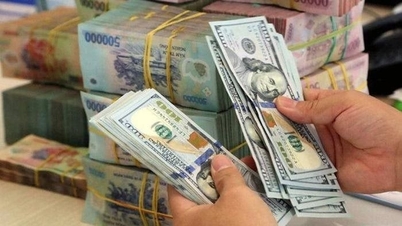
In the foreign exchange market during the week of January 29th - February 2nd, the central exchange rate was sharply adjusted downwards by the State Bank of Vietnam in all sessions. At the close of trading on February 2nd, the central exchange rate was listed at 23,959 VND/USD, a decrease of 77 dong compared to the end of the previous week.
The State Bank of Vietnam's exchange rate office continued to list the USD buying price at 23,400 VND/USD, while the USD selling price at the end of the week was listed at 25,106 VND/USD, 50 dong lower than the exchange rate ceiling.
The interbank exchange rate between the US dollar and the Vietnamese dong fell again last week. At the close of trading on February 2nd, the interbank rate settled at 24,340 VND/USD, a sharp decrease of 258 dong compared to the end of the previous week.
The US dollar-Vietnamese dong exchange rate on the free market fluctuated downwards last week. At the close of trading on February 2nd, the free market exchange rate fell sharply by 260 dong on the buying side and 250 dong on the selling side compared to the end of the previous week, trading at 24,805 VND/USD and 24,865 VND/USD respectively.
In the interbank money market during the week of January 29th - February 2nd, interbank VND interest rates increased sharply across all maturities. At the close of trading on February 2nd, interbank VND interest rates were around: overnight 1.41% (+1.23 percentage points); 1 week 1.71% (+1.41 percentage points); 2 weeks 1.84% (+1.31 percentage points); 1 month 1.91% (+0.78 percentage points).
Interbank USD interest rates rose slightly across all maturities. At the close of trading on February 2nd, interbank USD interest rates were: overnight 5.17% (+0.04); 1 week 5.28% (+0.04 percentage points); 2 weeks 5.32% (+0.02 percentage points) and 1 month 5.40% (+0.01 percentage points).
In the open market during the week of January 29th - February 2nd, in the collateralized lending channel, the State Bank of Vietnam (SBV) offered 5,000 billion VND in 7-day and 14-day maturities at an interest rate of 4.0%. 2.28 billion VND was successfully bid, resulting in a net injection of 2.28 billion VND into the market by the SBV.
The State Bank of Vietnam (SBV) continued not to offer SBV bills for auction last week. There are no SBV bills in circulation on the market.
On January 31st, the State Treasury auctioned 10,000 billion VND of government bonds. The winning bid volume was 3,007 billion VND (equivalent to a 30% winning bid rate). Specifically, 350 billion VND out of 3,500 billion VND offered were for 5-year bonds; 1,542 billion VND out of 3,000 billion VND for 10-year bonds; 950 billion VND out of 3,000 billion VND for 15-year bonds; and 165 billion VND out of 500 billion VND for 30-year bonds. The winning interest rates were 1.39% for 5-year bonds (unchanged from the previous auction), 2.28% (+0.08 percentage points) for 10-year bonds, 2.48% (+0.08 percentage points) for 15-year bonds, and 2.85% (unchanged) for 30-year bonds.
This week, on February 7th, the State Treasury offered 8,000 billion VND of government bonds, including 2,000 billion VND with a 5-year maturity, 3,000 billion VND with a 10-year maturity, 2,500 billion VND with a 15-year maturity, and 500 billion VND with a 20-year maturity.
The average trading value of Outright and Repos transactions in the secondary market last week reached VND 14,039 billion per session, a significant increase compared to VND 9,440 billion per session the previous week. Government bond yields fluctuated slightly upwards last week for maturities of 5 years or more. At the close of trading on February 2nd, government bond yields were trading around: 1 year 1.12% (unchanged); 2 years 1.14% (unchanged); 3 years 1.19% (unchanged); 5 years 1.42% (+0.02 percentage points); 7 years 1.83% (+0.01 percentage points); 10 years 2.30% (+0.02 percentage points); 15 years 2.52% (+0.04 percentage points); 30 years 3.04% (+0.03 percentage points).
The stock market during the week of January 29th to February 2nd continued to fluctuate with both gains and losses throughout the sessions. At the close of trading on February 2nd, the VN-Index stood at 1,172.55 points, down 3.12 points (-0.27%) from the end of the previous week; the HNX-Index increased by 1.13 points (+0.49%) to 230.56 points; and the UPCoM-Index edged up slightly by 0.67 points (+0.76%) to 88.37 points.
Market liquidity remained low, although it increased slightly compared to the previous week, with trading value rising to VND 18,600 billion/session from VND 15,700 billion/session the previous week. Foreign investors sold net more than VND 1,205 billion across all three exchanges.
International News
The International Monetary Fund (IMF) has raised its outlook for the global economy in 2024. In a report released on January 30, the IMF expects global GDP to grow by 3.1% in 2024 (+0.2 percentage points compared to the October 2023 forecast). The main reason for this is the altered outlook for the United States and China.
Specifically, the organization forecasts that, among developed countries, the US GDP will increase by 2.1% (+0.6 percentage points) in 2024, while the Eurozone will only increase by 0.9% (-0.3 percentage points), Japan by 0.9% (-0.1 percentage points), and the UK by 0.6% (unchanged). For developing countries, China's GDP is projected to increase by 4.6% this year (+0.4 percentage points), and India's by 6.5% (+0.2 percentage points).
Accordingly, the IMF believes that the risk of a global "hard landing" is gradually decreasing over time, despite emerging risks in the Middle East that are disrupting supply chains and driving up commodity prices.
Regarding inflation, the IMF forecasts the global consumer price index to rise by 5.8% in 2024 (unchanged), a continued slowdown from the 6.8% of 2023.
The Fed did not change its policy interest rate at its early 2024 meeting, and the US also recorded several important economic indicators.
In its meeting on January 31st, the Fed noted that the US economy has been growing fairly rapidly recently. Throughout 2023, inflation showed a slowdown, but remained at a high level. The Fed demonstrated its commitment to achieving full employment and bringing inflation back to 2.0% in the long term.
Accordingly, the agency decided to keep the policy interest rate unchanged at 5.25% - 5.50% at this meeting to achieve the aforementioned goal. The Fed also affirmed that it will continue to carefully assess economic and inflation data in the coming period to make appropriate decisions on monetary policy.
In addition, the Fed is also prepared to change its stance on monetary policy if risks emerge that hinder the achievement of its inflation target.
Regarding the US economy, the Institute for Supply Management (ISM) reported that the manufacturing PMI stood at 49.1% in January, up from 47.4% the previous month, contrary to forecasts of a slight decline to 47.2%.
In the labor market, the US created 353,000 new non-agricultural jobs in January, higher than the 333,000 in November and also exceeding the forecast of 187,000. The unemployment rate in the US remained unchanged at 3.7% in January, contrary to experts' forecasts of a slight increase to 3.8%. Average hourly earnings in the US also increased by 0.6% month-on-month in January, continuing the 0.4% increase from the previous month, and also exceeding the expected 0.3% increase.
Following the Fed and the ECB, the Bank of England (BoE) also kept its policy interest rate unchanged at its first meeting of the year. At its meeting on February 1st, the BoE stated that the UK's GDP would gradually recover in the coming period after the slump caused by the high interest rate environment. The labor market is gradually easing, but is still considered tight compared to historical levels. Inflation in the UK in December 2023 fell to 4%, lower than expected in the BoE's November report.
Accordingly, the Bank of England (BoE) forecasts that inflation will continue to fall to its target of 2.0% in the second quarter of 2024, before rising again in the third and fourth quarters. The CPI for the whole year 2024 could increase by approximately 2.75%. In this meeting, the BoE decided to keep the policy interest rate unchanged at 5.25%, aiming to bring inflation to its target level within a reasonable timeframe. The institution also affirmed that it will continue to closely monitor inflation and economic indicators to determine how long to maintain the policy interest rate at its current level.
Regarding the UK economy, S&P Global revised down the UK manufacturing PMI for December to 47.0 points, a slight decrease from the preliminary survey's 47.3 points. House prices in the UK rose 0.7% month-on-month in January after remaining flat the previous month, exceeding the forecast of a 0.1% increase.
Source link































![[Image] Hanoi's urban life under the challenge of a "scorching hot" environment](https://vphoto.vietnam.vn/thumb/1200x675/vietnam/resource/IMAGE/2026/05/25/1779706979265_nang-nong-t5-2026-minh-duy-7-4636-jpg.webp)









































































Comment (0)