

In recent years, commercial banks have continuously promoted the issuance of credit cards to encourage cashless payments. Many banks have integrated eKYC, online approval processes, and shortened card issuance times to just a few minutes. Along with this, a series of promotional programs such as waived annual fees, cashback, reward points, 0% installment payments, discounts on shopping, travel , and dining have led to a surge in demand for credit cards, especially among young customers and office workers.
According to financial experts, the "spend now, pay later" mechanism makes spending more convenient for users but also carries many risks if cash flow is not managed properly. The mentality of buying on installments with 0% interest, hunting for deals, or taking advantage of cashback leads many people to spend beyond their actual financial capacity. If customers do not fully understand the interest rates, penalty fees, and payment obligations of credit cards, it can easily lead to prolonged late payments. The consequences are not only the pressure of high interest rates but also the risk of bad debt, affecting their personal credit history in the long term.
Ms. Hoang Thi Hanh ( from Hung Yen province ) said that two years ago she opened a credit card with a limit of 100 million VND to cover personal expenses. Initially, she made timely payments, but her uncontrolled spending quickly depleted her credit limit.
"In the first few months, I tried to make the minimum payments to avoid penalties. But in the last few months, I've lost my income and can no longer afford to pay off the debt," Ms. Hanh shared.
According to her, the total outstanding debt and accrued interest has now reached approximately 146 million VND. Recently, the bank has been constantly calling to remind her of the debt, sending emails demanding full repayment, and warning that they may take legal action if she does not fulfill her commitments.
"I'm under a lot of pressure right now because I don't know how I'm going to manage this debt," she said.
Similarly, Mr. Nguyen Duc Tuan ( Hanoi ) said that he had opened a credit card with a limit of 55 million VND when he first started working. Initially, he used the card quite wisely and always paid in full to avoid interest charges. However, after a while, his spending went beyond control, causing his outstanding debt to increase rapidly.
“I’ve been unemployed for about two years now, so I’m no longer able to make payments. The total principal and interest now amounts to about 150 million VND. Constantly receiving debt reminder calls and notices of legal action from the bank has caused me prolonged stress,” Mr. Tuan shared.
The current reality shows that many users only focus on the 45-55 day interest-free period and do not pay enough attention to the interest rate if they are late in payment. According to financial experts, credit card interest rates are usually significantly higher than those of regular loans because they are unsecured loans with high flexibility. If spending is not well controlled or payments are not made on time, the outstanding balance can increase rapidly due to interest and fees.
|

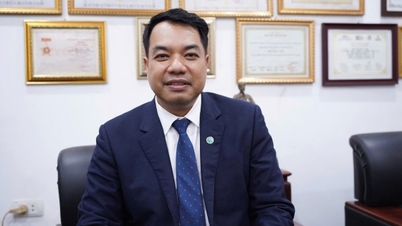
Financial and banking expert Dr. Nguyen Tri Hieu stated that credit cards are essentially short-term consumer loans with relatively high capital costs. If users do not manage their cash flow well, they can easily fall into a situation where their outstanding debt increases rapidly due to interest and fees. According to Dr. Hieu, many people often mistake the credit limit for "available funds" instead of a loan that needs to be repaid on time.
"Paying only the minimum amount can lead to prolonged debt and increasingly large accrued interest due to compound interest. Therefore, users should use credit cards within their financial means, prioritize paying off the entire balance on time, and limit card usage for unnecessary expenses. At the same time, it is crucial to absolutely secure the OTP and CVV codes and regularly monitor transaction activity to minimize risks," Dr. Hieu further noted.
From a management perspective, the State Bank of Vietnam also requires credit institutions to review fees, interest rates, and interest calculation methods for each type of card, while enhancing information transparency so that customers clearly understand their payment obligations and potential risks. Many banks are now also tightening control over credit card issuance, promoting the application of AI in credit scoring, analyzing spending behavior, and providing early warnings of overdue risks.
According to experts, uncontrolled credit card use not only creates immediate financial pressure but also risks being classified as a bad debtor, affecting credit scores on the CIC system and future access to capital. Therefore, when overdue debts arise, customers need to proactively work with the bank to develop a suitable payment plan, and at the same time be wary of offers to "clear CIC bad debt" on social media or over the phone to avoid the risk of fraud, theft of assets or personal information.
Source: https://thoibaonganhang.vn/the-tin-dung-va-cau-chuyen-kiem-soat-chi-tieu-182431.html





![[Photo] General Secretary and President To Lam presides over the meeting to approve the draft report on the results of the second inspection by the Politburo of the Standing Committee of the Hanoi City Party Committee.](https://vphoto.vietnam.vn/thumb/1200x675/vietnam/resource/IMAGE/2026/05/26/1779789811432_a2-bnd-4430-9620-jpg.webp)





























































































Comment (0)