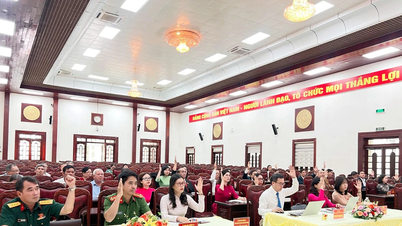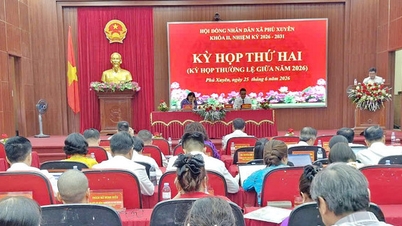
People conduct transactions at the Public Administrative Service Center of Van Phu Ward.
The numbers speak for themselves.
Looking at the 2025 PAR INDEX results, it's clear that Phu Tho 's administrative reform picture has seen many positive changes. According to Mr. Le Minh Tan, Deputy Director of the Department of Internal Affairs, with 90.96 points, ranking 15th out of 34 provinces and cities nationwide and belonging to Group A - the group of localities achieving 90 points or more, Phu Tho not only exceeded the national average but also affirmed its determination to build a modern, professional, and service-oriented administration. Notably, the gap between the province and the top 10 localities nationwide is less than half a point, showing that the reform efforts over the past period have created significant progress.
Behind those figures lies the synchronized involvement of the entire political system. From issuing plans to improve the PAR INDEX and SIPAS, strengthening administrative discipline and order, to clearly assigning responsibilities to each agency and unit according to evaluation criteria, administrative reform has been implemented in a more systematic and focused manner. Not only has it focused on perfecting mechanisms and policies, but all levels and sectors have also concentrated on innovating service methods, using the efficiency of work resolution and citizen satisfaction as a measure of operational quality.
Within this overall picture, digital transformation is becoming one of the key drivers of administrative reform. By 2025, the province's digital transformation in state agencies ranked 11th out of 34 localities; civil service reform also ranked 11th out of 34, and institutional reform ranked 12th out of 34. These results demonstrate the province's efforts in building a digital government, improving the quality of its officials and civil servants, and perfecting the legal environment to serve citizens and businesses.



According to Deputy Director of the Department of Internal Affairs Le Minh Tan, the 2025 PAR Index results comprehensively reflect the effectiveness of administrative reform in the province. Many aspects have become substantive, gradually changing the operating methods of state administrative agencies towards openness, transparency, and a focus on serving citizens and businesses.
While the PAR Index measures the administrative capacity of the government, SIPAS directly reflects the public's perception of the quality of service provided by state administrative agencies. The Ministry of Interior's survey of 3,300 people in 22 communes and wards across the province shows that the voice of the people is increasingly becoming an important basis for evaluating the effectiveness of administrative reform, helping government levels to better identify what has been achieved as well as areas for further improvement.
The score isn't the ultimate goal.
In 2025, Phu Tho province's SIPAS index reached 82.69%, ranking 21st out of 34 provinces and cities nationwide. Specifically, satisfaction with the provision of public administrative services reached 82.73%; and satisfaction with the development and implementation of policies reached 82.66%. These figures show that the majority of people have acknowledged positive changes in the operation of government at all levels, from the service attitude of officials and civil servants to the quality of handling administrative procedures. However, the province's SIPAS results are still lower than the national average and there is a certain gap compared to the leading localities. This is also an important message that the assessment indicators are sending to the administrative apparatus, because each score below the target reflects very specific desires of the people.
In reality, several aspects remain "bottlenecks" in the process of improving service quality. The rate of online applications and online payments has not met requirements; the public disclosure and updating of administrative procedures in some areas lack consistency; there are still cases of delayed processing; and the effectiveness of disseminating information about administrative reform has not truly spread widely to all citizens. These are also the reasons why the province received deductions in points in some important criteria in the PAR INDEX and SIPAS assessments.
According to Deputy Director of the Department of Internal Affairs Le Minh Tan, based on that practical experience, the province is focusing on implementing many solutions to improve the quality of administrative reform in a more substantive way. The focus is on continuing to tighten administrative discipline and order; linking the responsibility of the head of each agency with the results of implementing each indicator and criterion of the PAR INDEX and SIPAS; strengthening public service inspections, and promptly correcting manifestations that cause inconvenience and harassment in handling work for citizens and businesses.
At the same time, the province continues to promote digital transformation in the operations of state agencies; increase the rate of online applications and online payments; improve the shared data system and strengthen data connectivity and sharing between agencies and units. Departments, sectors, and localities are required to review and standardize the public disclosure of administrative procedures in the electronic environment, ensuring that people can access necessary information fully, conveniently, and transparently. Another important task is to improve the quality of service at the Public Administrative Service Centers at all levels. Not only are administrative agencies aiming to resolve issues on time, but they are also striving to enhance the citizen experience by simplifying procedures, increasing online support, and promptly receiving and processing feedback and suggestions.



The PAR Index and SIPAS are like "measures of trust," reflecting the quality of service provided by the administrative apparatus and the level of citizen satisfaction. When citizens clearly perceive changes in each procedure and public service, it is the clearest evidence of the success of administrative reform. And from there, these "trust scores" will continue to improve through substantive changes in the operations of all levels of government.
Nguyen Yen
Source: https://baophutho.vn/diem-so-nbsp-cua-nbsp-niem-tin-256885.htm





































![[Image] Ho Chi Minh City: Ma Lang area, Chicken-Rice Market about to change its appearance](https://vphoto.vietnam.vn/thumb/1200x675/vietnam/resource/IMAGE/2026/06/25/1782377698627_ndo_br_m1-jpg.webp)