

Help the people fill their stomachs and illuminate their paths.
Visiting the border commune of Long Phieng these days, the people on the hillsides are busy harvesting late-season plums, a result of the efforts of the military and the people here in developing the economy . Leading us to visit the economic models of the people, Captain Vang A Nu, Team Leader of the Mass Mobilization Team, Chieng Tuong Border Guard Post, shared: "Our unit is stationed in and manages the Long Phieng commune area, which covers more than 147 km², with 19 villages, mainly inhabited by ethnic minorities. Previously, due to the fragmented terrain, harsh climate, and lack of water, the people only cultivated corn and cassava on the sloping hillsides, so the poverty rate was always high."
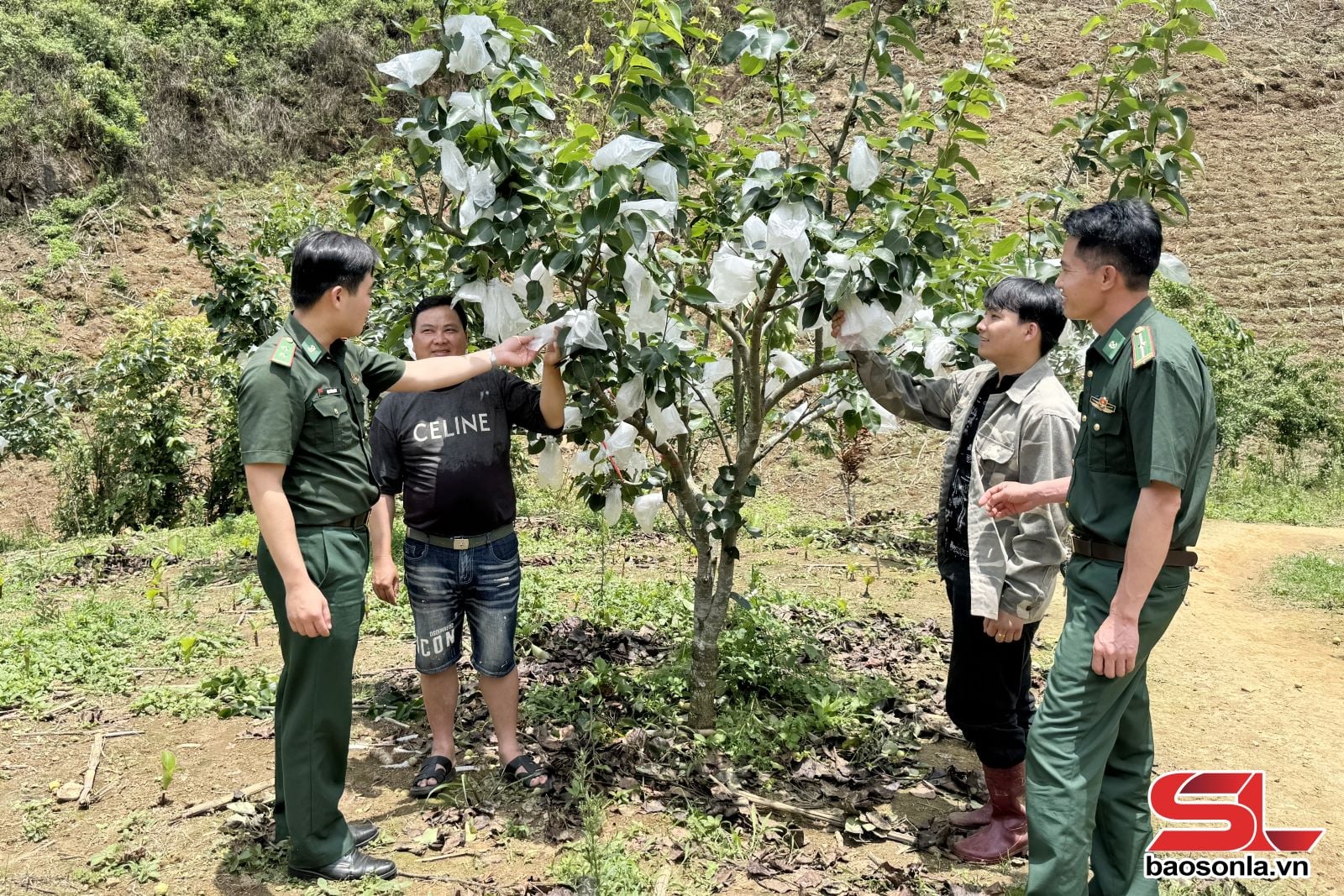
Following the motto "three close ties, four shared goals," the unit has mobilized all resources to implement various models to support people's economic development, directly providing seedlings, fertilizers, labor, and technical guidance to help people confidently change their crop and livestock structures. Since 2017, the unit has built a fruit tree planting model, selecting 5 households in Pa Kha I village to participate in planting 4.7 hectares, with a total support of over 200 million VND, including purchasing seedlings, fertilizers, providing labor support, and training in planting and caring techniques. The fruit tree model has been effective, increasing income for households and becoming a destination for people in the area to visit and learn from.
Standing amidst his 1-hectare plum orchard, currently in harvest season, Mr. Phàng Lao Lang from Pa Kha I village couldn't hide his happiness as he reflected on his family's journey through hardship. For him, the yield of 12-13 tons of fruit, bringing in over 100 million VND annually, is not just a number, but a lifeline that truly helped his family escape poverty. Looking at the branches laden with plums, this border farmer deeply feels the companionship of the soldiers in green uniforms. He is proud and grateful to the soldiers of Chiềng Tương, who, undeterred by sun and rain, guided him from the very beginning, and stood by his side until the sweet fruits of his labor were finally harvested.
Pa Kha I village currently has 146 households, but thanks to significant transformation, the number of poor households has decreased to 26 and near-poor households to 30. Witnessing the daily changes in his homeland, Mr. Giang A Tu, Party Secretary and Head of Pa Kha I village, could not hide his emotion and pride. In the mind of the village leader, the revival of this land is closely linked to the image of the soldiers in green uniforms of the Chieng Tuong Border Guard Post. He deeply feels that the dedication of the soldiers, from providing seedlings and livestock, guiding techniques, to the days of hard work helping people harvest agricultural products, has instilled confidence in the people. Thanks to that solid support, the villagers boldly abandoned corn and cassava cultivation to green the hillsides with plums, longan, passion fruit, and develop livestock farming, opening a new, more prosperous chapter for the village.
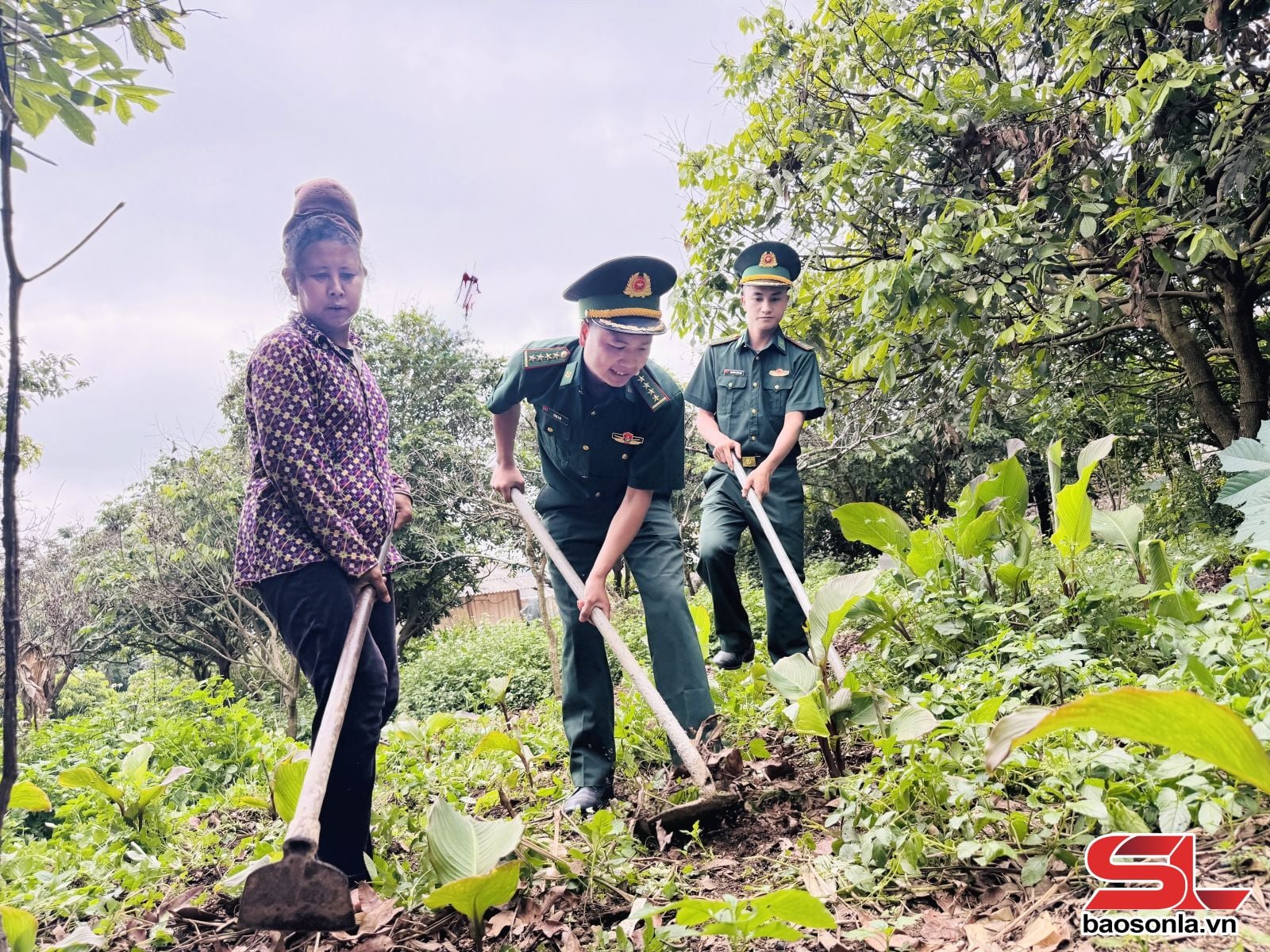
Beyond simply providing food for the villagers, border guards also illuminate the hamlets with the "Borderland Lighting" model. Solar-powered lights not only brighten the rough village roads but also raise awareness among the people about eradicating outdated customs and preserving the cultural heritage of their ancestors. Similarly, the "Rice Savings Jar" model collects handfuls of rice from the soldiers' rations, accumulating over 300 kg annually to deliver to impoverished households and those in particularly difficult circumstances during the lean season, further strengthening the solidarity between the military and the people in the border region.
Sowing seeds of prosperity in the border region.
Leaving Long Phieng, we traversed winding mountain passes to reach Long Sap border commune – an area still facing many difficulties with nearly 1,300 poor households, accounting for 56.3% of the population. This presents a challenging problem for the local government in the work of sustainable poverty eradication.
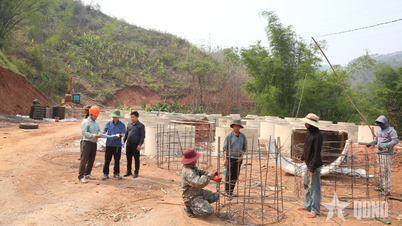
Identifying the bottleneck in poverty eradication efforts in Long Sap as outdated farming practices, Lieutenant Colonel Tran Nam Hung, Commander of the Long Sap International Border Gate Border Guard Station, directed his unit to deploy personnel to key areas such as Phieng Cai, Buon, and Pha Don to directly transfer scientific and technical knowledge to the people. Evaluating the past five years, Lieutenant Colonel Hung affirmed that the effectiveness of fruit tree cultivation, intensive tea farming, and livestock breeding models is proof of the unit's correct approach. This success highlights a profound lesson: effective community mobilization only truly works when soldiers proactively bring scientific knowledge to the people, fostering a spirit of self-reliance to help them rise out of poverty sustainably.
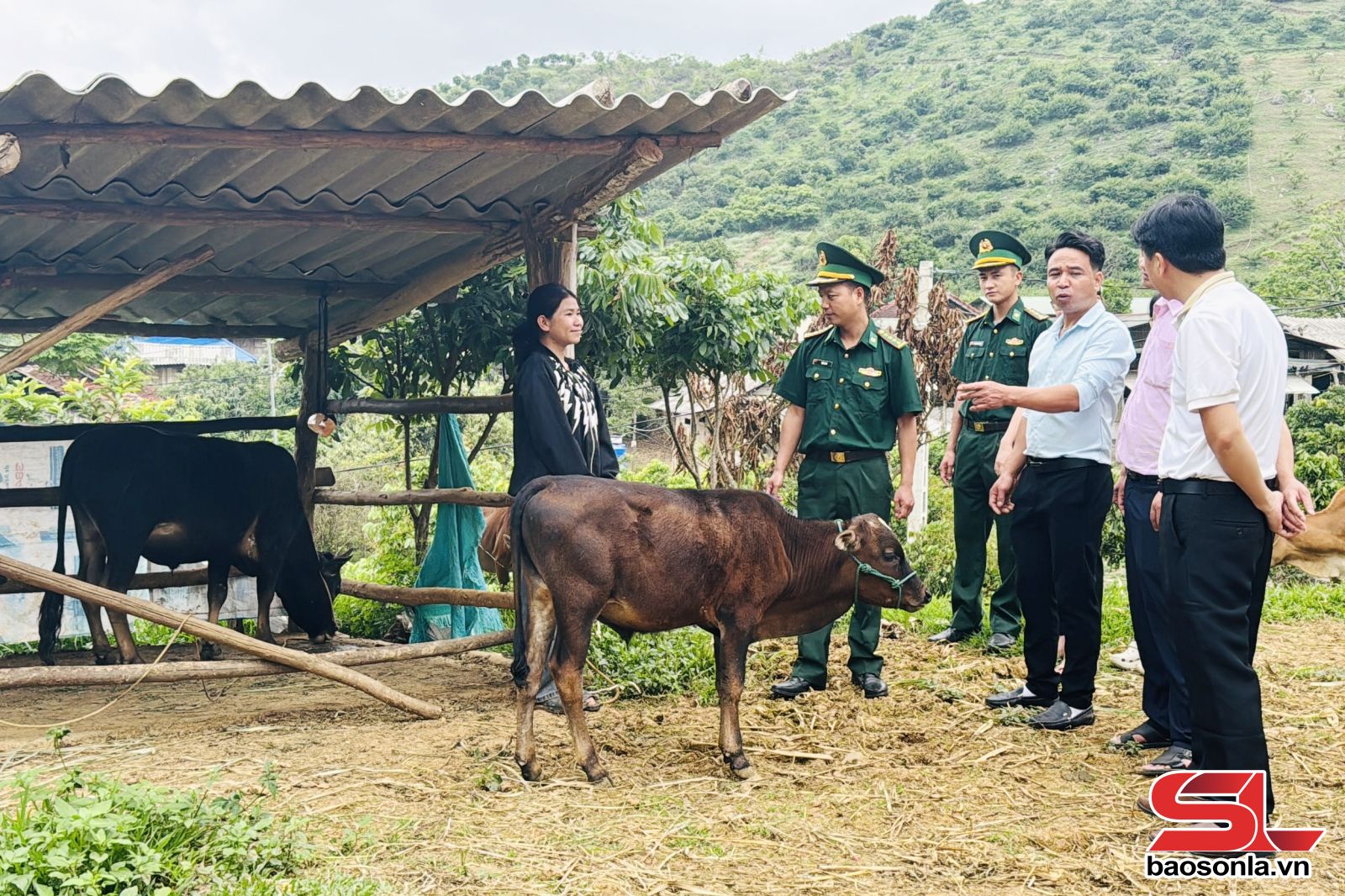
Evaluating the contributions of the border guard force to the development of the area, Comrade Tran Van Son, Secretary of the Party Committee and Chairman of the People's Council of Long Sap commune, affirmed: The companionship of the Border Guard is of great importance to the locality. The officers have actively helped the people alleviate poverty, transform the structure of crops and livestock, and closely coordinate with the commune's Party committee and government to strengthen the grassroots political system and maintain security and order. As a result, the people's trust in the Party, the State, and the Army has been increasingly strengthened, creating high consensus in the socio-economic development of the locality.
Long Phieng and Long Sap are just two of the border communes receiving effective support from the Border Guard. From 2020 to 2025, the Son La Provincial Border Guard mobilized over 30 billion VND to implement many practical livelihood models, such as: planting 2.6 hectares of passion fruit in Long Sap, 4.7 hectares of plum trees in Chieng Tuong, and over 3,000 macadamia trees in Xuan Nha, Muong Lan, and Muong Leo communes; and donating over 300 breeding livestock to poor households on both sides of the border. Besides supporting economic development, the units also performed well in social welfare work by maintaining regular assistance for over 60 disadvantaged students and providing over 5.2 tons of rice through the "Rice Savings Jar" model. In particular, the provincial border guard force has closely coordinated with local authorities to maintain self-management by over 4,200 households and more than 17,300 individuals along more than 274 km of border, contributing to firmly consolidating the "people's support" in the nation's border region.
Looking ahead, Colonel Nguyen Danh Tue, Deputy Commander and Chief of Staff of the Son La Provincial Border Guard Command, is always concerned about ensuring a sustainable livelihood for the people in the mountainous regions. Regarding future tasks, he affirmed that the unit will focus on reviewing the actual needs of each village to advise on replicating suitable economic models. The core issue is strengthening the presence of technical staff in the area to guide people in applying science and technology to production. In particular, the fundamental solution that the Command is focusing on is promoting linkages with businesses to ensure stable markets for agricultural products, helping the people in border areas break through and escape poverty sustainably.
With the support of the Border Guard through economic development models, people in border areas have changed their production mindset, increased their income, and contributed to consolidating the "people's support" in the nation's border region, protecting the complete sovereignty and security of the national border.
Source: https://baosonla.vn/quoc-phong-an-ninh/diem-tua-long-dan-noi-bien-gioi-C5szLnxvg.html


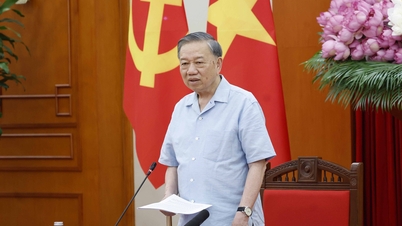
![[Photo] General Secretary and President To Lam presides over a meeting on preparations for the review of one year of operation of the three-tiered government system.](https://vphoto.vietnam.vn/thumb/1200x675/vietnam/resource/IMAGE/2026/06/02/1780391821195_a1-bnd-4595-9717-jpg.webp)






















































Comment (0)