

Infrastructure facilities such as electricity, water, and telecommunications will be required to pay road usage fees according to the new regulations. The specific amount to be collected is currently being considered and calculated by the relevant authorities.
Identify the components of rental price.
According to the Road Law 2024, which will take effect from January 1, 2025, revenue from the exploitation and use of technical infrastructure facilities shared with roads is one of the sources of revenue for investment, construction, management, operation, exploitation, and maintenance of road infrastructure.
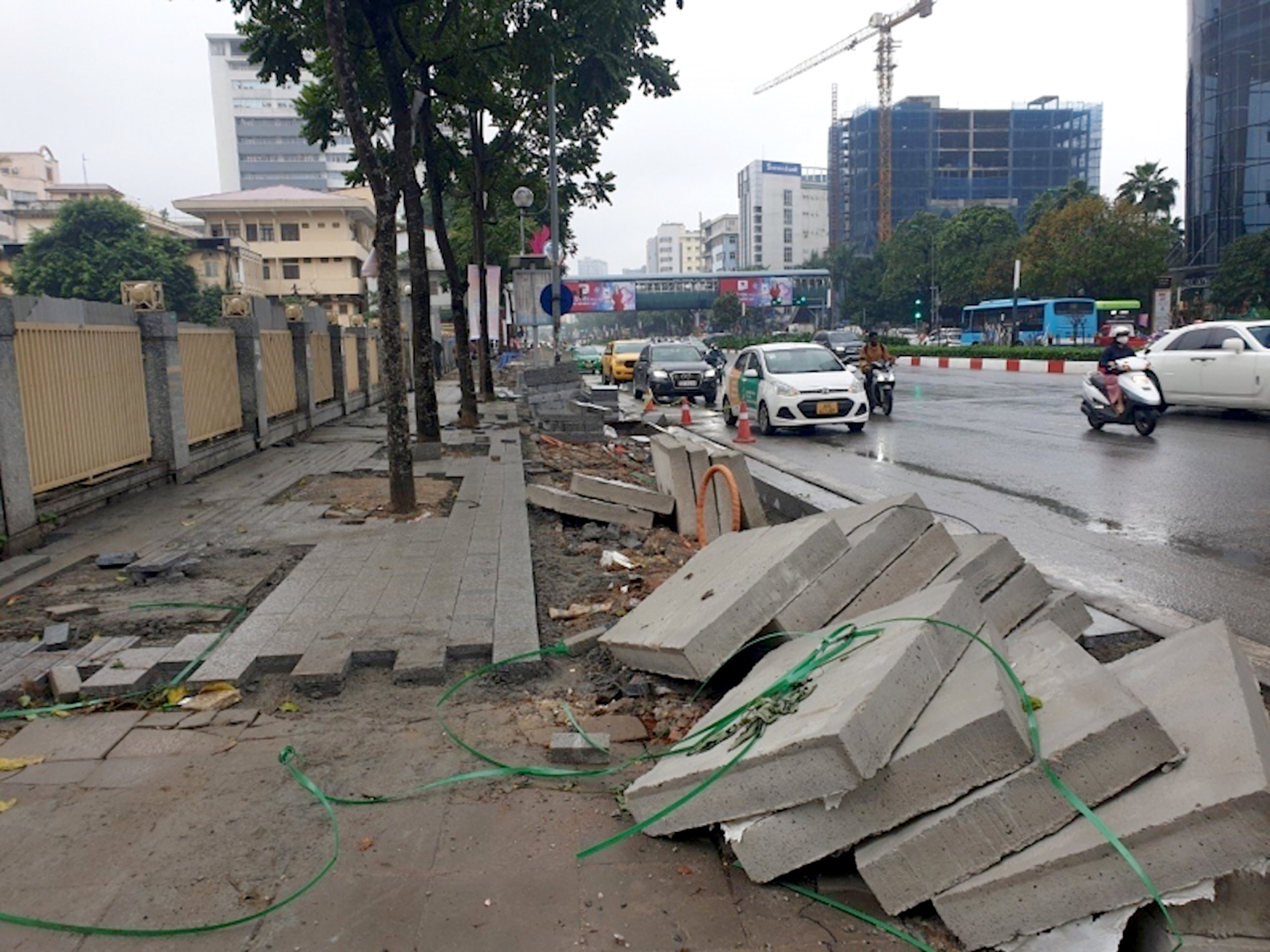
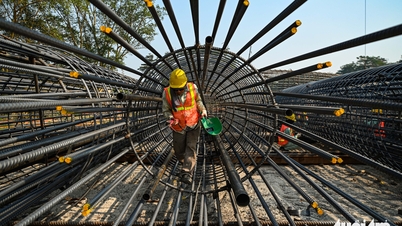
Road infrastructure fees will be calculated in accordance with the scale of each engineering project (illustrative image).
A representative from a water supply company stated that they are willing to pay for the use of road infrastructure. However, they believe that the fee should be clearly defined based on usage levels, with companies that use more water paying more.
According to Dr. Truong Thi My Thanh from the University of Transport Technology, first and foremost, the rental price needs to be determined based on costs. This means considering the cost components for investing in technical infrastructure projects, and how much money is required for operation and maintenance.
Secondly, there is the approach of comparing rental prices with commercially equivalent products and services to determine appropriate rental rates in accordance with general principles.
Sharing the same view, Mr. Nguyen Van Quyen, Chairman of the Vietnam Automobile Transport Association, believes that with the increasing number of entities using road infrastructure, it is appropriate to allocate a portion of profits to cover usage costs.
"That's the regulation, but we need to differentiate between types of investment projects. For example, the fees for state-funded road projects are different from those for private investment projects," Mr. Quyen said.
Prepare a proposal for submission to the competent authority for approval.
A representative from the Finance Department of the Vietnam Road Administration said that collecting technical infrastructure fees is a new field. Input costs such as the investment cost of a road, the cost of constructing shared technical infrastructure, road depreciation, etc., will be aggregated and then divided to determine the rental fee. "However, this is only an approximation," the representative said.
According to Mr. Le Hong Diep, Head of the Traffic Management Department of the Vietnam Road Administration, the most difficult part is calculating the fees, because the fees must be appropriate to the scale of each engineering project.
According to Mr. Diep, determining the original cost to calculate input costs, and then determining the rental price, also involves various levels. For example, the cost of installing water pipes depends on the terrain and location; the cost of installing water pipes beforehand, along with road renovation and upgrading, differs from the cost after the road has been put into operation.
"The input costs for producing thousands of cars are the same, but for technical infrastructure, each road has a different way of calculating input costs," Mr. Diep explained.
Furthermore, whether land acquisition costs are included in the rental price is also a crucial consideration. For example, if the cost of land acquisition for 1km of national highway is approximately 20 billion VND, should this amount be included in the shared infrastructure costs? While this might be waived for small-scale projects, it is unreasonable to exclude land acquisition costs from the rental price for large-scale electrical and telecommunications infrastructure projects.
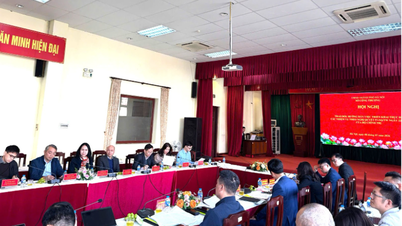
According to Decree 44/2024 on the management, use, and exploitation of road transport infrastructure assets, in order to collect fees for shared use of road infrastructure for electricity, telecommunications, domestic water, etc., a project proposal must be prepared and submitted to the competent authority for approval.
All factors such as determining the fee level, the collecting unit, and the revenue source will be specifically calculated in the upcoming proposal, ensuring that the collection is truly effective and does not cause negative impacts, with careful consideration of the fee level and management mechanism.
The more you use, the higher the fee.
Many people are concerned that applying road infrastructure usage fees could increase costs for electricity, water, and telecommunications companies. These costs could then be passed on to consumers through increased service prices.
However, according to Associate Professor Dr. Nguyen Hong Thai, Faculty of Transport and Economics , University of Transport, collecting road infrastructure usage fees would be fair to businesses. Once fees are collected, they must be accounted for, and this will affect general costs and the consumption expenses of the people.
"Just like gasoline, electricity, and water, all of these will be input factors, adding up to the cost. We must explain this so that people will cooperate and share the burden," Mr. Thai stated.
Regarding this issue, a representative from the Vietnam Road Administration said that in the future, when developing the plan, the principle for classifying and adjusting road infrastructure usage fees will be based on the level of usage and impact on the infrastructure of each enterprise. This will help ensure fairness and reasonableness.
"Businesses that use the service extensively and have a significant impact will pay higher fees than those that use it less. This will not significantly affect the service prices of businesses," this person affirmed.
According to the Road Law, the financial resources for investing in, constructing, managing, operating, exploiting, and maintaining road infrastructure that are paid to the State budget include: Road usage fees collected per vehicle for automobiles; expressway usage fees collected from vehicles traveling on expressways invested in, owned, managed, and operated by the State; State revenue related to the exploitation and use of road infrastructure; revenue from the exploitation and use of technical infrastructure facilities shared with roads; and other legitimate revenue sources as prescribed by law.
Source: https://www.baogiaothong.vn/dien-luc-vien-thong-se-tra-phi-ha-tang-duong-bo-192250310210136539.htm


































































































Comment (0)