Creating urban identity
Joining the UNESCO Creative Cities Network demonstrates the transformation of urban heritage into a resource for development. Hanoi , with its thousand-year history, is witnessing a transformation into a city of design and creativity. Heritage is being redefined and is present in the lifeblood of traditional craft streets and villages, as well as cultural and artistic activities. The Phung Hung mural space, the 22 Hang Buom Cultural and Art Center, and the Complex 01 (renovated from an old printing factory) are the results of collaboration between the government, artists, and the people.
.jpg)
Meanwhile, the ancient town of Hoi An ( Da Nang ) offers a new interpretation of the connection between heritage and community livelihoods. This creative city, excelling in handicrafts and folk art, is nurtured by the talent of artisans from Kim Bong carpentry village, Thanh Ha pottery village, and the traditional folk singing troupes along the Hoai River. Upon joining the Creative Cities Network, Hoi An doesn't need to construct grandiose buildings or large-scale art spaces; instead, it should protect and promote its existing values, allowing its people to tell their own cultural stories.
Similarly, Da Lat – a creative city in the field of music – is not limited to concert halls but resonates from the cultural spaces of ethnic minorities' gong music; from nostalgic cafes; or from vibrant events amidst pine hills… From July 2025, the old Da Lat city will be divided into 5 wards. Based on this, in early April 2026, the Steering Committee for UNESCO's Creative City of Music in Lam Dong province issued a plan to implement activities to promote this title in the 2026-2027 period, in coordination with the authorities of all 5 wards. This aims to realize initiatives, maintain the title; honor musical ideas and practices; and preserve and promote the value of traditional music…
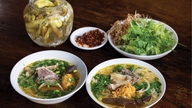
In Hue, history and culture are preserved and elevated into brands such as Hue - the culinary capital, Hue - the ao dai capital, etc., becoming an important foundation towards becoming a future heritage city. Meanwhile, Ninh Binh is shaping its urban brand associated with the unique historical and cultural space of the ancient capital of Hoa Lu, using this as an advantage and driving force to elevate itself into a typical millennium heritage city…


Clearly, a creative city is not just a title, but a commitment to action. In such a city, preservation goes hand in hand with promoting the value of cultural heritage, and the community participates in the process of creating value.
New vision, new thinking, new management capabilities.
According to experts, for sustainable development, Vietnamese cities need a comprehensive reform. This includes empowering cities with autonomy based on their unique characteristics, emphasizing the preservation of cultural identity in architecture and lifestyles, and focusing resources on investing in digital infrastructure to build highly competitive, innovative urban models.
On December 8, 2025, the Politburo issued Conclusion No. 224-KL/TW on continuing to implement Resolution No. 06-NQ/TW on planning, construction, management, and sustainable development of Vietnamese cities until 2030, with a vision to 2045. Resolution 06 clearly states that it is necessary to “combine synchronously and harmoniously the renovation, upgrading, and reconstruction of urban areas with the development of new urban areas, ensuring modern urban architecture, rich in identity, and preserving and promoting distinctive cultural elements.” At the same time, it emphasizes “researching and perfecting specific mechanisms, policies, standards, and regulations for the construction and selection of sustainable urban development models suitable for each region, especially in mountainous and plateau areas, areas of strategic importance for national defense and security, and cities with many historical relics, cultural heritage, and natural landscapes that need to be preserved and protected.”
The Ministry of Culture, Sports and Tourism is seeking feedback on the draft Decree detailing certain provisions and guiding the implementation of Resolution No. 28/2026/QH16 of the National Assembly on the development of Vietnamese culture. The draft proposes criteria for piloting a cultural heritage city model, clearly stating that local authorities implementing the pilot model will have the authority to decide on preferential mechanisms and policies regarding land use, fees, and charges. This could be a necessary boost to promote the development of heritage cities and creative cities.
The reality demands a comprehensive approach to preserving urban heritage, considering it within a broader context and awareness. It is necessary to select specific locations and cultural forms, including tangible and intangible heritage and traditional crafts, to focus on maintaining within the overall development framework. Simultaneously, a clear policy framework is needed to support and address the situation where many urban heritage sites are being lost due to societal changes and economic pressures.


According to architect Pham Thanh Tung, Chief of the Central Office of the Vietnam Association of Architects, the history of Vietnamese cities mostly originated from areas where communities lived by farming and trading, rather than from industrial production areas or seaports like European cities. Therefore, Vietnamese cities, from their very inception, contained a wealth of tangible and intangible heritage and rich, unique natural landscapes.
"Building Vietnamese cities, including heritage cities, in a sustainable direction requires a new vision, a new way of thinking, and a new management capability so that cities can truly be honest mirrors reflecting the times," architect Pham Thanh Tung observed.
Source: https://daibieunhandan.vn/dinh-vi-di-san-trong-do-thi-10420403.html
![[Image] Ho Chi Minh City: Ma Lang area, Chicken-Rice Market about to change its appearance](https://vphoto.vietnam.vn/thumb/1200x675/vietnam/resource/IMAGE/2026/06/25/1782377698627_ndo_br_m1-jpg.webp)

![[Photo] General Secretary and President To Lam receives Palestinian Ambassador Saadi Salama](https://vphoto.vietnam.vn/thumb/1200x675/vietnam/resource/IMAGE/2026/06/25/1782365384740_a1-bnd-9423-8322-jpg.webp)
![[Image] Schools organize meetings and introduce teaching models to students admitted to grade 10.](https://vphoto.vietnam.vn/thumb/1200x675/vietnam/resource/IMAGE/2026/06/25/1782368077271_ndo_br_z7970052192242-1ec8daeb77a6eed1a4e9f58c564ddd3e-jpg.webp)





![[Video] Readying a plan for safe and continuous domestic water supply for residents of Chan May-Lang Co](https://vphoto.vietnam.vn/thumb/402x226/vietnam/resource/IMAGE/2026/06/26/1782432301787_hue-jpg.webp)