

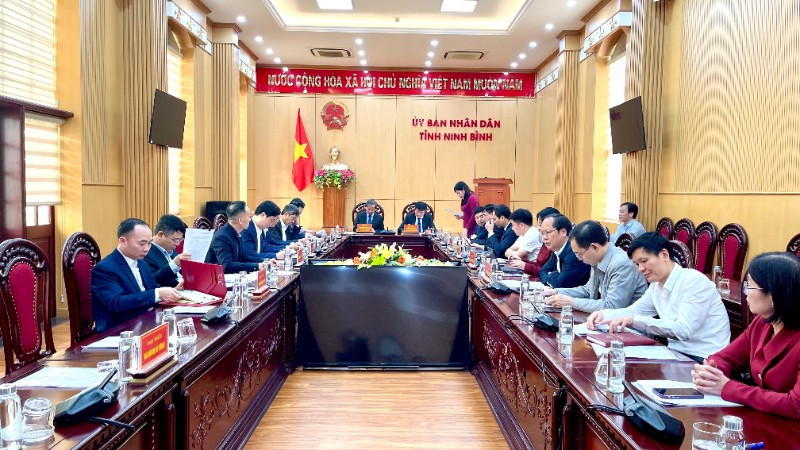
Following the merger, Ninh Binh province has a very large education system with 1,607 preschool, primary, secondary, and continuing education institutions, including 1,570 public institutions; a total of 28,579 classes with over 954,000 preschool children, primary and secondary school students, and continuing education learners.
The school network is widely distributed and diverse in type, basically meeting the learning needs of the people. The entire province has over 58,000 administrators, teachers, and staff in preschool and general education; the teaching staff at all levels meet high training standards.
School infrastructure has received significant investment, with 99% of classrooms being structurally sound; and over 96% of public kindergartens and primary and secondary schools meeting national standards.
The province has promptly stabilized its organizational structure and arranged working and living conditions for its staff; the management and operation of the sector have been maintained smoothly without interruption; the results of universal preschool education for 5-year-olds, universal primary and lower secondary education at level 3, and literacy eradication at level 2 have been firmly maintained; and the quality of mass and advanced education has been maintained and improved.
The results of the 2025 High School Graduation Exam ranked 3rd nationwide in terms of average exam scores; the advanced education system achieved many outstanding results in national student competitions and intellectual contests.
The education sector has completed updating 100% of its data, synchronizing it with the National Population Database; implemented digital student records according to the roadmap; and promoted the application of information technology, digital transformation, and administrative reform, contributing to reducing management pressure under the two-tiered local government structure.
Regarding the reorganization of educational institutions, the province maintained the stability of 92 public high schools; retained 20 vocational education and continuing education centers and 1 continuing education and career guidance center in Phu Ly; renamed some training centers; completed the reorganization of 12 schools into 6 schools in some communes; and is continuing to implement the plan, with plans to reorganize 150-200 small-scale schools in the near future…
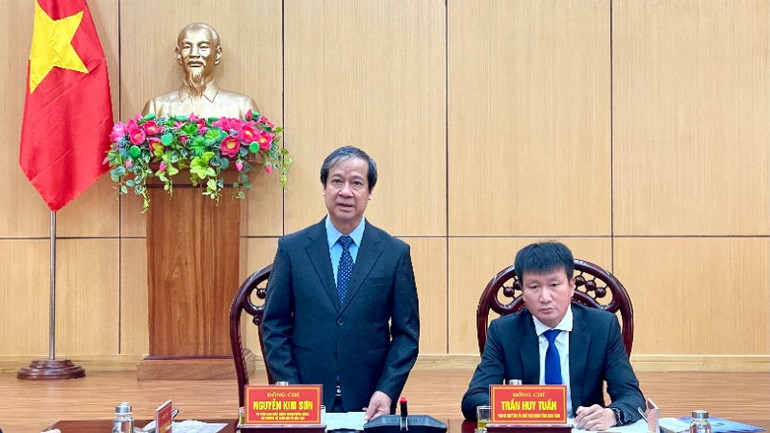
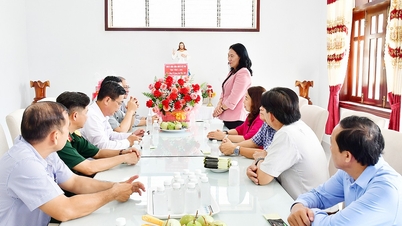
Speaking at the meeting, Minister of Education and Training Nguyen Kim Son emphasized that reviewing and reorganizing educational institutions in Ninh Binh province is an important task that must be completed in 2025, ensuring that it does not cause disruption or affect teaching and learning.
The Minister noted that the arrangement of educational institutions must facilitate management, improve quality, avoid merging preschools into general education schools, and prioritize the merger of small, substandard institutions.
In addition, the province needs to review the entire private school system; prepare the conditions for universal preschool education for children aged 3 to 5; make full use of existing staffing quotas; focus on training and developing teachers, aiming to make English a second language; build an education development strategy, establish multidisciplinary universities and a plan to improve the quality of education throughout the province… in order to seriously and effectively implement Resolution No. 71-NQ/TW dated August 22, 2025 of the Politburo on breakthroughs in education and training development.
Source: https://nhandan.vn/doan-cong-tac-cua-bo-giao-duc-va-dao-tao-lam-viec-tai-ninh-binh-post931601.html


![[Photo] Prime Minister Pham Minh Chinh attends the Conference on the Implementation of Tasks for 2026 of the Industry and Trade Sector](/_next/image?url=https%3A%2F%2Fvphoto.vietnam.vn%2Fthumb%2F1200x675%2Fvietnam%2Fresource%2FIMAGE%2F2025%2F12%2F19%2F1766159500458_ndo_br_shared31-jpg.webp&w=3840&q=75)















































































Comment (0)