

In 2009, Dang Thi Phuong Thao moved to Thanh Nien Newspaper and began a new journey as Deputy Editor-in-Chief. Her work involved reading and reviewing articles across various fields, within a tight schedule typically from 4 PM to evening, day after day. Later, in an interview, she said: "I wasn't afraid to change my field of work, even though many people said I had never worked in journalism before… Although I had never directly written articles like a reporter, I could completely handle organizing topics, thanks to my experience managing the press while working at the Central Youth Union."
However, a newspaper executive with strong writing skills would have a significant advantage in the daily editing and manuscript processing tasks.
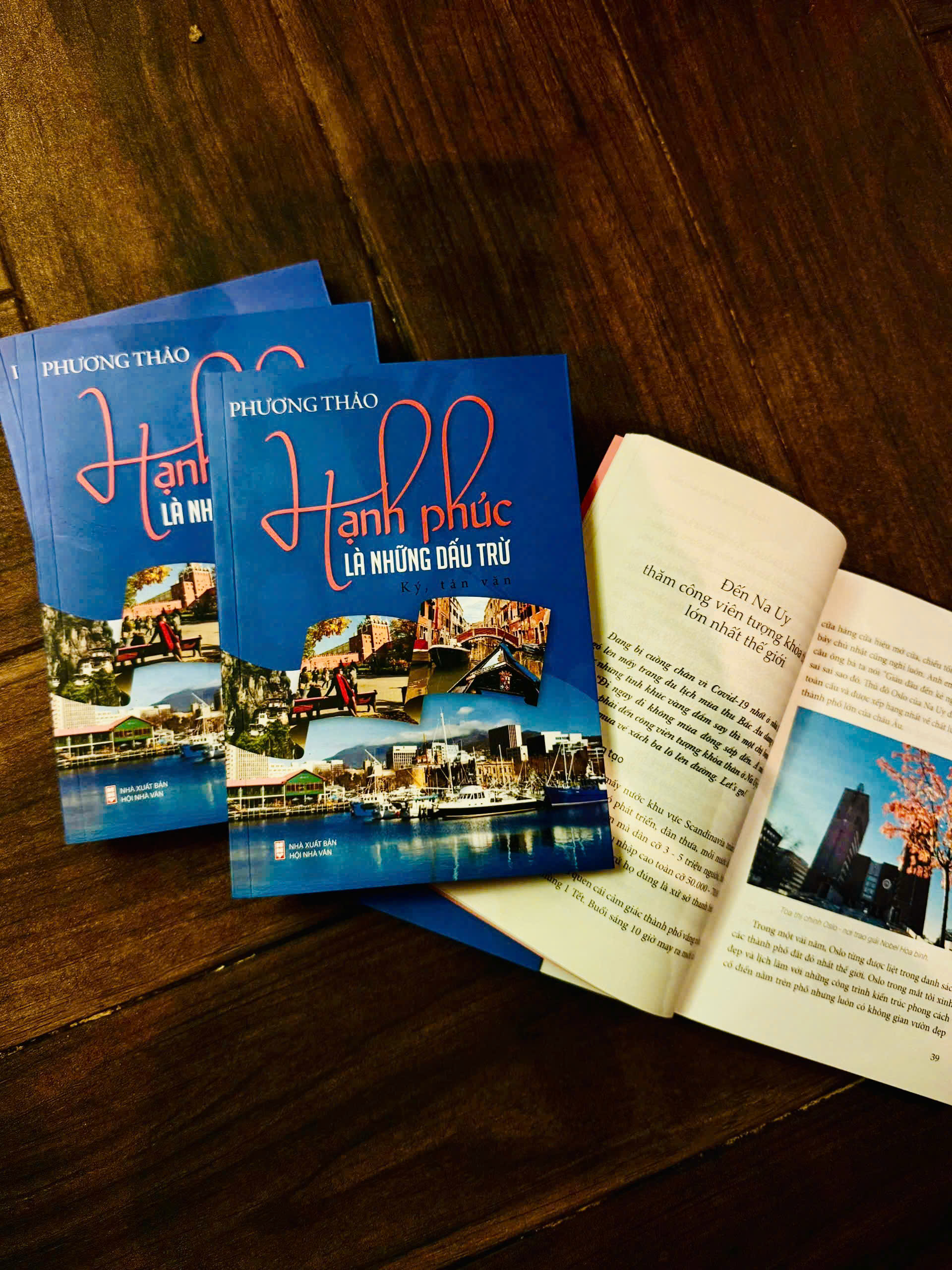
The book "Happiness is a Number of Negatives" reflects many experiences from the journalism profession.
PHOTO: PROVIDED BY THE SUBJECT
In the collection of essays and memoirs, "Happiness is a Number of Negatives ," we can see the journey of journalist Dang Thi Phuong Thao in her writing career. A female journalist who "rose through the ranks of newspaper leadership." This journey is particularly evident in the first part of the book, "Long Journeys in the Blue Eyes ," with her notes from each long trip abroad, across many continents.
Eyes
Throughout her journey across many countries, her travelogue is mostly rich in statistical details and summarized historical stories, forming a well-organized body of information that allows readers to easily immerse themselves in the situations she recounts. Her observations are also diverse, with each object presented through a series of consecutive descriptions. Readers see a 1:1 scale replica of the One Pillar Pagoda in the center of the city, just like the one in Hanoi. They also see a writer, translator, poet, and businesswoman who, despite owning only a dilapidated car, proudly driving alongside Mercedes and Bentleys… Description and description—that is the eye of a journalist, and throughout the book, she demonstrates a constant pursuit of this detailed perspective. A perspective that prevents people from being "bitter" by speculation or overthinking.
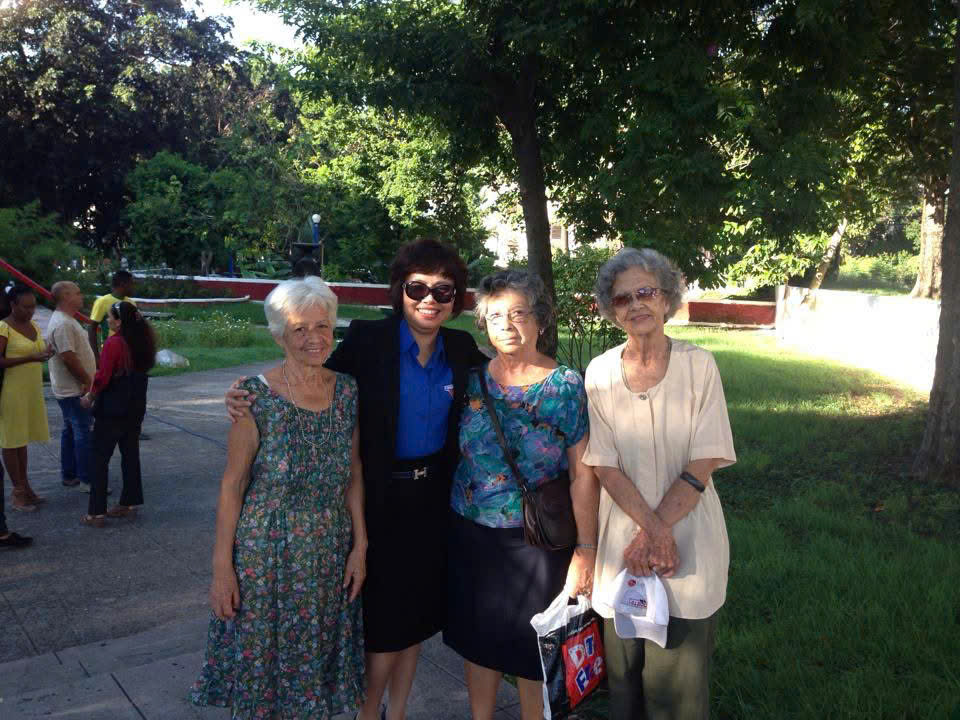
Journalist Dang Thi Phuong Thao (second from the left) during a work trip to Cuba.
PHOTO: PROVIDED BY THE SUBJECT
Besides attention to detail and information management—skills that can be acquired through persistent practice—the writings in "The Long Journey of Blue Eyes" also possess a more difficult quality to cultivate: compassion. In contemporary terms, the book explores the thoughts and feelings of those in the humanities and social sciences, a field that many world- renowned universities have been scaling back in recent years due to low demand. The author keenly "picks up" on Vietnamese customs abroad, the hardworking spirit of people from Central Vietnam establishing themselves far from home, and the pride expressed in the country's introductions in Pyongyang (North Korea)…
The most interesting thing about reading her essays is waiting to see the "conflict." What will prevail when Dang Thi Phuong Thao embodies a blend of many identities: journalist, politician , explorer, compassionate woman seeking healing, and someone with extensive experience from the period of the centrally planned economy to the period of reform in Vietnam? Therefore, her writings upon her return from Pyongyang, Cuba, and Yalta, the place that divided the world into two poles, become even more fascinating. They even challenge the political persona within her.
She navigates these situations with remarkable balance. In Pyongyang, she recounts food shortages alongside proud subway stations, libraries with reading habits, and the dream of "drinking beer and listening to my wife play the piano every evening after work." In Yalta, alongside the cold world order, there's a very human story of "the woman and the little dog," familiar to Vietnamese people from the Soviet era… This balance demonstrates a choice of core values and humanism in each piece of writing.
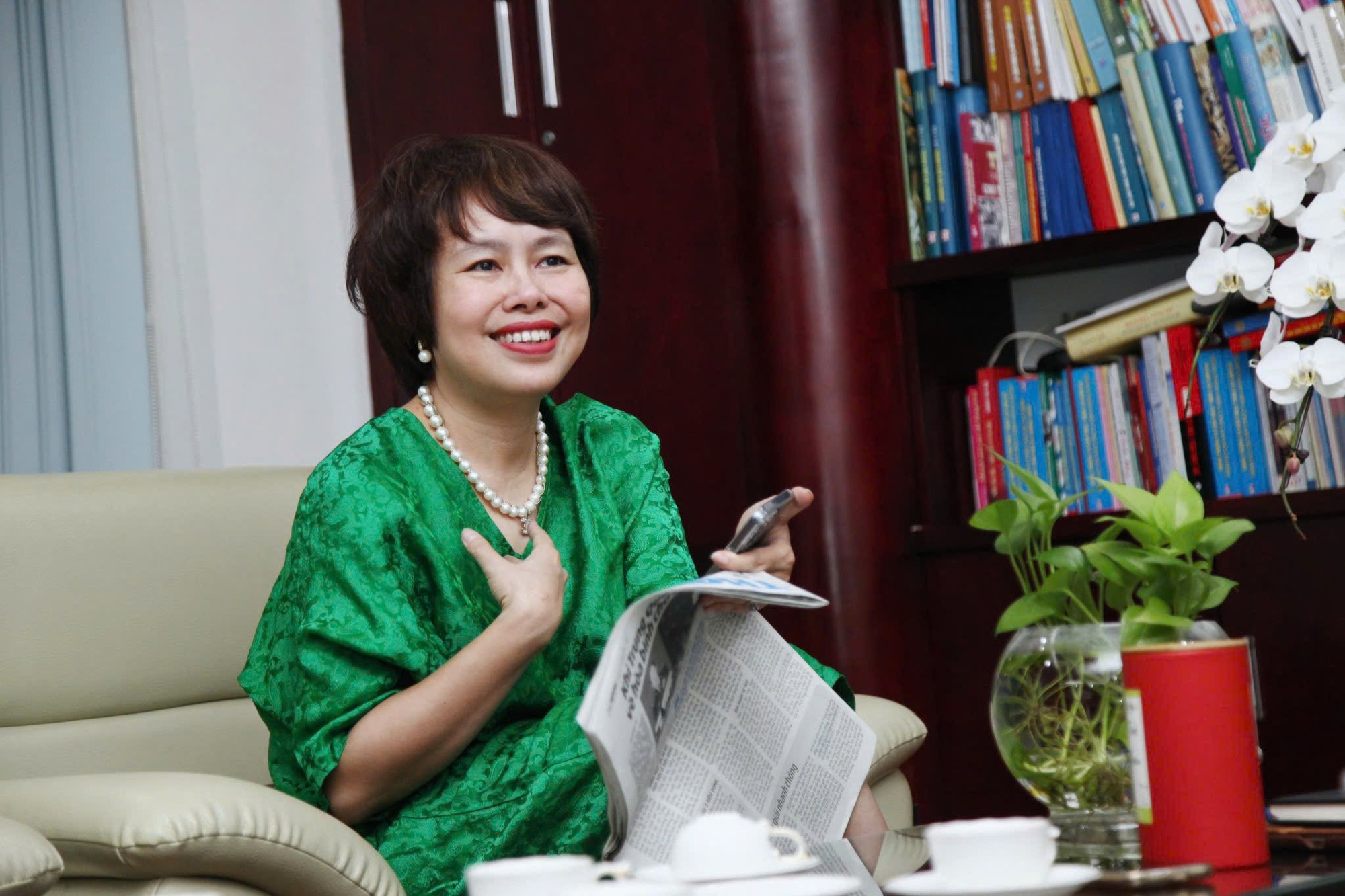
The author in an interview.
PHOTO: PROVIDED BY THE SUBJECT
MOMENTS OF SILENCE
With the same detailed observation and humanistic perspective, author Dang Thi Phuong Thao also opens her home, sharing family memories and very personal reflections through the section "Changing Seasons ." In these essays, there are parts about family and parents that may evoke a sense of nostalgia for the past in the reader.
Perhaps Phuong Thao is fortunate to have an exemplary family: a father renowned for his writing talent, who wrote the beloved Dong Tien Van Lich (a traditional Vietnamese opera); a mother beautiful both in appearance and in her ability to manage the household while her husband was engrossed in his writing; and siblings who love each other deeply. More than anything, it's a family that has maintained its cultural traditions and customs for many years. Therefore, her stories about her grandmother caring for her daughter and daughter-in-law during their postpartum period, and the grandchildren being fortunate enough to be bathed in green tea water to keep their skin clean and fragrant, evoke both surprise and emotion. This "effect" is repeated when reading her article about Mid-Autumn Festival snail feasts, a tradition that few people know well anymore, and even fewer have practiced regularly for decades. From that family perspective, the author is someone who was dealt "a beautiful hand," born "almost at the finish line."
The memoir and essay collection "Happiness is a Number of Negatives " is a writing and sharing journey by journalist and family member Dang Thi Phuong Thao. And even with a "beautiful hand of cards," like everyone else, she also has her moments of quiet reflection. Many of the writings contain small stories that show her moments of silence, followed by finding ways to forgive and heal herself and her life. The book doesn't tell the story of whether she succeeded or truly healed, but with its serious writing style, gentle demeanor, and the wisdom she gained from her family, one can imagine peaceful and happy days ahead.

Source: https://thanhnien.vn/doi-mat-biec-nhin-hanh-phuc-185260529202854883.htm

![[Photo] General Secretary and President To Lam and the President of the Philippines hold talks.](https://vphoto.vietnam.vn/thumb/1200x675/vietnam/resource/IMAGE/2026/06/01/1780286997787_anh-man-hinh-2026-06-01-luc-11-09-43.png)

























































Comment (0)