

 |
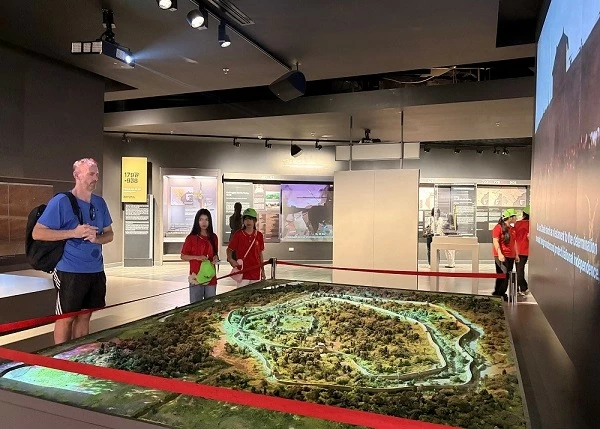
| Modern exhibition and simulation space at the Vietnam Military History Museum. (Photo: Mai Huong) |
According to data from the Hanoi Department of Tourism , in the first quarter of 2026, the capital city welcomed approximately 8.82 million tourists, including about 2.4 million international visitors, an increase of nearly 28.7% compared to the same period last year.
Notably, an increasing number of international tourists are choosing to explore Hanoi's historical sites as an important part of their Vietnam experience.
Through these trips, the image of a country rich in tradition, having gone through war but still steadfastly preserving its culture and identity, is naturally spreading to friends around the world.
History is present in every space.
As the political and cultural center of Vietnam through many dynasties, Hanoi possesses a unique system of historical sites, museums, and cultural spaces. In this thousand-year-old city, history is not only found in books or old documents, but is also present in everyday life.
In the morning at Thang Long Imperial Citadel, streams of international tourists silently pass through Doan Mon Gate, pausing before the ancient palace foundations or archaeological excavation pits deep underground. This UNESCO World Heritage site is like a vast layer of sediment recounting the journey of more than a thousand years of the ancient capital of Thang Long.
Meanwhile, the Temple of Literature - National University offers an atmosphere of antiquity, solemnity, and scholarship. Amidst the green trees and time-worn tiled roofs, many foreign visitors attentively learn about the ancient Confucian examinations, the tradition of studiousness, and the Vietnamese people's respect for knowledge. The doctoral steles placed on the backs of stone turtles are evidence that education has been valued by the Vietnamese people for hundreds of years.
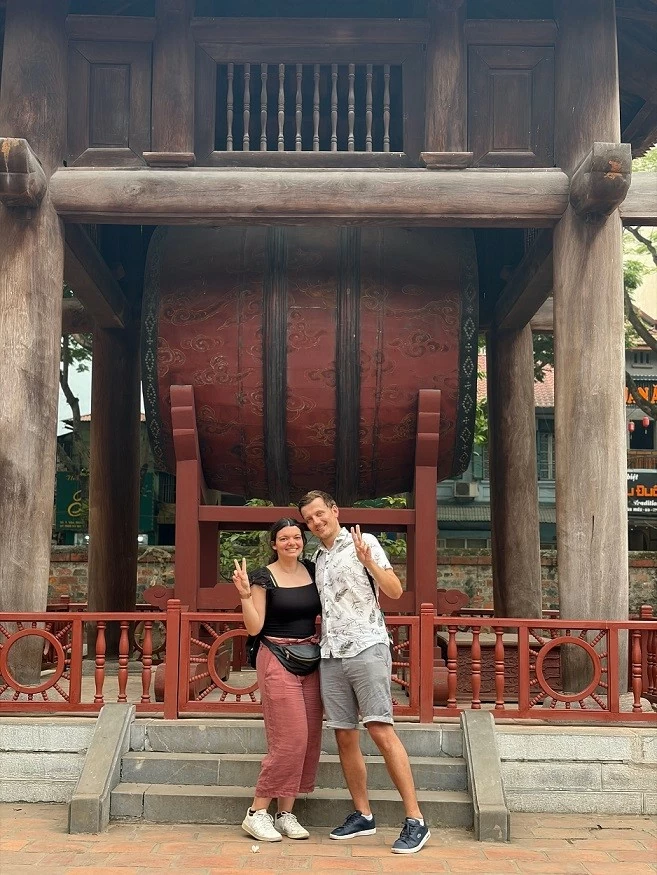 |
| International tourists take commemorative photos at the Temple of Literature - National University and share that they will encourage their friends to visit historical sites in Hanoi. (Photo: Mai Huong) |
Besides its ancient heritage sites, Hanoi also boasts a large system of museums such as the Vietnam Military History Museum, the National History Museum, and the Hoa Lo Prison historical site. These are popular destinations for international tourists thanks to their storytelling through artifacts, images, and modern projection technology.
On international travel platforms such as Tripadvisor, Booking.com, Klook, and Lonely Planet, Hanoi's historical landmarks like Hoa Lo Prison, the Temple of Literature, and Thang Long Imperial Citadel are consistently among the top-rated destinations by international tourists visiting the capital. Many themed historical tours, heritage night tours, and historical reenactment activities are also increasingly attracting international visitors, especially from Europe and the United States.
Experiences that touch the emotions
Many international tourists come to Vietnam with relatively limited knowledge of Vietnamese national history, especially the periods before the 20th century. However, the historical spaces in Hanoi have helped them gain a more complete and profound understanding of this country.
One morning at the Vietnam Military History Museum, Morio, a tourist from the United States, stood for quite a while in front of the exhibition about the Vietnamese people's resistance wars against foreign invaders. He said that before his trip, he only knew about Vietnam through its two wars of resistance against France and the United States. After visiting the museum, Morio was surprised to learn about the heroic, resilient, and indomitable struggle of the Vietnamese people in the past, and from then on, he grew to love the country and its people even more.
What impresses many international tourists is not only the military victories, but also the way the Vietnamese people preserve historical memories as an integral part of modern life.
In many museums in Hanoi, it's not uncommon to see young families bringing their children to visit, students attentively listening to explanations, or young people experiencing virtual reality technology to learn about history.
For many foreign visitors, it is proof that history in Vietnam is not confined to the past but continues to be retold and passed on to the present generation.
Isabelle Martin, a French tourist, said she was particularly moved by her visit to the Hoa Lo Prison historical site. “I had read many documents about the Vietnam War, but only by stepping into this space did I truly understand the brutality of the war and the willpower of the Vietnamese people at that time,” she said.
Meanwhile, many young tourists from South Korea, Japan, or Europe prefer night tours at Thang Long Imperial Citadel or Hoa Lo Prison historical site because of the combination of history and modern performance technology. The lighting, sound, and novel storytelling make history feel close and vivid, instead of just dry numbers or events.
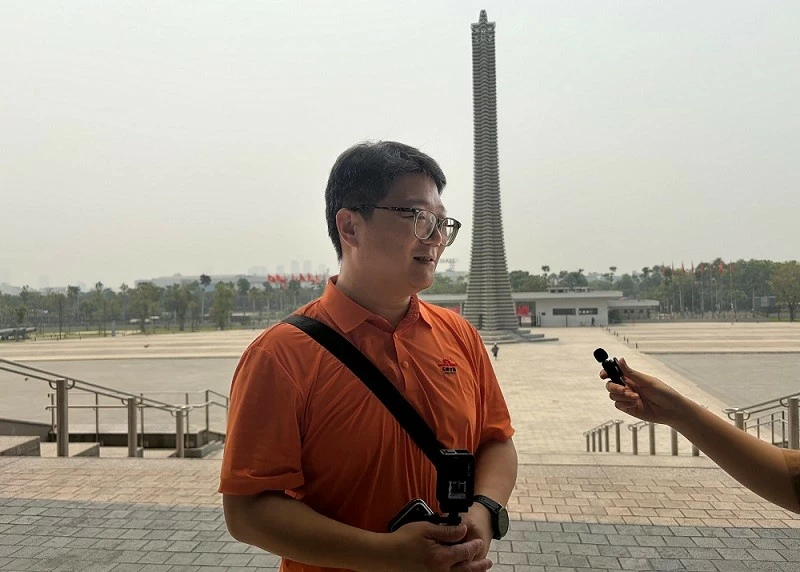 |
| Mr. A Qi enthusiastically shared his impressions after visiting the Vietnam Military History Museum. (Photo: Mai Huong) |
A bridge of cultural diplomacy.
Feedback from international tourists indicates that historical sites in Hanoi are gradually becoming effective in spreading historical values to the international community in a natural, visual, and highly persuasive way.
More than just a sightseeing trip, each exploration of historical sites in Hanoi also helps international tourists become "cultural ambassadors," sharing the story of Vietnam with the world. Through personal experiences, they gain a deeper understanding of a nation that has gone through many historical upheavals but still maintains its resilience and unique identity.
What historical sites and museums offer is not just historical knowledge, but also a transformation in emotions. From knowing little about Vietnam, international tourists gradually find empathy and grow to love the S-shaped country even more.
Mr. A Qi, a Chinese tourist, shared that after participating in several tours exploring Vietnamese history, what impressed him most was the "iron spirit" of the Vietnamese people. "I felt the strength and pride of a nation that always strives to protect its independence and constantly moves forward. That makes me believe in Vietnam's future development," he said.
Mr. A Qi believes that harmoniously combining modern technology with traditional elements in exhibitions will enhance the viewer's experience while preserving the cultural depth and historical spirit of the site.
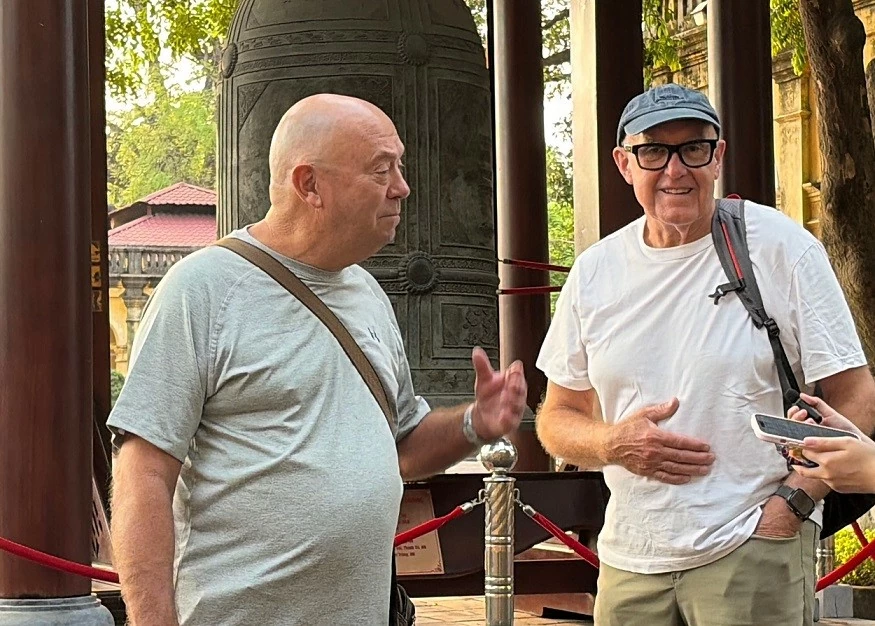 |
| Greg (on the left) shares his feelings about returning to Thang Long Imperial Citadel for the second time after 34 years. (Photo: Mai Huong) |
Jackie and her family, tourists from Australia, and Greg from Estonia all agree that Vietnamese history evokes special emotions in them, offering many thought-provoking lessons.
As can be seen, historical sites in Hanoi today not only preserve the memories of the past but also serve as a cultural bridge between Vietnam and the international community.
The interest and appreciation that foreign tourists show for Vietnamese history is a testament to the enduring vitality of national traditions, and also serves as a driving force for these values to continue to be preserved and spread in contemporary life.
Source: https://baoquocte.vn/ha-noi-thu-hut-khach-quoc-te-tu-chieu-sau-lich-su-398173.html
![[Photo] The heat at the fireworks display site on the opening night of the Da Nang International Fireworks Festival 2026](https://vphoto.vietnam.vn/thumb/1200x675/vietnam/resource/IMAGE/2026/05/27/1779889741485_ndo_br_z7872039145157-fecaba5112f39e8352544099d7ef4738-5140-jpg.webp)















































































Comment (0)