

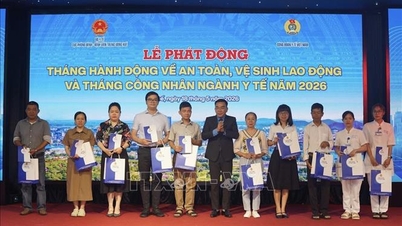
Quang Ninh has a large industrial and service sector, with many areas posing high risks such as coal mining, construction, and mechanical engineering. While labor accidents were projected to decrease in 2025, six fatal accidents still occurred in the first quarter of 2026. This figure indicates that many risks remain largely uncontrolled. Given this reality, the province is requiring localities and businesses to tighten management, review processes, identify hazards at the scene, and promote the application of technology in safety control. The Action Month serves as a catalyst for changing practices, moving towards regular and continuous management.

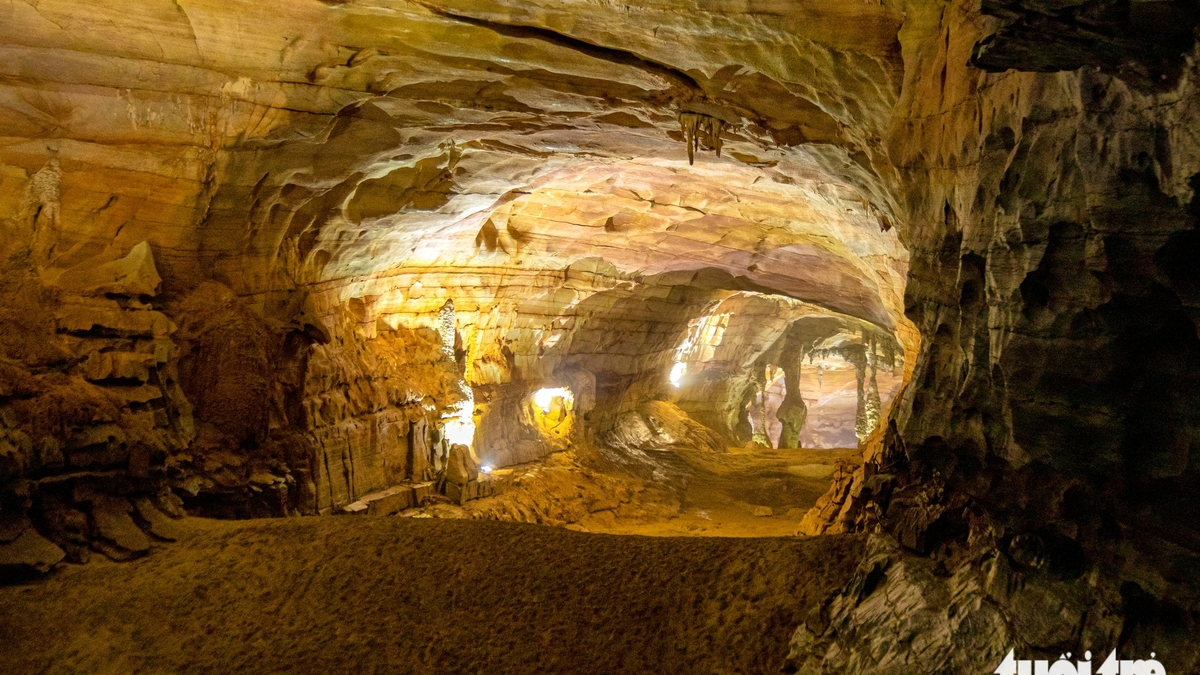
At Uong Bi Coal Company, safety pressure is ever-present in every production shift as mining deepens into complex geological conditions, with the constant risk of landslides, toxic gases, and water bursts. In the first quarter of 2026, the company recorded 9 work accidents, including one serious one. These figures force the company to abandon its "peak" work model and instead shift to continuous risk management, integrated with technology and production discipline.
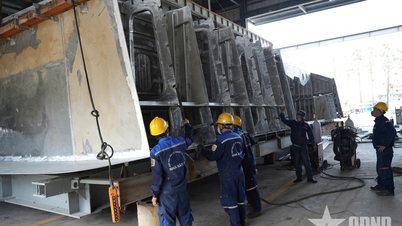
Accordingly, the unit has focused on innovation right from the production organization stage. The mine workings have adopted synchronized mechanization with hydraulic support systems, combine harvesters, and automatic conveyor belts. Workers have reduced direct work at the coal face and high-risk areas. The unit has deployed the ZRY flexible support system and applied 2ANSH technology in thick seam mining, replacing manual support methods. As a result, the mine roof is more stable, and the risk of collapse has been significantly reduced.
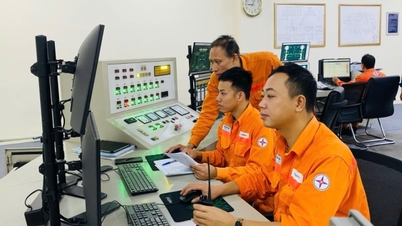
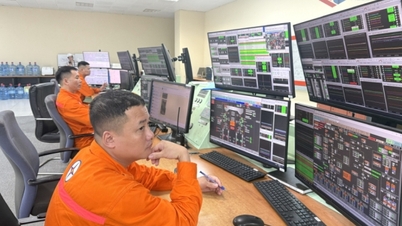
Along with mechanization, the company has innovated its operational methods. The underground transportation system is gradually being automated; shift handover information and risk warnings are continuously updated through internal channels. When data is shared quickly, teams can handle situations promptly, minimizing risks. Management is no longer based on individual experience, but on specific, real-time updated information.
At the team and group level, management is "pushed" closer to the work site. Workshops maintain pre-shift meetings, linking production tasks with identifying specific hazards. Workers inspect equipment and working conditions before entering the mine. When violations are detected, the team or group handles them immediately during the shift, without delay. The network of safety and hygiene inspectors closely monitors each stage, identifying risks and recommending corrective measures until they are fully implemented.
Mr. Nguyen Van Linh, a safety and hygiene officer at the K11 Mining and Tunneling Workshop, shared: “We remind our colleagues to follow the correct procedures and identify potential hazards to handle them promptly. Everyone must protect themselves and their teammates during the work process.”

From a management perspective, Mr. Pham Van Manh, Foreman of the K11 Mining and Tunneling Workshop, emphasized: “We integrate safety into the entire production process, from shift changes and equipment inspections to construction, all of which require risk control. The unit regularly reviews working conditions, adjusts measures accordingly, and strictly handles violations during the shift.”
The reality at Uong Bi Coal Mine shows that innovation in occupational safety and health is not just about slogans, but about management methods. When businesses focus on the field, and use technology and discipline as tools, risks are controlled right from the input of the production process.
At the provincial level, this orientation is further concretized through synchronized management solutions. Mr. Le Van Su, Head of the Labor Policy Department, Department of Internal Affairs, said: “The province requires raising awareness alongside improving processes, increasing decentralization in management, and promoting digital transformation. Businesses must proactively identify risks and prevent them early and from afar.”
Along with inspections and audits, the province is focusing on creating substantive changes in each enterprise. Occupational safety and health work should not stop at propaganda but must become a regular action, linked to the specific responsibilities of the head of the organization and each worker.
Therefore, the Action Month is not just a peak period, but a measure of safety management capabilities. When procedures are tightened, technology is applied, and worker awareness is raised, safety will no longer be a short-term goal, but will become a norm in every production shift.
Source: https://baoquangninh.vn/doi-moi-quan-ly-trong-cong-tac-an-toan-3406907.html







































































Comment (0)