

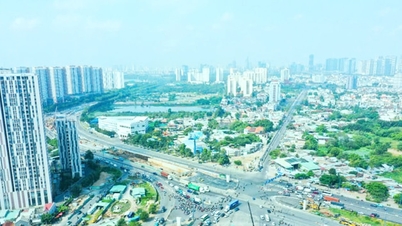
Developing transportation connectivity increases investment attractiveness.
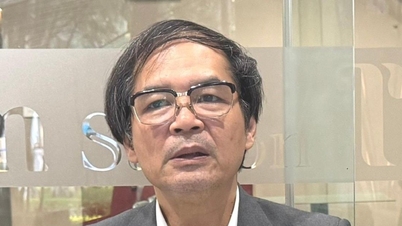
Emphasizing the importance of transportation in contributing to the success of economic growth because it directly connects supply (production) and demand (market), Dr. Nguyen Duc Kien pointed out that socio-economic development cannot take place without the accessibility provided by the transportation sector. Transportation allows producers' goods to reach consumers within a region, a country, and globally. Thanks to this, manufacturing businesses access and benefit from the use of the country's resources, deliver products to the market that meet the increasingly high demands of consumers, and is one of the decisive factors in attracting overall investment to a given area.
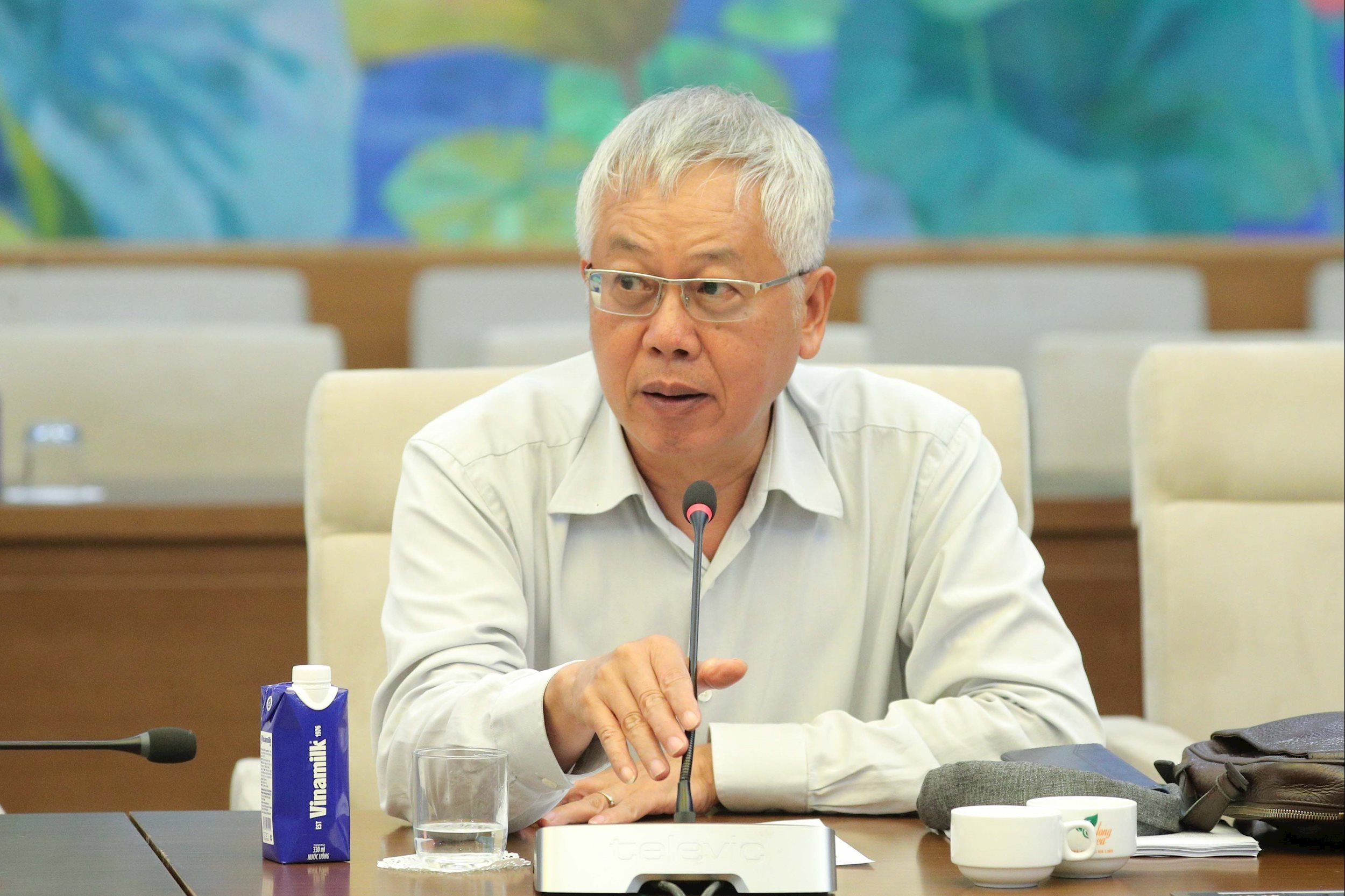
Dr. Nguyen Duc Kien stated that international studies have identified 12 factors influencing the attraction of investment and production support in transportation infrastructure, including: transportation methods and their quality (including time and safety); connectivity of the transportation network (direct transport or multiple transit points); logistics costs and affordability; speed, distance, and capacity of the infrastructure, including vehicles; multimodal transport integration; transportation demand; transport user requirements; competitiveness of different modes of transport; traffic management and operation by state management agencies; land use capacity and efficiency; and the priority level of different modes of transport for different types of products.
Dr. Nguyen Duc Kien observed that during the 2021-2025 term, public investment played a leading role, even "overshadowing" private investment, with the advantage of concentrated investment. To achieve double-digit growth in the next period, this economic expert believes that Vietnam must still rely on infrastructure developed through public investment to lead and attract investment from the entire society. This requires optimizing public investment activities by focusing on tangible efficiency. Accordingly, a shift from a conservative mindset to one that prioritizes efficiency in all policy decisions is necessary.
Focus on efficiency, strengthen post-auditing, and prioritize the development of Vietnamese businesses.
Based on the practical experience of managing the economy in the 2024-2025 fiscal year, Dr. Nguyen Duc Kien stated that there have been many valuable lessons and experiences in this field. For example, the implementation of the 500 KV power line from Quang Trach (Quang Binh) to Pho Noi ( Hung Yen ), with a length of over 500km and a total investment of nearly 3,000 billion VND, under the close guidance of the Prime Minister, was completed and handed over for operation after only 7 months of construction. This project spanned 11 provinces and cities, with varying amounts of land clearance and compensation policies depending on each locality, yet it was completed in record time. Previously, projects of similar scale would have taken approximately 4 years to complete.
Dr. Nguyen Duc Kien also cited an example: the construction of Phong Chau Bridge (formerly Phu Tho province), from the time the decision was made to implement it through a direct bidding process, the construction unit was the 12th Army Corps, using emergency government funds, and it was completed and put into operation in just 10 months.
Based on these two successful experiences, Dr. Nguyen Duc Kien argues that, in order for the country to thrive in the new era and achieve high economic growth, it is necessary to innovate thinking about public investment, focusing on efficiency rather than adherence to procedures and regulations. In policy planning, it is crucial to avoid regulations stemming from a fear of losing money or distrust, instead of looking at actual effectiveness.
According to Dr. Nguyen Duc Kien, during the remaining time of the 15th National Assembly term, thorough preparation is needed for amending the Law on Public Investment, the Law on Investment, and the Law on State Budget, focusing on efficiency, strengthening post-auditing, and prioritizing the development of Vietnamese enterprises. For public investment to be effective, decisions must be consistent and based on national interests.
For large-scale and complex infrastructure projects (especially transportation), Dr. Nguyen Duc Kien suggested that direct contracting is necessary to ensure timely completion, but there needs to be uniformity in the implementation and direct contracting methods to avoid delays. For example, the North-South Expressway project (Eastern section) was delayed by 3 years due to a change from direct contracting to international bidding, and then ultimately back to direct contracting.
For railway systems (including high-speed rail, metro, and light rail), there is a need for a unified approach to technical criteria, automation systems, signaling and information systems, and imported equipment. Failure to standardize all technical criteria will lead to limited resources and a dispersion of resources across many sectors.
Different transportation systems (such as subways and buses) need to be interconnected (e.g., using a single ticket, traveling within a specific area). Currently, even the simplest form of convergent transportation connectivity between regions and areas is "divergent".
Furthermore, it is necessary to continue improving the quality of oversight and accountability to build social consensus. Monitoring the implementation of resolutions and laws should also be strengthened.
Source: https://daibieunhandan.vn/doi-moi-tu-duy-trong-dau-tu-cong-chu-trong-hieu-qua-10388809.html
![[Photo] Admire the coral "masterpiece" amidst the million-year-old heritage of Dak Lak province.](https://vphoto.vietnam.vn/thumb/1200x675/vietnam/resource/IMAGE/2026/05/31/1780221235105_anh-man-hinh-2026-05-31-luc-16-53-27.png)
![[Photo] Solemn bathing ceremony and Buddha procession in Hue](https://vphoto.vietnam.vn/thumb/1200x675/vietnam/resource/IMAGE/2026/05/31/1780228263543_1-jpg.webp)
![[Image] Hanoi Police officially crowned champions of V-League 2025/2026](https://vphoto.vietnam.vn/thumb/1200x675/vietnam/resource/IMAGE/2026/05/31/1780244769054_ndo_br_039d561b692be875b13a-jpg.webp)

![[Photo] The General Secretary, President and his wife begin their state visit to the Philippines.](https://vphoto.vietnam.vn/thumb/1200x675/vietnam/resource/IMAGE/2026/05/31/1780230559452_anh-man-hinh-2026-05-31-luc-19-28-11.png)












![[Video] Sunset at Lap An Lagoon – Where the sun sets over the fishing nets](https://vphoto.vietnam.vn/thumb/340x192/vietnam/resource/IMAGE/2026/05/31/1780192137701_beach-landscape-sea-water-nature-grass-745871-pxhere-com.jpeg)






























![[Photo] Admire the coral "masterpiece" amidst the million-year-old heritage of Dak Lak province.](https://vphoto.vietnam.vn/thumb/402x226/vietnam/resource/IMAGE/2026/05/31/1780221235105_anh-man-hinh-2026-05-31-luc-16-53-27.png)


























Comment (0)