

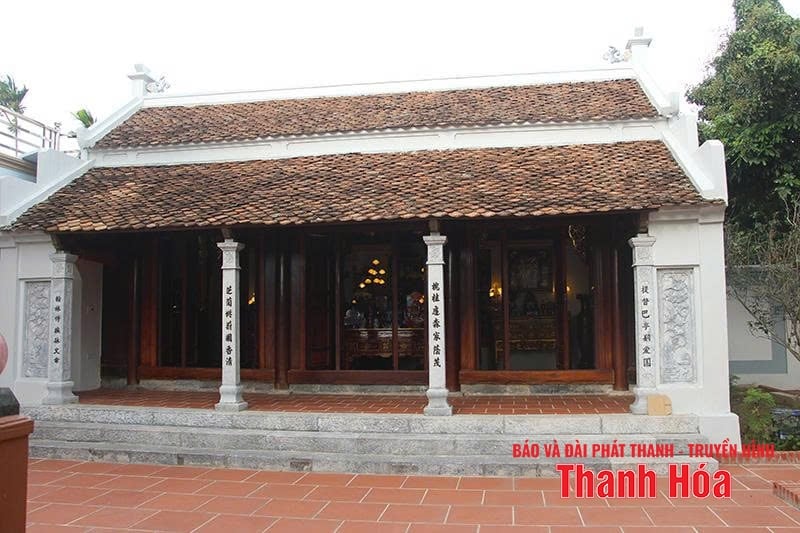
The provincial-level historical and cultural relic, the church of Doi Tam (Le Xuan Tuyen), in Hoang Tien commune. Photo: CHI ANH
The first milestone for young Le Xuan Tuyen was studying under Mr. Ho Quang Chieu, a scholar from Thuc Banh village (now part of Hoang Yen commune, Hoang Hoa district) – a highly respected and enthusiastic Confucian scholar. Seeing the young man's intelligence and ambition, Mr. Ho Quang Chieu married his daughter to him. At the age of 21, Le Xuan Tuyen was recruited into the naval forces of the Hue imperial court.
During the early years of the French colonial invasion of Vietnam, from 1858 to 1889, he repeatedly escorted and transported food, tax money, and built copper ships to bring them into the imperial city of Hue. All transports were successful, and he was rewarded by the court and promoted to squad leader (in 1863). In 1864, during a bandit suppression operation in Quang Ninh , he captured a bandit leader alive, and was rewarded and appointed Chief Squad Leader, with the rank of eighth-grade official. From then on, people called him Squad Leader Eight.
In late 1883, Emperor Tự Đức passed away. With the support of enthusiastic scholars and officials in the provinces, Minister Tôn Thất Thuyết, leading the pro-war faction in the Nguyễn dynasty, secretly and actively prepared the groundwork for a decisive battle against the invading enemy. Tôn Thất Thuyết assigned Team Eight the task of transporting rice from the northern provinces to Quảng Trị and distributing it to other provinces, including Thanh Hóa.
On July 5, 1885, the ambush against the French in the capital of Hue failed. Ton That Thuyet took King Ham Nghi away from the capital to Tan So (Quang Tri) to establish a resistance court. On July 13, 1885, King Ham Nghi issued the Can Vuong decree, calling on scholars and officials to rise up against the invaders. At this time, Le Xuan Tuyen was assigned to guard the Son Phong in Huong Khe (Ha Tinh province), tasked with persuading prominent figures from the three provinces of Thanh Hoa, Nghe An, and Ha Tinh to fight the French. Among them were scholars who were also loyal fighters, such as Nguyen Xuan On (Nghe An), Tong Duy Tan, and Pham Banh (Thanh Hoa)...
In late 1886, he was sent to Thanh Hoa to command the Can Vuong movement in the area. Back home, he contacted Nguyen Don Tiet, a high-ranking official, and many other Can Vuong leaders in various localities. He actively gathered rebel forces in Ngoc Chue commune (now Hoang Tien commune), acquired weapons, trained in martial arts, and stockpiled military supplies. His family established a military supply base in the coastal area of Hoang Hoa, with significant contributions from his own assets and those of many wealthy families in the region.
In 1887, Le Xuan Tuyen participated in the Ba Dinh uprising led by Dinh Cong Trang: he built fortifications, organized training for the insurgents, and commanded battles that were always victorious, so he was promoted to Chief Admiral.
The Lê Xuân family genealogy records the life of Lê Xuân Tuyển: "He went through 10 battles, enduring 3 years of stray bullets and arrows," but with his determination to pacify the West and restore the nation, and the skill of a naval officer, he is an example of courage, bravery, and resilience.
Faced with the growing strength of the Ba Dinh resistance movement, the French army ruthlessly suppressed the movement. His family's home was devastated, all their property was burned to ashes, but he was fortunate enough to escape safely.
At the end of 1890, he returned to his hometown, surrounded by the support of his neighbors. Not betraying their trust and affection, he rebuilt his family's economy, hired tutors to educate his children to become successful, and devoted himself to village affairs such as building stone bridges to drain floodwaters, supporting agricultural production by constructing roads, building a Confucian temple, and erecting steles to honor learned people.
"He possessed the virtues of honesty, respect, self-preservation, generosity towards others, good manners towards friends, did not value wealth more than others, was not stingy towards the villagers, and performed rituals promptly and sincerely" (according to the Le Xuan family genealogy).
Inspired by his example, both of his sons studied diligently and passed the baccalaureate examination in 1900. Le Xuan Lan was the valedictorian of Hue National School, later becoming Chairman of the Provisional Revolutionary Committee of Ngoc Chue district and Chairman of the Resistance Administrative Committee of Hoang Hoa district. His grandson, Dr. Le Xuan Thao, a lawyer, contributed to transforming the barren sandy area of Hai Tien (Hoang Hoa) into a modern and attractive tourist destination; he also founded and funded the Le Xuan Lan Scholarship Fund to support underprivileged students and nurture talent.
Visiting the "Team Eight" Le Xuan Tuyen church – a provincial-level historical and cultural relic – on the first day of the lunar month, amidst the fragrant incense, Mrs. Pham Thi Tam, the daughter-in-law of the family, while arranging offerings and lighting incense sticks, told us: "For the people and the country, Mr. Le Xuan Tuyen fulfilled his sacred duties. As for the family, thanks to his example, his descendants have always valued education and righteousness, and have achieved success in their studies and work."
CHI ANH
Source: https://baothanhhoa.vn/doi-tam-le-xuan-tuyen-253438.htm


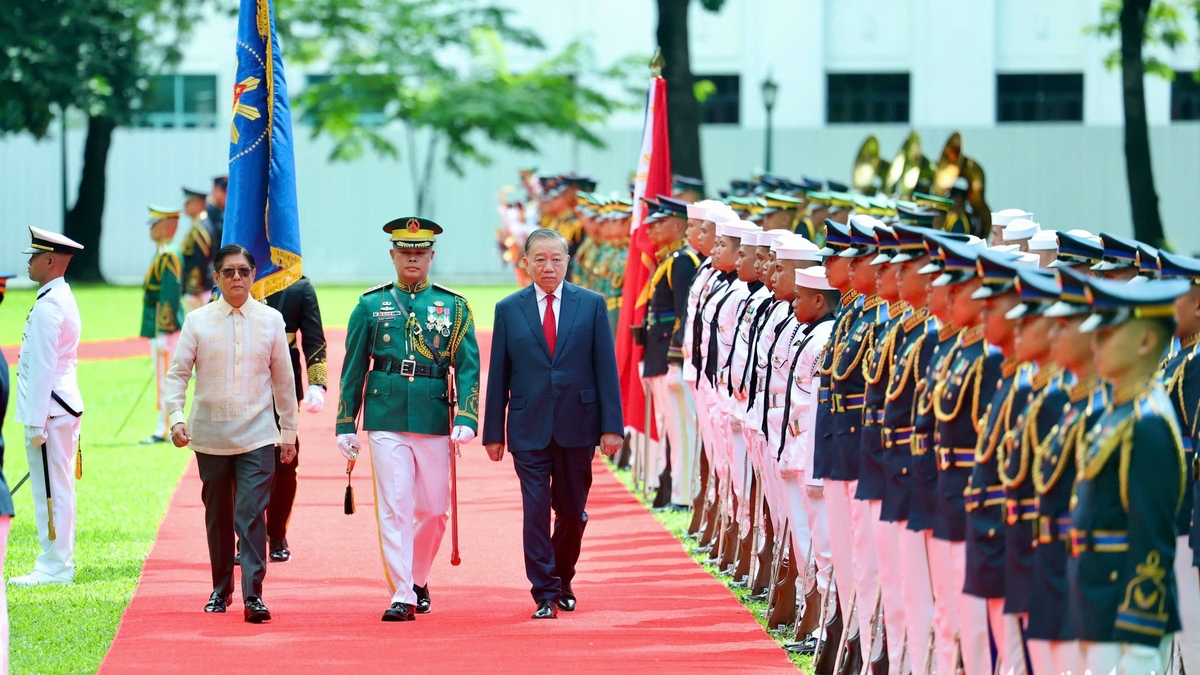
![[Photo] General Secretary and President To Lam and the President of the Philippines hold talks.](https://vphoto.vietnam.vn/thumb/1200x675/vietnam/resource/IMAGE/2026/06/01/1780286997787_anh-man-hinh-2026-06-01-luc-11-09-43.png)





























































Comment (0)