

Many, but not strong enough.
In the overall economic landscape, the private sector in Tuyen Quang province continues to play a crucial role. The province currently has nearly 6,550 businesses and over 33,120 business households; as of March 15, 2026, this sector contributed nearly 600 billion VND to the budget, accounting for approximately 36% of the total budget revenue in the first quarter. This figure demonstrates the potential and increasingly prominent role of the private sector in the local socio-economic development.
However, behind these achievements, there are still many concerns. The number of newly established businesses remains limited, lower than in other provinces in the region; the number of businesses with foreign investment is still modest. Notably, over 98% of private sector businesses are small and medium-sized enterprises, primarily micro-enterprises. Their small scale means they have weak resilience to market fluctuations, limited competitiveness, and difficulties in expanding production and business, and participating deeply in the value chain.
 |
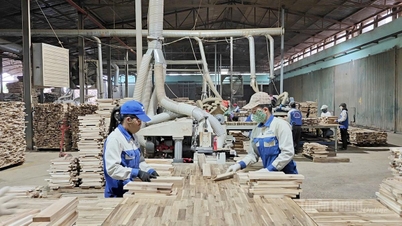
| Paper production at An Hoa Paper Joint Stock Company. |
This reality necessitates not only quantitative growth but also qualitative improvement in businesses, forming enterprises of sufficient scale to lead and create a ripple effect throughout the entire private economic sector.
There can be no delay in dismantling.
Businesses face challenges not only from market fluctuations but also from internal barriers. During dialogues with the business community, representatives of associations frankly pointed out a series of obstacles: complex administrative procedures, difficulties in accessing production space, and lengthy procedures for land allocation and land use conversion.
Mr. Nguyen Van Thang, Chairman of the Provincial Association of Small and Medium Enterprises, stated: In recent times, the province has demonstrated its determination to support businesses through various administrative reform solutions, maintaining regular dialogues and promptly addressing difficulties for projects. Many policies and guidelines have been issued in an open manner, contributing to improving the investment and business environment. However, he also frankly pointed out existing shortcomings: some procedures related to land and site clearance are still lengthy, directly affecting investment progress; coordination between some departments and agencies in handling dossiers is not truly synchronized, even overlapping and lacking uniformity. This causes businesses to make multiple trips, incurring additional costs and wasting time.
“Based on that reality, the business community hopes that the province will continue to provide more decisive direction, enhance the responsibility of departments and agencies; shorten the work processing procedures, and at the same time strengthen the mechanism for monitoring and evaluating the effectiveness of public service implementation. Businesses need a transparent and open environment where all difficulties are listened to and resolved promptly,” Mr. Nguyen Van Thang emphasized.
From the perspective of large-scale manufacturing and retail businesses, many opinions suggest that the obstacles are systemic, particularly in the areas of land and policy mechanisms. A representative from TH Group stated that the investment research process faced difficulties due to a lack of planning information and unclear cadastral maps, leading to prolonged survey and project development. Furthermore, the land price list is not realistic and lacks sufficient attractiveness for investors.
Meanwhile, Dabaco Group reported difficulties in finding land for production expansion; land access procedures are slow, causing missed investment opportunities. Based on this reality, businesses suggested that the province needs to accelerate planning, create clean land funds, streamline land allocation and leasing procedures, and build more stable and competitive policies and mechanisms.
From dialogue to decisive action
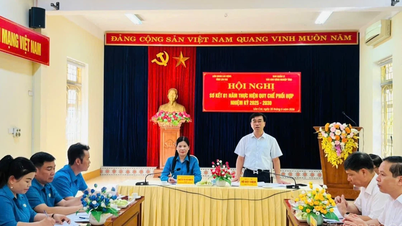
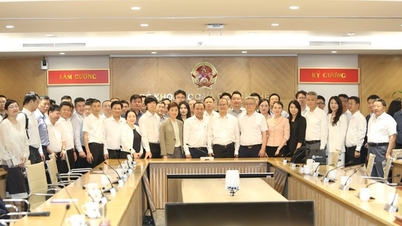
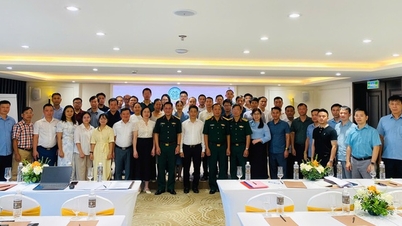
Without shying away from existing problems, during the dialogues, leaders of departments and agencies directly exchanged views and clarified the issues raised by businesses, while also proposing many solutions to overcome difficulties and promote the development of the private economic sector in both quantity and quality. The focus is on building businesses large enough to play a leading role and create a ripple effect. Many opinions suggest that the core issue lies not only in policy issuance but also in implementation. Without decisive and coordinated action with the spirit of "clear responsibilities, clear tasks, clear results," even correct policies will be difficult to implement.
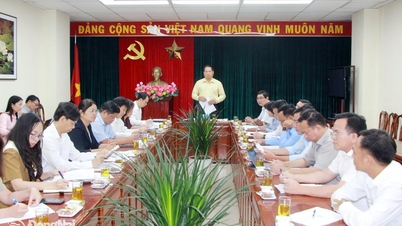
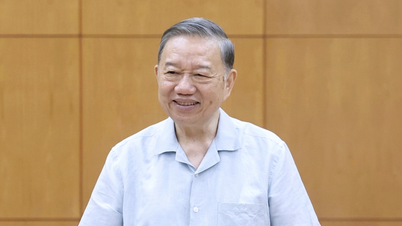
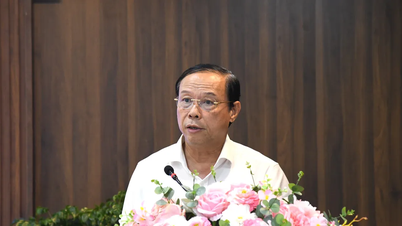
At the first quarterly meeting of the Steering Committee for Private Economic Development, Comrade Hau A Lenh, Secretary of the Provincial Party Committee and Head of the Steering Committee, emphasized the need to shift strongly from "receiving suggestions" to "resolving issues definitively." The focus is on reviewing and classifying difficulties into specific groups such as land, capital, human resources, and administrative procedures to find effective and appropriate solutions, ensuring businesses have convenient access to resources.
The comrade requested a push to improve administrative procedures in a substantive manner, minimizing processes and preventing the creation of additional procedures beyond regulations; providing clear guidance on required documents and setting specific processing times. At the same time, he emphasized the need to resolutely address acts of harassment and inconvenience to businesses; and to strengthen inspection, auditing, and supervision to tighten administrative discipline and order.
One key solution is to research and establish a business support department based on a "single-point" mechanism, which would reduce intermediate layers and improve the efficiency of problem-solving. Simultaneously, a human resource training plan should be developed, aligned with development planning, especially in promising sectors such as tourism and services.
The overarching message emphasized is: The State and businesses must genuinely cooperate, act together, and share responsibility. When dialogue is coupled with action, and when the "bottlenecks" are properly and effectively addressed, the private sector will have more impetus for sustainable development, contributing increasingly to the province's economic growth in the coming period.
Text and photos: Van Nghi
Source: https://baotuyenquang.com.vn/kinh-te/202605/doi-thoai-go-kho-phat-trien-kinh-te-tu-nhan-0dd5e28/
![[Image] Hanoi's urban life under the challenge of a "scorching hot" environment](https://vphoto.vietnam.vn/thumb/1200x675/vietnam/resource/IMAGE/2026/05/25/1779706979265_nang-nong-t5-2026-minh-duy-7-4636-jpg.webp)


![[Image] Close-up view of the interchange connecting the two expressways and Long Thanh Airport.](https://vphoto.vietnam.vn/thumb/1200x675/vietnam/resource/IMAGE/2026/05/25/1779703378210_ndo_br_z7863716673926-224453a31600126cce10622af6290afd-4549-jpg.webp)










































































Comment (0)