

And World Cup history also shows that, sometimes, the best tactic to defeat that invisible enemy isn't the strategy itself, but rather the team knowing when to concede.

The story of "The Hand of God"
"Hand of God" is the name of the photograph illustrating this article. The image captures one of the most iconic moments in football history: Maradona scoring a goal against England with his hand in the 1986 World Cup quarter-finals. The photograph earned this audacious title because, when asked whether he scored with his hand or his head, the legendary Argentinian number 10 cleverly replied: "The goal was scored with Maradona's head and the Hand of God."
"The Hand of God" is just a metaphor, but in reality, Maradona managed to fool the referee partly thanks to... divine intervention. Look at the photo; the players moving in the background are invisible. There's no editing trick involved; the match simply took place at midday. Not just the quarter-final between Argentina and England, but all matches at the 1986 World Cup were held at noon to accommodate prime-time (evening) television broadcasts for viewers in Europe.
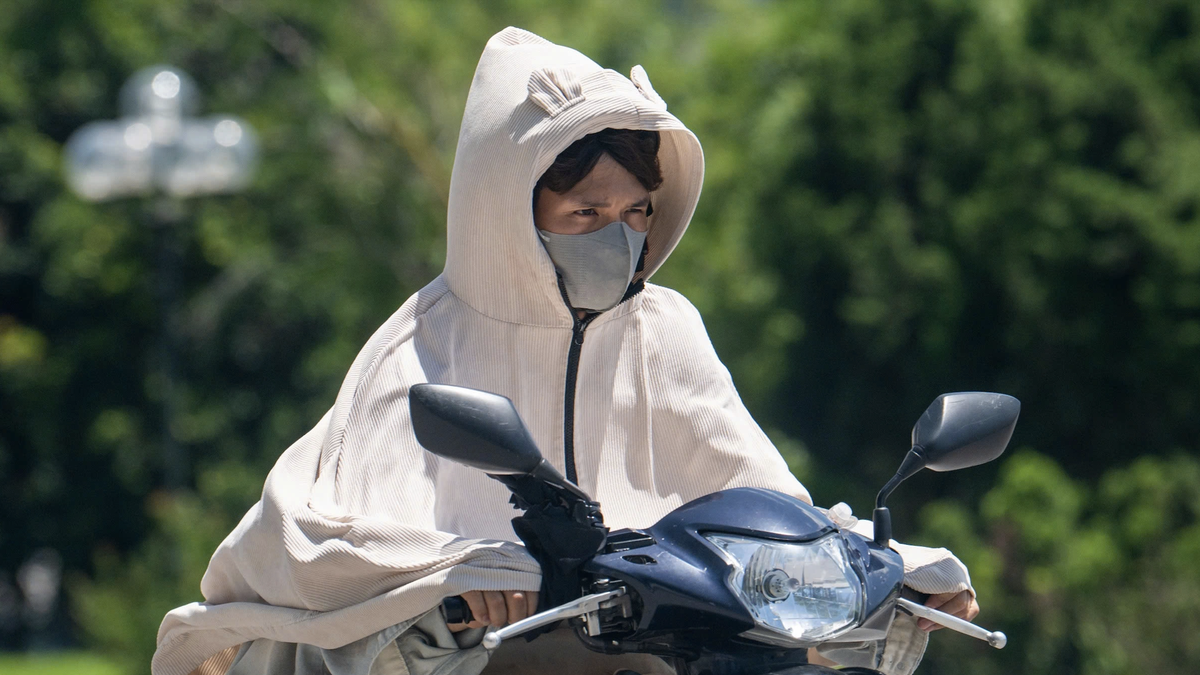
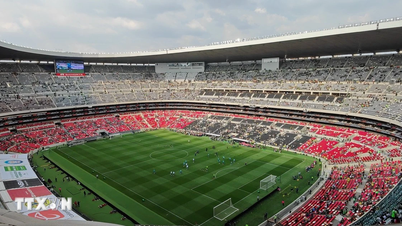
The midday heat in Mexico is just as harsh as the intense heatwave currently affecting northern and central Vietnam. To visualize this, try going outside at midday and carefully observing everything happening around you. The blazing sun will deter you in every way. Of course, the Ministry of Health advises people to limit their time outdoors between 10 am and 4 pm on hot days.
Nobody, except the Mexican sun of 86
Graeme Souness was one of the toughest midfielders in English football history, who reigned supreme in Liverpool's midfield for a decade. Only true geniuses like Brazil's Zico could surpass him technically, but absolutely no one could surpass him in physical strength. In Querétaro, amidst the scorching heat and suffocating altitude of the central Mexican city, Souness lost almost a stone (6.5 kg) after 90 minutes against West Germany. He recounted: “I remember sitting down and thinking: ‘Oh my God, I feel terrible.’ It was the worst I’ve ever felt on the pitch. I couldn’t breathe.”
Coach Alex Ferguson, who was also managing Scotland at the time, left Souness out of the squad for the crucial match against Uruguay. Omitting Souness from such a big game would be unthinkable under normal circumstances. But the Mexican heat made the impossible inevitable.
Forty years later, the 2026 World Cup will present the same challenge but on a much larger scale, with 48 teams and 104 matches, spanning the summers of the United States, Canada, and Mexico. Last summer, the Club World Cup held in the United States served as a general testbed for the 2026 World Cup. And what unfolded was a microcosm of everything national teams will face.
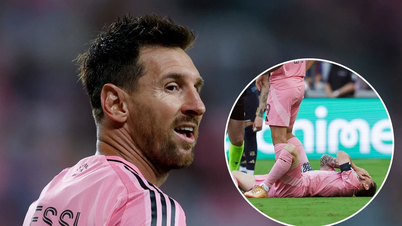
Chelsea midfielder Enzo Fernández suffered dizziness during the semi-final. Atlético Madrid midfielder Marcos Llorente complained that "even my toenails hurt." Several teams were forced to stop training due to the heat. And despite five substitutions, constant pressing for 90 minutes was impossible; the pace of some matches was so slow that, as journalist Rob Smyth described it, it looked "slower than a Béla Tarr film."
Chelsea's response in the final against PSG, the Champions League champions and the world's richest club, is a tactical lesson worth noting for every coach at the 2026 World Cup.
For the first ten minutes, Chelsea pressed with all their might, like a boxer's powerful punch in the first round, probing and warning. Then, they dropped back and took control. Slow, slow, quick. The first goal came in the 22nd minute, but the match, according to coach Enzo Maresca, was decided in the first ten minutes. “We tried to suffocate them early on. For me, we won the game in the first 10 minutes.” The result: Chelsea won 3-0. PSG, with Mbappé, Dembélé, and a host of European stars, suffered a crushing defeat in the North American heat.
When football becomes the art of waiting
There's a simple rule in tropical football that tacticians have learned from 1986 to the present day, albeit expressed in different ways: The higher the temperature, the more possession the team has. Brazil won the 1994 World Cup in the USA with an average possession rate of 60%, the highest in the history of World Cup champions until Spain's tiki-taka redefined possession football in South Africa in 2010. The unsung hero of Brazil 1994 wasn't Romário, nor Bebeto, but Dunga, the captain, who anchored the midfield rhythm like an anchor dropped into the ocean, both firm and consistent.
Chelsea did something similar in the Club World Cup with a modern variation: They held 61% possession in their first six games, then deliberately reduced it to 34% in the final when they realized PSG were stronger and needed a different strategy. That's rare tactical intelligence, knowing when to keep possession and when to let go.
There's a profound cultural shift in modern football that the 2026 World Cup will highlight more clearly than ever: the bench is no longer a punishment. The 2022 World Cup final between Argentina and France ended in a penalty shootout. Looking back at the original starting lineup, of the 20 players who started the match, only 7 were on the pitch when the penalty shootout took place. 13 players were substituted, and those who came on changed the game.
EURO 2024, Spain vs. England final: The decisive goal came from Mikel Oyarzabal, who came on as a substitute. England lost not because of a lower starting point, but because of a lack of squad depth. In high temperatures, this is no longer a luxury. It's a matter of survival. A fresh striker coming on in the 60th minute against a defense exhausted by the heat is like a boxer fighting a novice.
Chelsea employed a squad rotation strategy throughout the Club World Cup to an extent that, according to former legendary manager Arrigo Sacchi, even he wouldn't have dared to do in a month-long tournament just a few years ago. But football has changed. Fitness has changed. The heat hasn't changed, and that forces everyone to adapt.
Victory is knowing when to… yield.
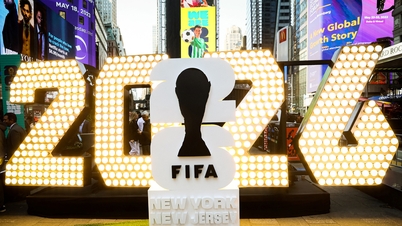
The 2026 World Cup will begin on June 11th and end on July 19th. The finalists will have to play eight matches in five weeks amidst the heat of Los Angeles, Dallas, New York, Miami, Mexico City, and Toronto. No team will escape having to play at least one match in extreme weather conditions. Previous World Cups have typically belonged to the best team. The 2026 World Cup could belong to the deepest squad, where the 18th or 20th player on the roster is still capable of making a difference in the 75th minute of a quarter-final match.
And they also belonged to a team that understood what Souness had learned at Querétaro in 1986 in the most painful way: Strength isn't always the most effective weapon. Sometimes, wisdom lies in knowing when to stop. Knowing when to pass the ball to a teammate. Knowing when to slow the game down, and only speeding up when a real opportunity arises. The most beautiful football isn't always the fastest football. Especially when the outside temperature exceeds 40 degrees Celsius and the humidity is 90%.
Source: https://baovanhoa.vn/the-thao/doi-thu-la-nhiet-do-232084.html

![[Photo] The heat at the fireworks display site on the opening night of the Da Nang International Fireworks Festival 2026](https://vphoto.vietnam.vn/thumb/1200x675/vietnam/resource/IMAGE/2026/05/27/1779889741485_ndo_br_z7872039145157-fecaba5112f39e8352544099d7ef4738-5140-jpg.webp)
![[Photo] The courage of new recruits of Brigade 144 on the training ground.](https://vphoto.vietnam.vn/thumb/1200x675/vietnam/resource/IMAGE/2026/05/27/1779881651341_anh-man-hinh-2026-05-27-luc-18-32-52.png)










































![[Photo] The courage of new recruits of Brigade 144 on the training ground.](https://vphoto.vietnam.vn/thumb/402x226/vietnam/resource/IMAGE/2026/05/27/1779881651341_anh-man-hinh-2026-05-27-luc-18-32-52.png)






























Comment (0)