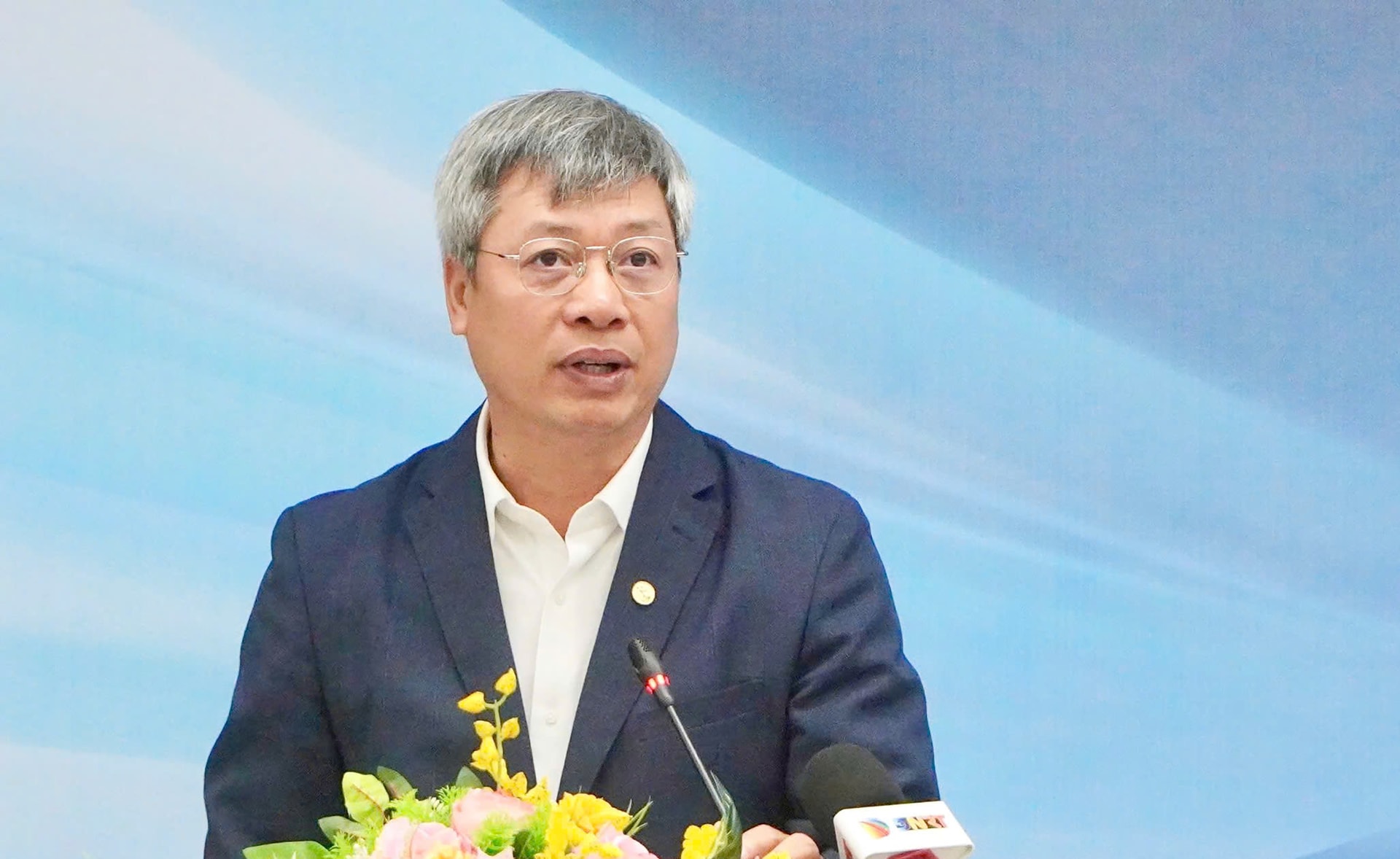
MR. HO QUANG BUU, VICE CHAIRMAN OF THE PEOPLE'S COMMITTEE OF DA NANG CITY:
Digital data as a resource for development.
Resolution No. 57-NQ/TW dated December 22, 2024, of the Politburo identified data as a particularly important production resource that needs to be nurtured and exploited to form a data economy. In Da Nang, this orientation is being concretized through the development of digital government and smart urban governance, based on real-time data.
Currently, the city's Intelligent Operations Center (IOC) has integrated more than 30 data sources from 45 units, forming 3 key data groups with 30 monitoring services, 250 visual charts, and 60 types of alerts. The system utilizes diverse data from IoT sensors, urban cameras, environmental data, and socio-economic indicators, while granting access rights to more than 1,500 users across 120 agencies and units.
Alongside the IOC, the city's shared data warehouse is becoming a core inter-sectoral sharing platform. To date, all 22 departments and agencies have connected approximately 780 datasets with over 26 million records. At the grassroots level, all 94/94 communes, wards, and special zones have registered over 1,100 datasets, directly generated from local management practices.
Aimed at citizens and businesses, the Open Data Portal has publicly released over 1,400 datasets, recording more than 5.7 million visits. Building on this platform, Da Nang is piloting a Data Exchange to transform this resource into a new driving force for the development of digital government and the digital economy, ensuring transparency, interoperability, and better service to the people in the coming period.




MR. VO TAN SINH, DIGITAL TRANSFORMATION EXPERT, DIRECTOR OF DIGITAL SYSTEMS CO., LTD (HO CHI MINH CITY):
Digital infrastructure must begin with basic needs.
In mountainous, border, and rural areas, digital transformation needs to be approached through simple, easy-to-operate tools that are compatible with the actual capabilities of the people and local officials.
The biggest challenge today lies in ensuring the synchronized operation of digital platforms with the state management system from the central to local levels. If implemented separately, without connectivity and common standards, digital applications will become fragmented and unsustainable.
At the commune level, especially in areas with dispersed populations and uneven technological literacy, digital platforms should prioritize streamlined interfaces, minimal operation, easy searching, and task reminders on basic mobile phones. The implementation process must flexibly combine online and in-person methods, as not all citizens possess the necessary skills to operate these platforms independently, particularly the elderly, people in remote areas, and groups with limited access to technology.
In the coming period, investment should focus on essential digital infrastructures such as online public services, education and healthcare, disaster warning systems, digital payments, and e-commerce for agricultural products. These areas offer tangible benefits, helping people save costs and time, and expanding their access to markets. Digital transformation in mountainous regions is only truly effective when it closely aligns with the actual needs of the grassroots, ensuring user-friendliness while maintaining seamless connectivity with the overall management system.

MR. PHUNG VAN NAM, CHAIRMAN OF THE PEOPLE'S COMMITTEE OF TRA GIAP COMMUNE:
Bringing digital conveniences closer to the people.



Experience from mountainous communes shows that digital transformation is only effective when it permeates every village and hamlet, meeting specific needs. In Tra Giap, due to its large area and scattered population, people still maintain the habit of working directly with officials; therefore, the dissemination of digital utilities requires a step-by-step roadmap accompanied by practical, hands-on guidance.
The key at the grassroots level lies in building trust so that people confidently access digital services. For people in mountainous areas, every technological operation requires precision, as the risk of errors can easily discourage them and lead them back to old habits. Therefore, the role of village officials, community digital technology groups, and youth union members is extremely important. They are the core force, directly guiding people to log in, register, and utilize essential services in the easiest way possible.
Digital transformation requires a shift in service-oriented thinking. Local officials today must assume a "dual role": operating the system while simultaneously providing direct support and disseminating information to help people understand the value of accurate data updates. When databases on population, land, health, and social security are digitized and synchronized, governance will become more thorough and timely. In mountainous areas, the effectiveness of digital transformation stems from actions closest to the people; only when people clearly see the benefits in terms of time and the support of officials will they truly trust and respond.
Source: https://baodanang.vn/don-bay-cho-su-phat-trien-3341262.html

![[Image] Paris's oldest bridge goes viral after transforming into a giant cave.](https://vphoto.vietnam.vn/thumb/1200x675/vietnam/resource/IMAGE/2026/06/24/1782283441197_ndo_br_dsc05314-jpg.webp)

![[Photo] Prime Minister Le Minh Hung presides over the thematic session on promoting science and technology development and innovation.](https://vphoto.vietnam.vn/thumb/1200x675/vietnam/resource/IMAGE/2026/06/23/1782207872934_ndo_br_dsc-1724-jpg.webp)