

Living for generations beside the largest natural lake in the Central Highlands (Lak Lake), Buon Jun village in Lien Son town, Lak district, Dak Lak province, still preserves many distinctive cultural characteristics of the Mnong ethnic group. At the end of 2024, Buon Jun was announced by the Dak Lak Provincial Department of Culture, Sports and Tourism as a community tourism destination, further motivating the Mnong people to preserve traditional cultural values associated with tourism development. Amidst the chaotic sounds of large excavators breaking rocks and leveling earth, the shape of the key road leading to the villages in the Ban Ve lake area (Tuong Duong, Nghe An) has emerged. The charming little road, like a golden thread winding through the mountain slopes, breaks the isolation and stagnation that has plagued this land for generations. Concluding the Government Conference with localities on economic growth, Prime Minister Pham Minh Chinh clearly outlined 10 key tasks and solutions for the coming period and affirmed that we have sufficient confidence, conditions, and capabilities. We must uphold our responsibility to history, to the Party, the State, and the people, and be determined to achieve GDP growth of 8% or more in 2025, creating momentum and strength for double-digit growth in the coming years. Every year at the beginning of the new year, the villages of the Tay and Nung ethnic groups in the northeastern provinces eagerly participate in the Long Tong Festival. This is a unique festival of the Tay and Nung ethnic communities, carrying the message of praying for national peace and prosperity, a bountiful harvest, and a life of warmth, happiness, and well-being. The Tay and Nung people have a saying: "My dear, in January we go to the festival/In February our hands and feet will not rest." Whenever I have the opportunity to work in Hoang Phi district, Ha Giang province, I always make time to visit the teachers and students of Then Chu Phin Ethnic Boarding Primary and Secondary School. Today was no different; I arrived at the schoolyard just as the drum signaled recess. Two resounding, three-beat drumbeats echoed joyfully amidst the vast borderland. The students excitedly rushed out of the classrooms, then called out to each other as they headed to the library, crowding the narrow aisle between the two large bookshelves. After the Lunar New Year of the Year of the Snake 2025, we visited Ra Giua village, Phuoc Trung commune, Bac Ai district, Ninh Thuan province, and were truly impressed by the peaceful life of the ethnic minority community. Children diligently attend school, and adults graze their livestock under the forest canopy. In Ra Giua village, Chamaléa Thi Khem, a woman with "three roles," is a typical example of the patriotic emulation movement in the locality; she actively mobilizes the Raglay people to work together to build a prosperous village. Living for generations beside the largest natural lake in the Central Highlands (Lak Lake), Buon Jun, Lien Son town, Lak district, Dak Lak province, still preserves many distinctive cultural characteristics of the Mnong ethnic group. At the end of 2024, Buon Jun was announced by the Department of Culture, Sports and Tourism of Dak Lak province as a community tourism destination, further motivating the Mnong people to preserve traditional cultural values associated with tourism development. On the morning of February 21st, the People's Committee of Quang Nam province, in coordination with the Archaeological Survey of India (ASI), launched the project to restore towers E and F in the My Son World Heritage site, giai đoạn 2025-2029. A summary of the news from the Ethnic and Development Newspaper. The morning news on February 21st, 2025, includes the following noteworthy information: Cham villages in Ninh Thuan celebrate the Ramuwan Tet festival. Lush green tea hills captivate tourists. The rhythm of life in the upstream of the Nam Non River. Along with other news from the ethnic minority and mountainous regions, amidst the chaotic sounds of large excavators breaking rocks and leveling earth, the shape of the key road leading to the communes in the Bản Vẽ reservoir area (Tương Dương, Nghệ An) has emerged. This small, charming road, like a golden thread winding through the mountain slopes, breaks the isolation and stagnation that has plagued this land for generations. In 2024, the entire Quảng Nam tourism industry welcomed over 8 million visitors, with total social income from tourism estimated at over 21.6 trillion VND. This is a record high for local tourism to date. Leveraging that advantage, from the beginning of 2025, the province's tourism industry has launched a series of impressive tourism stimulus activities and programs, creating highlights to drive strong tourism development in the coming time. Returning to Bao Thang district, Lao Cai province in the early days of the Year of the Snake 2025, we could clearly feel the picture of an improved new rural area gradually emerging. New constructions are springing up, with spacious and modern multi-story houses. Rural roads are being widened, stretching from the district center to the villages, creating a fresh and vibrant appearance. The custom of "za mi gu la," meaning "remarrying one's wife," of the Ha Nhi people in Y Ty commune, Bat Xat district, Lao Cai province, is a beautiful tradition passed down from generation to generation. According to the Ha Nhi people's beliefs, only then can the meaning and affection be complete. On February 21, 2025, the Provincial Party Committee, the Provincial People's Council, the Provincial People's Committee, and the Vietnam Fatherland Front Committee of Binh Duong province organized a press meeting to celebrate the Lunar New Year of the Snake 2025.
pristine beauty
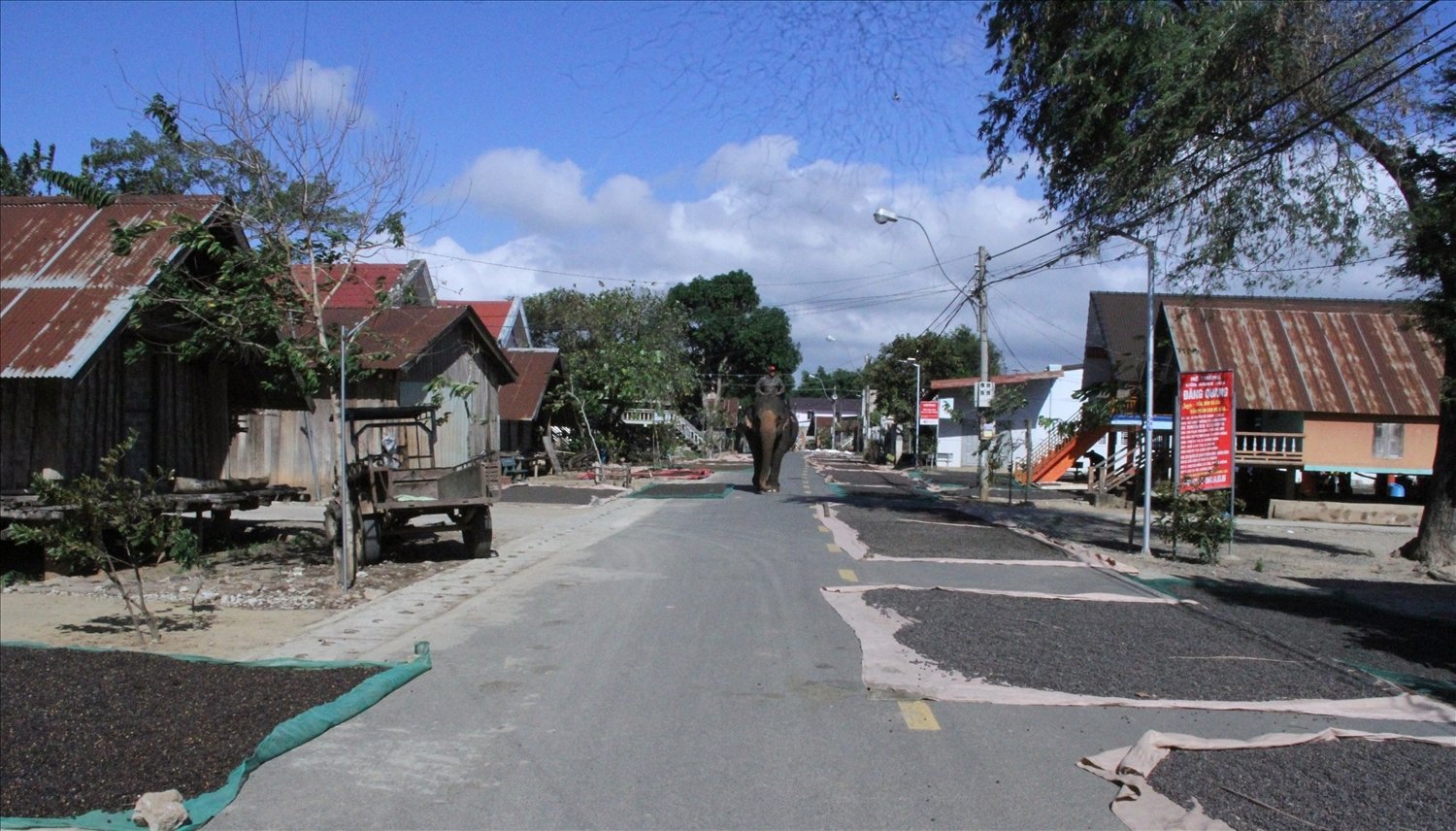
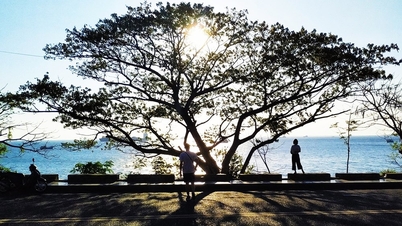
Stretching along the shores of Lake Lắk, Buôn Jun in Liên Sơn town still preserves many pristine beauties and unique characteristics of the Mnông ethnic minority village, which was formed hundreds of years ago.
Having witnessed the many historical changes of the land and holding the position of village elder for over 20 years, the respected elder of the village, Y Nơ Bdap (born in 1949), said: "Jun village was formed hundreds of years ago by four clans of the Mnong people from Dak Nong province and Dak Phoi commune who came here to establish and live, naming the village Jun. Over time, generations of Mnong people here have preserved and cherished the cultural identity of their ethnic group, from the architecture of longhouses, gongs, rice wine brewing, brocade weaving, rituals, and festivals…"
"In the past, Jun village had many elephants. The elephants helped the villagers transport agricultural products, and later they also participated in carrying tourists . Back then, my family also bought four elephants from Buon Don to raise and transport agricultural products. The Mnong people consider elephants as human beings; they give elephants names and offer prayers for their health. Over the years, the elephants have aged and gradually disappeared. Currently, the village only has a dozen or so left."
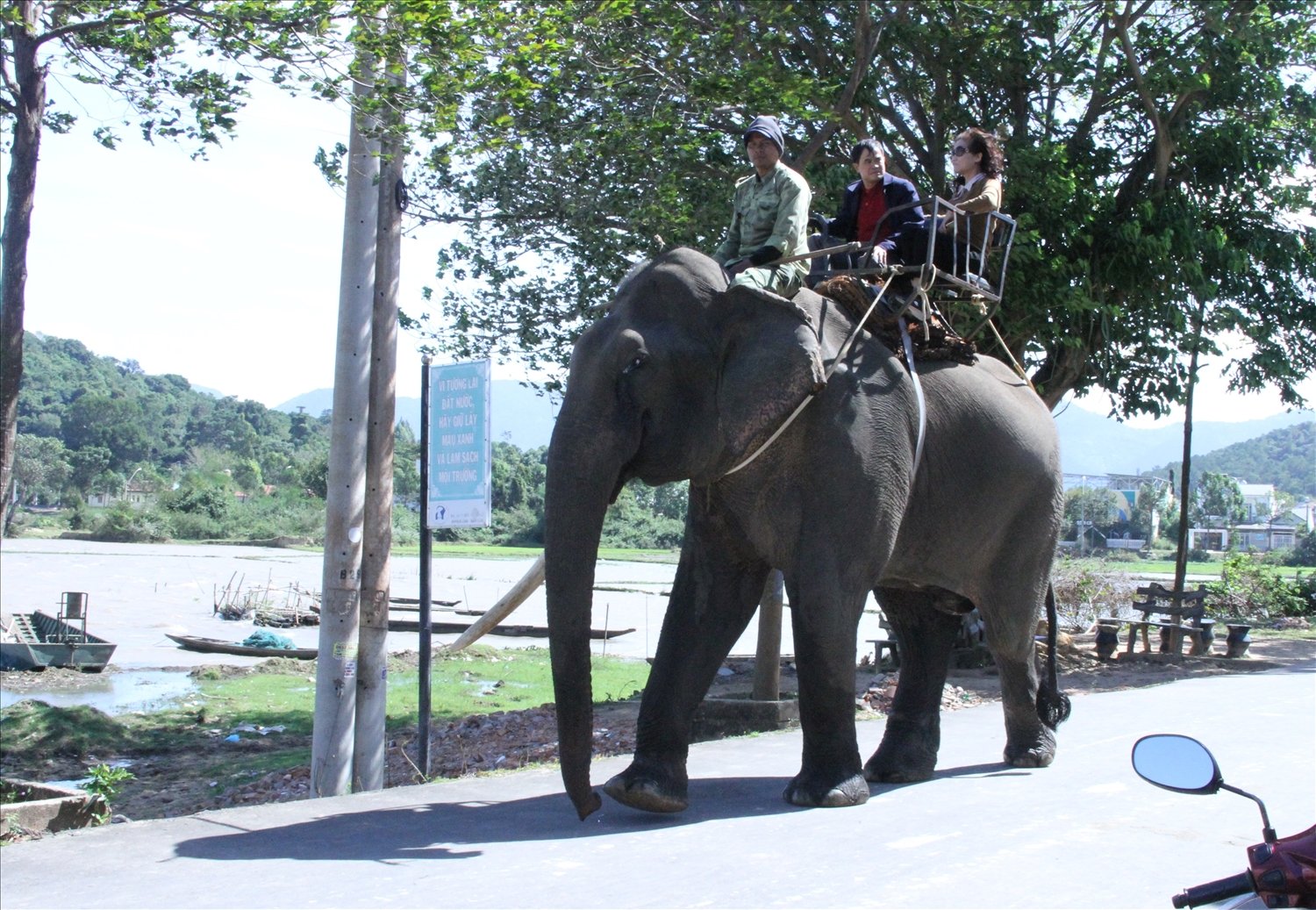
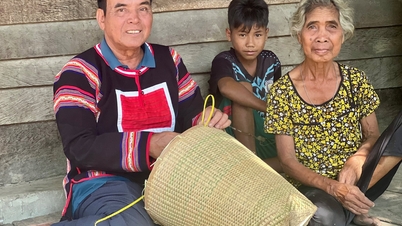
Currently, Jun village still preserves over 60 stilt houses, 70 sets of gongs, nearly 20 dugout canoes, 13 domesticated elephants, and important rituals such as: life cycle festivals, boat launching ceremonies, new rice offering ceremonies, and health blessing ceremonies for elephants... In addition, the people also preserve traditional crafts such as brewing rice wine, weaving brocade, basket weaving, and unique culinary traditions. All these cultural values are utilized by the people to develop tourism and promote local socio-economic development.
Secretary of the Jun Y Rôn Buôn Krông village Party branch shared: "Like the Mnông community in Lắk district, the people of Jun village mainly live by farming. The water from Lắk Lake irrigates the rice fields and industrial crops of the people. In the past, the average income of the people was less than 10 million VND/year. Now, the Mnông people of Jun village know how to apply science and technology to production, growing three rice crops a year, and also planting coffee trees. The lives of the people are getting better and better. From a village where more than 90% of households were poor, now there are only 37 households left, and many temporary houses have been replaced with sturdy traditional houses. The average income of the people has increased to 45 million VND/person/year."
An attractive community tourism destination.
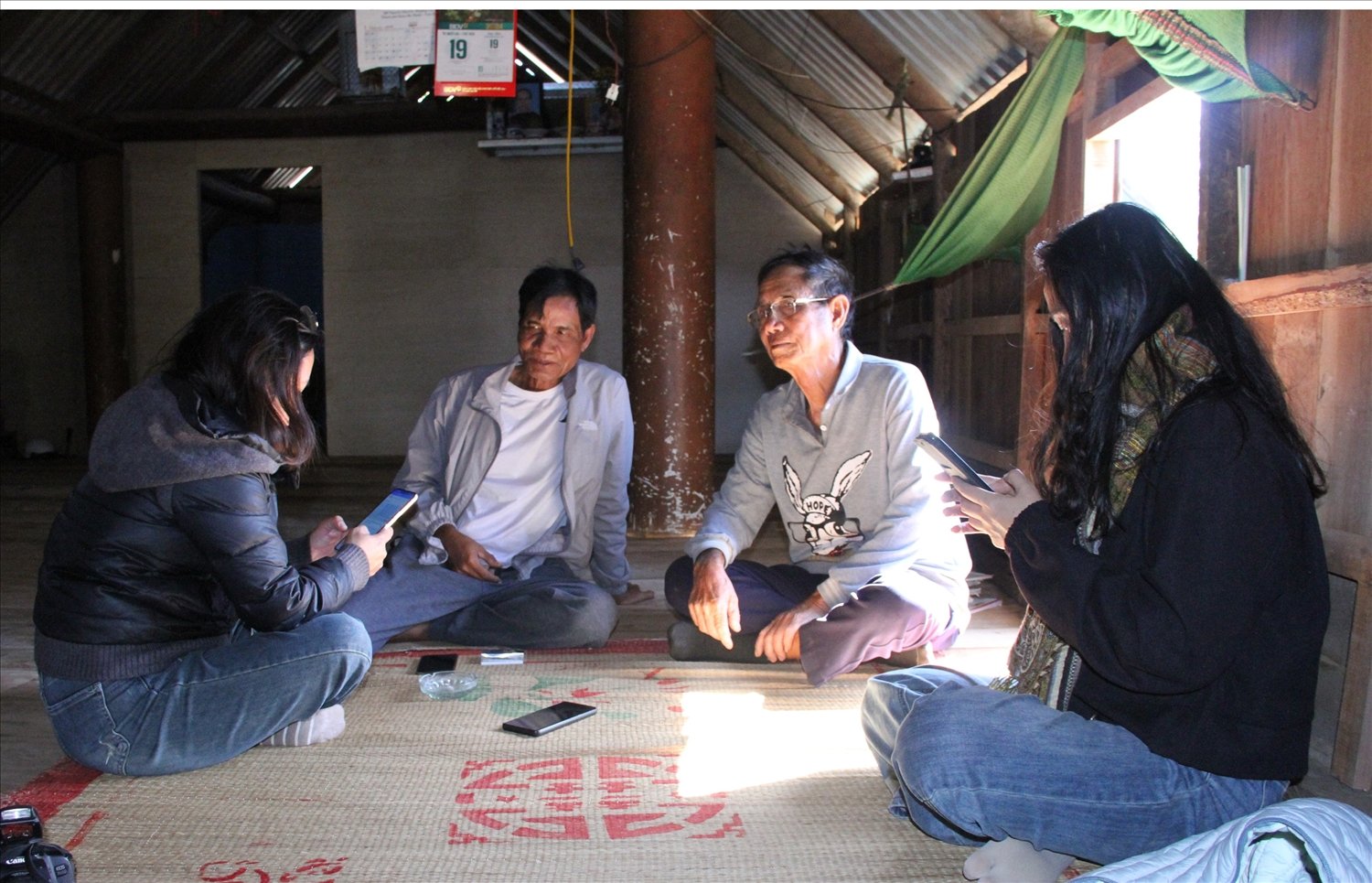
Buon Jun currently has 117 households and 450 inhabitants, with over 90% being of the Mnong ethnic group. Possessing stunning scenery and a rich Mnong cultural heritage, Buon Jun has the advantage of developing unique and attractive community-based tourism products. Every year, Buon Jun welcomes thousands of domestic and international tourists who come to visit and experience its culture.
To help the people of Jun village develop community tourism, on November 16, 2023, the People's Committee of Dak Lak province approved the Project to support investment in building a typical tourist destination in Jun village. The resources for implementing the Project come from Project 6 "Preserving and promoting the valuable traditional cultural values of ethnic minorities associated with tourism development" under the National Target Program for socio-economic development with ethnic minorities and mountainous regions.
By early December 2024, Jun village was officially recognized as a community tourism destination by the Department of Culture, Sports and Tourism of Dak Lak province. This is a significant milestone, marking a turning point in Jun village's tourism development journey, contributing to the preservation of traditional cultural values and increasing income for the villagers.
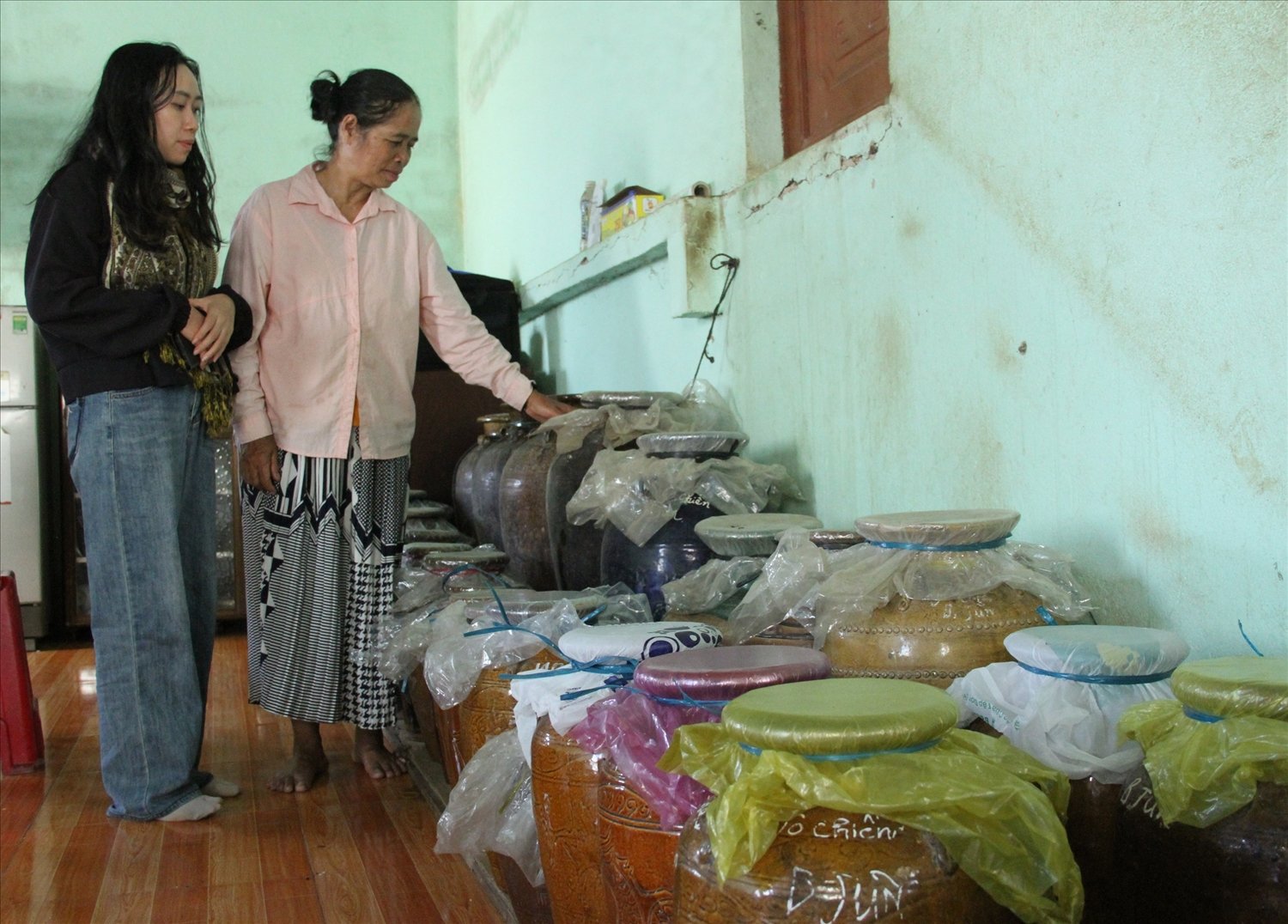
Having worked in community tourism for many years, Ms. H'Wai Bdap (born in 1962), from Jun village, shared: "In community tourism, my family and several other households in the village have participated in training courses on business and exploiting community tourism services related to gong culture, traditional crafts, cuisine, etc. My family runs an accommodation, food, and gong performance service in our traditional stilt house. I also maintain the traditional rice wine brewing craft to serve tourists and local people. We are very happy that the village was recently recognized as a community tourism destination. This is an opportunity for the Mnong ethnic people to continue developing their strengths in tourism, increasing income, and improving their quality of life."
In recent times, Jun village has received attention and investment in a modern infrastructure system, especially the road along Lak Lake, which has created a beautiful landscape and promoted tourism development. Currently, Jun village has 21 households participating in community tourism, including 6 houses that have received support in terms of facilities to serve tourism.
According to Nguyen Anh Tu, Vice Chairman of the People's Committee of Lak District: Buon Jun is surrounded by Lak Lake - the second largest natural freshwater lake in Vietnam and a scenic site recognized as a national historical and cultural relic by the Ministry of Culture, Sports and Tourism in 1993. This is the village with the longest history of tourism development in the district and plays an important role in the tourism activities of Lak District. Most people have a good understanding of tourism activities and have participated in tourism business. Being recognized as a typical community tourism destination further motivates Buon Jun to develop tourism more strongly.
Source: https://baodantoc.vn/dong-bao-mnong-lam-du-lich-cong-dong-1740111253646.htm
![[Photo] Opening Ceremony of the National People's Council Conference on the Implementation of Directions and Tasks for the 2026-2031 Term](https://vphoto.vietnam.vn/thumb/1200x675/vietnam/resource/IMAGE/2026/05/28/1779939257690_ndo_br_bnd-1991-jpg.webp)
![[Image] Checking the security conditions at the exam site, ready for the 10th grade exam.](https://vphoto.vietnam.vn/thumb/1200x675/vietnam/resource/IMAGE/2026/05/28/1779943458889_z7872507660648-d764421a26e8cd7b61d70d142a48a685-jpg.webp)































































Comment (0)