

120kW boost
For decades, the biggest obstacle to space travel has been fuel. Traditional chemical rocket engines consume enormous amounts of fuel but are inefficient, making spacecraft heavy and slow. However, an electromagnetic propulsion system, also known as a plasma propulsion system (magneto-plasmadynamic - MPD), recently successfully tested at NASA's Jet Propulsion Laboratory (JPL), has completely changed the game.
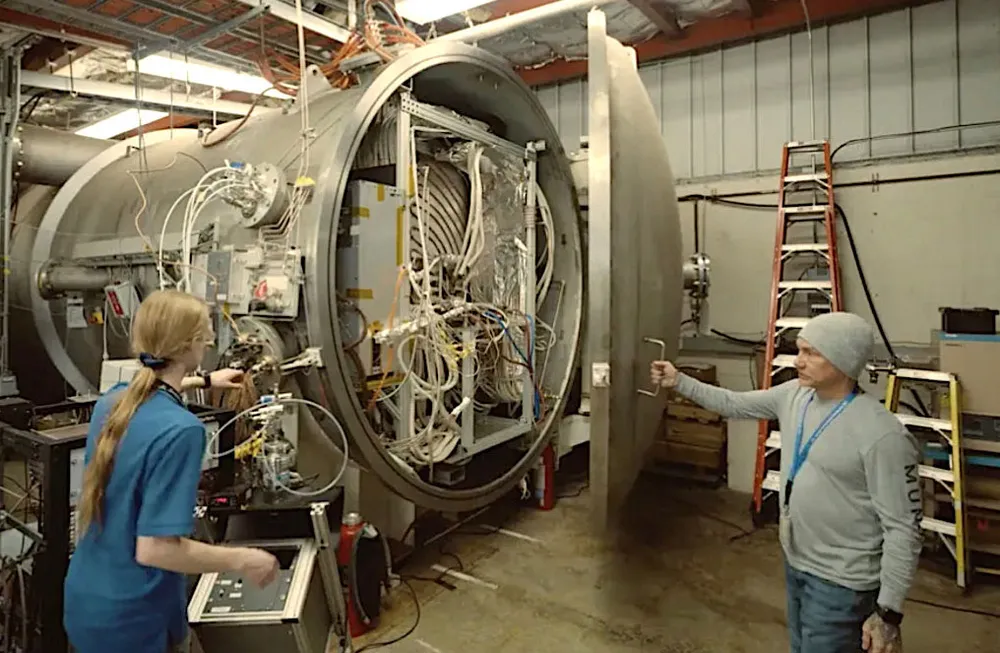
The concept of MPD has been circulating in academic circles since the 1960s, but has never been put into practical use. Unlike existing systems, this design uses strong electric currents and magnetic fields to accelerate plasma generated from lithium, creating greater thrust at higher power levels.
According to Science Daily, the 120kW MPD engine, which uses vaporized lithium as a propellant instead of traditional xenon gas, can achieve up to 10 times the efficiency of conventional chemical propulsion systems. This power level surpasses even the most powerful electric propulsion systems ever deployed by NASA on spacecraft, including the system that is helping the Psyche spacecraft reach speeds of over 124,000 miles per hour with its small but stable thrust. The biggest advantage of this technology is its fuel efficiency, potentially reducing the amount of fuel needed by up to 90%, thereby freeing up space for scientific equipment, supplies, and life support systems for the crew.
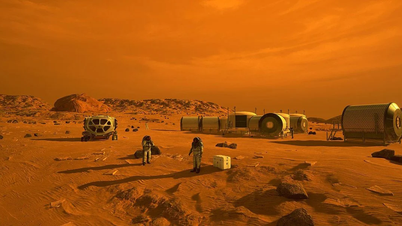
Most notably, the time factor is crucial. If powered by a sufficiently strong source, such as from micronuclear reactors, the MPD engine could shorten the journey to Mars from 7-9 months to just a few months, or even weeks. This is vital, because the shorter the flight time, the lower the astronaut's risk of exposure to cosmic radiation and the effects of weightlessness on their body.
A new power map in space.
NASA's success is considered by scientists to be a turning point paving the way for manned flights to Mars by the end of this decade. The next challenge NASA researchers are aiming for is to increase engine power even further, to 500kW to 1 megawatt per propulsion unit in the coming years. According to experts, if further developed, plasma technology could also power robotic missions throughout the solar system.
However, space is no longer NASA's exclusive playground. Just last February, scientists at the Russian Nuclear Energy Corporation unveiled a plasma-electric rocket engine capable of propelling spacecraft to Mars in 1-2 months. According to Interesting Engineering, unlike traditional rocket engines that rely on burning fuel, this advanced propulsion system uses a magnetic plasma accelerator, promising a significant reduction in interplanetary travel time and is expected to be ready for deployment by 2030.
While the US and Russia are testing plasma engines, China is also focusing its efforts on the Long March 10 rocket and the ILRS lunar station (in cooperation with Russia) to serve as a springboard for Mars by 2030. Meanwhile, in January 2024, Japan became the fifth nation to land a spacecraft on the moon and plans to undertake a Mars exploration mission using a probe. India was the fourth nation to achieve this the previous year.
In the rapidly changing geopolitical landscape of space, South Korea is emerging as a unique phenomenon. Observers now consider it a genuine counterweight in Asia, capable of competing on equal footing in projects exploring distant planets. The Land of the Morning Calm is no longer content with simply purchasing satellites or relying on others for launches; it officially established the Korea Aerospace Exploration Agency (KASA, often referred to as the NASA of South Korea) in May 2024, aiming to transform South Korea into a global aerospace powerhouse by 2026.
South Korea's ambitions include exploring the Moon and Mars, developing rocket technology, and launching new reconnaissance/observation satellites. On May 3rd, South Korea's CAS500-2 satellite was successfully launched into orbit from a space base in California, marking a significant step forward in the country's satellite technology capabilities and space development ambitions. According to the Indo Pacific Defense Forum, Seoul plans to conduct at least three more spacecraft launches before 2027 and expects to launch additional military satellites.
Source: https://www.sggp.org.vn/dong-co-plasma-luc-day-cua-cuoc-dua-den-hanh-tinh-do-post851991.html

![[Image] Close-up view of the interchange connecting the two expressways and Long Thanh Airport.](https://vphoto.vietnam.vn/thumb/1200x675/vietnam/resource/IMAGE/2026/05/25/1779703378210_ndo_br_z7863716673926-224453a31600126cce10622af6290afd-4549-jpg.webp)
![[Image] Hanoi's urban life under the challenge of a "scorching hot" environment](https://vphoto.vietnam.vn/thumb/1200x675/vietnam/resource/IMAGE/2026/05/25/1779706979265_nang-nong-t5-2026-minh-duy-7-4636-jpg.webp)






























































































Comment (0)