

In reality, the reduction of value-added tax along with other tax and fee support policies implemented by the Government in recent times has created favorable conditions for businesses to reduce production costs, increase profits, and stimulate demand. However, alongside the achievements, we also see that our economy still has limitations, shortcomings, and many challenges, especially the US announcement of retaliatory tariffs on countries, including Vietnam. Growth drivers have not yet shown a clear breakthrough as required, production and business activities still face difficulties, production costs remain high, and domestic purchasing power, while improving, is still slow.
To stimulate economic development, continuing the policy of reducing the value-added tax (VAT) rate by 2% is crucial to support people and businesses in boosting production, business, and consumption. Therefore, at the ninth session of the 15th National Assembly , the Government continued to submit to the National Assembly a Resolution on reducing the VAT rate by 2% until December 31, 2026. If approved by the National Assembly, this would be the second time the resolution on reducing the VAT rate by 2% has been implemented, attracting significant public and business interest.
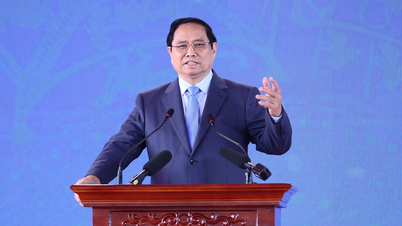
Along with reducing value-added tax, the Government is implementing a series of solutions to realize the target of GDP (gross domestic product) growth of over 8% this year and aiming for double-digit growth in the following years. In that spirit, Politburo member and Prime Minister Pham Minh Chinh signed Official Dispatch No. 63/CD-TTg dated May 12, 2025, on rectifying discipline, strengthening responsibility, overcoming limitations, and creating a favorable investment and business environment for enterprises.
For these policies to become a driving force for economic development, it requires decisive and coordinated action from ministries, sectors, and each locality to promptly address difficulties and obstacles for businesses. In particular, it is crucial to effectively implement solutions to improve governance quality and the investment and business environment for the business community, aiming for sustainable development.
Alongside reducing value-added tax, the Government and relevant ministries and agencies need to optimize budget revenue and implement measures to increase revenue from sources other than taxes to compensate for this shortfall. At the same time, more support should be given to small and medium-sized enterprises (SMEs), as they constitute a large part of the economy but are particularly vulnerable to market fluctuations.
In addition, the Government and relevant agencies need to continue implementing other support measures such as deploying low-interest credit packages specifically for small and medium-sized enterprises, helping them to have resources to expand production and business; supporting the costs of human resource training and technological innovation, etc.
Reducing value-added tax (VAT) is an effective short-term solution, but it requires comprehensive long-term measures to improve domestic production capacity, enhance product quality, and especially increase competitiveness in the international market. In reality, resolving business difficulties cannot rely solely on tax reductions. To address business challenges, we must implement comprehensive and long-term mechanisms and policies; while simultaneously continuing to reform and modernize the tax system and simplify tax administration procedures.
As direct beneficiaries of tax reduction policies, each business needs to proactively develop production plans and review input costs to further reduce production costs while improving product quality. This will help businesses increase their competitiveness in the market and contribute to increased revenue.
Only then will reducing value-added tax truly support businesses and become a driving force for economic development in the current context.
Source: https://hanoimoi.vn/dong-luc-thuc-day-tang-truong-702273.html


![[Photo] Prime Minister Pham Minh Chinh attends the Conference on the Implementation of Tasks for 2026 of the Industry and Trade Sector](/_next/image?url=https%3A%2F%2Fvphoto.vietnam.vn%2Fthumb%2F1200x675%2Fvietnam%2Fresource%2FIMAGE%2F2025%2F12%2F19%2F1766159500458_ndo_br_shared31-jpg.webp&w=3840&q=75)















































































Comment (0)