


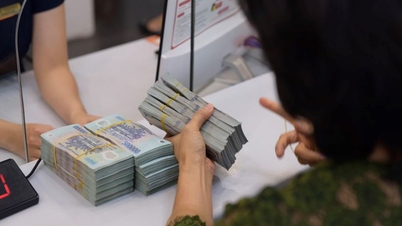
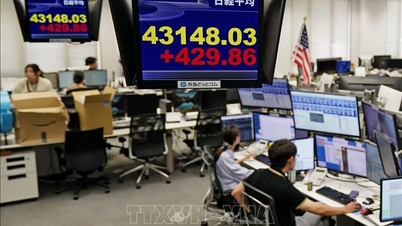
At 3:30 p.m. Seoul time, the won was quoted at 1,497.5 won/USD, down 3.8 won from the previous session. This is the lowest valuation of the South Korean currency since March 10, 2009, when the country was affected by the global financial crisis.
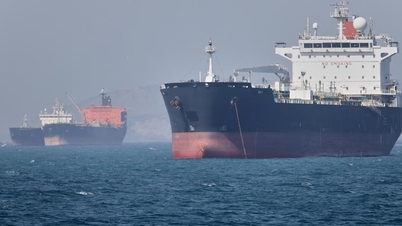
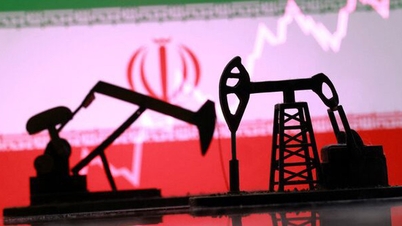
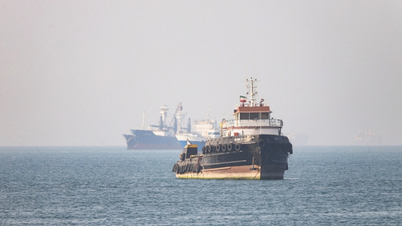
The direct cause of the won's weakening stems from global oil prices reaching record highs in years. The blockage of the Strait of Hormuz, a vital waterway controlled by Iran, since the start of military attacks has caused a serious disruption to energy supplies.
Brent crude oil prices rose 2.9% to around $106.12 per barrel on March 15, while US oil prices also surpassed $100 per barrel. Park Sang-hyun, an expert at iM Securities, noted that concerns about a prolonged conflict are driving the sharp rise in oil prices and strengthening the US dollar. According to him, if the instability persists, the won is likely to stabilize around $1,500 per won.
Pressure on the domestic currency is further intensified by a wave of capital withdrawals by foreign investors from the stock market. Data from the Bank of Korea (BoK) shows that foreign investors sold a net of approximately 13 trillion won (equivalent to $8.69 billion) worth of South Korean stocks in the first half of this month, following a record net sale of 21 trillion won in February. The decline of the won is raising concerns about stagflation.
According to analysis from the Bank of Korea (BoK), an estimated 10% annual increase in global oil prices will push consumer inflation up by an additional 0.2 percentage points. The agency forecasts South Korea's economy to grow by 2% in 2026 with inflation at 2.1%, based on the assumption of an average Brent crude oil price of $64 per barrel. While a weaker won may improve price competitiveness for export businesses, it also significantly increases the cost of importing energy, raw materials, and industrial components. Economist Lee Min-hyuk at KB Kookmin Bank warns that logistics disruptions and rising energy costs will narrow the current account surplus, adding further downward pressure on the domestic currency.
In light of the complex developments, the South Korean government is urgently implementing measures to stabilize the foreign exchange market and minimize the impact on people's lives. The Bank of Korea (BoK) affirms that USD liquidity remains abundant and commits to strengthening market monitoring to take timely stabilization measures.
Source: https://baotintuc.vn/thi-truong-tien-te/dong-won-cham-day-17-nam-20260316182120488.htm
![[Image] Close-up view of the interchange connecting the two expressways and Long Thanh Airport.](https://vphoto.vietnam.vn/thumb/1200x675/vietnam/resource/IMAGE/2026/05/25/1779703378210_ndo_br_z7863716673926-224453a31600126cce10622af6290afd-4549-jpg.webp)
































































































Comment (0)