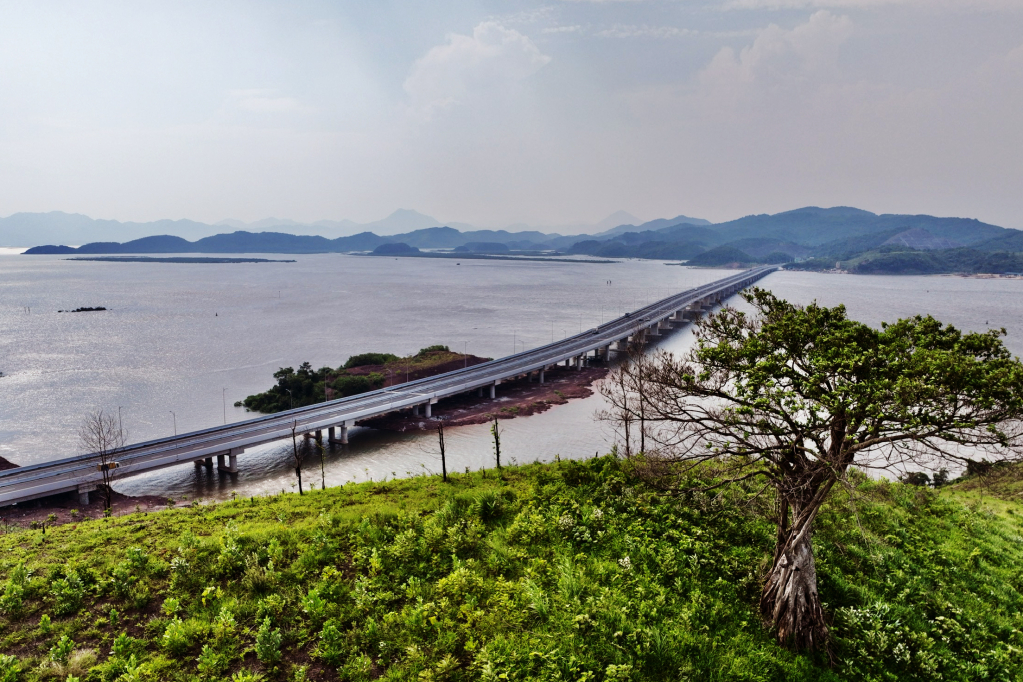
At the end of 2022, Quang Ninh put the Van Don - Mong Cai expressway into operation, completing the provincial expressway axis connecting Mong Cai City (the northernmost point of Vietnam) with Hanoi . This also marked the point when Quang Ninh officially possessed a diversified and integrated transportation system with an airport, an international seaport, and a provincial expressway, becoming the province with the fastest-developing transportation infrastructure in the country.
Continuously extending the "lifeline" of transportation.

The 2020-2025 term is a significant milestone for the people of Quang Ninh because not only does the province celebrate its 60th anniversary, but it also marks the completion of its comprehensive transportation infrastructure after nearly 8 years of effort, making it the province with the fastest transportation infrastructure development in the country – a new record for the transportation sector.
Looking back at the early 21st century, along with Hanoi and Hai Phong, Quang Ninh was identified by the central government as a key point in the Northern economic triangle. However, those who visited or lived in Quang Ninh during that period know that its transportation infrastructure was quite rudimentary and basic. Despite being a key point in the Northern economic triangle, Quang Ninh was far from the capital Hanoi, and therefore not a priority area for central government investment. This hampered and limited the province's development opportunities, despite possessing some of the greatest potential in the country.
The idea that "Transportation is the lifeblood of an organization. Good transportation makes everything easy. Poor transportation causes stagnation," as taught by President Ho Chi Minh during his lifetime, has been ingrained in the thinking and aspirations of many generations of provincial leaders throughout history. However, to achieve "good transportation," transportation leading the way in the context of limited budget resources, Quang Ninh has been forced to explore its own path with bold and unique ideas, using public investment as seed capital to guide and activate all social resources towards development goals.
Thinking and acting in a very short time, in 2012, the province boldly proposed to the Government to independently build a highway, an international airport, and a specialized seaport with convincing arguments, demonstrating the financial resources, and was approved by the Government. This was an unprecedented precedent in Vietnam's transportation sector, as these were projects funded by the Government.

2014 marked the beginning of a series of key transportation projects, starting with the Ha Long - Hai Phong expressway - the province's first road expressway. Just two years later, the Van Don International Airport and the Ha Long dedicated passenger port, representing the gateway to the sky and the ocean, connecting directly to the world via air and sea transport, were also invested in simultaneously, accompanied by modern, high-class landscape values and integrated into the overall road expressway network.
During the investment implementation process, the province faced many difficulties, from securing funding to technical design, as well as the impact of the Covid-19 pandemic and fluctuating prices. However, the province has gradually and effectively overcome these obstacles.

On September 1, 2022, amidst the nationwide emulation and achievement-making efforts to celebrate the 77th anniversary of the August Revolution and National Day on September 2, Quang Ninh province inaugurated the Van Don - Mong Cai expressway, the final section of a 176km expressway network running along the province. This officially completed all three major transportation gateways connecting with the region and the world after eight years of hard work. Impressively, the projects put into operation in Quang Ninh have quickly yielded positive results after investment, with a record increase in tourist arrivals to Mong Cai, the northernmost point of Vietnam, immediately after the expressway's completion. International flights to Quang Ninh began operating just five months after the expressway opened, and the Ha Long cruise port became a meeting point for some of the world's most luxurious cruise ships.
The key transportation projects completed within the first half of this term have made Quang Ninh the province with the most diverse, synchronized, and fastest-developing transportation infrastructure in the country across all three modes: road, air, and sea. These projects connect to the province's economic, cultural, and tourism centers, creating a comprehensive, seamless network that shortens distances and travel times, expands development opportunities, unlocks and promotes the potential of key areas, and creates a prosperous Quang Ninh, a crucial growth pole in northern Vietnam.
Regional Linkage Center
During his visit to Quang Ninh in April 2022, General Secretary Nguyen Phu Trong emphasized: "Given its important position, Quang Ninh needs to strongly promote regional linkages to effectively exploit its competitive advantages." The concern of the General Secretary has been clearly defined by Quang Ninh in the Resolution of the 15th Provincial Party Congress: Persistently implementing the spatial development organization of "one center, two multi-directional routes and two breakthroughs" to ensure the goal of linkage and synchronization, thereby maximizing the strengths of each locality within the province, as well as the province's strengths within the Red River Delta and the Northern Key Economic Region.
In less than two years, in accordance with the spirit of the Resolution and the wishes of General Secretary Nguyen Phu Trong, Quang Ninh completed a 176km expressway axis running along the province, connecting the Hanoi-Hai Phong and Hanoi-Lao Cai expressways, creating a nearly 600km long Lao Cai-Hanoi-Mong Cai expressway axis, accounting for 60% of the total length of expressways in Vietnam, making it the best connecting transportation infrastructure in the North at that time. Alongside the completion of the main expressway axis, the province implemented many other connecting transportation projects to form a regional linkage chain, such as roads connecting Lang Son, Bac Giang, Bac Ninh, Hai Duong, and Hai Phong... These projects were formed on the basis of cooperation and joint investment to spread benefits. Quang Ninh is ready to share its airport and seaport with Lang Son and Bac Giang through new connecting routes, and share its expressway with the Red River Delta region to access the Chinese market of over 1.4 billion people more quickly. Quang Ninh's infrastructure projects are the conditions and prerequisites for the Government to create a dynamic transportation corridor in the North by linking it with the Eastern expressway axis.


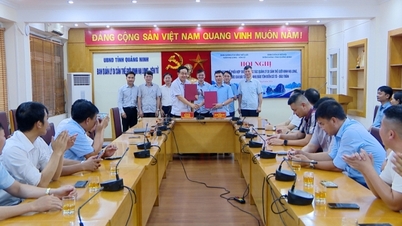
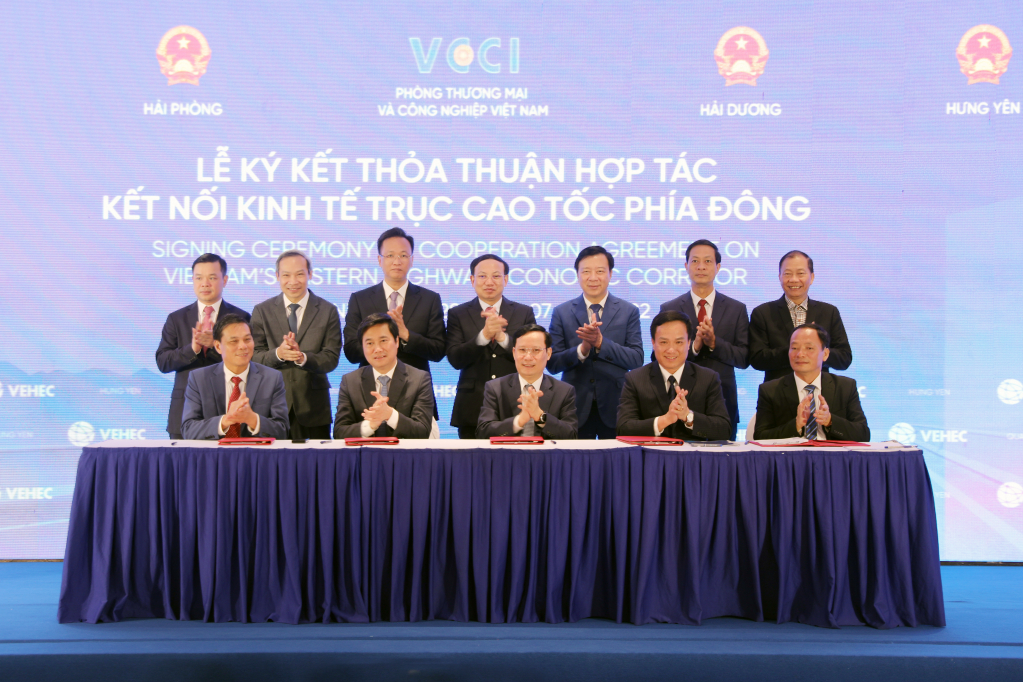
Specifically, in July 2022, four localities – Quang Ninh, Hai Phong, Hai Duong, and Hung Yen – signed an agreement to cooperate in connecting the Eastern Expressway economic corridor, based on the nearly 300km-long Hanoi-Mong Cai Expressway. Quang Ninh contributes nearly two-thirds of this length with a 176km-long provincial expressway system. This expressway also connects numerous industrial parks and urban areas, linking three international airports (Noi Bai, Cat Bi, and Van Don) and a system of international seaports, creating a region with a total natural area three times larger than Hanoi, five times larger than Ho Chi Minh City, and eight times larger than Da Nang.
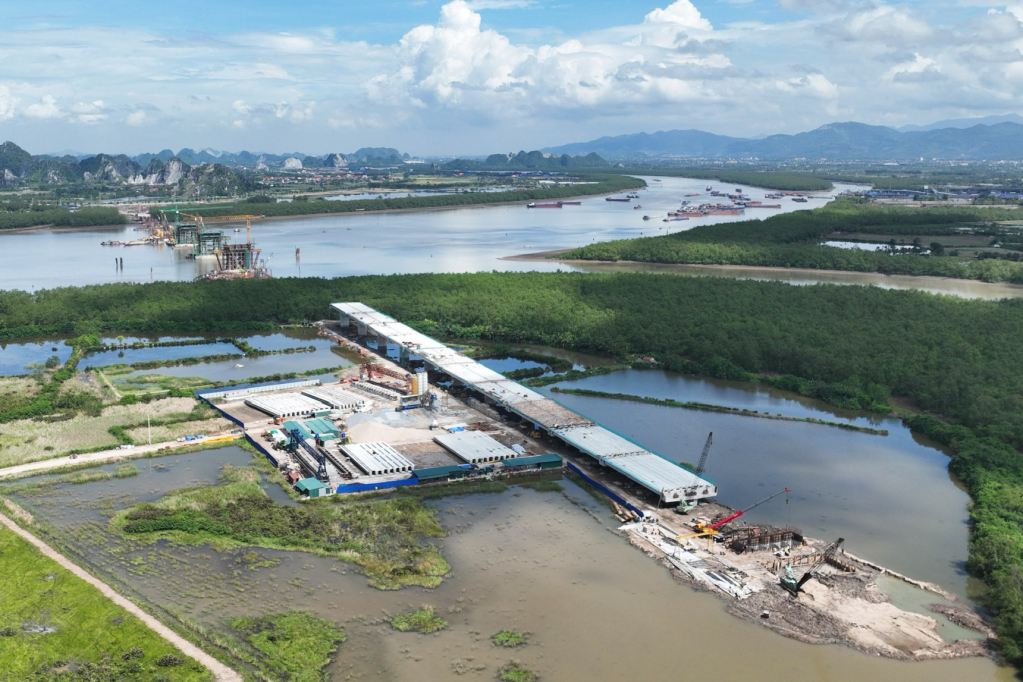
This interconnected network will help provinces overcome unfavorable barriers to development, enhance their position in the region and the country, strongly impact trade, goods transportation, tourism development, attract investment, and create jobs for the people. Shortening transportation distances contributes to reducing transportation costs, lowering investment costs, increasing profits for businesses, and promoting economic development. At the same time, it will become a transit point and logistics center for the region and the country; directly participating in the coastal expressway of the Northern Coast and the Red River Delta, making Quang Ninh a transportation gateway of the Northern economic region, connecting ASEAN trade with neighboring China.
The advantages are amplified by the development of transportation infrastructure, with Quang Ninh being one of the leading localities in terms of the speed of development and completion of a synchronous, modern, and interconnected socio-economic infrastructure system. This contributes to promoting regional linkages, territorial cooperation, and creating new development corridors and spaces, carefully considered and planned with the creation of landscapes and architectural works bearing the imprint of local identity, and is also an important milestone of the past half-term.
Source



![[Photo] Prime Minister Le Minh Hung presides over the thematic session on promoting science and technology development and innovation.](https://vphoto.vietnam.vn/thumb/1200x675/vietnam/resource/IMAGE/2026/06/23/1782207872934_ndo_br_dsc-1724-jpg.webp)