

From high-quality rice fields in Ea Pal to durian-producing regions in Krông Pắc, the collective economy is demonstrating a new role: not only linking farmers in production, but also reorganizing value chains, applying technology, and enhancing the competitiveness of key agricultural products in Dak Lak.
Transformation thanks to "modern agricultural managers"

Amidst the scorching heat of the 2025-2026 Winter-Spring harvest season, in the rice fields of Ea Pal commune (Dak Lak province), Mr. Chau Van Cam, a veteran farmer of Cooperative 714, wiped away his sweat and said: “A few years ago, we used to grow rice of all kinds. But since joining the cooperative and growing ST rice, farming has become much easier, with high yields, and traders buy directly from the fields, so we don’t have to worry about finding buyers.”
The 130 quintals/hectare yield achieved by the 714 Cooperative is no coincidence. Originating from the 714 Regiment with 387 hectares of rice paddies, this unit took a bold step: bringing Professor Ho Quang Cua's ST25 rice variety to "test" on the plateau. Nguyen Dinh Thanh, another member of the cooperative, recalled: “Initially, the cooperative provided the seeds to the people, guided them on techniques, and guaranteed the purchase of all their produce. Seeing the effectiveness, the farmers simply continued to use the cooperative's seeds.”
Mr. Vu Xuan Thu, Chairman of the Board of Directors and Director of Cooperative 714, confided: "Previously, we planted all kinds of rice, from O Mon, 4900 to Dai Thom 8... but when we saw that ST24 and ST25 had outstanding advantages in terms of record yield; excellent disease resistance; and thirdly, a price 12 or 13 times higher than regular rice, we decided to implement it. Initially, it was very difficult, but the cooperative decided to do it. Achieving that yield used it as leverage and a benchmark, so members came to us to ask to plant it themselves.”
Few people know that, more than a decade ago, "Farm 714" was being considered for dissolution. But after the introduction of ST rice, everything changed. Mr. Thu recounted: "We went down to the South three times to meet and invite Professor Ho Quang Cua to Ea Pal. Professor Ho Quang Cua personally inspected the technical parameters of this rice-growing area. From then on, a powerful transformation was born. To this day, rice farmers of Cooperative 417 don't have to worry about anything, from seeds, fertilizers, pest control to harvesting. Everything is taken care of by the cooperative, and companies and traders from the South come to buy all the rice here."
The firm foothold of the "world's best rice" variety in Dak Lak has created a proud reality: Central Highlands rice not only achieves exceptionally high yields but also boasts higher quality rice than the Mekong Delta. Furthermore, the recent crop rotation model of 2 rice crops followed by 1 sweet potato crop implemented by Cooperative 714 has brought farmers a value of up to 800 million VND/hectare/year – a figure previously unimaginable.
If Cooperative 714 is the symbol of the rice industry, then the Clean Agricultural Services Cooperative (Krong Pac commune) is the "brain" of the durian export region. Here, a peculiar management model has emerged: The head of the cooperative - Mr. Mai Dinh Tho, former Standing Deputy Secretary of the Krong Pac District Party Committee (old) - owns no assets in the cooperative.
He took us around to all the durian orchards in every nook and cranny, but when I asked where his orchard was, Mr. Tho said, "There aren't any trees there!" Mr. Tho also didn't contribute any assets to the collective. He was simply the manager of the cooperative and had no need to "transform collective interests into individual interests"—unlike many other collective economic organizations.
This very "proletarian" spirit instilled absolute confidence in the farmers. He didn't join the cooperative to sell his durians, but to organize, connect, and establish standards. At Mr. Tho's cooperative, the participation fee is only 500,000 VND, but the mandatory condition is strict adherence to the most rigorous common standards. Among the members of the clean agricultural service cooperative are Catholic and Buddhist organizations.
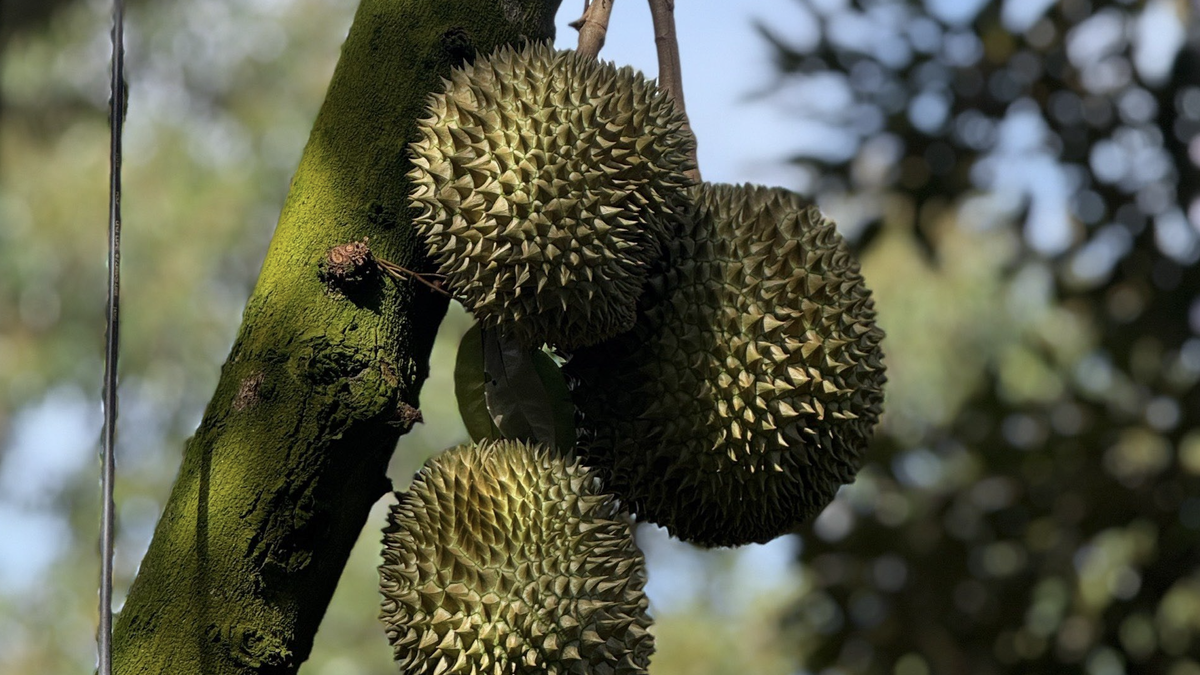
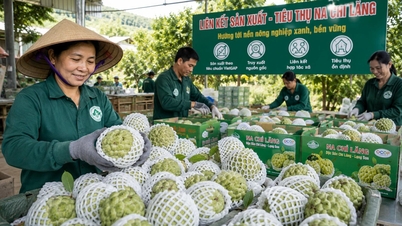
From 13 farmer households participating in the establishment of the cooperative, there are now nearly 200 households voluntarily becoming members, participating in production on an area of 150-196 hectares; of which, 10 planting area codes have been granted with nearly 100 hectares meeting export standards, and 146 hectares have achieved VietGAP certification. Each year, the cooperative harvests nearly 4,000 tons of durian, generating revenue of hundreds of billions of VND.
What Mr. Tho is building is not simply a durian farming cooperative. He is building a production organization system. Each durian orchard is managed by data. "Electronic brains" are installed in the soil to measure moisture and pH levels, and automatically "open valves" when the soil "requires" it.
"A consumer anywhere in the world can scan the durian's code and know its full origin; they'll know which fruit it is, from which tree in whose garden in Krông Pắc, and what the cultivation process was like!" Mr. Thọ said.
Mr. Tho affirmed: "Our farmers are not weak in terms of physical strength, but rather in their organizational skills. To go far, we must go together and work based on data."
The cooperative model is the core link of the collective economy.

From the stories of Cooperative 714 and the Clean Agricultural Service Cooperative, we can gain a clearer picture of the development of the collective economy in Dak Lak in recent years. The period from 2020 to 2025 is the period of strongest growth in terms of the number of cooperatives in the collective economic sector. The entire province established 468 new cooperatives, achieving more than 170% of the set target, an increase of about 40% compared to the previous term. Currently, Dak Lak has 1,201 active cooperatives.
The significant increase in the number of cooperatives shows that the cooperative economy is not only not shrinking in role but is becoming an essential need of modern agriculture. The cooperative model is gradually shifting from a supporting role to organizing production, gathering farmers, creating large-scale raw material areas with uniform processes and product quality, thereby enhancing the value and competitiveness of key agricultural products in Dak Lak.
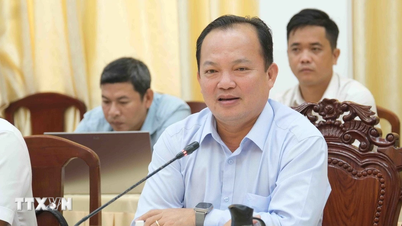
This is a concrete manifestation of the spirit of Resolution 20-NQ/TW on the development of the collective economy and Resolution 57-NQ/TW on breakthroughs in the development of science, technology, innovation, and national digital transformation. According to Mr. Huynh Bai, Chairman of the Dak Lak Provincial Cooperative Union, the new-style cooperatives currently play the role of a "link" connecting and gathering farmers to produce according to a unified process, creating large raw material areas with consistent quality and increasing value for both the collective and individual members.
The collective economy in Dak Lak has undergone a strong and effective transformation due to several factors. The Dak Lak Provincial Party Committee has issued a program for the development of the collective economy; the Provincial People's Council has issued a resolution along with many supporting mechanisms and policies. In addition, there has been increasingly close coordination between the Provincial Cooperative Union and various departments, agencies, and localities in the implementation process.
Most cooperatives have gradually transformed their organizational and operational models in accordance with the 2023 Cooperative Law, innovating management methods, strengthening linkages with members, and gradually adapting to the requirements of the market economy. In many localities, cooperatives have become the nucleus of production linkages, helping people change farming methods and increase the value of agricultural products.
The period 2025-2030 is identified as a time for accelerating digital transformation and enhancing the competitiveness of the collective economy. According to Mr. Huynh Bai, in implementing the spirit of Resolution 57-NQ/TW and Resolution 68-NQ/TW of the Politburo, the Provincial Cooperative Union will focus on supporting cooperatives in applying digital technology throughout the entire production chain, from raw material management and production organization to product consumption.
Another important objective is to promote value chain linkages between cooperatives and businesses, forming large-scale production areas that are unified in terms of production processes, trade, and benefits. When people produce together according to the same standards, build brands together, and participate in e-commerce platforms together, it will create much greater value than individual production.
"The most important thing now is that society's perception of the collective economy has changed significantly. The collective economy is no longer seen as simply a sector needing support, but is becoming an important economic component capable of creating great value, measured by its contribution to social growth, how much value it creates for the people, for the provincial economy, and for the nation as a whole," Mr. Huynh Bai emphasized.
Source: https://baotintuc.vn/kinh-te/dot-pha-phat-trien-kinh-te-tap-the-20260601184707403.htm

![[Photo] General Secretary and President To Lam presides over a meeting on preparations for the review of one year of operation of the three-tiered government system.](https://vphoto.vietnam.vn/thumb/1200x675/vietnam/resource/IMAGE/2026/06/02/1780391821195_a1-bnd-4595-9717-jpg.webp)























































Comment (0)