

.jpg)
Adapt to the local "weather culture".
In mid-2016, Mr. Le Quoc Viet, head of the Quang Nam Destination Club, and his family left Hanoi and moved to Hoi An, Da Nang. After nearly a decade of running a tourism business in Central Vietnam, enduring major and minor storms and floods, he gradually learned to adapt and accumulated a wealth of experience in operating accommodation during the rainy and stormy season.
"Tourism is not just about adapting to trends and markets, but also requires harmony and adaptation to local cultures, including 'weather culture.' Tourism businesses and accommodation establishments always need to be prepared with contingency plans to deal with storms and floods."
"Especially for small homestays where the owner isn't often present, there should be detailed instructions on how to handle emergencies. Prepare storm-resistant supplies and have a backup supply of clean water for guests to use immediately when needed. Plan your food and supplies, prioritizing vegetables, fruits, and dry ingredients to last for several days to a week," Viet shared.
He also emphasized the need for tourism establishments to regularly update tourists with accurate weather information: “Customers will carefully consider whether to arrive or check out early, and we should facilitate free refunds/cancellations, reassure them, and inform them about the thorough preparations made by the accommodation provider so they can feel at ease. In emergency situations, early evacuation of guests should be implemented to ensure their safety and allow the establishment owner to focus on handling the situation and protecting property.”
To ensure timely and effective rescue and support for tourists, Mr. Viet suggested establishing community response teams/groups within residential areas and accommodation and tourism businesses. These teams would proactively gather information and understand needs, be ready to cooperate and support each other during natural disasters, and promptly mobilize on-site resources.
For tourists, preparation and composure are the most important factors. This is the view of Dao Dang Cong Trung, a sports coach and underwater tour guide who regularly participates in rescuing and assisting locals and tourists during floods in Da Nang.
“When there are warnings of heavy rain or rising water levels, remain calm, follow the instructions of the hotel or local authorities, and do not travel by private vehicle without knowing the situation. In emergency situations, guests should stay in contact with tour representatives, guides, or diplomatic agencies, and equip themselves with some basic survival skills such as swimming, using life jackets, keeping warm, and finding floating objects to protect themselves when necessary…,” Mr. Trung advised.
Rainy and stormy days are no longer the "off-season".
According to information from the Da Nang Department of Culture, Sports and Tourism, in light of the complex weather situation, the city's tourism industry has coordinated with relevant agencies and units, guiding accommodation establishments to proactively implement various solutions to provide timely support and ensure the highest level of safety for tourists during rain, storms, and floods.
The department also developed contingency plans, compiling a list of accommodation establishments that meet safety standards to provide support and welcome guests when necessary; many establishments offered room discounts ranging from 20% to 70%, and some even provided free accommodation for tourists.
During the prolonged period of heavy rain and flooding from late October to early November, the department closely coordinated with local authorities, rescue forces, and accommodation establishments to promptly evacuate tourists from deeply flooded areas. Information was continuously updated through the Tourist Support Center's hotline and a multi-platform online communication system to receive and provide quick assistance to tourists in all emergency situations.
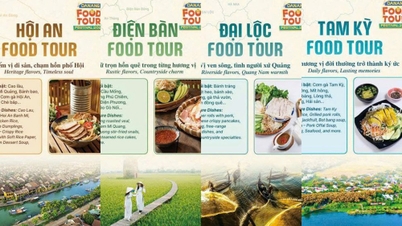
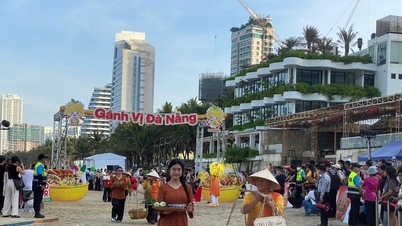
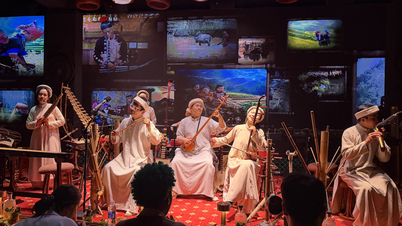
To minimize the adverse impacts of the weather, Da Nang's tourism industry has quickly implemented flexible plans and programs to both respond to natural disasters and restore tourism activities, continuing to promote and attract tourists in the remaining months of the year. The city is focusing on indoor tourism products suitable for the rainy and stormy season, such as the Da Nang Food Tour, museum and exhibition visits, art appreciation, and shows… to provide tourists with more convenient and safe experiences even in unfavorable weather conditions.
In addition, the city is also researching and implementing a number of post-storm reconstruction activities in a creative and civilized manner, with the participation of the community, tourists, and international experts… such as cleanup programs, landscape restoration, and socially responsible tourism activities, which will bring practical value to the community while creating meaningful and humane experiences for tourists.
In October 2025, the number of tourists staying in Da Nang is estimated to reach over 1.3 million, an increase of more than 25% compared to the same period in 2024. Of these, international tourists are expected to reach approximately 614,000, higher than the previous month and an increase of more than 28% compared to the same period in 2024. This data shows that rainy and stormy days are no longer a "low season" for the city's tourism. When each tourism business has contingency plans in place, and each tourist equips themselves with knowledge and calmly travels to their destination, trust and mutual support will become the core driving force for sustainable tourism development.
Source: https://baodanang.vn/du-lich-mua-thap-diem-3311965.html
![[Photo] General Secretary and President To Lam presides over a meeting on assessing national development resources.](https://vphoto.vietnam.vn/thumb/1200x675/vietnam/resource/IMAGE/2026/05/20/1779253785852_a1-bnd-2943-8519-jpg.webp)







































































Comment (0)