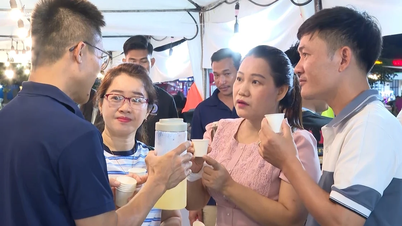
Passion stemming from a love of the land.
The agro -ecotourism area of Mr. Phong's family is the result of many efforts in propaganda, mobilization, guidance and technology transfer, as well as capital support through poverty reduction policies, state loan policies through the Social Policy Bank, commercial banks, etc. Introduced by the leaders of the People's Committee of Nam Thanh Mien commune, Hai Phong city, we visited the unique agro-ecotourism model of Mr. Vu Van Phong in Trieu Duong village.
Surprisingly, this picturesque agricultural eco- tourism area, nestled amidst a peaceful countryside near a heron island, is considered a "precious gem" of the Northern Delta region. Under the cool shade of trees, in gardens filled with various fruit trees in bloom and bearing fruit, the air is intoxicating. Mr. Phong shared: "My hometown is a purely agricultural area, but for a long time, people haven't paid much attention to agricultural production (because most work as factory workers). I myself love the land and farming, but relying only on two rice crops a year has led to hardship and poverty."
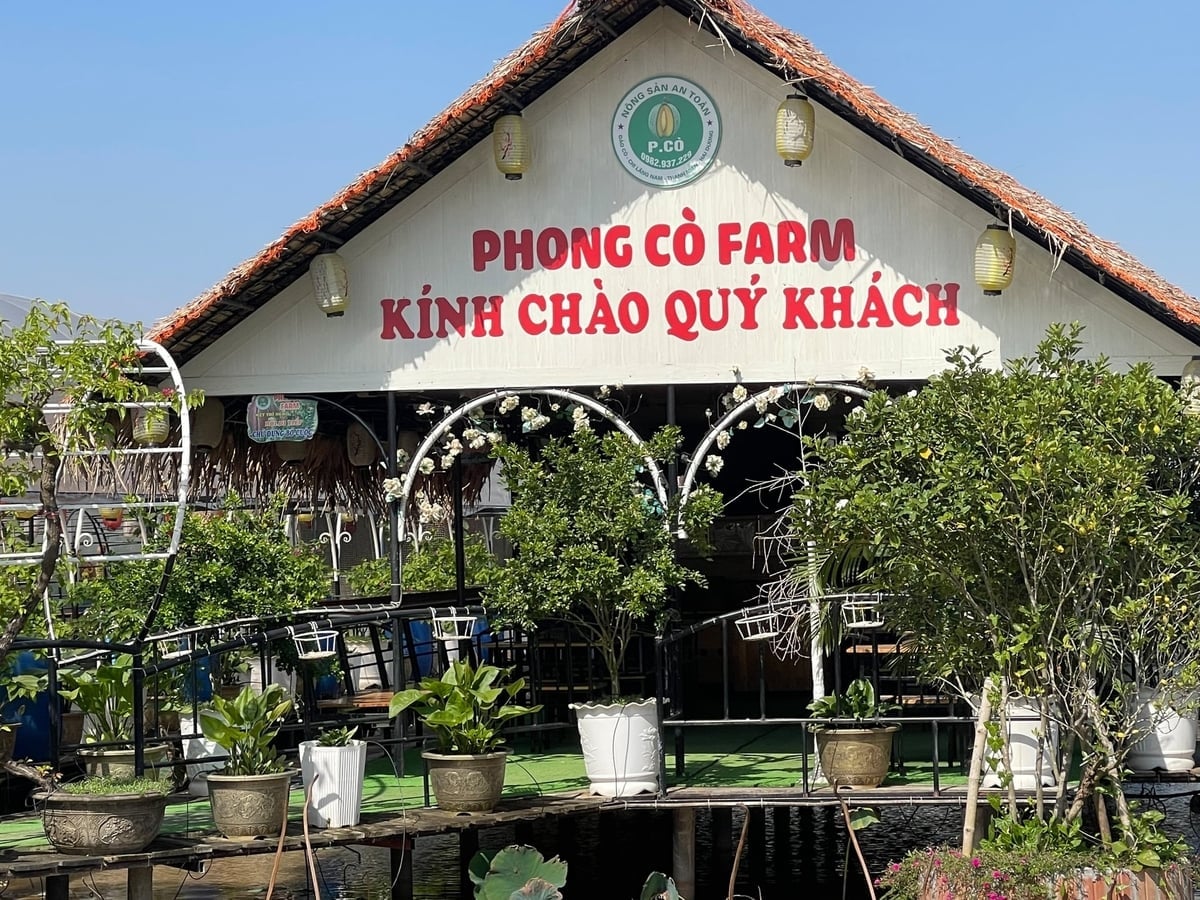
Mr. Phong's eco-tourism and agricultural resort is as beautiful as a painting amidst the peaceful countryside. Photo: Pham Hoang.
In 2013, information from the local government about the policy of consolidating land for people to implement the VAC (Garden-Pond-Livestock) model acted as a "breath of fresh air," motivating Mr. Phong to strive to overcome poverty from his homeland. He began converting 2,600 square meters of land to grow vegetables and agricultural products. Initially, Mr. Phong was very confused and worried, but through the dissemination of information and advice from the local government on building agricultural models that yield high economic efficiency, combined with learning from successful models, books, newspapers, media, and gardening groups, he gained confidence and passion to grow clean vegetables and agricultural products.
With the inherent diligence, hard work, and eagerness to learn about science and technology from long-standing vegetable and fruit growing areas in the region and from experienced people, Mr. Phong has built a model of a transitional farming area, growing seasonal crops such as cucumbers, tomatoes, melons, and other vegetables, which he sells to the market annually, generating high income (3-5 times higher than rice cultivation).
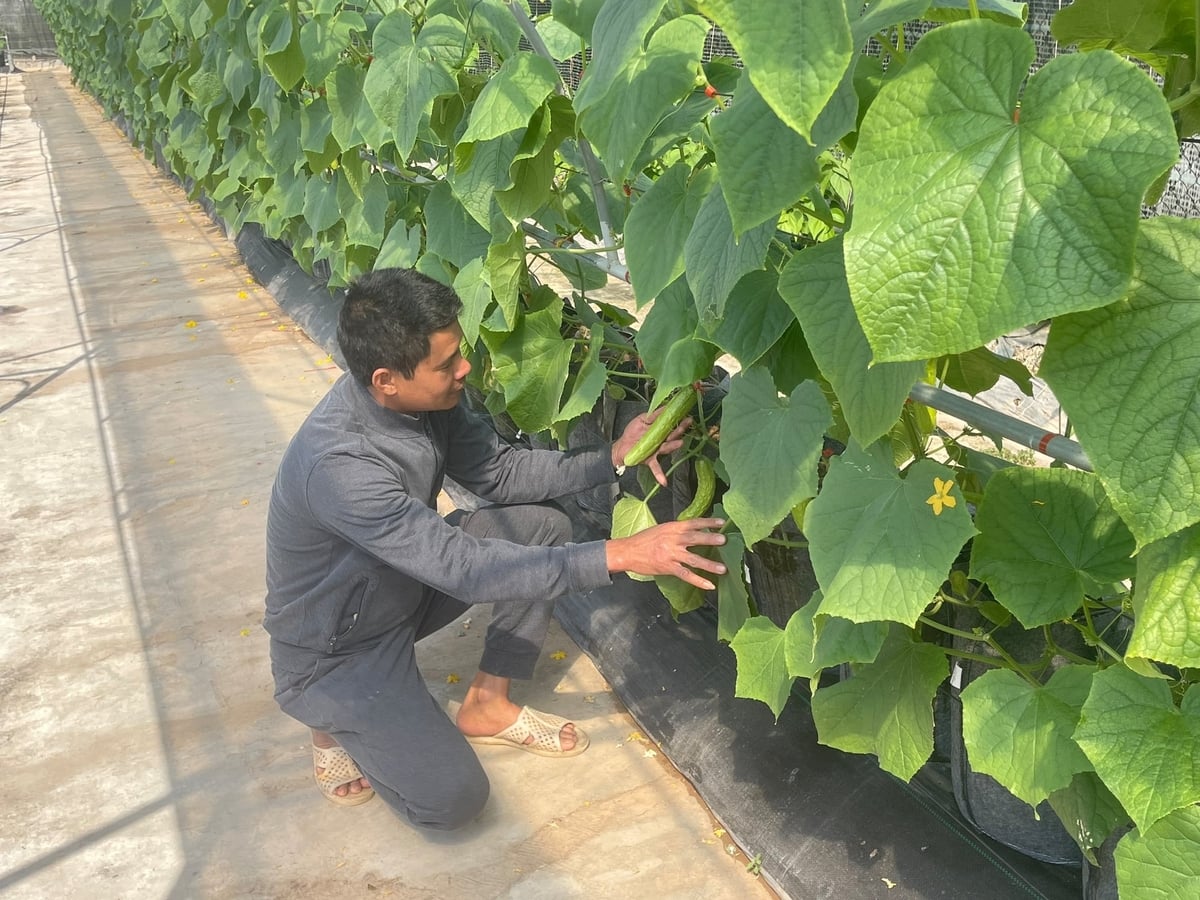
Mr. Phong checks the growth rate of cucumbers. Photo: Pham Hoang.
This experience also motivated him to develop a clean and innovative agricultural model into an ecotourism area, serving local and international visitors who come to tour and purchase products directly from the farm, and students who come to learn how to plant and care for trees, enjoy flowers and fruits, and cultivate a love for labor. With the money he saved over nearly 10 years from converting 2,600m2 of agricultural land and additional loans, Mr. Phong leased 12,500m2 (in 2023) from villagers to build a model combining agricultural production with ecotourism.
According to Mr. Phong, although the agro-tourism model does not generate as high an income as the clean agriculture model and requires more investment of money and effort, driven by his love for his homeland and his desire to introduce local specialty fruits and clean vegetables to people, he set aside short-term gains and invested nearly 5 billion VND in this model.
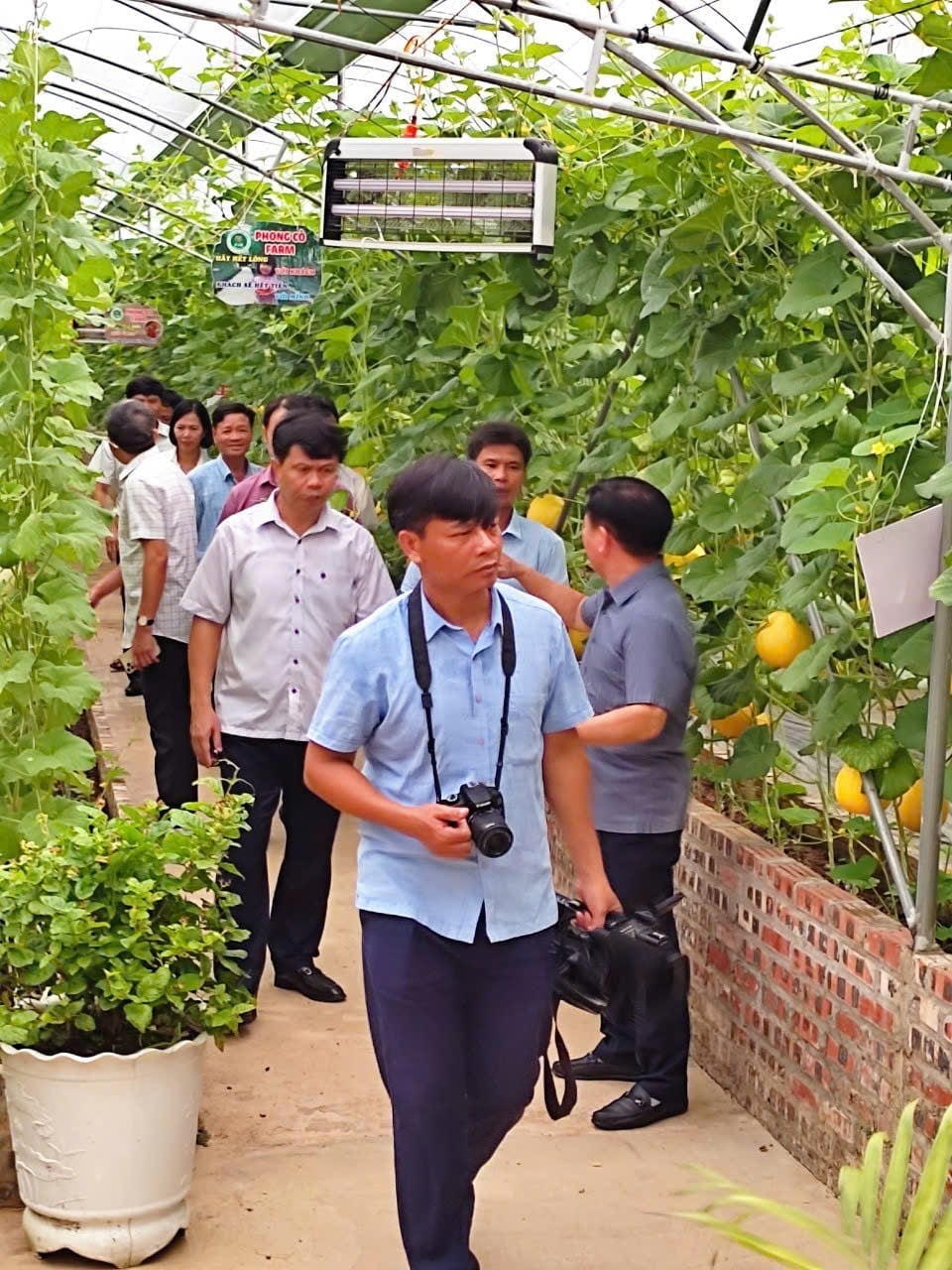
Phong's ecotourism model attracts thousands of visitors annually who come to see the farm and buy organic products. Photo: Van Phong.
Unique agricultural model
To date, Phong's agro-ecotourism model is well-planned, with diverse crops planted in rows and furrows lined with wood for visitors to walk through.
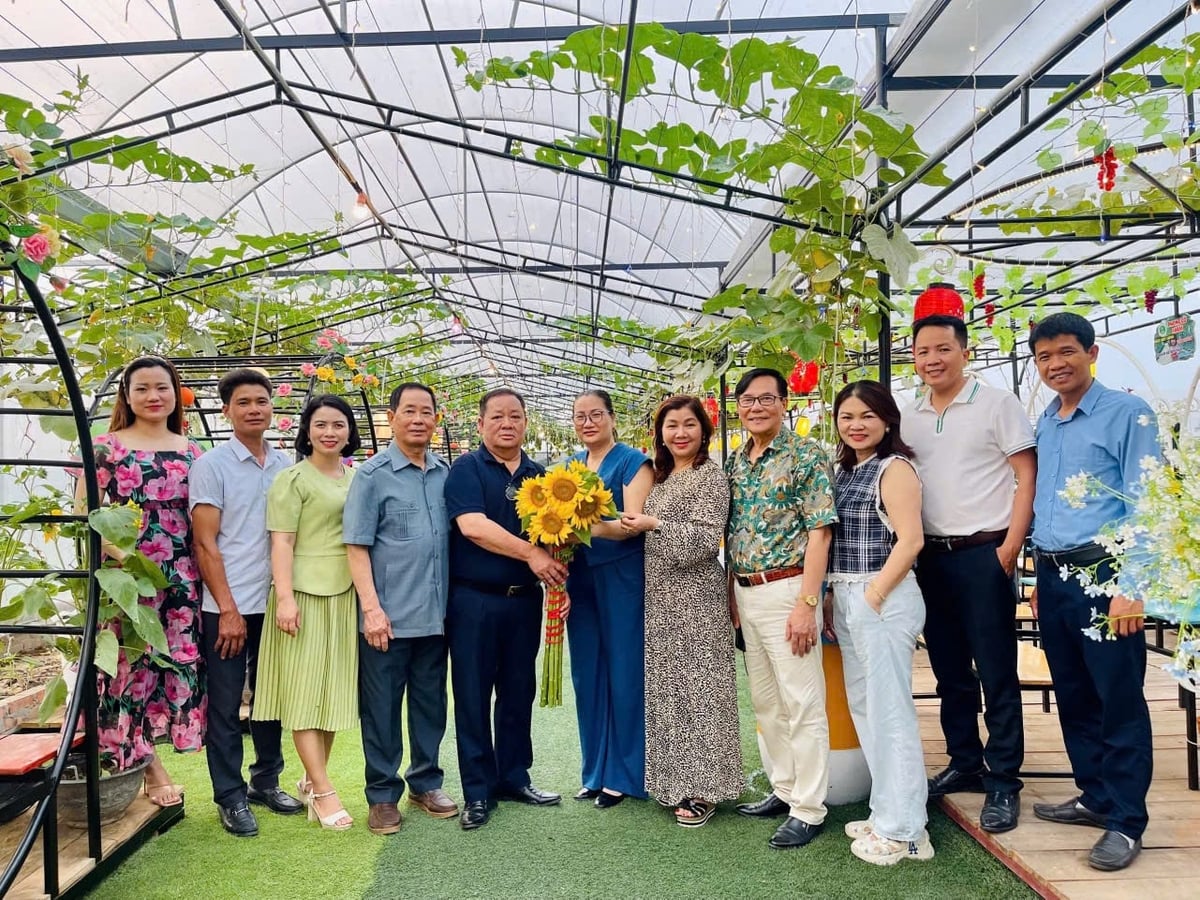
Agricultural tourism also helps create jobs and increase income for local people, while helping to maintain and promote rural culture and regional life. Photo: Van Phong.
Mr. Phong led us to visit his greenhouse where he grows various crops: cherry tomatoes, cantaloupe, organic vegetables, etc. As we walked, he explained: "Agricultural tourism is a type of tourism built and organized based on agricultural production activities to serve the sightseeing and entertainment needs of tourists. In this type of tourism, visitors can tour, learn about, and participate in agricultural production alongside local people, such as planting, caring for, harvesting, and processing agricultural products. Agricultural tourism brings many great values to agricultural production, while also helping to develop and promote local tourism and businesses. This helps increase consumption, contributes to solving the problem of agricultural product output, and promotes the development of agricultural trade. The development of agricultural tourism also helps create jobs, increase income for local people, and helps maintain and promote rural culture and life in the region."
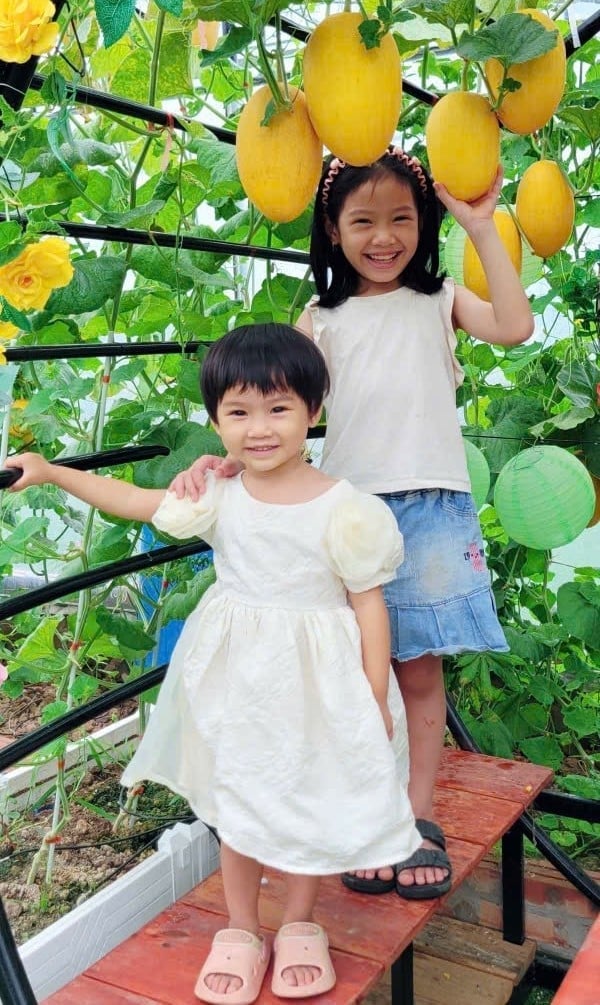
An eco-tourism destination designed to educate children about the value of labor and plants. Photo: Van Phong.
To achieve high productivity and ensure the quality of clean products, Mr. Phong has actively applied science and technology, promoting clean agricultural production in an organic direction with high economic value, growing crops in greenhouses, and using advanced Israeli drip irrigation technology. Fertilizers and irrigation water are supplied to each melon plant and vegetable bed... This allows for daily control of water and fertilizer quantities. Each melon plant receives the correct and sufficient nutrients and water to ensure optimal growth. In addition, the drip irrigation system and automatic pumping system have significantly reduced labor costs.
To ensure the plants receive the necessary nutrients for growth, Mr. Phong buys fish, eggs, snails, and earthworms to ferment into a nutrient solution for fertilizing his crops. After proper fermentation and sufficient time, he dilutes this solution with water according to established ratios and standards to water the plants, replacing other fertilizers. As a result, the yield, production, and quality of his vegetables and fruits are consistently higher than those grown using traditional methods.
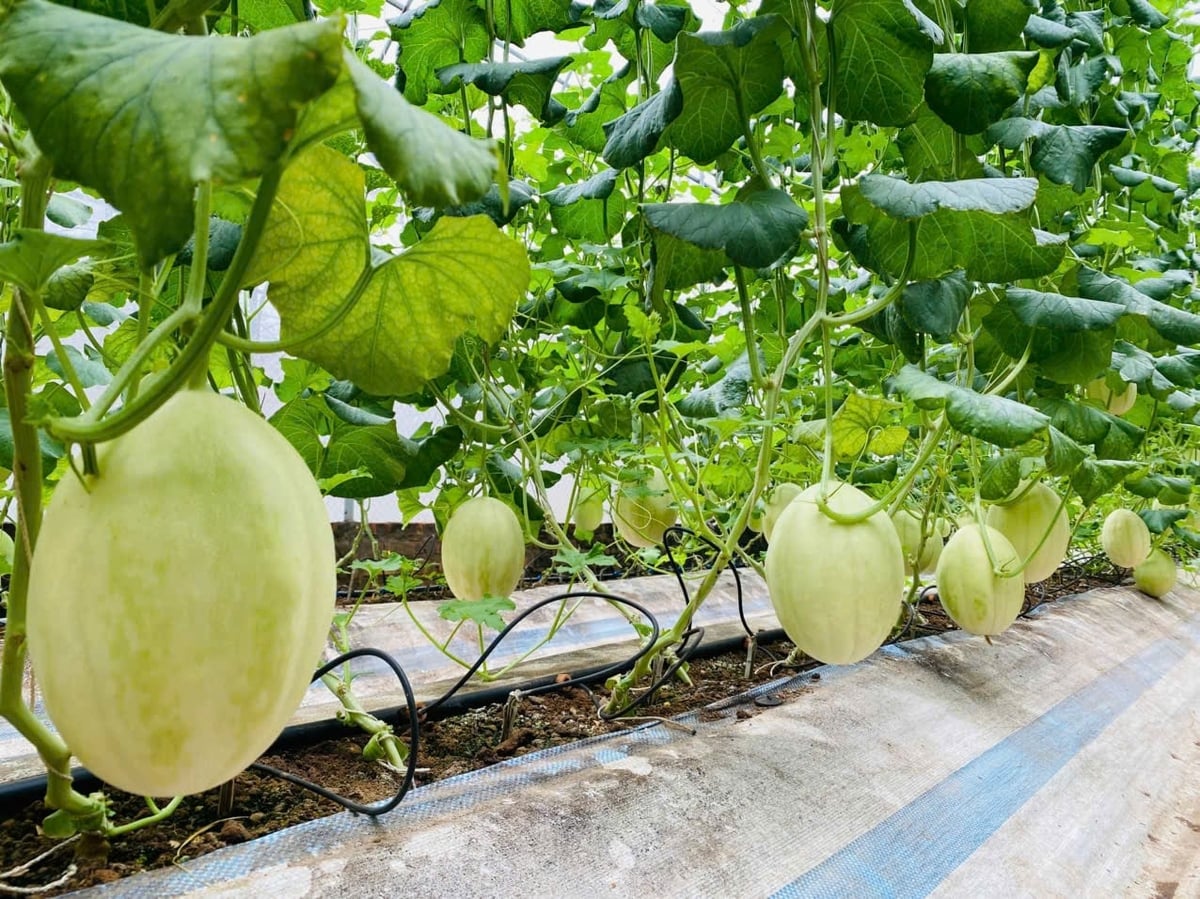
The yield, output, and quality of vegetables and fruits from Mr. Phong's garden are consistently higher than those grown using traditional methods. Photo: Van Phong.
Currently, Mr. Phong's eco-tourism model has created jobs for 5 local workers, with an average income of 6 million VND/month/person. The model generates an annual profit of approximately 400-450 million VND for Mr. Phong's family, enabling them to become well-off farmers with stable incomes and helping many other farming households escape poverty.
Source: https://nongnghiepmoitruong.vn/du-lich-nong-nghiep-giup-nguoi-dan-vuon-len-thoat-ngheo-d787629.html



![[Photo] Prime Minister Le Minh Hung presides over the thematic session on promoting science and technology development and innovation.](https://vphoto.vietnam.vn/thumb/1200x675/vietnam/resource/IMAGE/2026/06/23/1782207872934_ndo_br_dsc-1724-jpg.webp)
























![The Essence of the Viet Bac Villages: [Part 3] The Precious Fragrance of Nghinh Tuong](https://vphoto.vietnam.vn/thumb/402x226/vietnam/resource/IMAGE/2026/05/29/1780020600366_5237-tinh-tuy-ban-lang-viet-bac-bai-3-chuyen-o-nghinh-tuong-050626_700.jpeg)
![The Quintessence of Northern Vietnam's Villages: [Part 2] The Famous Cassava Noodles of Kunming](https://vphoto.vietnam.vn/thumb/402x226/vietnam/resource/IMAGE/2026/05/28/1779937455892_3929-3144-mien-dong-15-nongnghiep-023138.jpeg)
![The Essence of the Village: [Part 1] Wine on the mountain, tea in the clouds - Bang Phuc](https://vphoto.vietnam.vn/thumb/402x226/vietnam/resource/IMAGE/2026/05/27/1779841729178_3821-1jpg-nongnghiep-103814.jpeg)