

It is increasingly being valued in Mong Cai.
Over the years, Mong Cai City has made many efforts to effectively preserve and promote cultural heritage values. Especially to attract tourists to spiritual tourism destinations and to be a safe and attractive destination for domestic and international visitors, Mong Cai has allocated significant resources and promoted social mobilization to carry out the work of preserving, restoring, and effectively promoting the historical and cultural values of historical and cultural relics in the area.
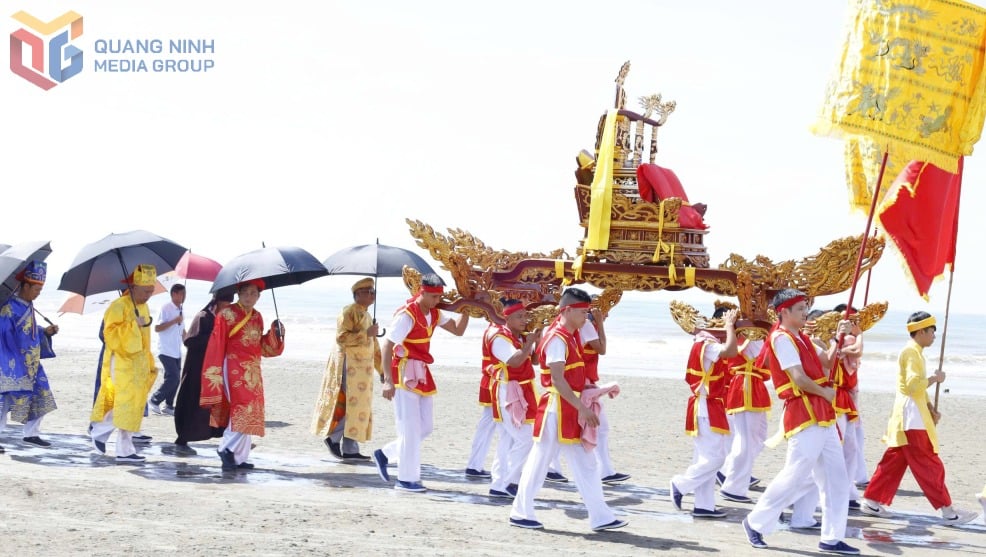
In late June 2025, visitors to Tra Co beach (Mong Cai City) will not only be able to immerse themselves in the cool, blue waters but also experience the Tra Co Temple Festival. The Tra Co Temple Festival is one of the unique festivals, deeply rooted in the culture of the Northeast coastal region of Vietnam, clearly reflecting the Vietnamese way of life and the close-knit, united, and mutually supportive community spirit. The festival has been revived and held annually since 1993. This year's festival will take place over four days, from June 25th to 28th (corresponding to May 30th to June 3rd in the lunar calendar), with many rich and diverse activities aimed at continuing and promoting the fine cultural traditions of our ancestors; widely publicizing the image of the land and people of Tra Co and Mong Cai; and contributing to the preservation and promotion of Mong Cai's cultural heritage. The ceremonial part includes: the procession of the palanquin to welcome the deity on the sea, the bathing ceremony, the procession of the fruit and candle trays into the temple, the procession of the elephant to the temple to pay homage to the deity, the summoning ceremony, the installation ceremony; the setting up of the main altar, calling out the green-covered register; the removal of the main altar, calling out the list of the new altar bearers; the sending off of the lanterns, the offering of sacrifices... The festive part has many lively activities, such as: the "Elephant" competition, blindfolded drum beating, and painting.
Along with the Tra Co Temple Festival, the Binh Ngoc Temple Festival also takes place from June 24th to 26th (corresponding to May 30th to June 2nd in the lunar calendar) with many rich and diverse cultural, artistic, and sporting activities, aiming to continue and promote the fine cultural traditions of our ancestors; and to widely publicize the cultural image, beliefs, and hospitable people of Binh Ngoc. The Binh Ngoc Temple was formed during the process of Binh Ngoc separating from Tra Co to establish Binh Ngoc commune in the early 20th century. Around 1910, the Binh Ngoc Temple was built. In 2020, the Binh Ngoc Temple historical site was recognized as a provincial-level historical relic.
The Mong Cai border region currently has 5 national-level historical sites: Tra Co Temple, Nam Tho Pagoda, Xuan Lan Pagoda, Xa Tac Temple, and Po Hen historical site; and 9 provincial-level historical sites: Trang Vi Temple, Van Ninh Temple, Bau Temple, Tran Phu Hill, Thac Ma Temple, the Ho Chi Minh Memorial Site in Tra Co Ward, the site where the first Communist Party branch of Mong Cai City was established, Binh Ngoc Temple, and Quat Dong Temple. Two intangible cultural heritage sites are ranked at the national level: the Tra Co Temple Festival and the Nha To Singing and Dancing at the Temple Gate. Mong Cai currently hosts several annual festivals, including: the Van Ninh Temple Festival, the Lang Bau Temple Festival, the Dan Tien Temple Festival, the Xa Tac Temple Festival, the Thanh Mau Temple Festival, the Tra Co Temple Festival, the Dong Thinh Temple Festival, the Trang Vi Temple Festival, and the Binh Ngoc Temple Festival.
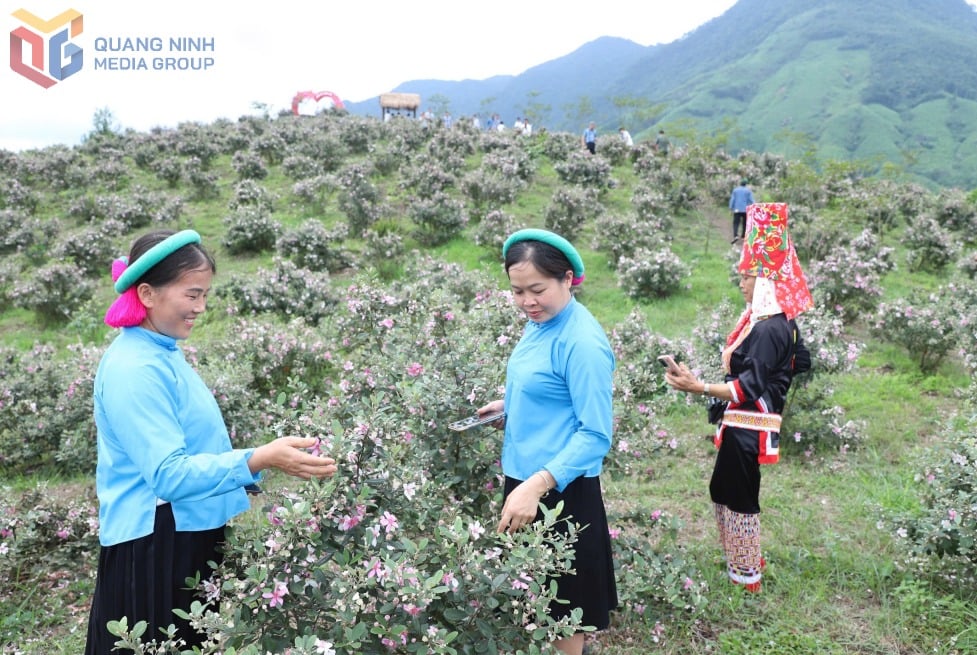
Since the beginning of the year, Mong Cai is truly an attractive destination, not only for its unique tourism products but also for its culturally and spiritually significant sites. Locals and tourists alike come to offer incense, pray to Buddha, and seek peace at sacred places such as the Xa Tac Temple and Pagoda, Tra Co communal house, Linh Son Pagoda, and Xuan Lan Pagoda. Along with traditional folk festivals, there are now more modern cultural festivals such as the Mong Cai Summer Festival and the Border Sim Flower Festival. The Border Sim Flower Festival is linked to community tourism development activities in Hai Son commune. The sight of Dao and San Chi ethnic girls showcasing and displaying agricultural products grown by their own hands, and Dao Thanh Y mothers guiding their children in embroidery and sewing, further delights visitors with the unique cultural identity of the ethnic communities.
Thanks to well-organized festivals, the total number of tourists visiting Mong Cai in the first six months of 2025 reached over 2.633 million people, an increase of over 26% compared to the same period in 2024; revenue from tourism services reached over 6.2 trillion VND.
Source: https://baoquangninh.vn/du-lich-van-hoa-o-vung-bien-3364591.html
![[Photo] Prime Minister Pham Minh Chinh presides over the fourth session on private economic development.](/_next/image?url=https%3A%2F%2Fvphoto.vietnam.vn%2Fthumb%2F1200x675%2Fvietnam%2Fresource%2FIMAGE%2F2026%2F01%2F31%2F1769835553414_ndo_br_dsc-7213-jpg.webp&w=3840&q=75)


![[Photo] General Secretary To Lam attends the Inauguration Ceremony of the Ho Chi Minh Memorial House at the E2 Hill historical site.](/_next/image?url=https%3A%2F%2Fvphoto.vietnam.vn%2Fthumb%2F1200x675%2Fvietnam%2Fresource%2FIMAGE%2F2026%2F01%2F31%2F1769831648495_vna-potal-tong-bi-thu-to-lam-du-le-khanh-thanh-nha-tuong-niem-chu-tich-ho-chi-minh-tai-di-tich-doi-e2-8564287-1-2231-jpg.webp&w=3840&q=75)


![OCOP during Tet season: [Part 3] Ultra-thin rice paper takes off.](/_next/image?url=https%3A%2F%2Fvphoto.vietnam.vn%2Fthumb%2F402x226%2Fvietnam%2Fresource%2FIMAGE%2F2026%2F01%2F28%2F1769562783429_004-194121_651-081010.jpeg&w=3840&q=75)


![OCOP during Tet season: [Part 2] Hoa Thanh incense village glows red.](/_next/image?url=https%3A%2F%2Fvphoto.vietnam.vn%2Fthumb%2F402x226%2Fvietnam%2Fresource%2FIMAGE%2F2026%2F01%2F27%2F1769480573807_505139049_683408031333867_2820052735775418136_n-180643_808-092229.jpeg&w=3840&q=75)


Comment (0)