

Despite attracting many visitors, is tourism truly strong and generating substantial economic value? At a recent seminar to provide feedback on the project "Developing tourism into a key economic sector in the new era," many leading experts frankly pointed out the "bottlenecks" of Vietnamese tourism.
High growth, but not yet substantial.
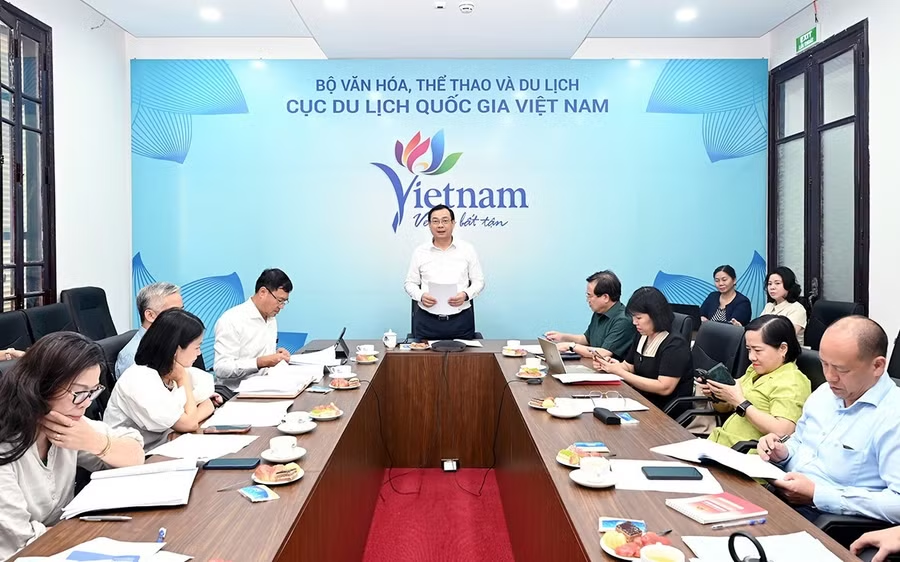
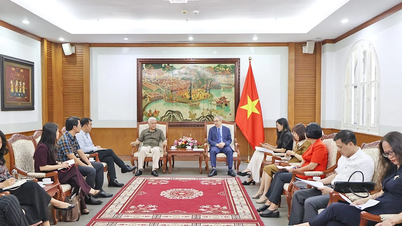
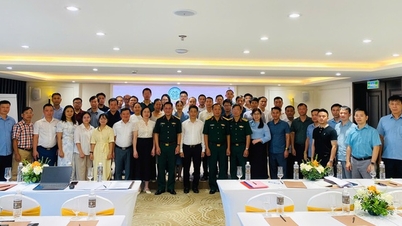
The Vietnam National Tourism Administration (Ministry of Culture, Sports and Tourism) recently organized a seminar on the project "Developing tourism into a key economic sector in the new era," seeking feedback from experts, scientists , and managers to ensure the quality and comprehensiveness of the project.
According to Mr. Nguyen Trung Khanh, Director of the Vietnam National Tourism Administration, the draft plan focuses on comprehensively evaluating the results of implementing Resolution 08-NQ/TW, from the contribution of tourism to the economy, market development, products, infrastructure, businesses, human resources to state management.
Although Vietnam's tourism sector has recovered from the Covid-19 pandemic and regained high growth momentum, realizing the targets for 2030 remains a major challenge. Therefore, the current issue is not simply about increasing the number of tourists, but how to improve economic efficiency and the quality of growth.
Accordingly, many issues were raised, such as the quality of tourism businesses, human resource development, digital transformation, market restructuring, and the development of high value-added products. These issues also reflect the reality that after many years of rapid growth, Vietnamese tourism is revealing many limitations of its extensive development model.
Associate Professor Tran Thi Minh Hoa, Deputy Director of Phenikaa University, believes that to clarify the goal of developing tourism into a key economic sector, it is necessary to supplement quantitative analyses of tourism's contribution to GDP, and to make comparisons domestically and internationally to clarify the "leading" role of the industry.
According to Ms. Hoa, evaluating the practical implementation of Resolution 08-NQ/TW needs to fully reflect both subjective and objective causes, including the significant impact of the pandemic, geopolitical changes, military conflicts, and shifts in international tourist flows.
Mr. Nguyen Manh Hung, from the Social Affairs Department of the Central Policy and Strategy Committee, suggested a thorough assessment of the "bottlenecks" in the implementation of Resolution 08, clarifying the meaning of tourism as a key economic sector.
We need breakthrough solutions, inter-sectoral and inter-regional coordination mechanisms; improved quality of tourism statistics and data; development of businesses capable of leading the market; and priority given to high-quality tourism segments with high added value.
The issues raised at the seminar show that Vietnamese tourism is facing the need to transform its growth model, from quantity-based development to in-depth development, focusing on quality experiences, competitiveness, and real economic value.
Tourism needs cultural depth.
One of the key points discussed by many experts at the seminar was the need to link tourism with the cultural industry, national soft power, and creative sectors. Accordingly, tourism needs to be closely integrated with the cultural industry and major events to create momentum for growth and enhance the attractiveness of destinations.
Associate Professor Dr. Nguyen Thi Thu Phuong, Director of the Vietnam Institute of Culture, Arts, Sports and Tourism, commented that the draft proposal needs to further clarify the role of tourism not only as a comprehensive, interdisciplinary economic sector but also as a field closely linked to the cultural industry and national soft power.
In reality, Vietnam's greatest advantage in tourism lies not only in its natural landscapes but also in its cultural depth and diverse identity. However, the exploitation of cultural values in tourism still faces many limitations. Many destinations are trending towards similarity, from pedestrian streets and night markets to mass-market service models. Meanwhile, the global tourism trend is towards cultural experiences, local character, and the authenticity of the destination.
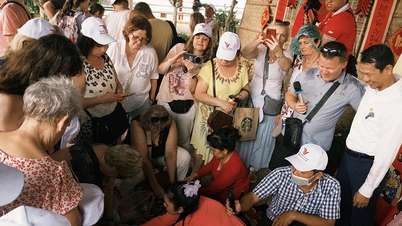
Issues regarding the quality of experiences and the development of cultural tourism have also been raised by many cultural and heritage experts in recent times. According to Associate Professor Dr. Nguyen Van Huy - former Director of the Vietnam Museum of Ethnology, for tourists to return, tourism must be truly professional and culturally oriented.
Mr. Huy observed that many community-based tourism models are falling into the trap of "over-the-top" reenactments, recreating customs or rituals that do not accurately reflect the real life of the community. "Tourists come to a remote area hoping to learn about real life. But if we over-the-top, decorated things that don't reflect real life, they certainly won't come a second time," Mr. Huy stated.
Besides product and experience, issues such as artificial intelligence (AI), Big Data, smart tourism, green economy, and digital transformation are of particular interest to experts, who suggest that these should be clearly identified as breakthrough pillars for the tourism industry in the coming period.
In particular, it is necessary to promote data-driven tourism governance, build a national tourism database, and accelerate the application of AI, Big Data, and digital twins in destination management to enhance both the experience and management efficiency. In addition, new trends such as green tourism, low-carbon tourism, and energy transition should also be incorporated into long-term development strategies.
Notably, many experts believe that the new era of tourism is not just about technology, but also about a shift in development thinking. Associate Professor Dr. Nguyen Thi Thu Phuong argues that it is necessary to clarify the meaning of the "new era" and affirm the role of tourism in relation to the cultural industry and the creative economy.
This means that Vietnam's competitive advantage in tourism in the future will not only lie in its natural landscapes or the number of visitors, but also in its ability to create in-depth experiences, preserve its identity, and protect the environment so that tourism not only attracts many visitors but also brings real economic value.
According to Director Nguyen Trung Khanh, the project aims to welcome 45-50 million international tourists, serve 160 million domestic tourists, and contribute approximately 14% to GDP by 2030. However, to realize these goals, the tourism industry needs breakthrough solutions in visa policies, infrastructure investment, product development, promotion and advertising, and digital transformation.
Source: https://giaoducthoidai.vn/du-lich-viet-nam-lam-sao-de-tang-truong-thuc-chat-post778554.html

![[Image] Hanoi's urban life under the challenge of a "scorching hot" environment](https://vphoto.vietnam.vn/thumb/1200x675/vietnam/resource/IMAGE/2026/05/25/1779706979265_nang-nong-t5-2026-minh-duy-7-4636-jpg.webp)



![[Image] Close-up view of the interchange connecting the two expressways and Long Thanh Airport.](https://vphoto.vietnam.vn/thumb/1200x675/vietnam/resource/IMAGE/2026/05/25/1779703378210_ndo_br_z7863716673926-224453a31600126cce10622af6290afd-4549-jpg.webp)











































































Comment (0)