

Currently, Quang Ninh province has integrated over 50,000 hectares of sea surface area for aquaculture into its provincial planning, of which over 30,000 hectares are within 6 nautical miles, and the remaining nearly 20,000 hectares are outside 6 nautical miles. This area is intended to attract investment and develop industrial, high-tech aquaculture zones.
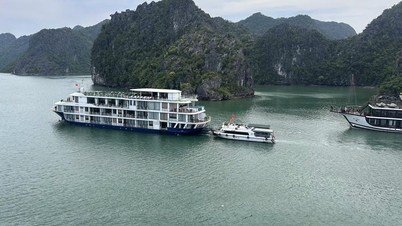
Since the beginning of 2026, Quang Ninh province has been gradually implementing a pilot plan to establish an industrial cluster for marine aquaculture. The Department of Agriculture and Environment has proactively advised and developed a project for the development of marine aquaculture focusing on the offshore and inshore areas of the Co To and Van Don special economic zones, with the goal of forming 500-1,000 hectares of industrial-scale marine aquaculture. Along with Van Don and Co To, the Bai Tu Long Bay area has also been identified as a key focus for high-tech, industrial marine aquaculture in the province, due to its vast, sheltered sea area, numerous large and small islands, and clean seawater and environment.
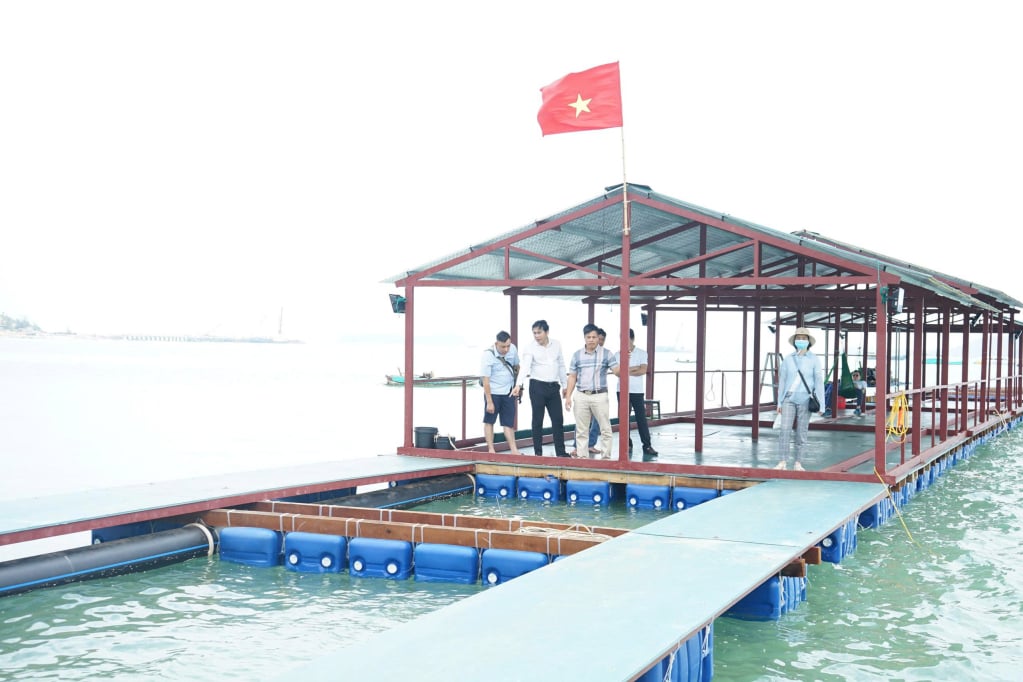
The most recent development in Quang Ninh's goal of establishing and developing an offshore aquaculture industrial cluster was in April when the Provincial People's Committee issued Decision No. 1286/QD-UBND allocating 209.8 hectares of sea area in the Co To Special Economic Zone to Bien Dong Squid Joint Stock Company for the construction of an industrial, high-tech marine aquaculture model. Immediately after receiving the land, the company quickly implemented several investment items, including the assembly of two large rafts, which are nearing completion and will be towed to the allocated sea area for production.
The aquaculture project in the Co To Special Economic Zone by Bien Dong Squid Joint Stock Company is designed according to an industrial marine farming model, applying high technology. The core infrastructure includes 20 HDPE circular cages with a diameter of 23m and 20 square cages measuring 6x6m, along with an administration building, a floating power station, and connecting bridges for operation. Bien Dong Squid Joint Stock Company will focus on squid farming, combined with marine fish, mollusks, and seaweed; the expected production is approximately 670,000 tons per year. With the granted sea area lease term until December 31, 2050, the aquaculture project in the Co To Special Economic Zone by Bien Dong Squid Joint Stock Company is expected to have high economic value, aligning with the province's sustainable marine aquaculture development orientation.
Mr. Nguyen Ba Ngoc, Director of Bien Dong Squid Joint Stock Company, said: "Offshore aquaculture activities within 6 nautical miles are directly affected by major storms, high waves, strong currents, and extreme weather phenomena due to climate change. Even a single unusual natural disaster can cause serious damage to the cage system, fry, and all invested assets at sea, even risking total loss. However, we have sufficient resources and determination to implement the project. What we need is a sufficiently clear legal framework to encourage businesses to invest long-term and genuine support."
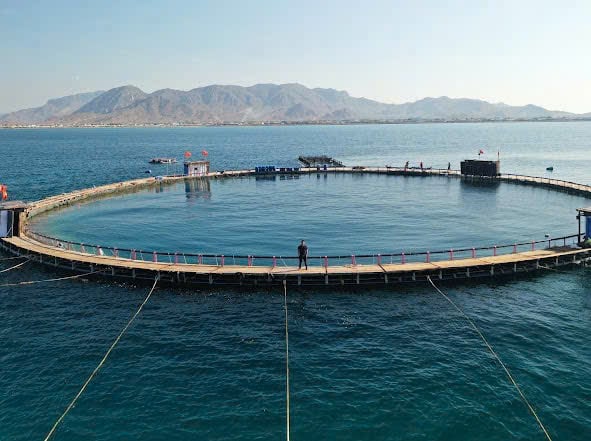
It is known that the long-term strategy and vision of Bien Dong Squid Joint Stock Company is to move towards a multi-purpose marine economic model, meaning that within the same marine space, high-tech aquaculture will be combined with green marine tourism, logistics services, and renewable energy, forming a marine economic ecosystem and a circular economy, thereby promoting the transition to a green, sustainable, and multi-valued marine development model. For Co To, this type of marine economic ecosystem is considered very suitable, in which the marine tourism model alone can be immediately implemented with attractive marine experiential tourism products such as "Green Marine Tourism" and "Happy Tourism" to generate additional short-term revenue for reinvestment in high-tech aquaculture activities.
According to the provincial plan, by 2030, industrial aquaculture will account for over 75% of production, with an average growth rate of 8-10% per year; by 2050, marine aquaculture is expected to contribute up to 80% of the province's total aquaculture production. With recent actions by the province and the determination of the East Sea Squid Joint Stock Company, high-tech industrial aquaculture in open sea areas beyond 6 nautical miles will not only expand livelihoods for coastal fishing communities and create opportunities to attract young workers back to develop the marine economy, but also, more importantly, will form long-term marine communities, increasing the economic presence in strategic islands and seas. This is highly significant in protecting national sovereignty and realizing the goal of making Vietnam a nation that is "strong in the sea and prosperous from the sea".
Source: https://baoquangninh.vn/dua-cong-nghiep-cong-nghe-cao-ra-bien-3409498.html

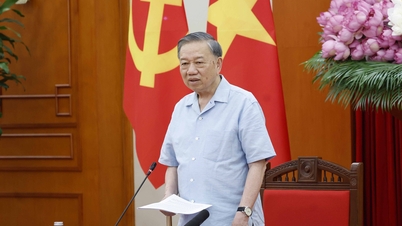
![[Photo] General Secretary and President To Lam presides over a meeting on preparations for the review of one year of operation of the three-tiered government system.](https://vphoto.vietnam.vn/thumb/1200x675/vietnam/resource/IMAGE/2026/06/02/1780391821195_a1-bnd-4595-9717-jpg.webp)










































































Comment (0)