

 |
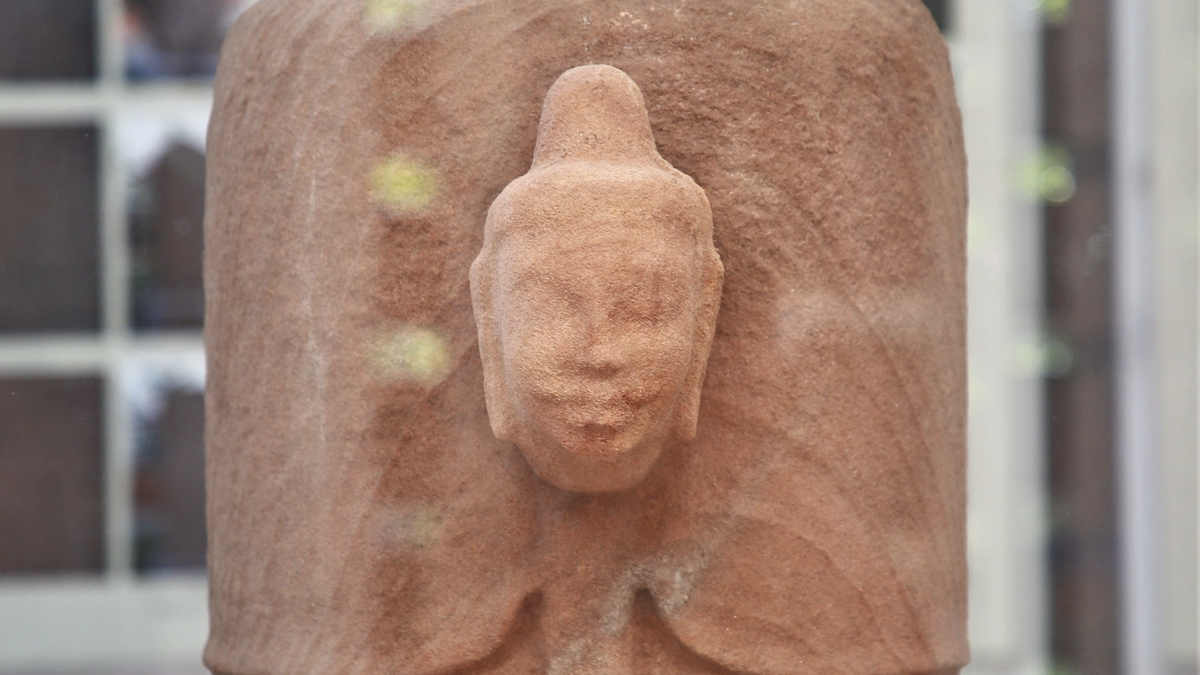
| Large cocoa plantations are integrated into a production, processing, and export chain in Phu Hoa commune. |
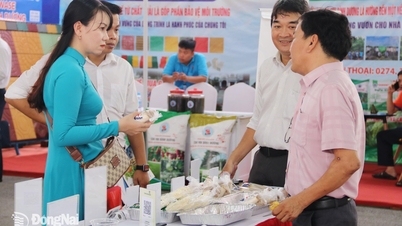
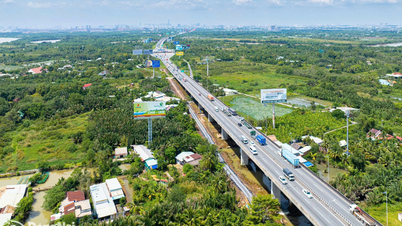
Following the merger, Dong Nai is not only a "capital" of livestock farming, but many types of industrial crops and fruit trees are also among the top in the country in terms of area, production, and value. Accordingly, Dong Nai city continues to be an attractive destination for large domestic and foreign investors, forming a production chain linking livestock farming, crop cultivation, processing, distribution, and export.
Developing commercial agriculture
Following the merger, Dong Nai City boasts a large agricultural land area exceeding 1 million hectares. The city maintains its position as the "capital" of livestock farming nationwide, with a large total number of livestock and poultry. Notably, from a very early stage, the livestock industry has developed in an industrial direction, applying modern technology on a large commercial scale. Specifically, the total pig population currently stands at 3.94 million, with approximately 90% of the total being raised on industrial-scale farms using modern technology. The total chicken population is approximately 32.6 million, with about 89% raised on closed-loop farm systems.
Recently, during a working visit to Dong Nai, Le Hong Phong, Director of the Central Veterinary Hygiene Inspection Center II, remarked that Dong Nai is the "capital" of livestock farming, with the largest proportion of livestock production in the country. The livestock industry attracts many large domestic and foreign corporations and businesses investing in a closed-loop chain from feed production and breeding to farming, processing, and export.
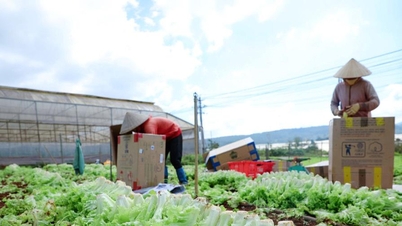
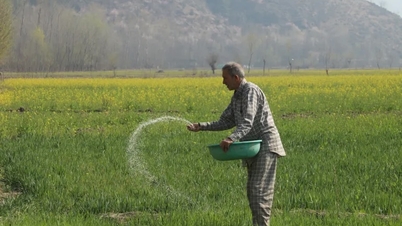
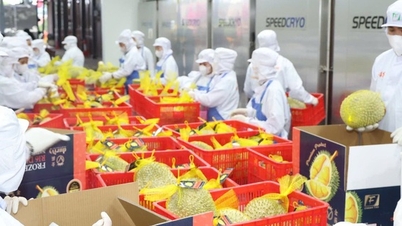
With a total area of over 503,000 hectares of perennial industrial crops and nearly 99,500 hectares of fruit trees, Dong Nai is also the "capital" of many key industrial and fruit crops with export advantages. Key crops have been planned and clearly defined into concentrated production areas, specialized farming zones, and export-oriented products with high economic value, suitable to the natural conditions of each locality. To date, the entire city has formed more than 300 concentrated production zones. Many key products have large-scale cultivation areas, ranking among the top in the country, such as: rubber (over 285,000 hectares), cashew nuts (nearly 176,000 hectares), durian (over 23,000 hectares), and bananas (over 20,000 hectares)...

![[Photo] General Secretary and President To Lam presides over a meeting with the Central Organizing Committee.](https://vphoto.vietnam.vn/thumb/1200x675/vietnam/resource/IMAGE/2026/06/03/1780482764658_a1-bnd-4741-3342-jpg.webp)


![[Photo] Secretary of the National Assembly Party Committee, Chairman of the National Assembly presides over the meeting of the Standing Committee and Executive Committee of the National Assembly Party Committee.](https://vphoto.vietnam.vn/thumb/1200x675/vietnam/resource/IMAGE/2026/06/03/1780480353201_ndo_br_bnd-2585-jpg.webp)




































![[Video] Sunset at Lap An Lagoon – Where the sun sets over the fishing nets](https://vphoto.vietnam.vn/thumb/1200x675/vietnam/resource/IMAGE/2026/05/31/1780192137701_beach-landscape-sea-water-nature-grass-745871-pxhere-com.jpeg)






![[Photo] General Secretary and President To Lam attends the 14th Congress of the Vietnam Trade Union](https://vphoto.vietnam.vn/thumb/402x226/vietnam/resource/IMAGE/2026/06/04/1780543339765_anh-man-hinh-2026-06-04-luc-10-22-07.png)


















Comment (0)