

Speaking to Thanh Nien newspaper , Associate Professor Chu Cam Tho expressed her confusion about when midterm assessments came to be called midterm exams. "Exams are so stressful for students! Exams are just as stressful for teachers!" Associate Professor Tho shared.
According to Associate Professor Tho, periodic assessment is the educational outcome of students after a period of learning and training, aiming to determine the level of completion of learning tasks compared to the knowledge and skills standards prescribed in the general education program. However, for a long time, when it has been transformed into an exam, it has caused quite a few "mistakes," leading teachers, parents, and students to overemphasize it, resulting in a "study whatever is on the exam" mentality. Students will familiarize themselves with the exam format, question types, and syllabus to achieve good results. If they don't achieve good results, they will get low grades, and the quality of the class or school will suffer, leaving no room for escape.

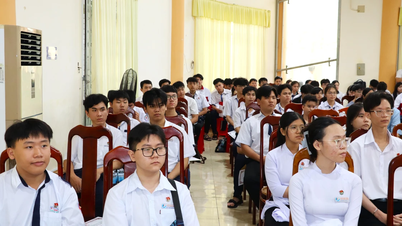
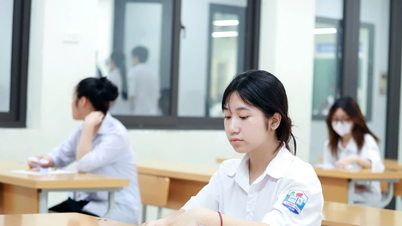
Students at all levels are currently in the process of taking their first semester final exams.
A review that seems objective but is very harsh.
So, what are the consequences of the Education and Training Departments organizing midterm exams with a common set of questions for all schools in an entire district or county, Madam?
Currently, according to Circular 22/2021/TT-BGDĐT, the scores used to assess the learning outcomes of junior high school students are confirmed by regular assessment scores (coefficient 1), mid-term scores (coefficient 2), and final scores (coefficient 3). If the Departments of Education and Training organize both mid-term and final exams, teachers will only have the autonomy to assess students through regular assessments (coefficient 1)! Just this analysis reveals the mindset of teachers and students: they will teach and learn according to the exam format.
Not to mention, organizing a district-wide exam (considered equivalent to a large-scale assessment) is very complicated. The burden increases as a result. Students will have time off from school and will not follow their normal timetables; there will be teams of teachers and staff to create exam questions, supervise exams, and grade papers…
Today, large-scale assessments require changes in organizational methods such as the application of technology and digital transformation to ensure the effectiveness of such an examination. However, in reality, very few localities are able to do so. Therefore, an assessment that seems objective but is actually very burdensome lacks value for improving the quality of education.
As someone who works in educational assessment research and has held various positions within a national exam, I still feel exhausted before each exam. But I know for sure that teachers and students are the most tired and fearful before, during, and especially after the exam.
When will the vicious cycle of "studying to pass exams" ever end? Even in school, with multiple exams each year, students are not yet prepared for the major exams of life.
N. CONFUSED PERIODIC EVALUATION INTO CLASSIFICATION AND SELECTION
Madam, many localities, when conducting centralized periodic assessments, often argue that the purpose is to evaluate the overall quality of students. If each school is allowed to create its own exam questions, the difficulty level might vary, failing to accurately reflect the overall quality. Is this appropriate?
First of all, this is not a selection exam. To assess the true quality of education, administrators must consider the entire process. In this case, is the goal of lower secondary education simply to meet the standards for entry into grade 10? How will student streaming be implemented? How will students who don't want to enter grade 10 be evaluated, and what is the quality of that evaluation?
The spirit of innovation in testing and evaluation for many years has been to integrate assessment with teaching, making it an integral part of the educational process, providing information to adjust teaching methods rather than simply "confirming students' learning outcomes." Therefore, teachers are empowered and need training to develop their assessment skills, enabling them to evaluate students both during the teaching process and in periodic assessments.
Yet, this year, the fourth year of officially implementing the 2018 General Education Program, many district/county education departments are still organizing mid-term exams using a common test for the entire district/county. Considering the functions and responsibilities of a management unit and the significance of educational activities, I believe this is an unnecessary and somewhat excessive management practice in this context. At the district/county level, periodic assessments should only be conducted once a year per class of students, prioritizing the final grades.
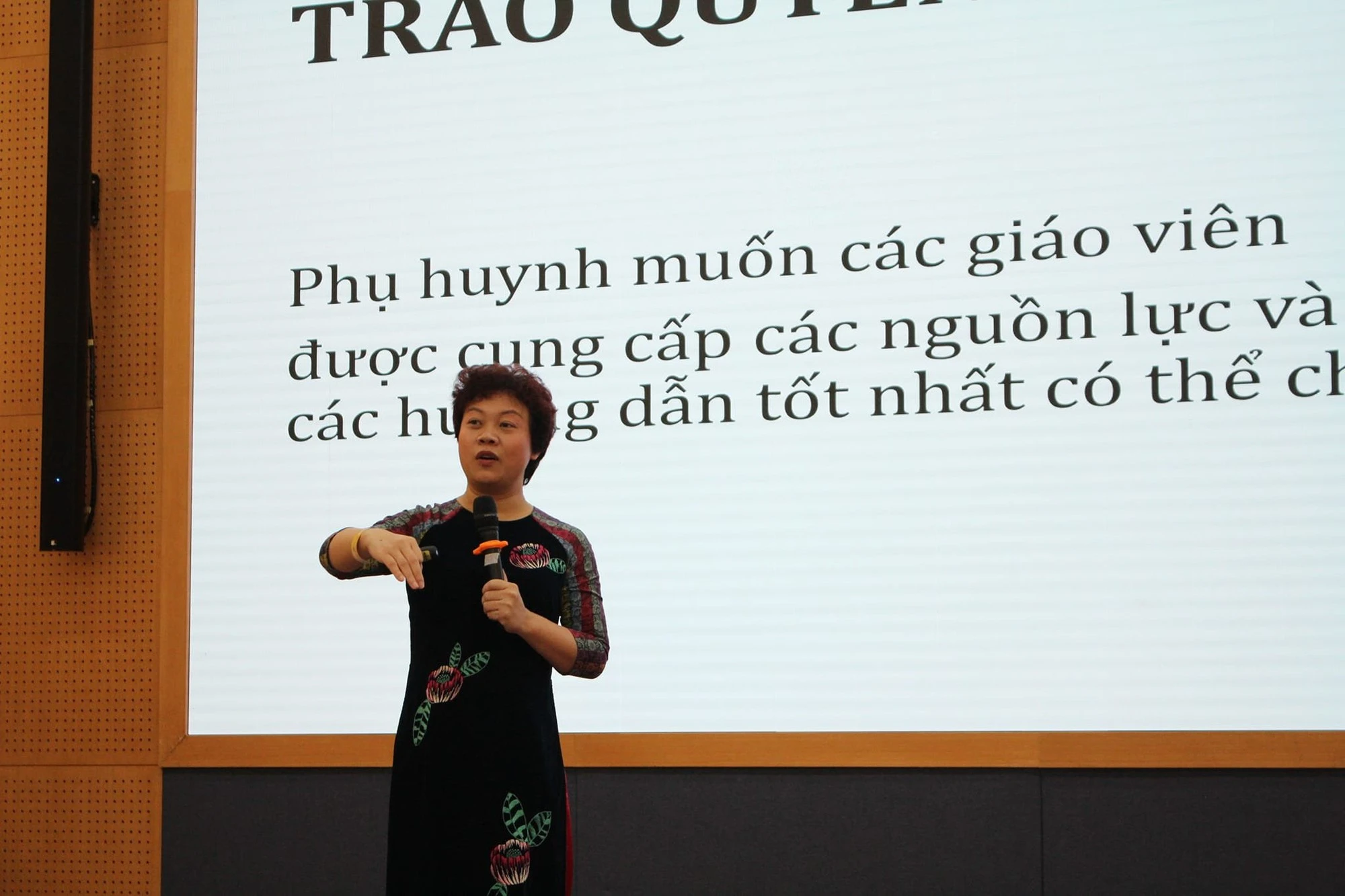
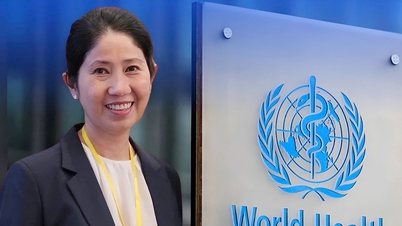
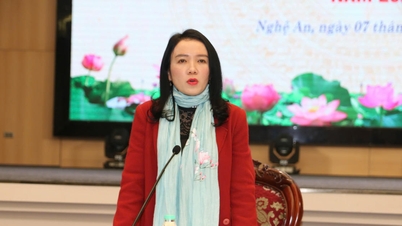
Associate Professor Chu Cam Tho, Head of the Education Evaluation Research Department (Vietnam Institute of Educational Sciences )
What principles should be followed in designing large-scale exams and tests? Based on your observations, have the education departments in the past ensured standardization in their midterm exam design when organizing them with standardized questions?
According to regulations, large-scale assessments (organized at the district, provincial, national, and international levels) involving thousands of students must adhere to very strict requirements, with standardized, objective questions and exams focusing on meeting curriculum standards. Organizing periodic assessments at the district/provincial level is considered equivalent to large-scale assessments.
To achieve this, in practice, the organizing units usually proceed as follows: establish an organizing committee, which includes a question-setting team, an evaluation team, examination and grading committees, etc.; organize the exam, with each school having its own examination committee, assigning registration numbers, separating answer sheets, creating examination rooms, assigning students to rooms, and cross-marking.
However, I have never had access to a quality assessment of any exam published by the organizing bodies. I often receive feedback that the exam questions were not as good as expected (some questions were reported in the press due to poor quality or leaked questions); and that the results were not objective (for example, teachers reported that cross-marking was inaccurate or that scores were too high or too low compared to the actual performance of some students). These complaints are incidental, and therefore all the more so, they necessitate an objective and scientific quality assessment for each exam, as the impact on thousands of students and teachers is never a minor issue.
Teacher training and accurate student competency assessment.
The crucial question is how to limit widespread examinations while still ensuring the quality of teaching across schools? Associate Professor Chu Cam Tho argues that to successfully achieve the new, humane, and modern goals we aspire to, it's not enough to simply innovate teaching and learning methods for teachers and students; it requires change in school administrators, specifically the effective and meaningful use of quality management tools.
As mentioned above, it is necessary to train and support teachers so that they have the capacity to assess learners; create a learning environment where assessment is implemented correctly and in parallel with teaching. At the same time, it is necessary to make maximum use of scientific results, especially technology, to make each examination less stressful and achieve universality and objectivity.
Periodic assessments need to be used appropriately and at the right time within the educational context, avoiding misuse. The information obtained from student assessments should first and foremost fulfill its pedagogical function: providing feedback on teaching and learning; helping all stakeholders recognize the need for adjustments; and accurately assessing student abilities using effective methods – acting as a "reverse steering wheel" for the operation of education. Only then can we create an environment where teachers can teach with confidence and students are enthusiastic about learning.
Source link






























































































Comment (0)