

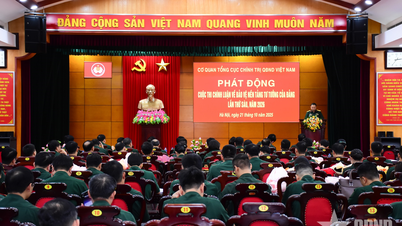
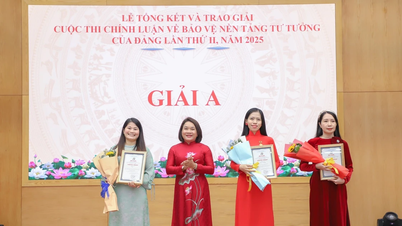
Protecting the Party's ideological foundation in cyberspace is both an urgent and long-term task to create a "steel wall," thwarting all plots and schemes of hostile forces, and firmly safeguarding the Party's ideological foundation.
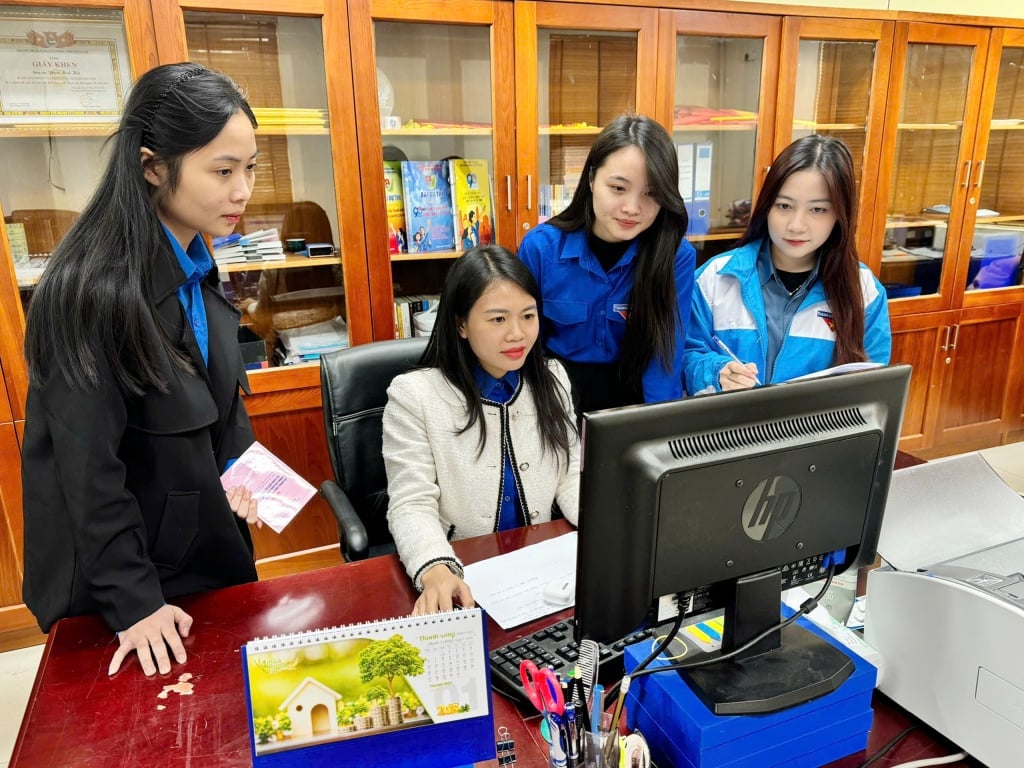
In the current era of the IT boom, especially social media, the subversive propaganda and sabotage of our Party's internal affairs by hostile forces on the internet are occurring on an increasingly large scale and intensity; the methods of deceiving the people are becoming more sophisticated and diverse... According to statistics from the Ministry of Information and Communications , on average, hostile forces and political opportunists disseminate over 130,000 articles and video clips distorting the truth on the internet and social media every month. Through sensational headlines, mixing true and false information to "attract views"; creating fake websites, blogs, Facebook pages, and fan pages of reputable agencies, organizations, and individuals; using email services, chat services, forums, etc., hostile forces have spread malicious information and articles, plotting to create false perceptions, doubts, confusion, and wavering, promoting "self-evolution" and "self-transformation" within the Party. These activities have negatively impacted the thinking and perceptions of a segment of cadres, Party members, and the people; causing confusion and doubt, and eroding trust in the country and the role of the Party.
In response to this situation, in recent times, the fight against and refutation of erroneous and hostile viewpoints on the internet has been intensified by all levels of government, units, and organizations with various solutions. The entire province has strictly implemented directives, resolutions, programs, plans, and projects related to protecting the ideological foundation and combating erroneous and hostile viewpoints and harmful information. This includes the decisive and effective implementation of Resolution No. 35-NQ/TW dated October 22, 2018, of the Politburo and Regulation No. 85-QĐ/TW dated October 7, 2022, of the Secretariat on the establishment and use of personal websites on the internet and social networks by cadres and Party members, linking it to the roles and responsibilities of Party committees, heads of agencies and units; Guidance No. 99-HD/BTGTW dated March 20, 2023, of the Central Propaganda Department on implementing Regulation No. 85-QĐ/TW regarding the establishment and use of personal websites on the internet and social networks by cadres and Party members. The Provincial Party Standing Committee has issued the Project "Improving the effectiveness of combating, preventing, handling, removing, and eradicating false, inaccurate, harmful, and toxic information on the internet concerning Quang Ninh province" and the Directive on strengthening the Party's leadership and the effectiveness and efficiency of state management in combating, preventing, handling, removing, and eradicating false, inaccurate, harmful, and toxic information on the internet concerning Quang Ninh province.
Through this, localities and units have implemented information and propaganda work extensively, systematically, and promptly with rich forms and diverse content, maximizing the power of the press and media with the overarching principle of "promoting the good and suppressing the bad," creating a positive mainstream of information; the province's information and press agencies closely followed the province's political tasks, developed plans and organized information and propaganda proactively and actively; ensuring political correctness and direction, especially for current affairs, political issues, and important, complex issues with many differing perspectives and assessments; thereby contributing to creating consensus among cadres, Party members, and all strata of the people.
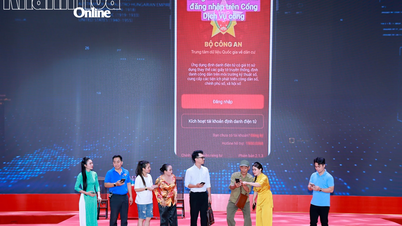
The Steering Committee 35 at all levels has established over 400 Facebook and YouTube pages and accounts to provide information, disseminate propaganda, and guide public opinion, with nearly 980,000 members. Several provincial social media pages operate effectively, have a good reputation, and attract many followers, receiving positive feedback and high praise from the public, such as: "I Love Quang Ninh," "Proud of Quang Ninh," "Quang Ninh Propaganda," the QMG - Quang Ninh News 24/7 fanpage of the Provincial Communication Center, Quang Ninh Express, Leng Keeng, "Ha Long in Many Colors," "The Craftsman," etc. These pages, groups, and accounts on social media have contributed to providing timely official information, refuting false and misleading information, and guiding public opinion. In particular, there has been a diversification of information posting methods on social media. While previously mainly long articles with little interaction, now information content is presented in the form of images, videos , and short slogans that are easy to read, remember, and understand. Therefore, the number of people interacting with and accessing the posted information is increasing.
In 2024 alone, the pages, groups, and social media accounts of the Provincial Party Committee's Steering Committee 35 and local authorities actively posted over 14,000 news articles, images, and video clips to provide official information and promptly combat and refute false and hostile information and viewpoints. Many articles attracted tens of thousands of views; thousands of articles were posted and shared on the personal Facebook accounts of expert group members, creating a widespread impact on the online community and among the people. Simultaneously, 124 cases were reviewed, verified, and addressed with warnings and administrative penalties were imposed on 17 cases for posting inaccurate and biased information that negatively affected the community.
Coping with, combating, and preventing false and distorted views on social media is a long and complex process. Therefore, each citizen needs to adopt an objective attitude, proactively recognizing this responsibility, and strengthening efforts to counter, combat, and prevent it in order to reduce its harmful effects and negative impacts, rather than completely eradicating it. Only with this understanding can one develop appropriate attitudes and behaviors in the digital information environment, adapt to it, and find fundamental, sustainable, and long-term solutions.
Source


![[Photo] Prime Minister Pham Minh Chinh presides over a meeting on private sector economic development.](/_next/image?url=https%3A%2F%2Fvphoto.vietnam.vn%2Fthumb%2F1200x675%2Fvietnam%2Fresource%2FIMAGE%2F2025%2F12%2F20%2F1766237501876_thiet-ke-chua-co-ten-40-png.webp&w=3840&q=75)






































































Comment (0)