

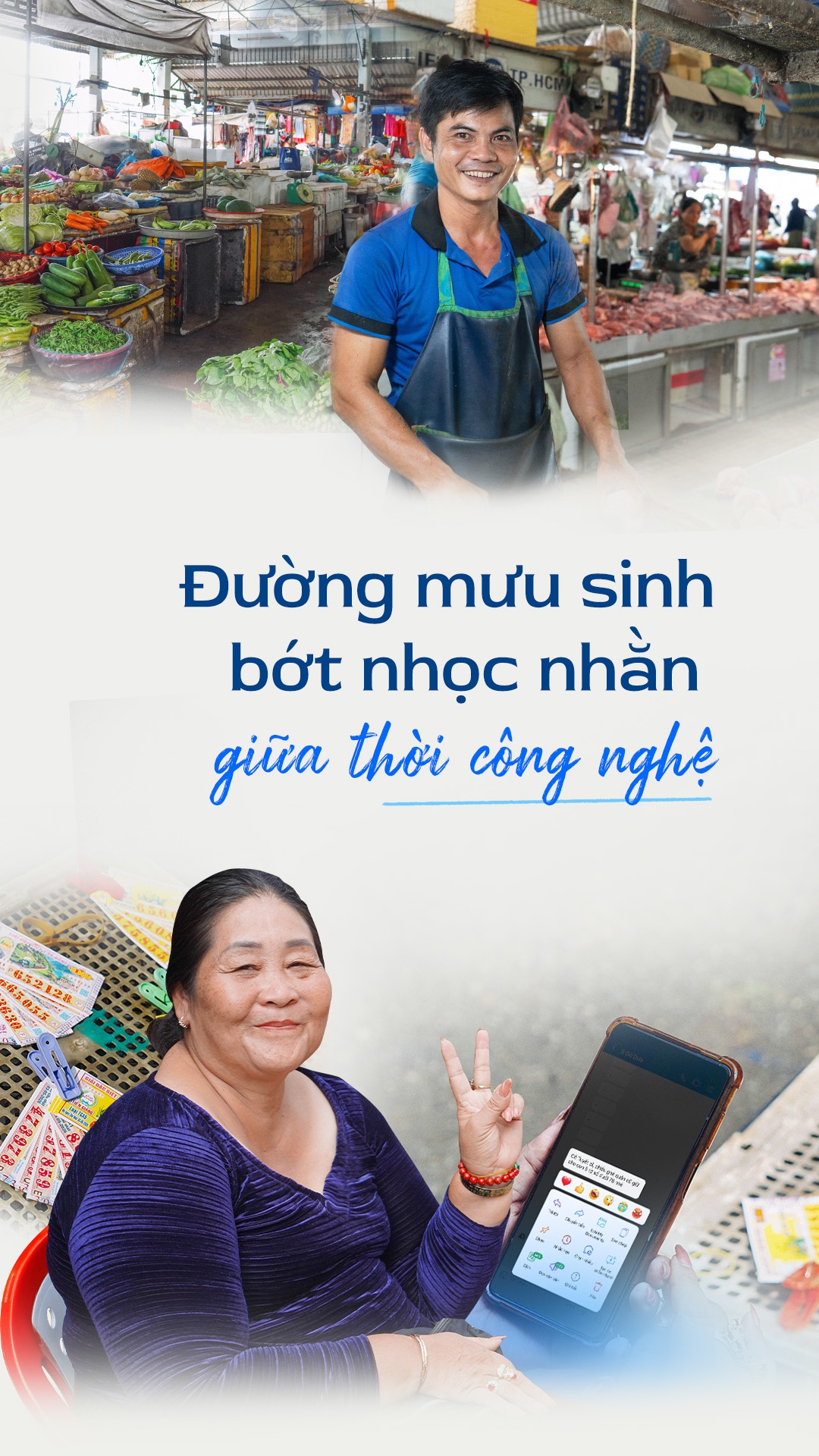

In a corner of a traditional market, AI is gradually infiltrating the lives of ordinary workers, bridging the technological gap in a society undergoing digital transformation.
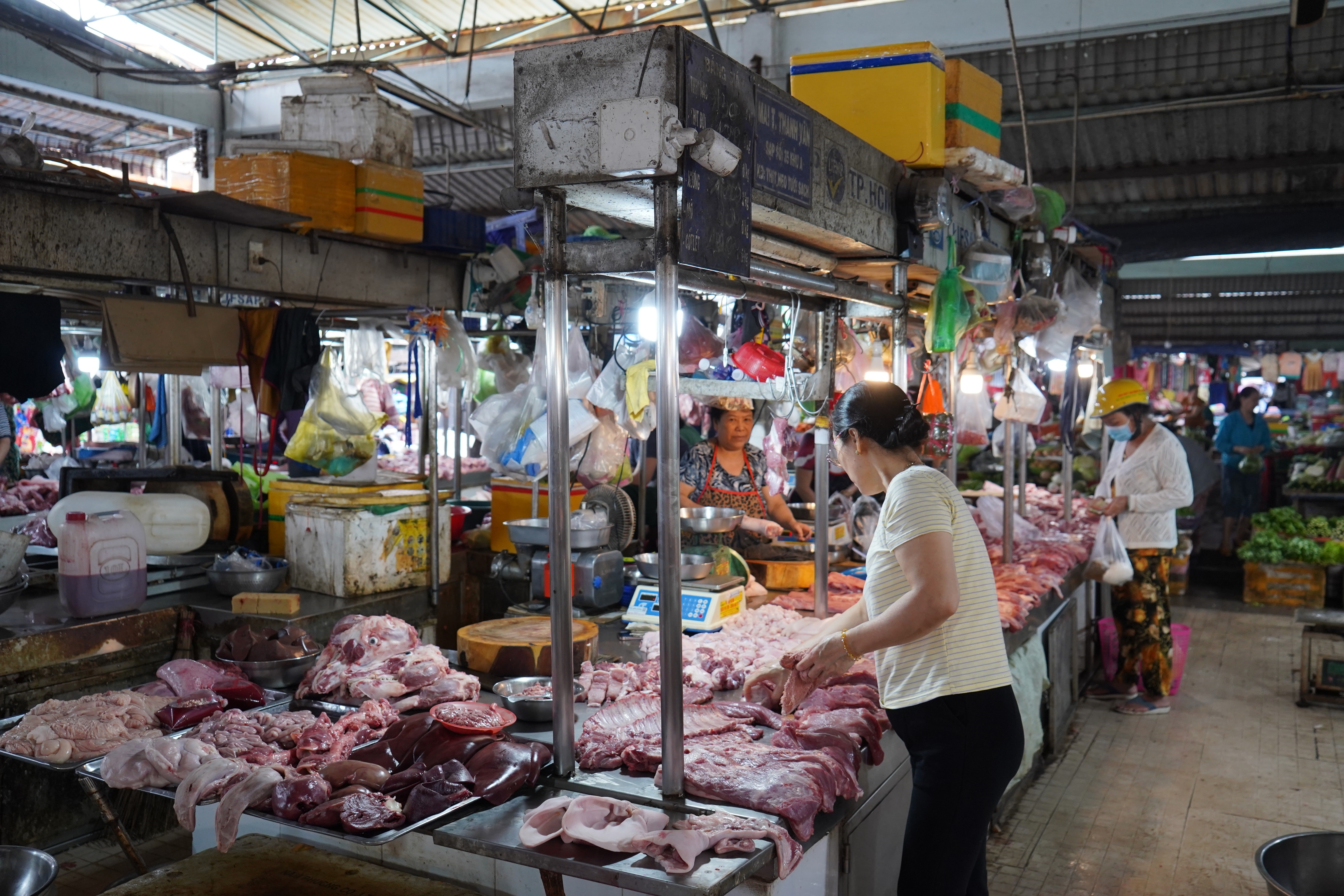
At 3 a.m., the soft yellow light shone down on the damp cement floor. The stalls at Tam Binh Market (Thu Duc) began to light up, people came and went, the sounds of motorbikes and people calling out to each other seemed to awaken the night.
Without alarm clocks, the vendors here are accustomed to a "reverse" pace of life, where the new day begins even before dawn.

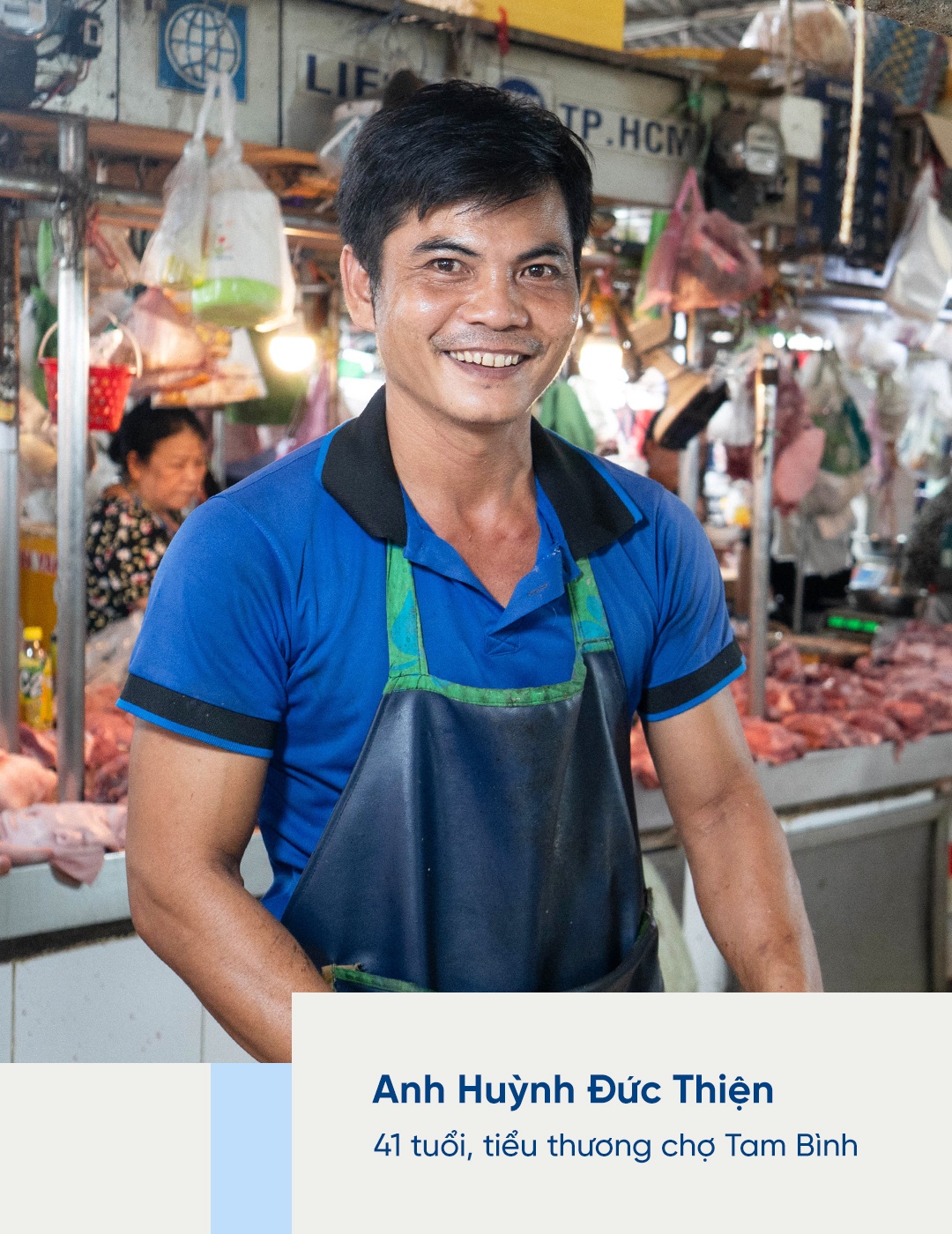
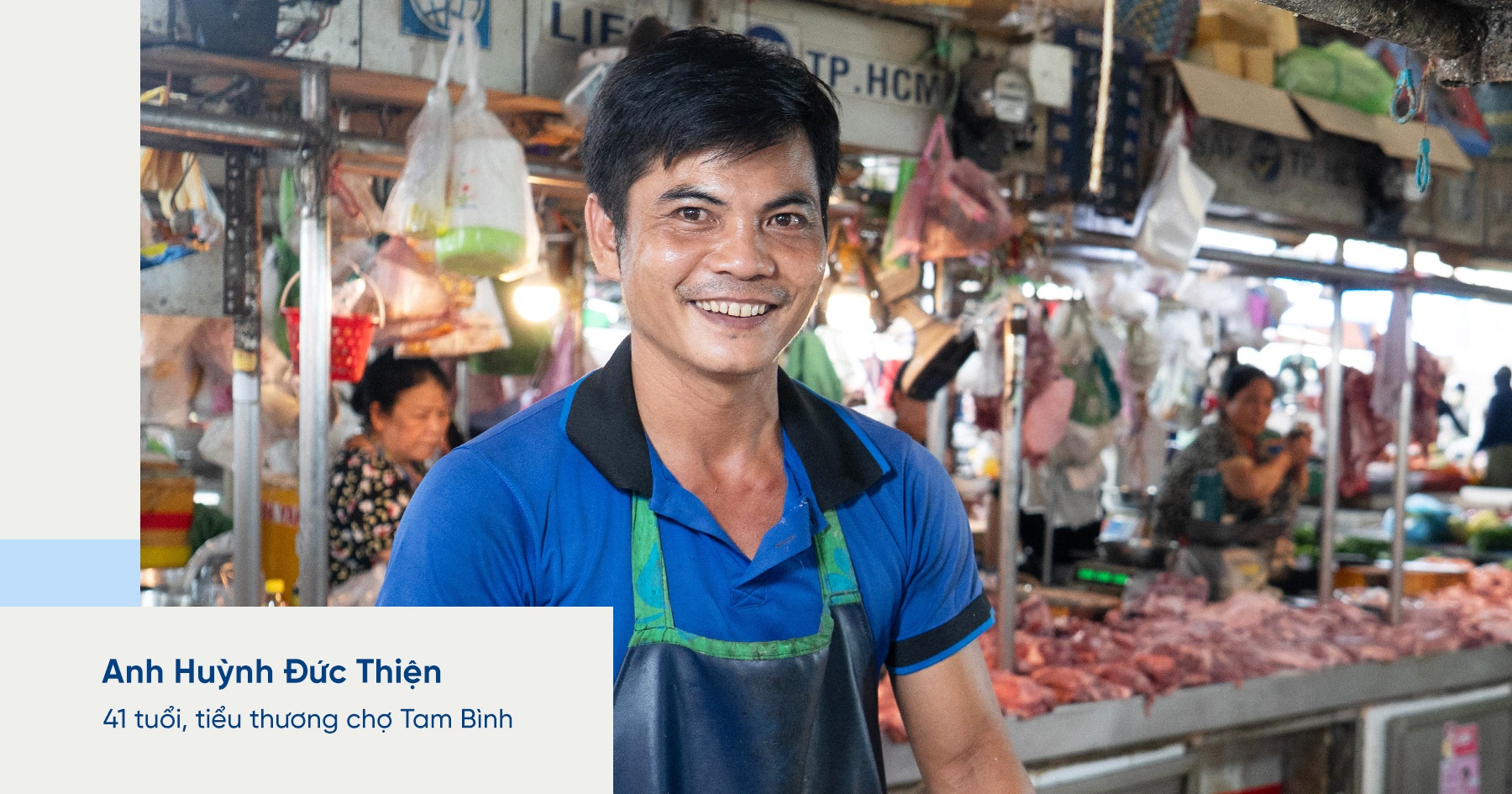
In a corner of the market, Huynh Duc Thien (41 years old) - a small trader selling meat at a stall - quickly puffs on a cigarette before a busy new day. His old motorbike is hastily parked next to his stall, behind which are neatly stacked boxes of meat. His hands move quickly as he butchers pork and rearranges the trays of goods to get them ready for the early morning market.
"It's wholesale, you know, if you're late you'll lose customers ," he chuckled, his voice hoarse from hawking his goods and staying up late and waking up early.
  |
Mr. Thien doesn't remember exactly how long he's been associated with this market. He only knows that since moving to Saigon to make a living, his small pork stall has become the main source of income for his entire family. Each day begins before dawn and ends when the sun is high in the sky, enough to cover groceries, living expenses, and sometimes a little extra for when he gets sick.
However, small-scale trading isn't always just about weighing, measuring, and counting.
Lately, he's started hearing a lot of people around him talking about "business tax." Some say registration is necessary, others say it's not needed because it's for small businesses. Some even recounted being fined several million dong for "not declaring correctly." The conflicting information is making him increasingly confused.
The new numbers, forms, and regulations left the man, who was used to quickly calculating the cost of goods, feeling bewildered. "I don't know if I'm subject to this payment, and if so, how much, and how to fill it out correctly…" he muttered, his hands still steadily chopping the meat.
Previously, there were usually only two ways to answer such questions: ask acquaintances, who would only know what they heard, or go to the local ward or tax office, which meant taking a half-day off from selling and losing that day's income.
Many people told him, "Why don't you ask AI? It can answer anything the kids ask." But for him, the concept of "AI" or "artificial intelligence" sounded as luxurious as the skyscrapers in the heart of District 1, completely unrelated to his pork stall and the daily haggling.
  |
After hearing from a fellow vendor that Zalo has an AI feature that can help with administrative information lookup, Thien decided to investigate further.
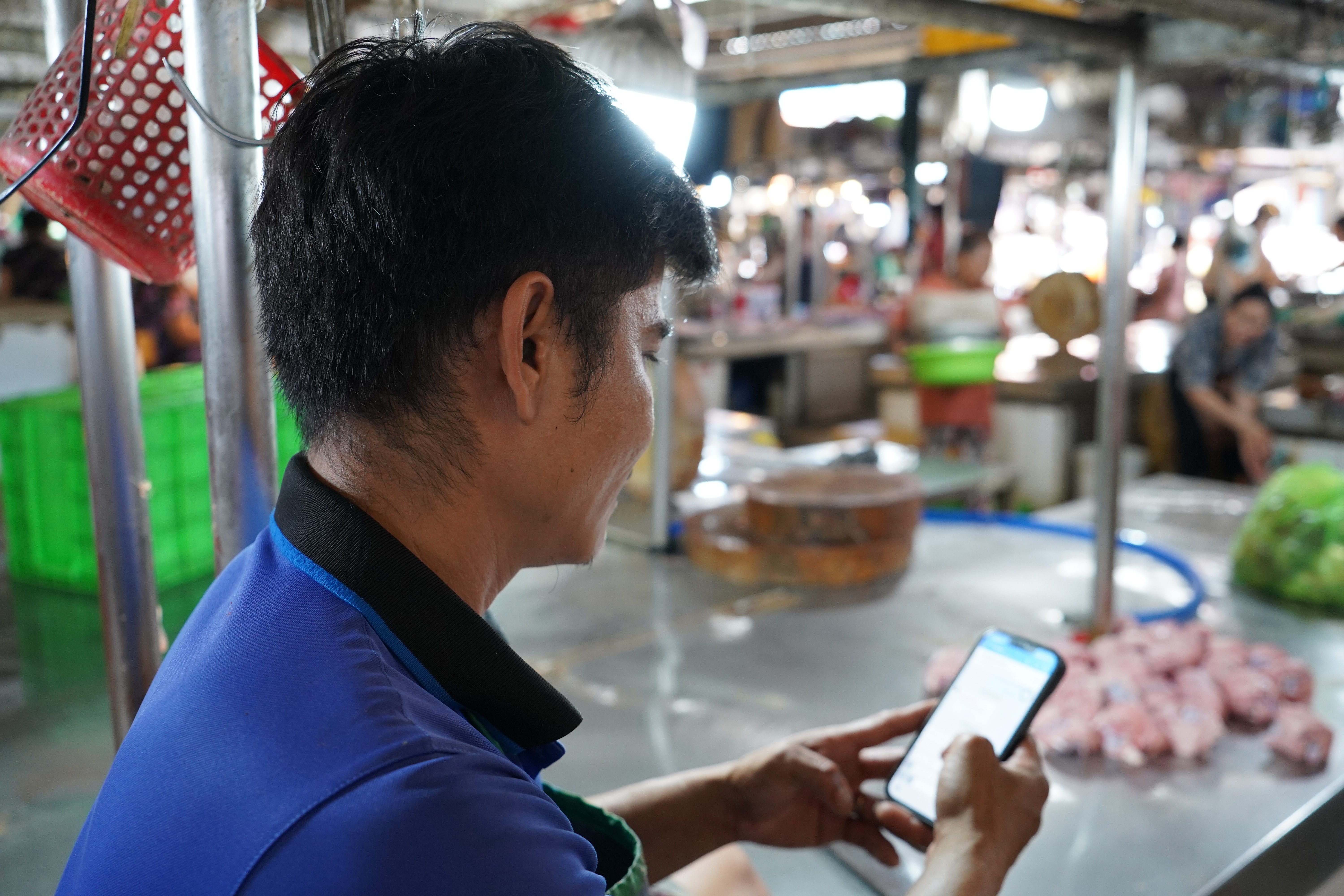
For him, Zalo had always been primarily used for messaging relatives, calling friends, or receiving orders from regular customers at the market. He never imagined that the application he had been using for many years could answer his questions about taxes and business procedures.
When he first accessed the Digital Citizen Assistant section on Zalo, he carefully entered a very ordinary question from a small business owner: "I sell meat at the market, do I have to pay business tax?"
Within seconds, the answers appeared concisely and clearly.
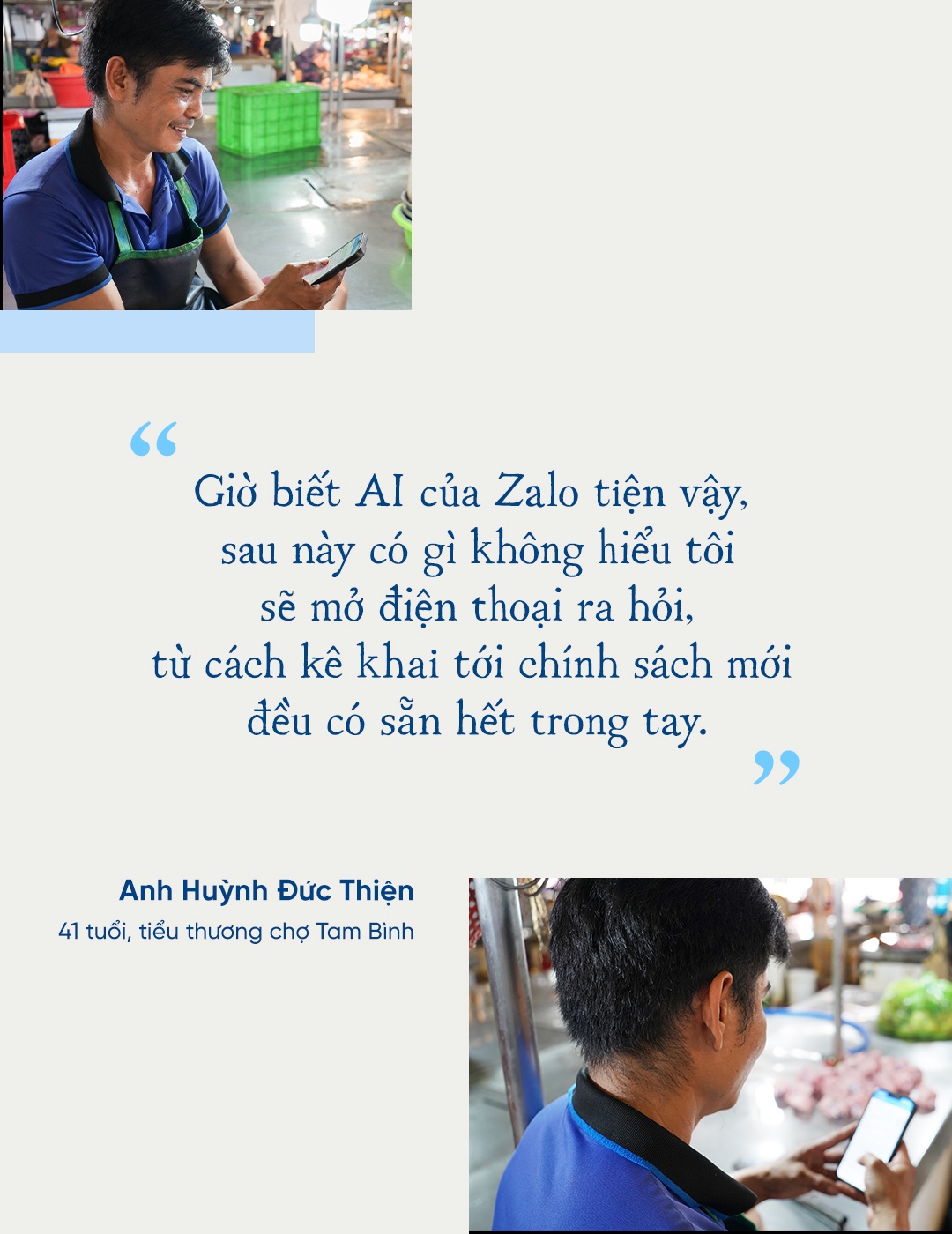
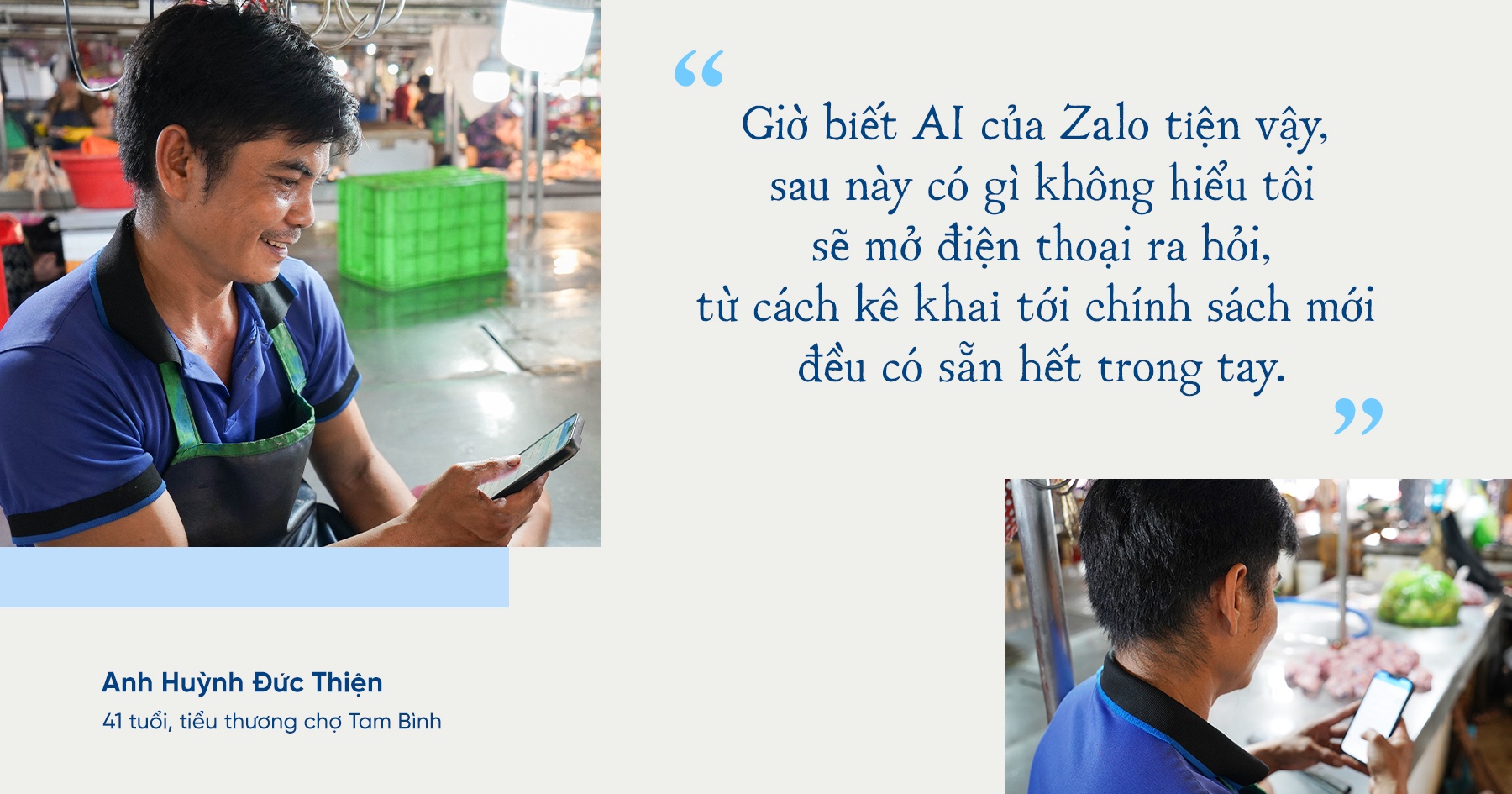
"In the past, just hearing about taxes gave me a headache. Sometimes I had to rush to the tax office, other times I had to ask different people, and everyone gave a different answer. Now that I know about Zalo's AI, it's so convenient. If I don't understand something, I can just open my phone and ask. Everything from how to file taxes to new policies is readily available."
  |
The concept of "artificial intelligence," which seemed so far-fetched, turned out to be present right at his small meat stall, solving a small vendor's worries in the simplest way. He smiled gently, putting his phone in his pocket: "It turns out AI is quite down-to-earth!"
Amidst the bustling crowd in front of the market gate, the voice of "Lottery tickets for sale, children! We have some lucky numbers today!" rang out. That voice belonged to Ms. To Thi Anh Tuyet (55 years old), who has been selling lottery tickets for 37 years.
  |
Her hair was streaked with gray, her skin tanned by the sun and wind, and she always clutched a worn-out lottery ticket bag close to her chest. Regularly, starting at 7 a.m. each day, Ms. Tuyet would sit at her familiar "stall," which was actually just a small, inverted basket with a few stacks of lottery tickets that she meticulously sorted and neatly clipped together with small pins.

At nearly 60 years old, Ms. Tuyet's eyesight is no longer as sharp as it once was. The letters on her phone screen, already small, are now even more blurred by the dust of the road and the fatigue of old age. For her, reading a customer's booking message or a greeting from her children and grandchildren is sometimes more difficult than walking ten kilometers every day. Some days, her phone vibrates constantly – customers booking tickets, children and grandchildren sending addresses, acquaintances asking how she is… but she can only squint at the screen, then ask someone next to her to read it for her.
"I only use my phone to make calls because the font is too small; sometimes I can't read the messages customers send. If I can't reply in time, they'll think I've stopped selling," Ms. Tuyet confided, her rough hands flipping through the neatly stacked lottery tickets.
However, ever since her neighbor's nephew showed her how to use Zalo's voice-reading feature for text messages, the lottery ticket vendor's life has been like having a new companion. No longer having to squint or fumble for her glasses, whenever there's a new notification, she just needs a light tap.
  |
"Ms. Tuyet, please stop by the old shop this afternoon and reserve five bills for me , " the AI voice from the screen said clearly and warmly, conveying every word perfectly to her ears. Amidst the blaring car horns of the city, the voice of her "assistant" emanating from the old phone suddenly became magical.
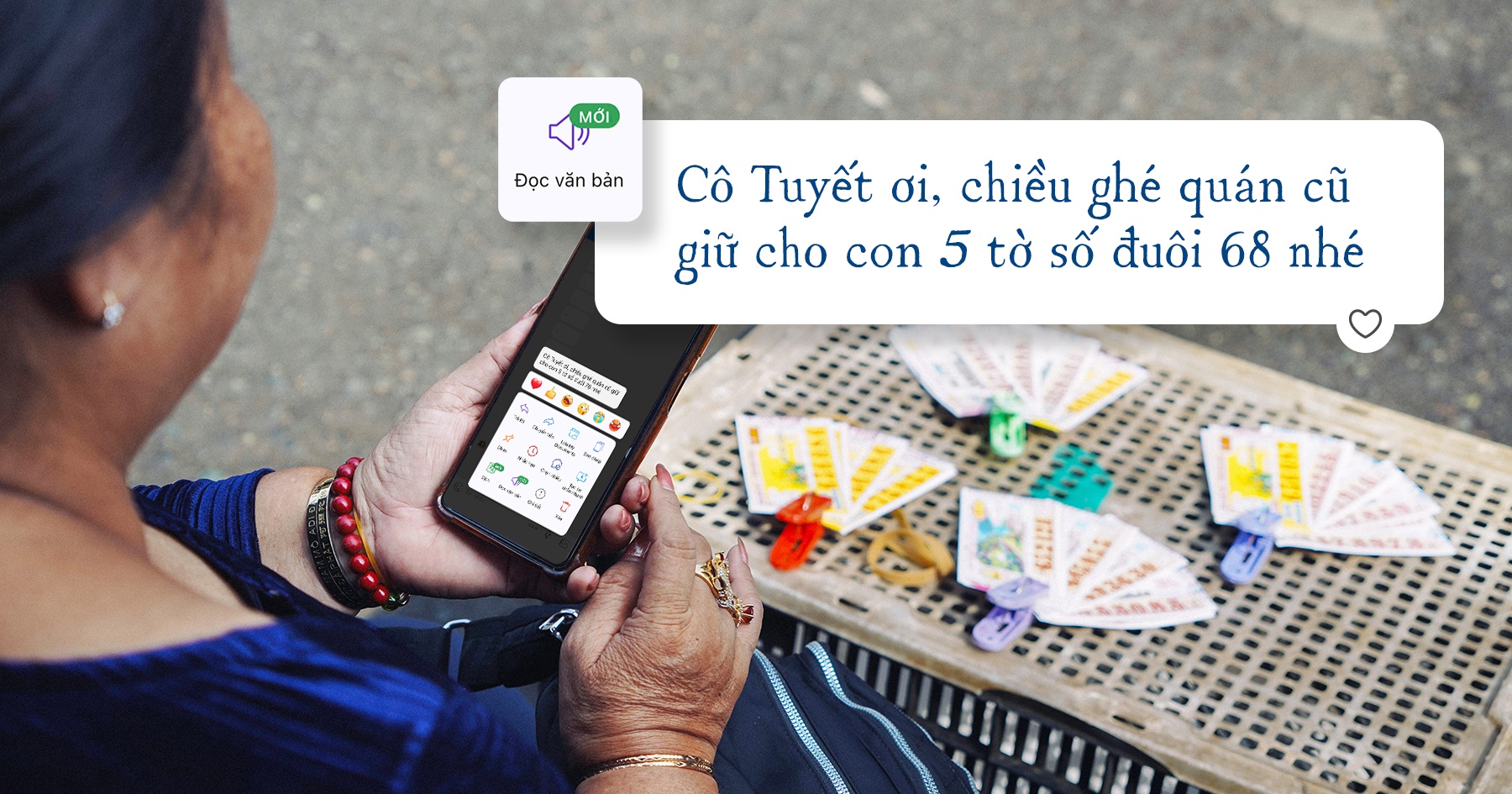 |
The phone is no longer just for making calls. For Ms. Tuyet, this feature has gradually become her "second pair of eyes." From text messages with lucky numbers ending in "lucky digits" from acquaintances to announcements from the market management on the group chat, everything is transformed into familiar sounds by technology.
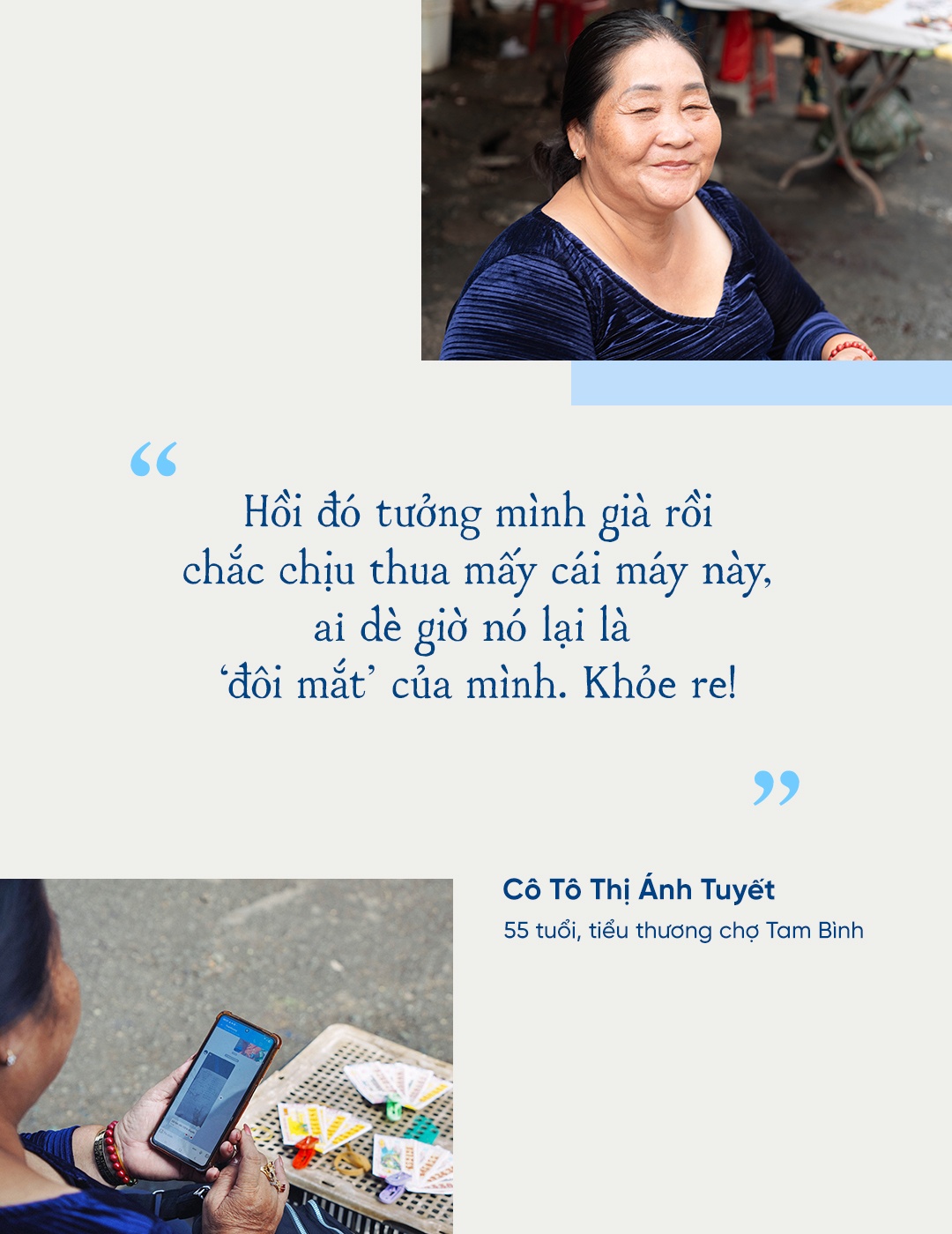
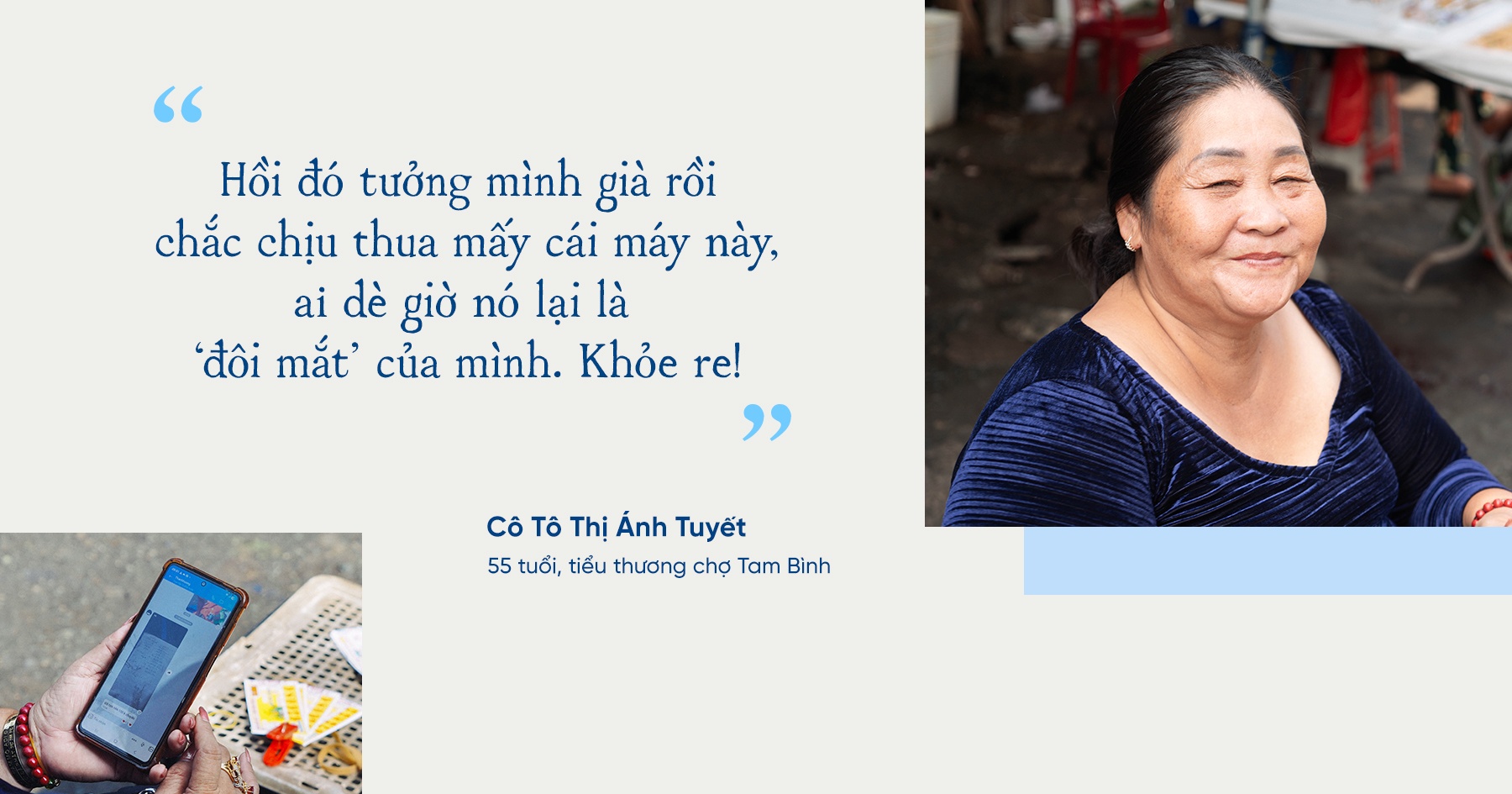
With a gentle smile, Ms. Tuyet said, "Back then, I thought I was too old to handle these machines, but now they've become my 'eyes.' I'm perfectly fine!"
  |
Technology, which originated in state-of-the-art labs, is now helping a woman who has spent almost her entire life on the streets feel that she is not being left behind in the digital revolution.
According to data from the National Statistics Agency - General Statistics Office, Ministry of Finance , Vietnam currently has 32.7 million informal workers, accounting for 61.9% of the total employed workforce. In addition, by 2025, the country is expected to have approximately 6.036 million business households, contributing 30% to the national GDP. However, these groups are also vulnerable to the digital transformation and artificial intelligence wave due to limitations in technological skills, access to official information, and time to learn new tools.
Instead of remaining outside the technological revolution, an increasing number of ordinary workers are beginning to find new approaches that are simpler, more accessible, and most importantly, practical enough to serve their daily livelihoods.
The stories of Mr. Thien and Ms. Tuyet are clear evidence of the powerful shift of technology into the lives of the working class in Vietnam. Artificial intelligence is no longer the "privilege" of young people or office workers, but is gradually becoming a practical tool to support the livelihoods of millions of freelancers, small traders, drivers, street vendors, and owners of small businesses.
  |
With over 80 million monthly active users, Zalo is creating a different approach for the general user group by integrating AI directly into basic experiences such as messaging, calling, and searching. By the end of 2025, Zalo expects 30% of users to utilize AI-in-app features on the platform each month. Many users, even without a deep understanding of "Artificial Intelligence" or learning how to use AI, are benefiting from this technology daily through practical tools such as AI Dictation (speech-to-text), Translation, and converting voice messages to text.
The AI features integrated directly into Zalo are gradually changing the way small business owners and freelancers approach technology, from passive and hesitant to more proactive in communication, information retrieval, and application to their livelihoods.
The presence of AI in traditional markets, on ride-hailing vehicles, or at roadside stalls is therefore more than just a technical feature. From a broader perspective, it's a sign that AI is gradually becoming a habit, where the gap between high technology and everyday life is narrowing, so that even the most ordinary workers are not left behind in Vietnam's digital transformation journey.
Source: https://znews.vn/duong-muu-sinh-bot-nhoc-nhan-giua-thoi-cong-nghe-post1653269.html



























































































Comment (0)