

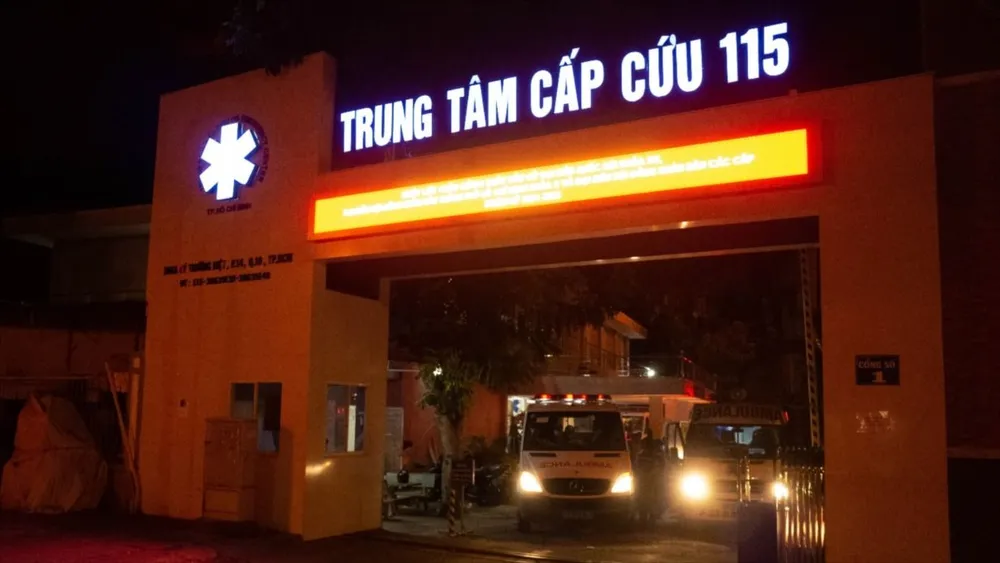
Earlier, at approximately 8:40 PM on June 3rd, the 115 Emergency Center received an urgent call: pregnant woman LYC, who was sitting in a park near her home, suddenly experienced heavy vaginal bleeding.
Immediately, the shift supervisor dispatched an emergency team that departed within 3 minutes and reached the patient 10 minutes after receiving the call. Upon arrival, the team noted that the pregnant woman had high blood pressure, a rapid heart rate, continuous vaginal bleeding, and was being monitored and treated for high-risk preeclampsia during pregnancy.
Dr. Ha Trung Dao, the team leader, issued orders for on-site emergency treatment: establish an IV line, administer antihypertensive medication, and inject prophylactic medication to prevent seizures.
The nurses quickly carried out the doctor's orders, coordinating with Dr. Dao to treat and monitor the pregnant woman; at the same time, they contacted Hung Vuong Hospital for a consultation and to inform them of the patient's transfer.
After an 8-minute emergency transfer from the initial emergency location to Hung Vuong Hospital , the pregnant woman was admitted and diagnosed with severe preeclampsia and severe placental abruption.
The on-call doctors switched to emergency cesarean section mode (the quickest procedure in emergency obstetric and gynecological surgery).
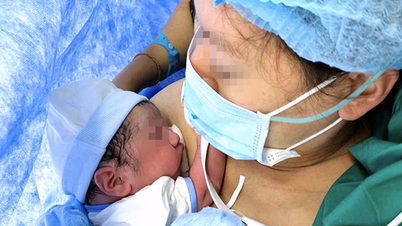
Five minutes after admission, a baby weighing 720 grams was born and is currently receiving intensive care in the Neonatal Intensive Care Unit at Hung Vuong Hospital. The mother continues to receive post-operative care and is currently in stable condition.
According to Dr. Nguyen Duy Long, Director of the 115 Emergency Center, severe preeclampsia is a dangerous obstetric emergency that can progress rapidly and threaten the lives of both mother and fetus if not diagnosed and treated promptly. One possible complication of severe preeclampsia is placental abruption, leading to heavy vaginal bleeding.
The outcome of this case has demonstrated the crucial role of pre-hospital emergency care and the rapid, highly professional response from the center's pre-hospital emergency team.
Furthermore, the inter-hospital coordination of emergency response between pre-hospital emergency teams and specialists from the city's specialized hospitals in professional work and receiving emergency cases has increased patients' chances of survival and reduced severe complications caused by delayed patient admission.
Source: https://www.sggp.org.vn/em-be-nang-720gram-chao-doi-trong-tinh-huong-nguy-cap-post798460.html
![[Photo] Prime Minister Pham Minh Chinh attends the Conference on the Implementation of Tasks for 2026 of the Industry and Trade Sector](/_next/image?url=https%3A%2F%2Fvphoto.vietnam.vn%2Fthumb%2F1200x675%2Fvietnam%2Fresource%2FIMAGE%2F2025%2F12%2F19%2F1766159500458_ndo_br_shared31-jpg.webp&w=3840&q=75)

































































Comment (0)