

 |
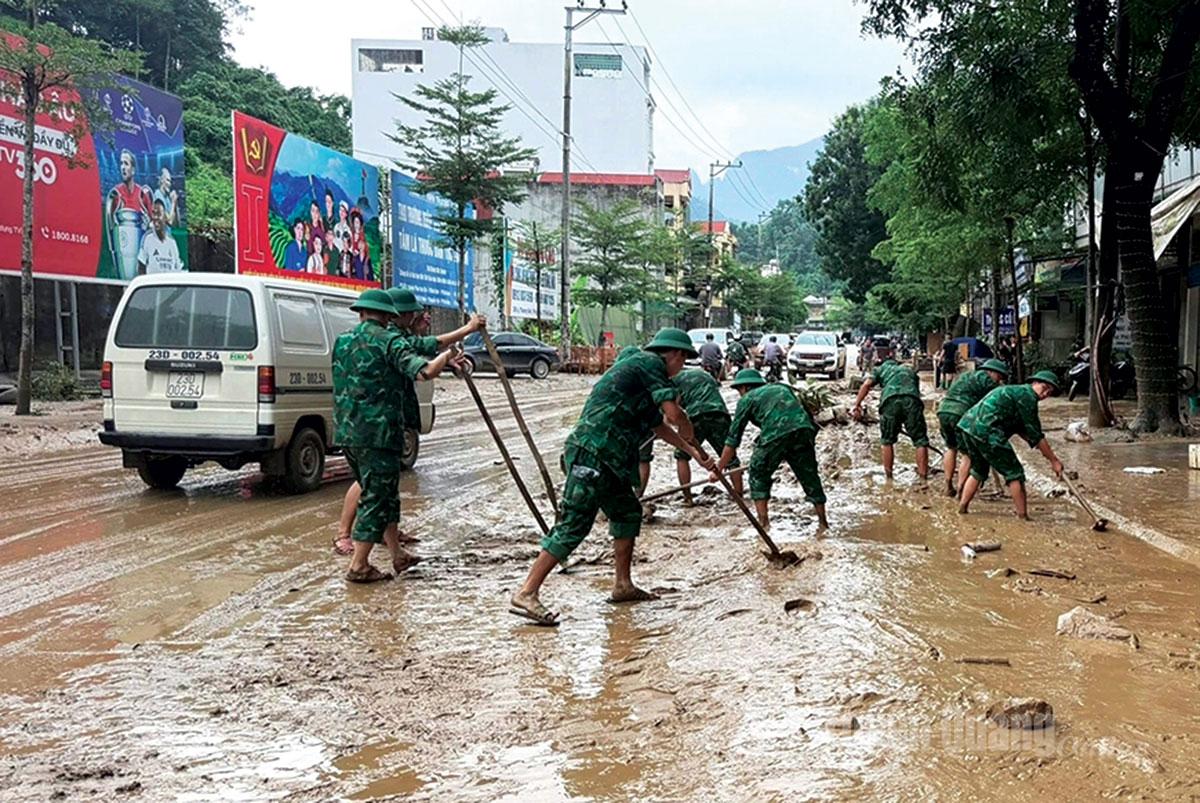
| Soldiers from the Provincial Military Command helped the people clear mud from the streets of Ha Giang 1 ward. |
"The army and the people are like fish and water."
Tuyen Quang is the cradle of the revolution, a place chosen by President Ho Chi Minh and the Central Party Committee as a base of operations, blessed with favorable geographical conditions and harmonious human relations. It was here, under the banyan tree of Tan Trao, on the afternoon of August 16, 1945, that Comrade Vo Nguyen Giap, on behalf of the Uprising Committee, read Military Order No. 1, took the oath of office, and commanded the Liberation Army unit to advance towards liberating Hanoi . Our army originates from the people and fights for the people. In Tuyen Quang, this became even more sacred. During those years, without the protection and support of the people, these revolutionary "red seeds" would have found it difficult to overcome the relentless pursuit of the enemy.
Mr. Hoang Ngoc, now over 80 years old, who witnessed those historic days, shared with a trembling voice: “Back then, my village only had about 23 households, but the people were united. The villagers treated the cadres like family, sheltering and protecting them wholeheartedly. From the houses of Mr. Nguyen Tien Su and Mr. Hoang Trung Dan, to countless other houses, everyone wholeheartedly sheltered and followed Uncle Ho and the revolution.”
This protection went beyond simply providing logistical support; it encompassed shared hardship and solidarity, with the people willing to sacrifice their lives to ensure the safety of the key resistance organizations. This immense mutual support was the intrinsic strength that enabled our Party and our Army to grow stronger and stronger.
During the nine years of resistance against the French, Tuyen Quang, as the "Capital of Resistance," had the honor of sheltering President Ho Chi Minh, who lived and worked there for nearly six years. The strong support of the people here formed a "steel fortress," ensuring the absolute safety of 65 central government agencies and 13 ministries and departments that were evacuated to the area.
During the anti-American war, implementing the slogan "Not a single grain of rice is lacking, not a single soldier is lacking," Tuyen Quang sent tens of thousands of young people to join the army, dedicating their manpower and tens of thousands of tons of food to support the Southern battlefield, contributing to the ultimate victory.
During the border defense battles in the North, from 1979 to 1989, at the Vi Xuyen front – known as the "Lime Kiln of the Century" – the solidarity between the army and the people once again shone brightly. On the steep, jagged rocky peaks, where artillery shells churned up every meter of land, the soldiers held their positions while the people formed the most solid rear line.
Veteran Nguyen Van Hung, who fought at Hill 1509, reminisced: “During the most intense years in Vi Xuyen, without the people, the soldiers would have found it difficult to hold out for long. I will always remember the image of the Dao and Tay women enthusiastically climbing the rocky slopes to bring rice balls to support the soldiers. The blood of the soldiers and the sweat of the people truly mingled, seeping into every inch of this borderland to uphold the sacred sovereignty of the Fatherland.”
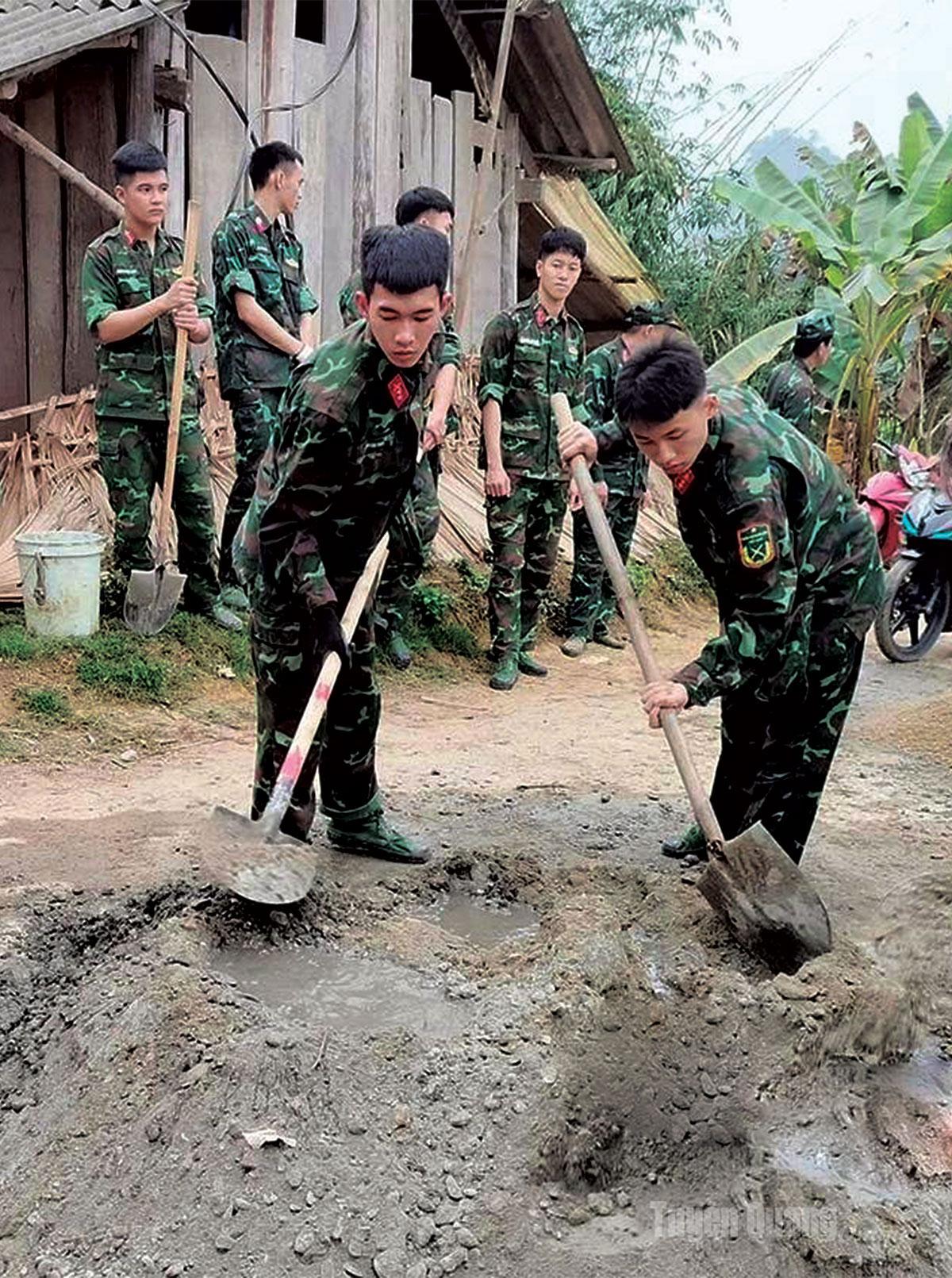 |
| Officers and soldiers of the Provincial Military Command participated in demolishing temporary and dilapidated houses in Hung Loi commune. |
"When you leave, the people will remember you; when you stay, the people will cherish you."
Building upon those noble qualities, today's soldiers of Uncle Ho not only wield weapons to defend the Fatherland but also bravely venture onto new fronts. They are always the vanguard force, leading the way in socio-economic development and contributing to the construction of new rural areas, bringing a renewed vibrancy to remote villages. In particular, officers and soldiers wholeheartedly assist the people in preventing, combating, and overcoming the consequences of natural disasters, considering the people's difficulties as their own.
This spirit was further demonstrated during the recent historic Typhoon No. 10. When the natural disaster struck, the Tuyen Quang Provincial Military Command considered protecting the lives of the people as a "command from the heart." Implementing the "four on-the-spot" principle, a campaign was quickly deployed. More than 1,000 regular officers and soldiers, along with 3,716 militia members, braved the dangers and plunged into the heart of the storm. From evacuating people from landslide areas and searching for missing persons to standing guard at dangerous culverts and bridges, the soldiers' uniforms became a symbol of safety.
Not only are they the core force in protecting territorial sovereignty, the provincial armed forces also affirm their pioneering role on the social welfare front. Over the past year, the Provincial Military Command has directed agencies and units to support the construction of 21 "Comrade Houses" and "Great Solidarity Houses".
In Thang Binh village, Hung Duc commune these days, joy seems to radiate from Mr. Vi Van Kien's new house. Sitting in his house, still smelling of fresh lime, Mr. Kien said with tears in his eyes: "This old man is weak, and my old house leaked whenever it rained and shook whenever the wind blew. Luckily, the soldiers and young people pitched in to help. Thank you so much to the Party, the Government, and the Ho Chi Minh Army. Now I can sleep soundly without fear of rain and storms anymore."
Alongside the task of eliminating temporary and dilapidated houses, the provincial armed forces are pioneering in transforming the appearance of rural areas. In 2025, the Provincial Military Command mobilized 25,631 officers and soldiers to participate in helping people build roads, reinforce irrigation canals, repair public facilities, build new rural areas, eliminate temporary and dilapidated houses, and help people overcome the consequences of natural disasters.
At border guard posts in Tuyen Quang province, literacy classes have become a regular activity for many years. By 2025, there were over 40 literacy classes with more than 1,110 students along the border of Tuyen Quang province. Teachers included local teachers, border guards, and police officers. Among them, 39 teachers belonged to the provincial Border Guard force.
The image of Ho Chi Minh's soldiers silently and discreetly "going from street to street, knocking on every door" to help people improve their education, alleviate poverty, and settle down has become a beautiful symbol of the spirit of "Ho Chi Minh's soldiers" in the new era.
"Steel ramparts" block "undercurrents"
In the current situation, direct communication from the province down to 124 communes and wards helps to expedite the delivery of orders but also faces many challenges. The biggest challenge now is not just overcoming geographical distances, but maintaining continuous and close communication. Without a thorough understanding of the local situation, problems arising in remote, border communes and wards can easily be overlooked.
Comrade Dang Van Hoach, Commander of the Military Command of Yen Son commune, confided: “After the merger, the responsibilities are heavier, but we are also more confident. We are right here on this land, the people trust us, so we must proactively handle matters for the people. Thanks to this strong decentralization, every change, no matter how small, from security and order to natural disasters, is handled quickly, efficiently, and effectively.”
For example, in the flood-stricken area of Ha Giang 2 ward, facing over 1,000 deeply submerged houses, the Commander of the Ward Military Command, Nguyen Viet Hung, did not passively wait for reinforcements. He immediately activated the on-site force, mobilizing nearly 300 militia members to wade through mud and debris, coordinating with other forces to support the people 24/7. Hung shared: “There were numerous difficulties due to a lack of resources, but the flood didn't wait for anyone, so we couldn't wait for orders either. The team clearly understood: Wherever the people need us, the army will be there.”
While geographical challenges are tangible obstacles, non-traditional security threats are far more complex "undercurrents." Today, national borders are not only protected by boundary markers, but also by a fierce ideological struggle. Hostile forces constantly exploit ethnic and religious issues, and wealth disparities, to incite separatism and spread heresy. Especially in the digital age, cyberspace has become an environment for harmful and toxic information to infiltrate and sow doubt.
Major Phan The Ha, Deputy Political Officer of the Thanh Thuy International Border Gate Border Guard Station, expressed his deep concern: “The tactics of criminals are now very sophisticated, using sweet words and exploiting the gullibility and economic difficulties of the people to lure them in. If officers are not close to the people, do not understand their language and customs, it is very difficult to spread the message. If we cannot protect the land but cannot win the hearts of the people, then the ‘soft border’ is very easily breached.”
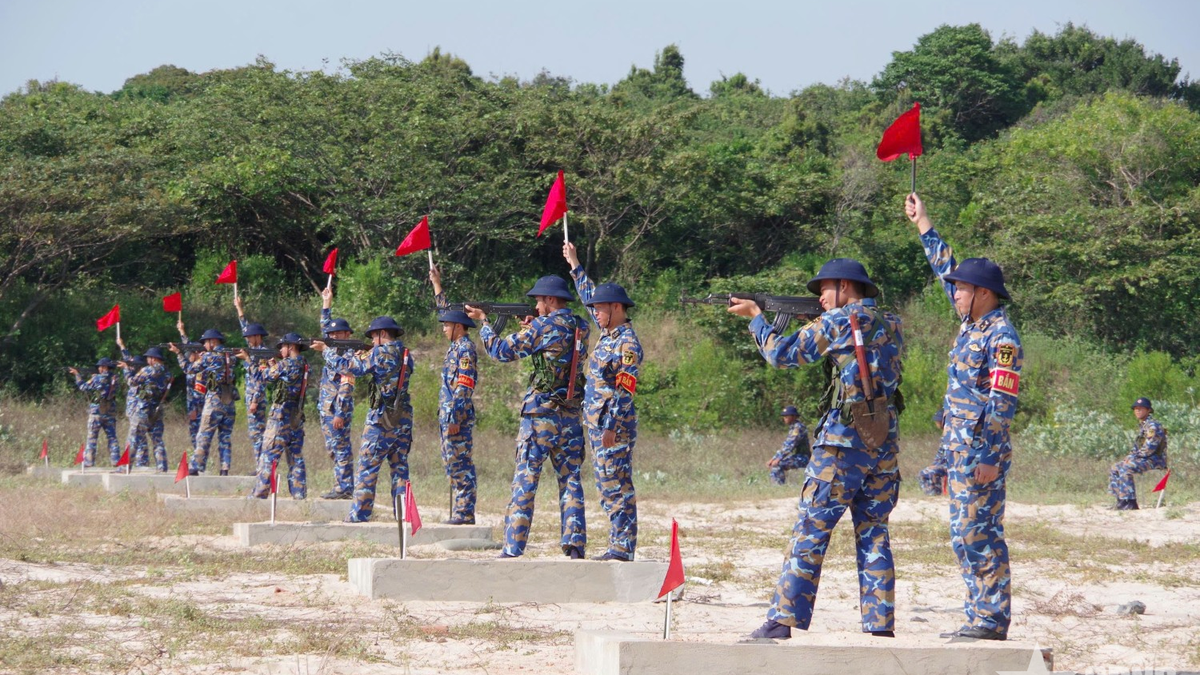
Faced with this reality, Tuyen Quang determined that to build a strong national defense and security posture, it is necessary to create a self-reliant "immune system" within the community. The work of mobilizing the people has gone deep into its core with the motto: Economy is the foundation, culture is the weapon. The image of "Uncle Ho's soldiers" helping the people develop the economy, eliminating temporary housing, along with models such as "Tet for the Poor," "Spring Border Guards warming the hearts of the villagers," or campaigns to eliminate outdated customs among the Mong people... have become solid "milestones" of trust. When material living standards improve and cultural identity is preserved, the rhetoric of malicious individuals automatically becomes meaningless.
The achievements stemming from this "people's support" strategy are not only valuable lessons but have also been distilled and elevated into a guiding principle throughout the Resolution of the First Congress of the Tuyen Quang Provincial Party Committee, term 2025-2030. The Resolution outlines the following tasks and solutions: Consolidating the defense zone; building a national defense system based on the people's security posture; closely integrating socio-economic development with national defense and security; and emphasizing the role of ethnic minorities in border protection.
History has proven that, whether amidst the flames of war or facing unconventional challenges such as natural disasters and epidemics, the "people's support" remains the strongest foundation. Because maintaining the people's trust is tantamount to maintaining the nation. The bond of affection, sharing, and absolute trust between soldiers and their compatriots has woven an impregnable "fortress," protecting the peace and security of the homeland.
Giang Lam
Source: https://baotuyenquang.com.vn/xa-hoi/202512/suc-manh-the-tran-long-dan-be14eab/
![[Photo] National Assembly Chairman Tran Thanh Man working with the Standing Committee of the National Assembly's Delegation Affairs Committee.](https://vphoto.vietnam.vn/thumb/1200x675/vietnam/resource/IMAGE/2026/05/20/1779294340023_ndo_br_1-1691-jpg.webp)
![[Image] "Journey of Hope" promotes the organ and tissue donation movement in Vietnam.](https://vphoto.vietnam.vn/thumb/1200x675/vietnam/resource/IMAGE/2026/05/20/1779294400833_1-8910-jpg.webp)
![[Photo] General Secretary and President To Lam works with the Party Committee of the Ministry of Health on the work of Vietnamese traditional medicine.](https://vphoto.vietnam.vn/thumb/1200x675/vietnam/resource/IMAGE/2026/05/20/1779294323718_a1-bnd-2978-3319-jpg.webp)




















































Comment (0)