

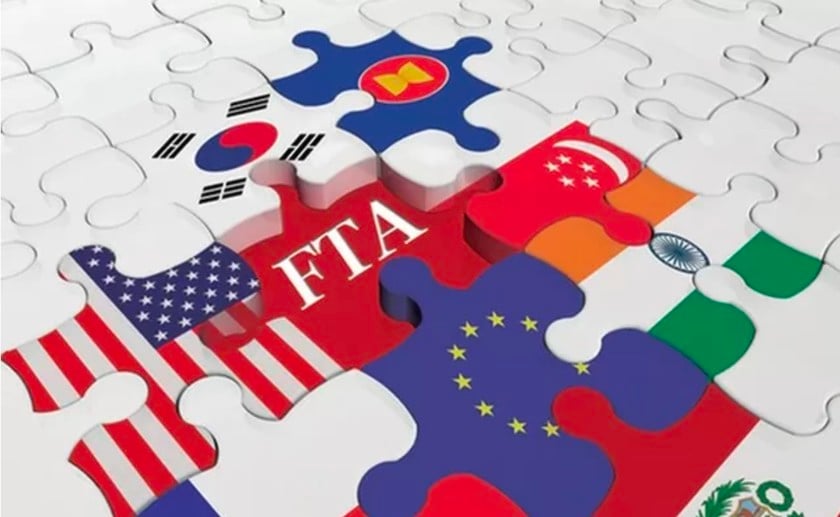
(PLVN) - Through the FTA Index, local agencies and businesses can compare the implementation of the Government 's action plan with the action plans of provinces and cities that have developed the FTA Index to identify areas where progress has been made and areas that need further development. This allows them to find more specific solutions and policies for businesses in their areas to take advantage of the FTA.
 |
| A key task of the Multilateral Trade Policy Department is to complete the report on the development of the Index Set and submit it to the Prime Minister . |
(PLVN) - Through the FTA Index, local agencies and businesses can compare the implementation of the Government's action plan with the action plans of provinces and cities that have developed the FTA Index to identify areas where progress has been made and areas that need further development. This allows them to find more specific solutions and policies for businesses in their areas to take advantage of the FTA.
New-generation Free Trade Agreements (FTAs) have opened up many opportunities for Vietnam to grow and diversify its import and export markets, attract foreign investment, and bring positive impacts to the country's socio -economic development. However, the implementation and utilization of FTAs are still uneven across localities. To propose practical solutions applicable to each locality, measurement and evaluation from FTA implementation management agencies are necessary.
Accordingly, based on the Government's directives from 2022, the Ministry of Industry and Trade has been developing a set of indicators to evaluate the implementation results of FTAs (FTA Index). Currently, the FTA Index is being finalized with the goal of being ready for publication as soon as possible. The top priority is to complete the report on the development of the Index and submit it to the Prime Minister for consideration.
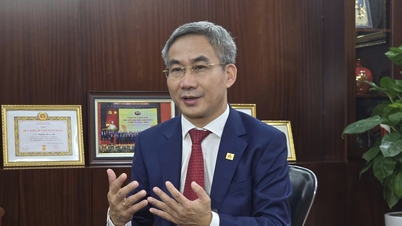
According to Ms. Nguyen Thi Lan Phuong, Deputy Head of the WTO and FTA Department, Multilateral Trade Policy Division, Ministry of Industry and Trade, we are currently implementing 16 FTAs, including 3 new-generation FTAs such as CPTPP, UKVFTA, and EVFTA... but only since the implementation of the CPTPP Agreement have we begun to have implementation plans. Thus, to date, we have 4 FTAs with implementation plans: CPTPP, EVFTA, UKVFTA, and RCEP. This reflects a significant change in central-level management, as previous FTAs were implemented without action plans after signing.
"Since the CPTPP Agreement, we have had plans and have closely followed the Government's action plans. Along with that, ministries, sectors, and localities have also developed their own action plans, closely adhering to the Government's requirements to effectively implement and maximize the benefits of these FTAs," said Ms. Nguyen Thi Lan Phuong.
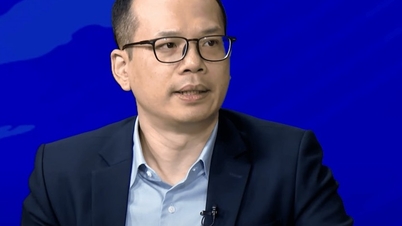
 Ms. Nguyen Thi Lan Phuong - Deputy Head of WTO and FTA Department, Multilateral Trade Policy Division, Ministry of Industry and Trade. Ms. Nguyen Thi Lan Phuong - Deputy Head of WTO and FTA Department, Multilateral Trade Policy Division, Ministry of Industry and Trade. |
According to Ms. Phuong, although businesses, provinces, and cities have achieved very positive results in implementing and utilizing FTAs, there are still many limitations in the implementation process:
Firstly, the utilization rate of incentives is still very limited, and businesses are only focusing on producing raw materials.
Secondly, at the local level, although the attention and support for businesses to take advantage of FTAs have improved significantly, they remain modest due to various reasons, including a limited workforce that has not received systematic professional training.
Thirdly, we lack a detailed, transparent, specific, and continuous mechanism to measure the results of FTA implementation, thereby enabling the development of continuously evolving solutions. That is, while implementation plans set out a long-term vision, each changing political and economic context requires central and local authorities to develop more specific and practical solutions for industry associations and businesses to help them effectively utilize FTAs.
During the development of the FTA Index, the drafting agency and editorial team faced significant challenges, including timelines and funding. Although the FTA Index was funded by the state budget, the relevant agency only decided to allocate funds for the task in May 2024. Following this, a bidding process lasted four months, and the unit responsible for conducting the data analysis, compilation, and development of the index was finally selected at the end of September. Furthermore, numerous other complex tasks and procedures were also encountered, creating significant pressure on time, expertise, and finances.
However, overcoming all those obstacles and challenges, the Ministry of Industry and Trade and its functional units have continuously strived to build the report on the results of the FTA Index. Currently, this report is being submitted to the Prime Minister for consideration.
According to Ms. Phuong, the FTA Index was created to support various stakeholders, from the National Assembly, central and local government agencies, to investors, citizens, and businesses. The FTA Index acts as a health indicator, measuring the capacity of provinces and cities and supporting businesses in the implementation of Free Trade Agreements (FTAs). This allows for the development of more effective and proactive support solutions for localities, businesses, industry associations, and investors.
Representatives from the Multilateral Trade Policy Department of the Ministry of Industry and Trade emphasized that once the FTA Index is finalized, it will become a tool to help the National Assembly better evaluate, monitor results, and direct the implementation of FTAs. For central agencies, the FTA Index will improve management and provide more practical support to localities and businesses.
Source: https://baophapluat.vn/fta-index-cong-cu-ho-tro-quoc-hoi-giam-sat-chi-dao-cong-tac-thuc-thi-fta-post534283.html

![[Photo] Secretary of the National Assembly Party Committee, Chairman of the National Assembly presides over the meeting of the Standing Committee and Executive Committee of the National Assembly Party Committee.](https://vphoto.vietnam.vn/thumb/1200x675/vietnam/resource/IMAGE/2026/06/03/1780480353201_ndo_br_bnd-2585-jpg.webp)

![[Photo] General Secretary and President To Lam presides over a meeting with the Central Organizing Committee.](https://vphoto.vietnam.vn/thumb/1200x675/vietnam/resource/IMAGE/2026/06/03/1780482764658_a1-bnd-4741-3342-jpg.webp)








































![[Video] Sunset at Lap An Lagoon – Where the sun sets over the fishing nets](https://vphoto.vietnam.vn/thumb/1200x675/vietnam/resource/IMAGE/2026/05/31/1780192137701_beach-landscape-sea-water-nature-grass-745871-pxhere-com.jpeg)






![[Photo] General Secretary and President To Lam attends the 14th Congress of the Vietnam Trade Union](https://vphoto.vietnam.vn/thumb/402x226/vietnam/resource/IMAGE/2026/06/04/1780543339765_anh-man-hinh-2026-06-04-luc-10-22-07.png)




















Comment (0)