The voice of the people resounds everywhere.
And rightly so, this unprecedentedly large-scale and profound reform of the government apparatus aims to build a government that is "close to the people" in order to fulfill its mission of being "of the people, by the people, and for the people."
Everyone comes from the people and returns to the people, yet not everyone acts for the people while in positions of power.
Therefore, it is necessary to reiterate the above context, especially when the keyword "People" appears repeatedly as the entire country officially and simultaneously operates a two-tiered local government system in 34 provinces and cities.
With the elimination of the intermediate district level, the government system was restructured into two levels: province and commune/ward, where the commune/ward is the closest to the people, directly handling the most pressing needs of citizens and businesses.
General Secretary To Lam said: The decision to "reorganize the country" is a historic step with strategic significance, marking a new stage of development in perfecting the state administrative apparatus, perfecting the institutions and organization of the political system to be synchronous, streamlined, effective, and efficient, aiming towards perfecting a modern, constructive, people-oriented, and people-serving administration, so that all benefits belong to the people.
"I call upon all levels of government, agencies, organizations, civil servants, and workers to make a strong transformation in thinking and action, grasp development trends, innovate in thinking and working methods, enhance leadership and management capacity, promote the spirit of daring to think, daring to act, daring to take responsibility, and be ready to sacrifice personal interests to move towards a service-oriented, modern, transparent administration that is of the people, by the people, and for the people," he emphasized.
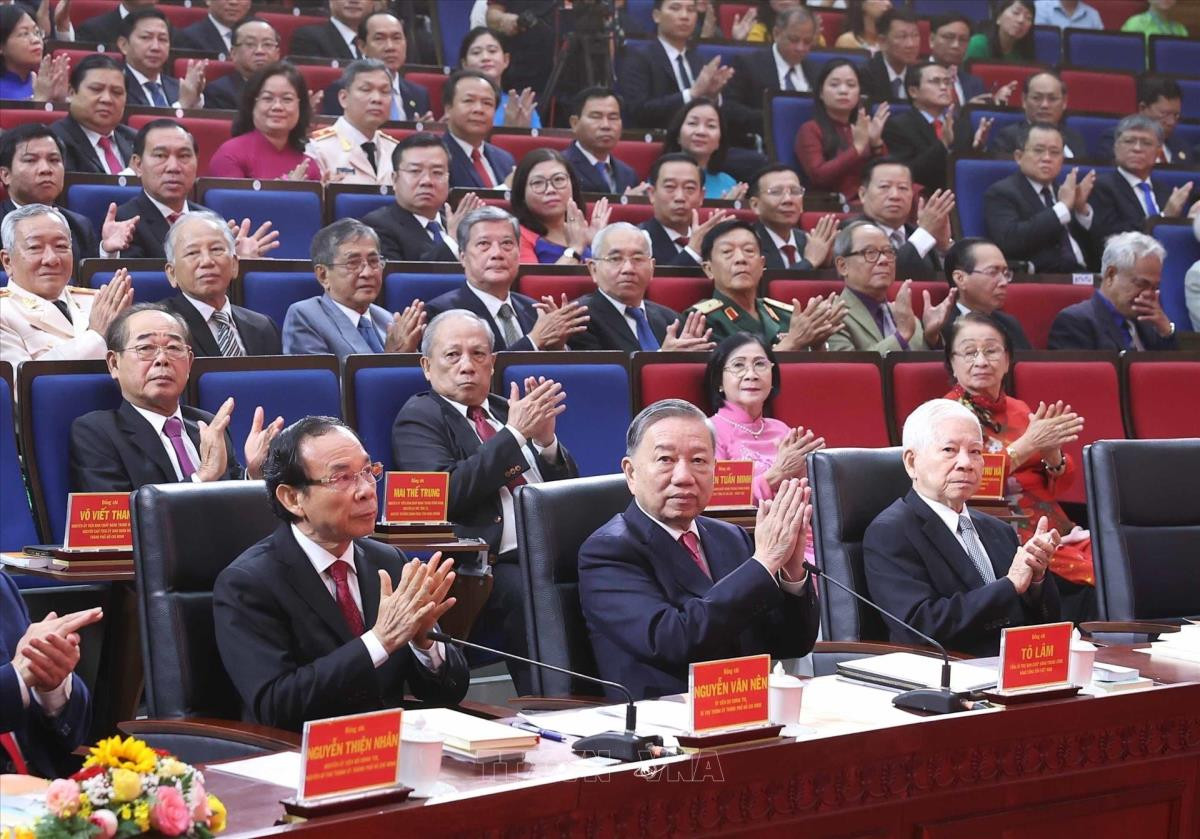
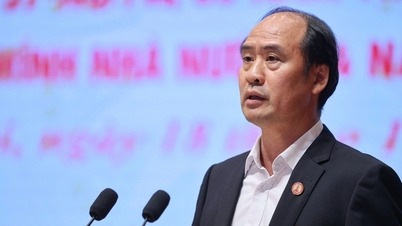
The unprecedentedly extensive and profound reform of the government apparatus aims to build a government that is "close to the people" in order to fulfill its mission of being "of the people, by the people, and for the people." Photo: VNA
In Ho Chi Minh City, Party Secretary Nguyen Van Nen emphasized: "The only true measure in any reform is the quality of life of the people." Meanwhile, in Hanoi , Party Secretary Bui Thi Minh Hoai pledged that the new apparatus would "best serve the people and businesses."
Reducing administrative layers, particularly eliminating intermediate district levels, is expected to bring about fundamental changes. Thousands of unnecessary departments, units, and facilities will be cut, resulting in significant savings in public spending. More importantly, it will eliminate countless overlapping processes and procedures, significantly shortening decision-making and policy implementation times.
Thus, the provincial level will play a strategic role in formulating macro-policies for the locality, directly guiding the grassroots level. Conversely, the commune/ward level will be granted greater autonomy, becoming a complete level of government, directly addressing the issues of citizens and businesses in the spirit of "local decision-making, local action, local responsibility".
This model promises a more flexible and responsive system of government that can react more quickly to practical needs.
People are still unfamiliar with the process.
However, this "major overhaul" also comes with challenges and anxieties, especially for citizens and the business community. Citizens worry about everything from national identity cards, land ownership certificates, vehicle registration, to school enrollment for their children. Businesses worry about business registration certificates, investment licenses, bank accounts, invoices, contracts, addresses, and so on.
Businesses and citizens are concerned that this widespread adjustment could cause short-term disruption and increase administrative costs.
In addition, will the new local government apparatus adapt immediately or will it be slow in processing important documents such as those related to land, investment, environment, and construction?
Despite initial legal guidelines, without unified central direction and effective coordination from local authorities, the initial phase after the merger could very well delay projects or create anxiety for investors.
The broader reform
From another perspective, it is hoped that the overhaul of the system will not only be limited to administrative reform but will also be a strategic reform of the development model, in which the roles of the State and the capital market, which have long been ambiguous and overlapping, are clearly defined.
The World Bank once calculated that a country's public assets can be four times its GDP. In our country, public resources could amount to $2 trillion.
However, the state's extensive direct involvement in economic activities through state-owned enterprises, coupled with the lack of transparency in the connections of certain privileged groups within the private sector, also raises concerns about efficiency.
The "commercialization, fragmentation, and lack of public oversight" of public institutions have left many valuable lessons to be learned.
This reform is an opportunity to redefine the role of the State: abandoning the mindset of "too much to give" and "giving without transparency," and shifting to a role of creating and regulating the market fairly so that resources are allocated most efficiently.
When authority and responsibility are more clearly defined, and processes are streamlined and transparent, the fragmentation of power that leads to overlapping tasks and suboptimal decisions will be minimized.
The restructuring and streamlining of central ministries and agencies (reducing the number from 30 to 21) demonstrates a strong political determination to break free from the ingrained "sector-based thinking" and shift towards an "integrated policy-based thinking." The government will not only be smaller but also operate more efficiently and flexibly, avoiding overlapping functions. The government will focus on its role as the chief architect coordinating national resources, rather than getting bogged down in minor issues or becoming too deeply involved in economic activities.
This will allow the free market to reach its full potential, becoming the main driver of sustainable economic growth.
Today, July 1st, 2025, marks a new milestone in our country's reform process, filled with hope and expectations.
Citizens not only desire a government that avoids harassment but also demand a "creative" government. Businesses seek not only a stable environment but also long-term partnership where their property rights are protected.
This reform, from the central to the local level, is not just an organizational matter, but a test of the thinking, capabilities, and fortitude of the entire political system.
But when "the people" is the keyword, and the people are at the center, then all policies and actions will always be oriented towards the people and in line with the market.
Vietnamnet.vn
Source: https://vietnamnet.vn/gan-dan-va-vi-dan-2416915.html



![[Image] Nearly 125,000 Hanoi students completed the Literature exam for the 10th grade entrance exam.](https://vphoto.vietnam.vn/thumb/1200x675/vietnam/resource/IMAGE/2026/05/30/1780117233041_ndo_br_thiet-ke-chua-co-ten-2-png.webp)



























































































Comment (0)