

Effective models
Affirming the important role of the collaborative model between family, school, and society, Ms. Nguyen Thi Tham - Head of the Culture and Social Affairs Department (Vinh Lai commune, Hai Phong city) said that educational institutions in the area are implementing the "Parents enjoy learning with their children" model. This is a form of collaborative education based on the principles of companionship, sharing, and daily interaction. The model not only strengthens the connection between parents and children but also contributes to improving the effectiveness of comprehensive education.
With this model, parents spend 15-30 minutes each day reviewing old lessons with their children, checking their understanding; assisting them with homework; asking open-ended questions instead of doing the work for them; and encouraging them to share what they learned at school.
This is considered the most important foundation. Besides learning with their children daily, the model encourages parents to become their children's "learning partners": telling stories, reading books; learning math and Vietnamese through games; supporting their children in small projects such as STEM or crafts… Parents learn alongside and accompany their children, but they don't do the work for them.
Furthermore, to increase bonding and help students apply their knowledge to practical situations, parents can participate in experiential activities with their children such as planting trees, cooking, conducting experiments, or having conversations about their feelings and lessons learned during the day. This is a way to build a "learning culture" right within the family.
To ensure the "Parents Learn Together with Their Children" model works effectively, the school guides parents on how to accompany their children without putting pressure on them; supports their children according to the methods of the 2018 General Education Program; and organizes experiential learning days with the participation of parents.
"It can be said that the 'Parents enjoy learning with their children every day' model is a practical solution that helps connect families and schools, improve the effectiveness of comprehensive education , and help students develop harmoniously in terms of intellect, emotions, and personality. This model is easy to implement, low-cost, but highly effective, and suitable for replication in localities and schools today," said Ms. Nguyen Thi Tham.
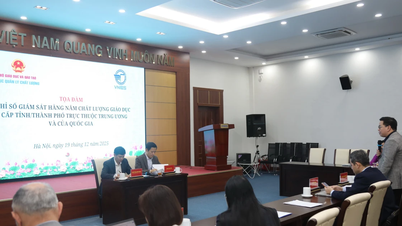
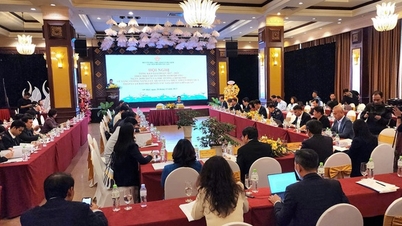
At a seminar on strengthening coordination between families, schools, and society in the education of children, students, and young people in the new era, organized by the Ministry of Education and Training and the Vietnam Association for the Promotion of Learning, the Ho Chi Minh City Department of Education and Training shared many effective models.
First, there is the "Happy School" model, developed by the city's Education Department based on three core values: Love, Safety, and Respect. Aiming to make every day at school a joyful one, the Department of Education and Training advised on the issuance of the "Happy School" criteria set. Based on this, all schools have developed plans to implement the "Happy School" model and self-assess their level of achievement of the criteria at the end of each school year.
Furthermore, the "Growing Up with Your Child in the Digital Age" model is also a highlight, focusing on enhancing the role of parents in supporting their children through the challenges of the technological era. Through workshops and seminars for parents, the education sector helps parents better understand the psychology of this age group, equipping them with the skills to guide their children in safe internet use and managing their study and entertainment time in a healthy way.
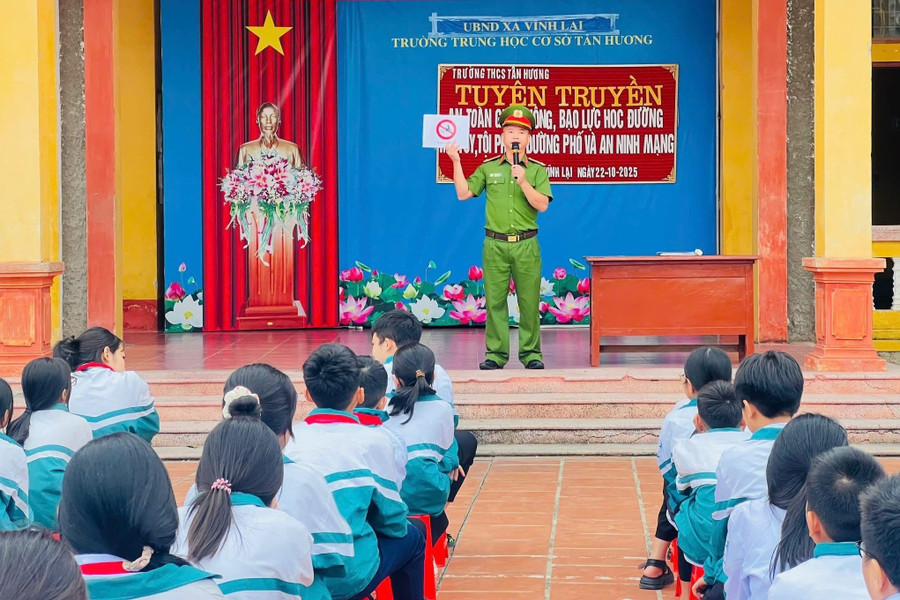
It is also worth mentioning the experience of coordinating between schools and local organizations in educating students. Many schools in Ho Chi Minh City have proactively signed cooperation agreements with the police and the People's Committee of wards/communes to ensure security and order around the school area, and to prevent social evils and school violence.
100% of educational institutions in the area have effectively coordinated with local authorities to maintain school security. Many units have signed joint agreements with the ward police to ensure the security and safety of students. The involvement of various organizations has created a support network around the school, helping to manage students both inside and outside the classroom.
These models and approaches demonstrate that when schools proactively "open their doors," considering parents and the community as partners in action, educational effectiveness increases significantly.
"The shared home"
Ms. Doan Thi Thuy Duong, Head of the Social Sciences Department at Vu Van Hieu High School (Quang Ninh), shared her practical experiences on promoting the collaborative role of family, school, and society in educating students.
Firstly, the school's leadership team focuses on regularly training homeroom teachers as experts in connecting with and advising students on psychological well-being. This training is incorporated into the annual psychological counseling plan; opportunities are created for teachers to participate in training courses and obtain certifications in school psychological counseling to detect and intervene early in cases of abnormal psychological behavior in students, ensuring that students always come to school safely and happily.
Secondly, attention is paid to building effective three-way communication channels. The school maintains popular communication channels with parents such as Zalo and an electronic communication book, continuously connecting parents and the school. In addition, the school, along with parents, students, and the local police, sign annual commitments to comply with regulations and laws such as traffic safety and fire prevention, creating a solid framework to prevent students from violating the law.
Thirdly, we promote the self-awareness of students. The school values the revolutionary ideals of Comrade Vu Van Hieu, instilling patriotism and revolutionary spirit in students; it organizes voluntary participation in clubs such as art, music, media, English, and basketball to maximize students' potential.
In addition, the school develops class activity themes according to a schedule to promote self-learning, confidence, and autonomy among students. Topics that students enthusiastically participate in include: "Civilized Behavior," "Safe Connection," "Responsible Use of Social Media," and "Legal Education"...
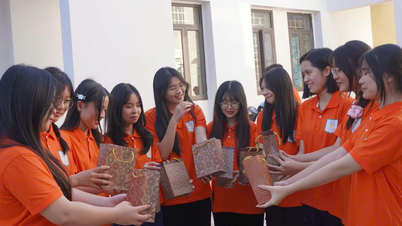
Fourth, strengthen the role of parents in supporting their children. Every year, the school organizes a Parent-Student-Teacher Day to create a forum for parents to share educational methods, introduce their professions, and directly participate in experiential activities with their children on engaging and practical themes such as "Understanding Your Child Through Listening," "Career Education with Your Child," "Strictly Abiding by the Law," and "Celebrating Traditional Tet with Your Child"...
These activities help the school become a "common home," where parents and children can create more memories, build strong bonds, and actively collaborate in the students' education.
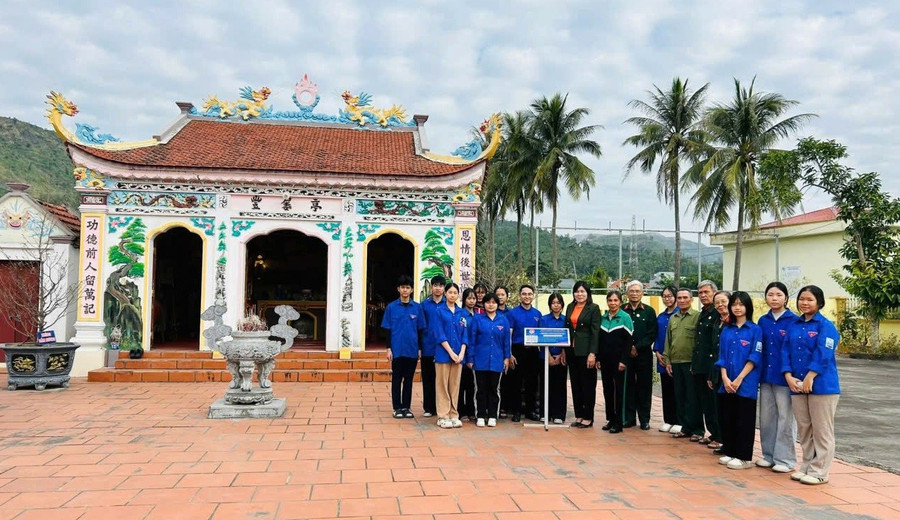
Fifthly, the school always seeks the participation and support of the local government and organizations in Ha Tu ward; proactively coordinating regularly with the police and the Youth Union of the ward in activities such as propaganda, application of digital technology, environmental sanitation, and showing gratitude to those who have contributed to the nation.
Through this, students are given the opportunity to connect more closely with their families, schools, and communities; forming a sense of responsibility voluntarily, effectively, and increasingly deeply.
3 "pillars" in the digital age
Sharing solutions for building collaborative relationships between schools and families in the digital age, Dr. Le Thi Duyen from the University of Education (Da Nang University) emphasized the first step in building a collaborative model involving schools, teachers, and parents. Teachers directly guide students, monitor their learning progress, and develop their skills. Parents act as partners, guiding values, managing technology use, and supporting home learning. The school is the organizing body, providing educational programs, materials, and policies.
Dr. Le Thi Duyen believes that schools need to raise awareness among parents and teachers about the importance of collaborative relationships in the digital age. This can be done through workshops and seminars, helping parents understand the inseparable role of the family in their children's learning process in the digital environment.
The school provides clear guidance materials on how parents can support their children's online learning, build study habits, manage time, and ensure safety while using the internet. With increased awareness, parents will proactively cooperate, provide positive feedback, and work alongside the school in all educational activities.
Enhancing the digital transformation capabilities of teachers and parents is a prerequisite for effective collaborative education in the digital age. Schools need to organize specialized training sessions to help teachers become proficient in student management and online learning platforms.
For parents, specific guidance on how to monitor timetables, grades, academic progress, or communicate with teachers through digital channels helps them proactively and continuously support their children. Schools should also develop a system of concise, visually appealing instructional videos and upload them to their website, allowing parents to easily review them when needed, reducing the workload for teachers in repeatedly explaining technical procedures.
Dr. Le Thi Duyen also emphasized the need for schools to diversify collaborative methods such as: inviting parents to participate in online educational activities (career seminars, life skills sharing); organizing "Online Learning Day" with the participation of parents; connecting parents with expertise in information technology to support the school in technology-related activities, etc.
"Creating a positive collaborative environment is a crucial foundation for enhancing the effectiveness of school-family cooperation. Schools need to promote active parental involvement by inviting them to participate in students' learning activities, experiences, projects, and extracurricular programs."
This involvement not only helps parents better understand the educational process but also allows them to contribute their experience, resources, and perspectives to support their children's development.
At the same time, it is necessary to build a culture of positive, transparent, and trustworthy exchange between schools, teachers, and parents; in which information is shared clearly, promptly, and based on a spirit of cooperation. All decisions related to students must be made on the basis of respect, listening, and aiming for the holistic development of students,” said Dr. Le Thi Duyen.
“In the digital age, implementing the principle of integrating schools, families, and society becomes particularly necessary due to the rapid transformation of the living environment, learning methods, and learner behavior. Modern learning models are more open, flexible, and experiential, requiring synchronized support from the community.”
"Learners acquire knowledge not only at school but also from online platforms, social interactions, and practical experiences. Families need to support self-learning habits; society needs to provide a healthy environment for practice, careers, and culture; and schools play the role of organizing and guiding students." - Dr. Le Thi Duyen
Source: https://giaoducthoidai.vn/gan-ket-3-chan-kieng-giao-duc-post761242.html












![[Photo] Prime Minister Pham Minh Chinh attends the Conference on the Implementation of Tasks for 2026 of the Industry and Trade Sector](/_next/image?url=https%3A%2F%2Fvphoto.vietnam.vn%2Fthumb%2F1200x675%2Fvietnam%2Fresource%2FIMAGE%2F2025%2F12%2F19%2F1766159500458_ndo_br_shared31-jpg.webp&w=3840&q=75)

































































Comment (0)