

Non-alcoholic fatty liver disease (NAFLD) is a condition where excessive fat accumulates in the liver even though the patient does not drink or drinks very little alcohol. According to the health website WebMD (USA), fish is a food source rich in protein, low in unhealthy fats, and suitable for people with this condition.
Why is eating fish good for the liver?
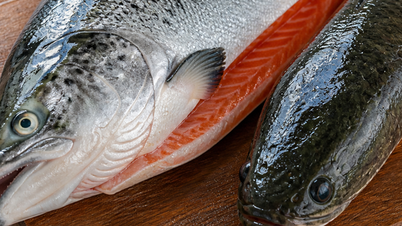
The most notable benefit of fish lies in its omega-3s. Fatty fish such as salmon, mackerel, and sardines are rich in long-chain omega-3 fatty acids (EPA and DHA), which have been studied for their anti-inflammatory properties.
Some studies suggest that omega-3s from fatty fish may help reduce liver fat and improve markers of hepatitis when included in a balanced diet and with proper energy control.

Fatty fish such as salmon, mackerel, and sardines are rich in omega-3 fatty acids, which have been studied for their anti-inflammatory properties.
Photo: NQ created from GM
Besides omega-3s, fish also provides vitamin D, selenium, and B vitamins—nutrients that support metabolic health. Eating fish as part of a Mediterranean diet is also considered beneficial for people with fatty liver disease.
Types of fish that are good for people with fatty liver disease.
The UK National Health Service (NHS) recommends eating at least two servings of fish per week (each serving being approximately 140g of cooked fish), with at least one serving being fatty fish.
Fatty fish varieties that should be prioritized:
- Salmon: Rich in omega-3s and high-quality protein.
- Mackerel, sardines, and herring: These have comparable nutritional value to salmon and generally accumulate fewer pollutants than larger fish.
- Herring and freshwater trout: Provide similar amounts of omega-3s and are easy to prepare.
Besides fatty fish, lean white fish such as cod, flounder, or sea bass are also good sources of lean protein and low calories, suitable for diversifying the diet and supporting weight management in people with fatty liver disease.
Healthy ways to prepare fish for people with fatty liver disease.
Oven baking : This is the ideal method because it requires very little oil and fat while still retaining the moisture and nutrients of the fish.
Making:
- Preheat the oven to 180-200°C.
- Place the fish on baking paper or a lightly greased baking tray.
- Grill until the fish is tender and fully cooked. You can add lemon slices, garlic, and dill to enhance the flavor without adding too much salt or calories.
Grilling or pan-frying with minimal oil : This helps create an appealing flavor thanks to the light charring, while also preventing excess fat from dripping out.
Making:
- Use about 1 teaspoon of olive oil for each serving of fish.
- Grill for 3-5 minutes on each side until the fish is thoroughly cooked. Suitable for salmon, tuna, and other firm-fleshed white fish.
- Be careful to avoid burning the food as this can produce compounds that are harmful to your health.

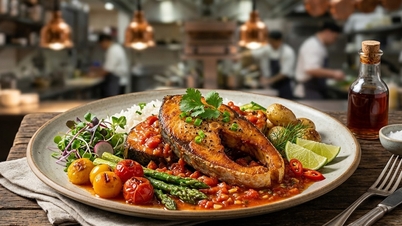
Steaming fish helps retain maximum nutrients and eliminates the need for added oil or fat.
PHOTO: NQ CREATED BY AI
Steaming : Helps retain maximum nutrients and eliminates the need for added oil or fat.
Instructions: Steam the fish for about 8-12 minutes until cooked through; this method is suitable for soft-fleshed fish such as flounder.
Baking in foil : Fish is wrapped in baking paper along with vegetables and herbs, then baked. This method combines the advantages of steaming and baking, resulting in a delicious dish without the need for much oil.
Gentle boiling : Boiling the fish in a light broth with herbs helps retain moisture without adding fat.
Notes on eating and preparing fish
- Always cook fish thoroughly.
- Pregnant women or people with weakened immune systems should avoid raw or undercooked fish.
- Flavor should be enhanced with lemon, garlic, spices, and herbs instead of excessive salt.
People with fatty liver disease should limit deep-fried fish and battered and fried fish because they contain high levels of saturated fat and refined carbohydrates, which can worsen insulin resistance. Creamy sauces, butter sauces, cheese sauces, and bottled sauces also often contain high amounts of fat, sugar, and salt. Instead, prioritize using a little olive oil, low-fat Greek yogurt, lemon, and herbs to flavor your dishes, according to WebMD (USA).
Source: https://thanhnien.vn/gan-nhiem-mo-nen-an-ca-gi-che-bien-ra-sao-185260527155612412.htm


![[Photo] The courage of new recruits of Brigade 144 on the training ground.](https://vphoto.vietnam.vn/thumb/1200x675/vietnam/resource/IMAGE/2026/05/27/1779881651341_anh-man-hinh-2026-05-27-luc-18-32-52.png)
![[Photo] The heat at the fireworks display site on the opening night of the Da Nang International Fireworks Festival 2026](https://vphoto.vietnam.vn/thumb/1200x675/vietnam/resource/IMAGE/2026/05/27/1779889741485_ndo_br_z7872039145157-fecaba5112f39e8352544099d7ef4738-5140-jpg.webp)



























































![[Photo] The courage of new recruits of Brigade 144 on the training ground.](https://vphoto.vietnam.vn/thumb/402x226/vietnam/resource/IMAGE/2026/05/27/1779881651341_anh-man-hinh-2026-05-27-luc-18-32-52.png)
































Comment (0)