

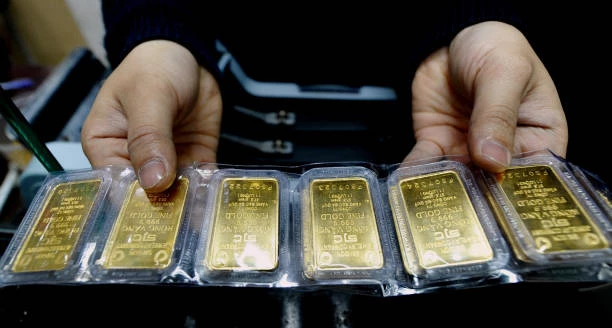
DNVN - The World Gold Council (WGC)'s May gold market commentary shows a continued upward trend in gold prices, with a 2% increase to $2,348 per ounce, marking the third consecutive monthly increase.
Despite a slightly smaller increase compared to March and April, gold prices still reached an all-time high of $2,427 per ounce in mid-May before reversing and falling. The market activity pushed long-term holdings on the COMEX (US futures exchange) to their highest level in four years, and gold exchange-traded funds (ETFs) recorded net inflows of $529 million, the first time since May 2023.
The WGC's Gold Returns Allocation (GRAM) model doesn't identify a single variable that dominated gold's performance in May. Positive factors included the upward momentum in gold prices and a weak US dollar, but their impact was negligible. The biggest factor remains the unexplained component, possibly due to decentralized, off-exchange gold trading and strong central bank buying.
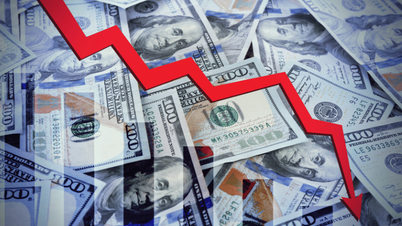
The weakening of the US dollar could be beneficial for gold.
Gold-backed ETFs recorded their first monthly inflows since May 2023, totaling $529 million, boosting total assets under management (AUM) by 2% to $234 billion, the highest level since April 2022. However, the amount of gold in the fund remains 8.2% lower than the average for 2023.
ETFs in Europe and Asia have boosted global inflows, with Asia recording its 15th consecutive monthly inflow of $398 million in May, although this is considered the lowest level since November 2023.
Meanwhile, China leads the region in gold demand due to record-high domestic gold prices and a weakening currency, while Japan sees strong inflows thanks to attractive domestic gold prices. Asia has attracted $2.6 billion so far in 2024, becoming the only region with inflows into ETFs, and total assets under management in Asian funds have increased by 41%, the highest level in history.
Shaokai Fan, Regional Director for Asia Pacific (excluding China) and Global Central Banking Director at the World Gold Council, said: “The gold market outlook is dependent on US growth and inflation data. In May, the US dollar reversed course after several consecutive gains since the beginning of 2024 as inflation trended downward, giving the Federal Reserve more flexibility in adjusting interest rates. The weakening of the US dollar could benefit gold. Additionally, the US dollar is heavily influenced by less optimistic economic data and ongoing global growth outside the US, which could dampen its performance.”
Recently, gold has nearly outpaced the US dollar as buyers in emerging markets seem to pay less attention to the US dollar or expectations about Western monetary policy; a weaker dollar in the future could entice Western investors back to the gold market, who are waiting for a boost.
Hoang Phuong
Source: https://doanhnghiepvn.vn/kinh-te/gia-vang-duy-tri-da-tang-du-toc-do-cham-hon/20240614015040949









































































































Comment (0)