

Global gold prices fall, domestic prices remain high.
In Asian trading on the morning of October 1st, gold prices continued to face strong selling pressure after a sharp decline in the US market at the end of last week and the beginning of this week.
After reaching an all-time high of $2,685 per ounce (equivalent to VND 80.9 million per tael), the spot gold price fell to $2,660 per ounce at the end of the week of September 23-27 and continued to decline to $2,635 per ounce at the start of the new week in the US market. By the morning of October 1, the spot gold price in the Asian market briefly fell to $2,625 per ounce. Continuous selling pressure caused the precious metal to constantly adjust downwards.
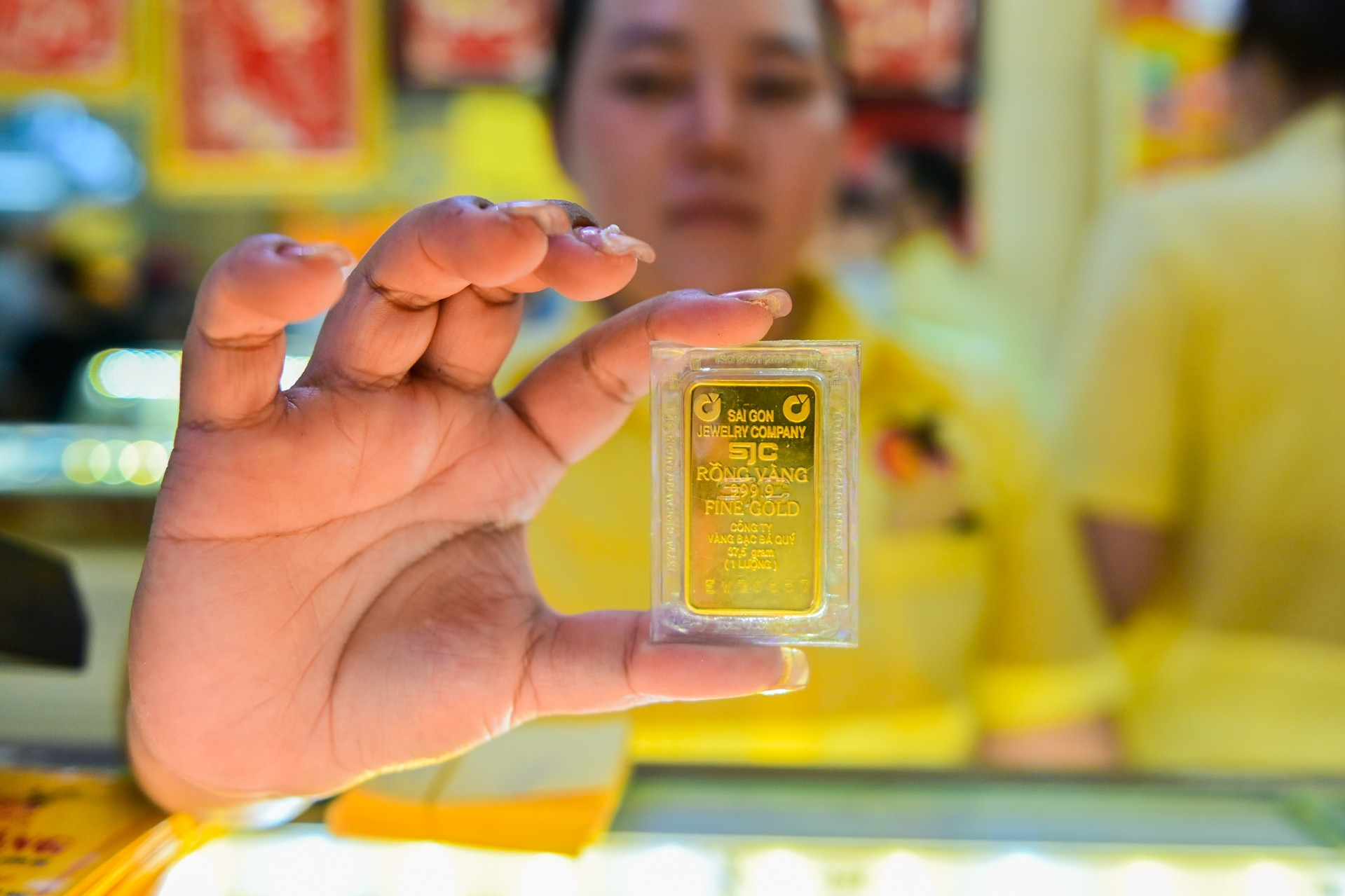
Meanwhile in Vietnam, gold prices continue to rise. On the morning of October 1st, the price of SJC gold bars unexpectedly increased by 500,000 VND, reaching 84 million VND/ounce (selling price) at four commercial banks and SJC Company.
SJC gold bars saw a surprising upward adjustment after consistently remaining at 83.5 million VND/ounce (selling price) throughout the previous week, even though this was a time when world gold prices experienced several consecutive days of sharp increases and reached a historical high on September 26th.
SJC gold bars have been sold at a stable price of 81 million VND/ounce (selling price) by four banks and SJC Company since June 3rd, after the domestic gold market experienced a surge, with gold bar prices peaking at 92.5 million VND/ounce on May 10th.
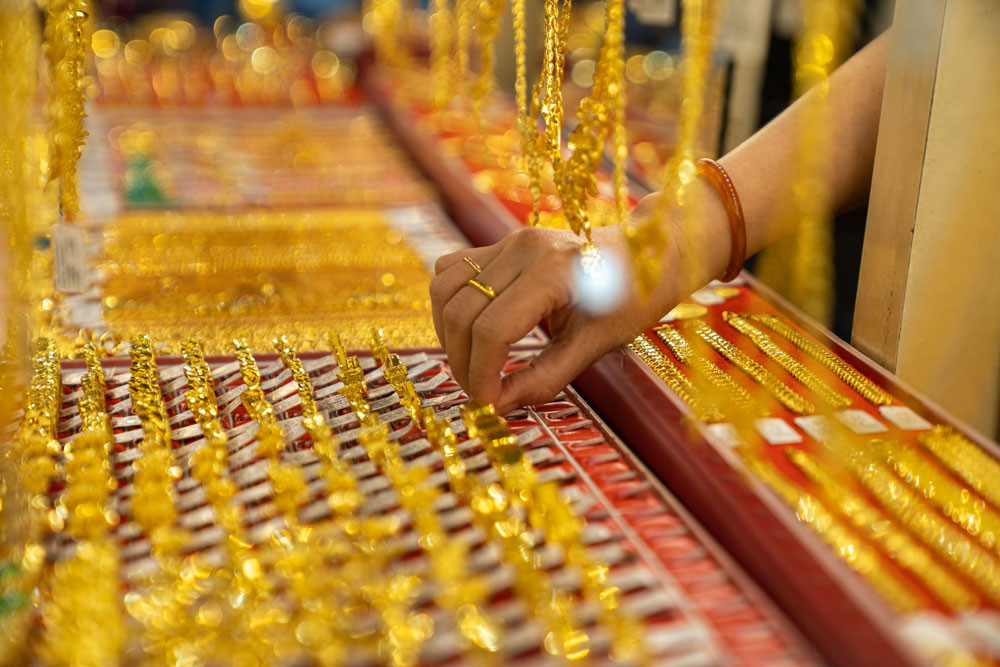
After stabilizing for a few sessions, the price of SJC gold bars at one point dropped to 76.98 million VND/ounce, before gradually rising in line with global prices and reaching the current level of 84 million VND/ounce.
The price of gold rings experienced a sharp increase and reached an all-time high of 83.45 million VND/ounce from September 26-28, only 50,000 VND/ounce less than the price of SJC gold bars.
In the last two trading sessions, the price of plain gold rings has seen a slight downward adjustment, but it remains at a very high level, around 82.9 million VND/ounce. With its rapid increase, the price of gold rings is predicted to potentially surpass the price of SJC gold bars.
Domestic gold prices have surged and remain at historically high levels amidst a downward trend in global gold prices, particularly due to significant global changes and geopolitical tensions in the Middle East.
The situation in the Middle East is considered to be entering a "dangerous moment," at its most critical stage, yet many believe it will soon move into a more stable phase as Israel demonstrates dominance in the region, while other countries/forces appear much weaker/quieter.
If the Middle East stabilizes, global gold prices will lose a key driver of growth. This could be a turning point, ending the strong upward trend that began in late 2023.
Is the Middle East cooling down?
Early on October 1st, the Israel Defense Forces (IDF) announced that they had launched ground attacks in southern Lebanon. The Israeli ground offensive against Hezbollah was seen by international media as a critical moment in the Middle East.
However, this operation was announced as "limited, targeted and aimed at the Hezbollah armed group in southern Lebanon." This is the next step after Israel "eliminated" much of Hezbollah's leadership, including its long-time leader, Nasrallah.
According to the Israeli Foreign Ministry, all 18 senior Hezbollah members, including leader Nasrallah and southern front commander Ali Karaki, as well as the heads of several designated units, have been killed.
Nasrallah, who led Hezbollah for over 30 years, is considered a symbol of resistance to Israel and the man who transformed Hezbollah into the powerful political and military force it is today.
On September 30, the Israeli military announced that it had killed Hezbollah leader candidate Nabil Qaouk, vice chairman of Hezbollah's "central council." Qaouk was considered one of the potential successors to the late Hezbollah leader Nasrallah, and he played a key role in military operations against Israel.
In the latest development, the Iranian Foreign Ministry affirmed that it will not deploy troops to Lebanon or Gaza, despite its repeated threats of retaliation against Israel, from the Israeli assassination of the Hamas leader in Tehran to the recent shocking developments involving Hezbollah in Lebanon.
Israeli Prime Minister Netanyahu warned on September 30 that there is no place in the Middle East that Israel cannot access.
Israel's ground offensive against Hezbollah is seen as a critical moment, potentially creating widespread instability in the Middle East. However, recent developments, including the elimination of Hezbollah's leadership, demonstrate Israel's dominance. This could lead to a period of de-escalation, similar to the aftermath of the Six-Day War in June 1967 between Israel and a coalition of Arab states.
If this happens, gold prices will lose one of their upward drivers.
In addition, the recent surge in the Chinese stock market following Beijing's unprecedented fiscal and monetary stimulus package has also reduced demand for gold in the country. Prior to this, the People's Bank of China (PBOC) halted gold purchases for three consecutive months after 18 months of net gold purchases.
Therefore, currently, the key factor supporting gold is the downward trend of the USD as the US begins its interest rate reduction cycle (which could last until 2026). However, these signals have already been partially reflected in the recent rise in gold prices.
In addition, tensions in Ukraine, the high demand for gold in Asia during the year-end peak season, and the possibility that the new US president will continue to inject money into the economy upon taking office (early next year)... will also be factors supporting gold.
In the long term, China will continue to reduce its USD holdings and increase its gold purchases.
However, for the time being, the situation in the Middle East remains tense following Israel's ground offensive in southern Lebanon.
World gold prices returned to the $2,656/ounce level on the evening of October 1st (Vietnam time). Bottom-buying demand continues to appear whenever prices fall.
Source: https://vietnamnet.vn/gia-vang-sup-manh-buoc-ngoat-kho-tranh-2327861.html



























































































Comment (0)