Awakening the value of heritage
Crossing the Cay Chanh bridge in Nhan Hoa commune and following the road along the Con River, we arrived at Truong Han Temple, located in Hong Son village, Thanh Binh Tho commune. The temple sits atop Ta Ngon mountain, surrounded by hills, fields, and villages, with the winding Trang stream in front, creating a majestic appearance. The temple has been recognized as a provincial-level historical and cultural relic.
According to Mr. Nguyen Van Canh, the manager of the Truong Han Temple relic site: The temple was built during the Le Trung Hung period (over 500 years ago) to worship Truong Cong Han – a chieftain of the Thai ethnic group who helped the Lam Son rebel army.
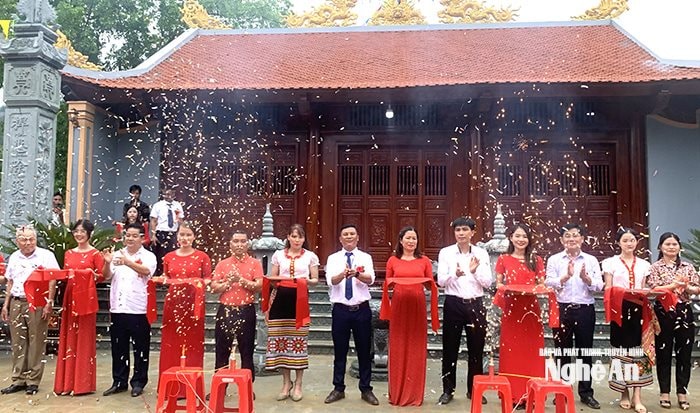
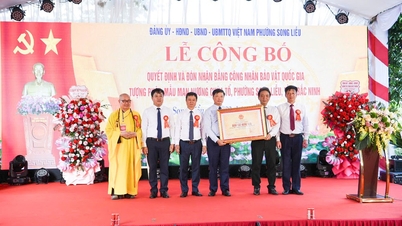
Ribbon-cutting ceremony for the inauguration of Truong Han Temple. Photo: CSCC
Legend has it that when the Lam Son army, led by King Le Loi of Binh Dinh, advanced from Thanh Hoa to Nghe An along the mountain road, after winning the Battle of Bo Dang in Quy Chau, they entered the Khe Trang area (present-day Thanh Binh Tho and Tien Dong communes). King Le Loi decided to stop here to recruit soldiers and prepare provisions to attack the Ming invaders at Tra Lan citadel (present-day Con Cuong commune).
Here, Le Loi and his army received assistance from chieftain Truong Cong Han, who provided provisions and encouraged young men to join the rebel army. Thanks to this, the Lam Son rebels gained strength, enabling them to besiege and attack the enemy at Tra Lan citadel, creating a battle of "shattering bamboo and flying ashes," as Nguyen Trai described in "Binh Ngo Dai Cao" (Proclamation of Victory over the Wu).
Following the victorious resistance against the Ming army, Le Loi ascended the throne as Emperor and bestowed the title of Kha Lam Quoc Cong upon Truong Cong Han. After his death, King Le Thai To granted him a royal decree and ordered the construction of a temple in his honor so that the people of Khe Trang could continue to care for him and offer incense.
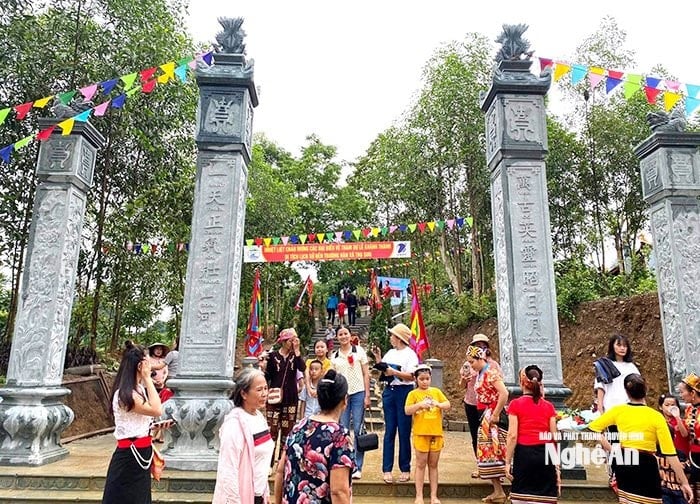
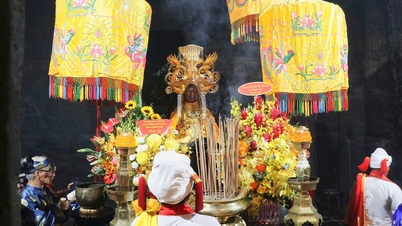
Locals and tourists visit Truong Han Temple in Thanh Binh Tho commune to pay their respects. Photo: CSCC.
Over the centuries, during the war against the US, the Truong Han Temple deteriorated and eventually collapsed. In 2013, the local government and people mobilized and raised funds to restore it, and the temple was inaugurated in 2022.
At the same time, ceremonies are held in mid-June of the lunar calendar and during the Bươn Xao Festival (August 20th of the lunar calendar) to commemorate merits and pray for the protection of the deities. Truong Han Temple is a spiritual destination for local people and tourists from near and far, especially on the first day of the month and the full moon day, when many people come to offer incense and prayers for peace and good fortune.
According to the leaders of Thanh Binh Tho commune, Truong Han Temple is one of the highlights in the local tourism development plan, a stop for tourists to visit, worship, and express their spiritual lives. From the temple grounds, visitors can admire the scenery of a vast area, taking in the beautiful villages, mountains, and fields, and imagine the ancient battle of the Lam Son rebels.
Sustainable livelihoods for the Thai ethnic group.
Leaving the Truong Han temple, we arrived at Hung Thanh village, located on the left bank of the Con River, a long-standing home of the Thai ethnic minority. Crossing a small suspension bridge over the river, we entered a prosperous village with clean roads lined with flowers and ancient stilt houses, evoking a peaceful way of life.
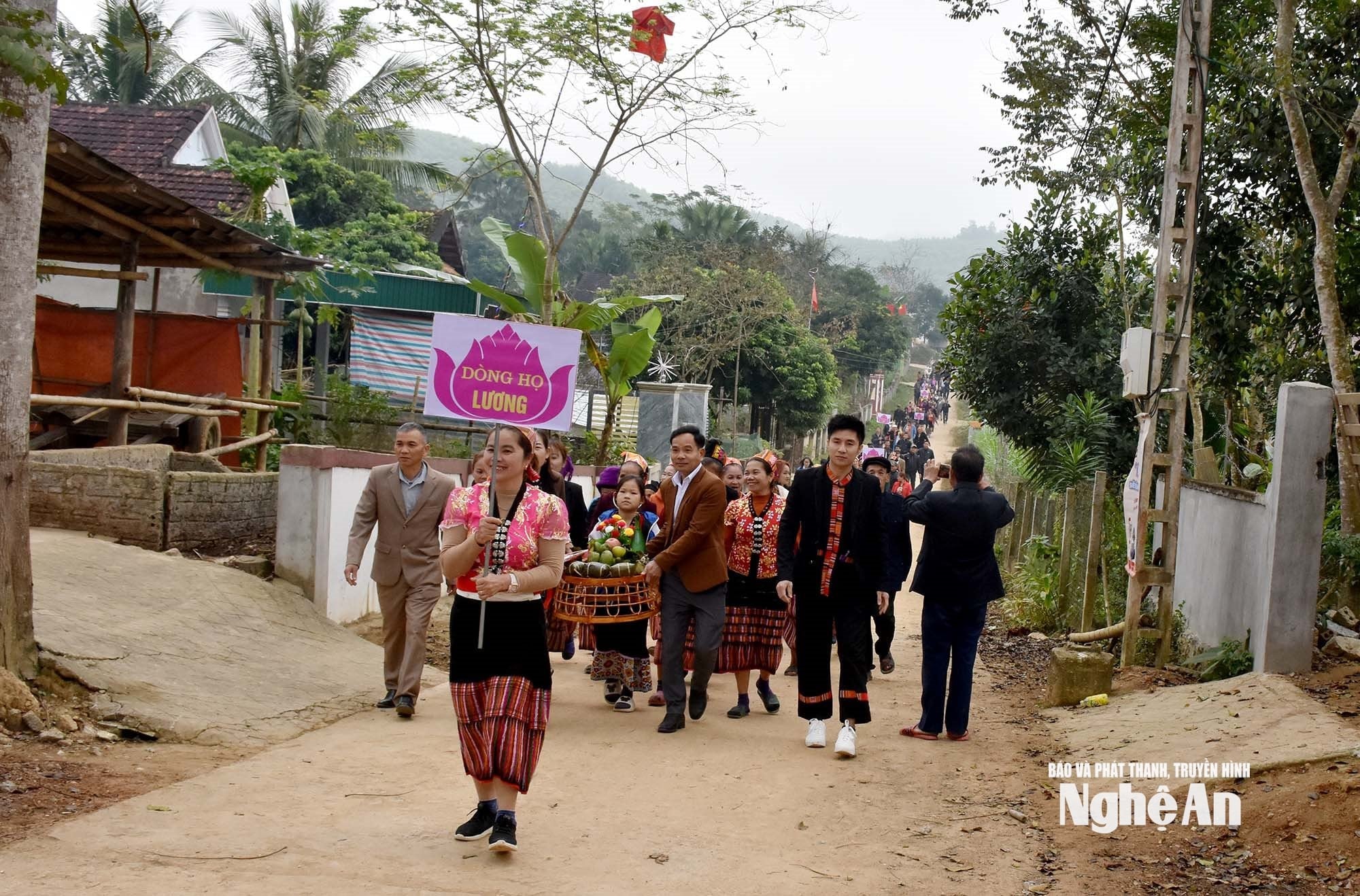
Locals and tourists attend the harvest festival in Hung Thanh village, Thanh Binh Tho commune. Photo: Cong Kien.
Village head Vi Van Duong and the people of Hung Thanh welcomed guests with warmth, smiles, and firm handshakes. “The village currently has over 250 households and more than 1,000 inhabitants, mostly ethnic Thai people. Our main source of income comes from forestry and livestock farming. Since developing community tourism, our village has welcomed many groups of visitors who have come to explore and experience the area, leaving a very positive impression,” said Mr. Vi Van Duong.
In 2022, the People's Committee of Thanh Son commune (formerly) developed a project to develop community tourism in Hung Thanh village based on the life and cultural identity of the Thai ethnic people there. This is because the people of Hung Thanh village still preserve their cultural space, customs, traditions, and ancient cultural beauty.
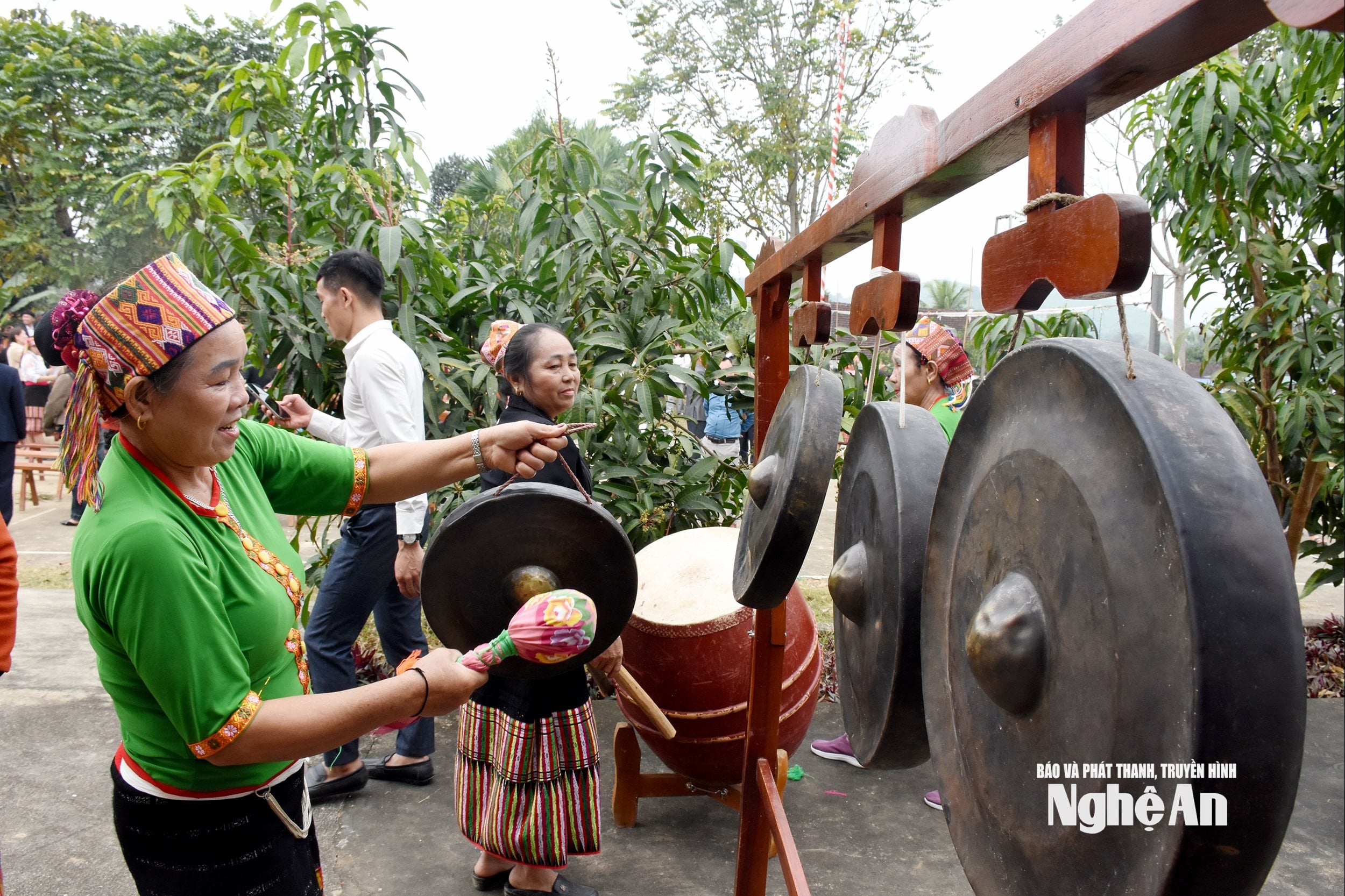
Gong festival in Hung Thanh village, Thanh Binh Tho commune. Photo: Cong Kien
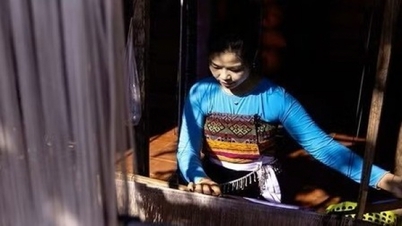
These include the gong culture, culinary culture, and traditional brocade weaving. Many families with the means build spacious stilt houses, which can be used as homestays to welcome and serve tourists.
The village shrine has been restored, and the villagers hold a harvest prayer ceremony at the beginning of spring and a new rice celebration in mid-May of the lunar calendar, adding another highlight to the cultural experience when visiting the Thai village downstream of the Con River.
To date, Hung Thanh village has built three homestays to provide accommodation for tourists. Simultaneously, it has established a Folk Song and Dance Club to interact with tourists; created groups for weaving brocade and preparing local dishes for tourists to experience; and renovated a lotus pond to create an attractive landscape to draw visitors.
In other words, the lush green mountains and forests, the picturesque riverbanks, the prosperous villages, the unique customs, and the fragrant lotus ponds have made Hung Thanh village an ideal destination for many tourists. In particular, the Harvest Festival held in early Spring 2026 attracted thousands of visitors who came to celebrate and share the joy with the people of Thanh Binh Tho.
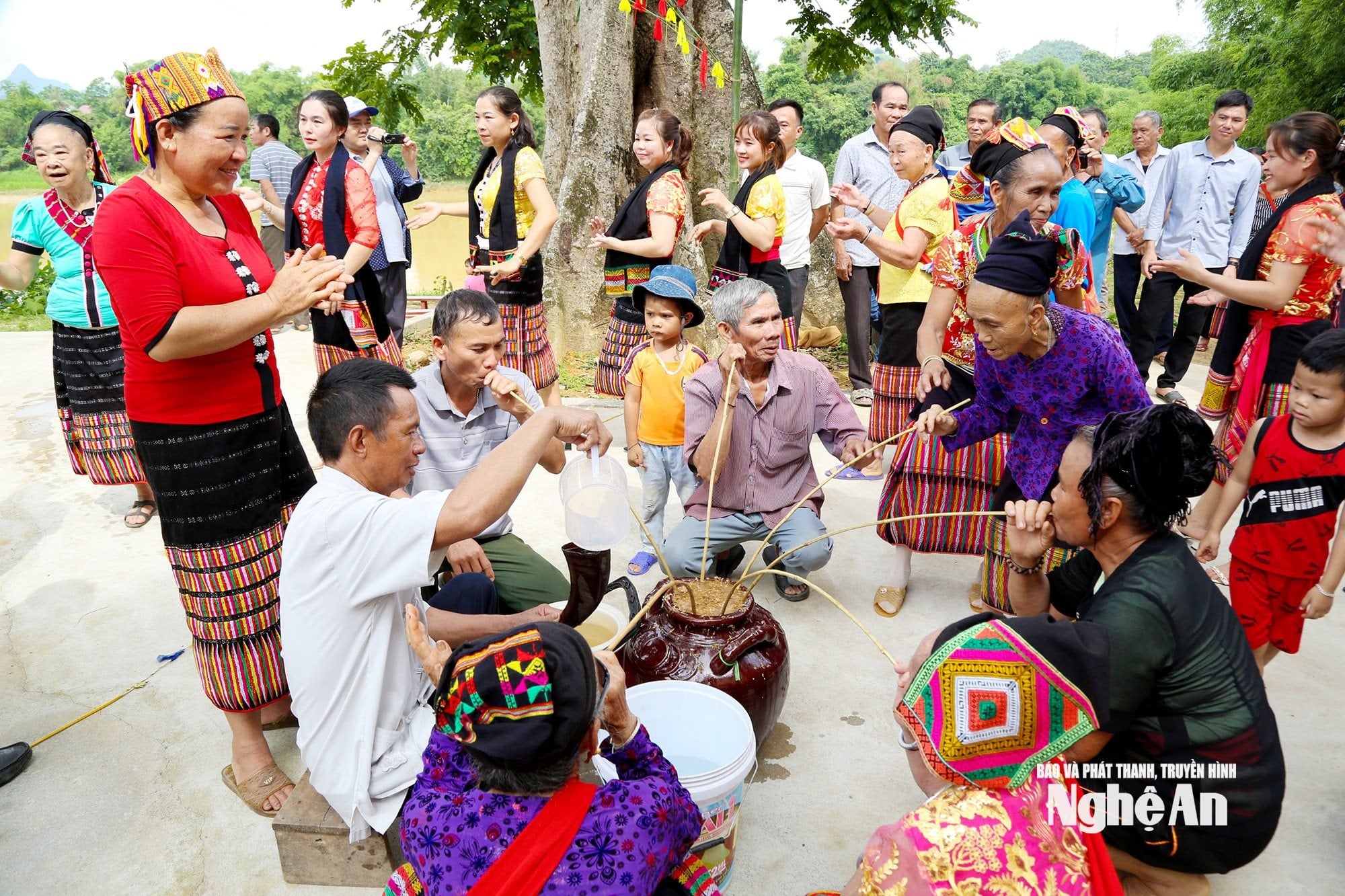
Locals and tourists dance the Lam Vong dance and drink rice wine together in Hung Thanh village, Thanh Binh Tho commune. Photo: Cong Kien
According to Ms. Ngo Thi Huyen, Chairwoman of the People's Committee of Thanh Binh Tho commune, the commune is planning to supplement its local tourism development project, focusing on connecting the Hung Thanh village community tourism site, Truong Han temple, and exploring the Con River by boat.
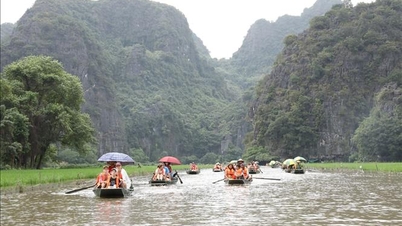
Specifically, when visiting this area, tourists will have the opportunity to experience the customs and cultural identity of the Thai ethnic group and stay in Hung Thanh village; visit Truong Han temple and take a boat trip up the Con River to admire the scenery and experience fishing.
If requested by visitors, connections can be extended to tourist attractions in neighboring communes such as Tam Son rock beach (Nhan Hoa commune), Khe Ran village (Con Cuong commune), and Thai Minh village, King Le Temple (Tien Dong commune).
“The transportation routes in the area have been upgraded, creating favorable conditions for travel; the income and living standards of the people are also gradually improving. If the tourism development project is successfully implemented, it will both contribute to preserving cultural identity and promote all aspects of life, and the appearance of the villages will become even more vibrant.”
Ms. Ngo Thi Huyen - Chairperson of the People's Committee of Thanh Binh Tho Commune
Source: https://baonghean.vn/giac-mo-du-lich-sinh-thai-o-thanh-binh-tho-10329811.html









































































Comment (0)