

Lowering lending interest rates.
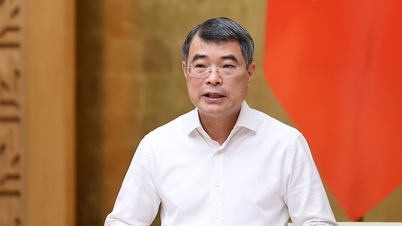
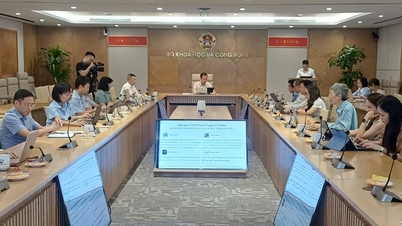
Lowering lending interest rates to the lowest possible level to provide maximum support for businesses and the economy … is the request of Deputy Prime Minister Nguyen Van Thang to the banking sector. Commercial banks need to share more of the burden because lending interest rates directly impact business operations.
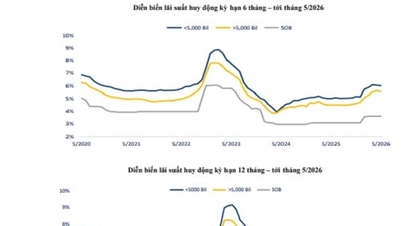
Statistics up to May 13th show that more than 40 banks have adjusted down deposit and lending interest rates, with reductions ranging from approximately 0.2% to nearly 1% per year, mainly for terms of 6 months or more.
Mr. Pham Nhu Anh, General Director of Military Bank, said: "After the Governor held a meeting requesting a minimum 0.5% reduction in deposit interest rates, MB immediately reduced deposit interest rates. And in parallel with reducing deposit interest rates, we have also started reducing lending interest rates."
Mr. Nguyen Hung, General Director of TPBank, shared: "Recently, interest rates on our new loans have decreased relatively, averaging a reduction of about 0.69%. Specifically for corporate customers, the average interest rate on new loans has also decreased by about 0.96%, which is nearly 1% compared to normal."

Outstanding green credit across the entire system currently stands at approximately 828,000 billion VND.
Funding solutions for digital application and green transformation projects.
With lower interest rates and reduced costs, businesses will borrow more. By the end of April, the economy's capital demand was estimated at over 19.4 million billion VND, a 4.42% increase compared to the end of last year and over 18% compared to the same period last year. Notably, priority sectors accounted for a large proportion of total outstanding loans, such as agriculture and rural areas (approximately 22.2%) and small and medium-sized enterprises (SMEs) (approximately 20%). However, in response to market and global demands for high technology, digital transformation, and sustainable growth, businesses are seeking new support solutions.
The high-tech organic vegetable production and consumption cooperative produces more than 30 types of vegetables such as spinach, lettuce, tomatoes, Japanese squash, passion fruit, etc. Each month, it supplies approximately 6-7 tons of vegetables to supermarkets, convenience stores, and school cafeterias. The cooperative aims to apply technology to increase productivity and expand its scale.
Ms. Dang Thi Cuoi, Director of the Cuoi Quy High-Tech Organic Vegetable Cooperative, said: "When we have capital, we can work more efficiently. Without capital, we just patch things up, grabbing from one place to hit another, and we can't make much progress. Buying machinery costs several hundred million dong. Buying machinery can save 10 workers."
Meanwhile, companies providing comprehensive logistics services, from raw material and finished product reception, customs procedures, warehousing to export, are having to meet new requirements for sustainable growth from demanding markets such as the US, Europe, and Japan in order to retain contracts.
Mr. Nguyen Duc Ninh, Chairman of PI Logistics Company, shared: "By using green technologies such as solar roof power, the entire system of electric forklifts operating in the warehouse, as well as delivery vehicles from PI's warehouse and customer warehouses to dealers and distributors, have all switched to electric vehicles. We hope that banks will have supportive policies."
Recognizing this need, banks are gradually providing solutions in terms of capital and processes. The total outstanding green credit in the entire system currently stands at approximately 828,000 billion VND.
Mr. Prasenjit Chakravarti - Director of Strategy and Transformation at Techcombank, stated: "The entire balance of green deposits at Techcombank, including time deposits, demand deposits, and certificates of deposit, is monitored and used to finance green projects, contributing to environmental protection, efficient resource use, and emission reduction."
Mr. Hoang Van Quang - Deputy Director of the Enterprise Number Factory, Military Bank, shared: "We have medium-term interest rate packages, with average interest rates 1-1.5% lower than other economic sectors. In addition, MB also directly advises customers throughout the project development process, from legal matters to connecting with sales partners. This is a significant added value that the bank brings to customers, in addition to the core elements of traditional banking such as interest rates and lending mechanisms."
Furthermore, outstanding credit after environmental and social risk assessment reached over 5.7 million billion VND, thereby contributing to the policy of limiting negative impacts on the environment when implementing projects and promoting sustainable economic growth.
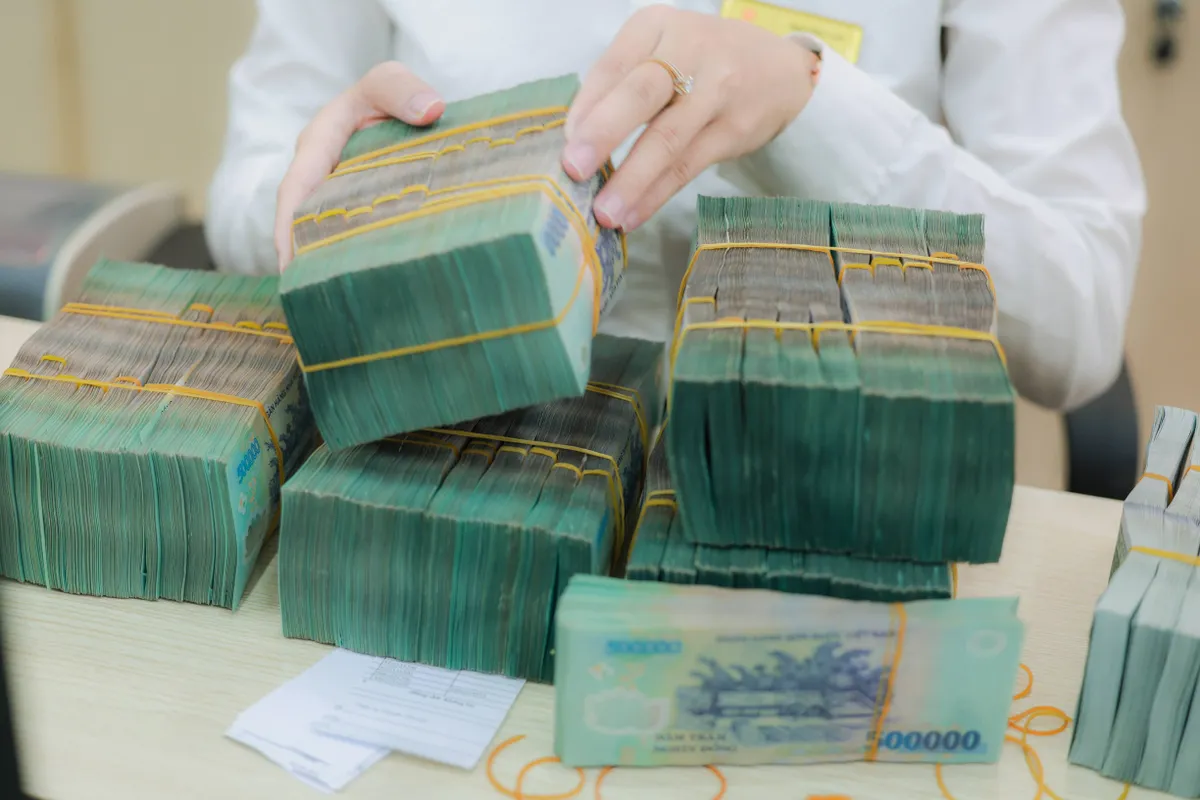
The size of outstanding credit in the economy at the end of April increased by 18.26% compared to the same period last year.
Diversifying sources of funding for economic growth.
The size of outstanding credit in the economy increased by 18.26% by the end of April compared to the same period last year. This is positive as capital flows into production and business. However, another pressure is the widening gap between the amount of money mobilized and the amount of money lent out, requiring additional sources of capital beyond credit.
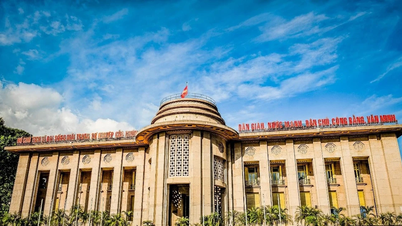
Ms. Ha Thu Giang, Director of the Department of Credit for Economic Sectors, State Bank of Vietnam, stated: "The credit growth rate is always higher than the deposit growth rate. The gap between credit and deposits is currently widening. By the end of April 2026, this gap will be approximately 1.4 trillion VND."
To narrow this gap, some banks have increased their capital, others have restructured their cash flows across maturities, and are seeking cheaper funding from international markets.
Mr. Nguyen Hung, General Director of TPBank, stated: "Borrowing long-term loans, including short-term loans on the market called trade loans – loans from foreign banks with terms of 6-12 months – supplements domestic capital, reducing the pressure on banks to compete on interest rates to secure funding for their capital needs."
Mr. Vu Van Tien, Chairman of ABBank, stated: "This year, An Binh Bank is determined to increase its charter capital to 20,000 billion VND. This will come from several sources: firstly, undistributed profits; secondly, issuing shares to existing shareholders; and thirdly, through the ESOP program."
While banks need to increase their capital capacity, the over-reliance on bank capital for economic growth is creating significant pressure, with Vietnam's credit-to-GDP ratio reaching 145% at the end of last year. This necessitates the corresponding development of other capital markets, such as bonds and securities, to meet capital needs, especially in the medium and long term.
When interest rates fall, capital flows more strongly into production, which is a positive sign. However, to achieve sustainable double-digit economic growth, one cannot rely too heavily on bank credit. From a macroeconomic stability perspective, the State Bank of Vietnam will face difficulties in raising interest rates to curb inflation. Therefore, achieving double-digit growth now requires even more coordinated efforts between monetary, fiscal, and capital market policies.
Source: https://vtv.vn/giam-lai-suat-cho-vay-thuc-day-tang-truong-100260513232733744.htm
![[Image] Close-up view of the interchange connecting the two expressways and Long Thanh Airport.](https://vphoto.vietnam.vn/thumb/1200x675/vietnam/resource/IMAGE/2026/05/25/1779703378210_ndo_br_z7863716673926-224453a31600126cce10622af6290afd-4549-jpg.webp)
![[Image] Hanoi's urban life under the challenge of a "scorching hot" environment](https://vphoto.vietnam.vn/thumb/1200x675/vietnam/resource/IMAGE/2026/05/25/1779706979265_nang-nong-t5-2026-minh-duy-7-4636-jpg.webp)




























































































Comment (0)