

Beside the village's water drop
As the sun peeked out from behind the mountains, the village of Kép 2 (Ia Ly commune) awoke to a thin mist and the familiar scent of red earth. From their stilt houses, the women emerged one by one, their wicker baskets pressed against their backs, making their way down the slope to the Ia Choah spring.
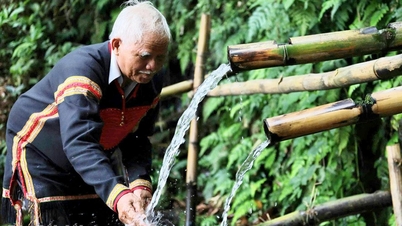
Long shadows stretched across the stone steps, worn smooth by the passage of time. Beside the watering hole, hands cupped to catch the cool, clear water; every movement slow and practiced, as if ingrained in their lives since they first followed their mothers to the watering hole each morning.
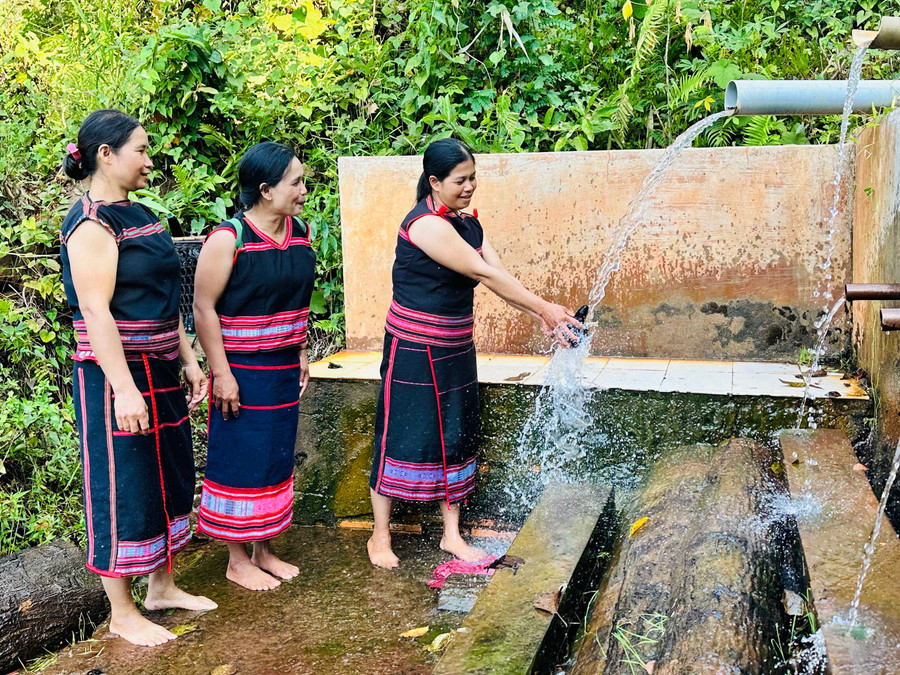
While carefully collecting water in gourds, Siu Thoai (40 years old, a Jrai woman from Kep 2 village) chatted with me. Since childhood, water has been an indispensable part of her life. "My family has a drilled well, but we still use the water collected from the well every day. Collecting the water is a way to remind our children and grandchildren of the old village customs, to preserve them, not to pollute or damage them, so that the traditions of our ancestors will not fade away."
For the Jrai people, water is always considered the source of life. According to the village elders, before choosing land to establish a village, the first thing to do is to find a water source sufficient for the community's daily needs. Once a suitable water source is identified, the villagers work together to clear the waterway and install bamboo or rattan pipes to facilitate daily water intake.
Ms. Rơ Châm H'Xuyên (41 years old, Kép 2 village) said: "The dry season here lasts a long time, but the water still flows steadily. There's not only enough water for the villagers' daily lives, but it also flows through small canals to each rice field, irrigating the rice plants. Thanks to the water, our people can maintain their fields, cultivate rice, and don't worry about water shortages. The water thus sustains the village, helping to stabilize the lives of the villagers and gradually improve their livelihoods."
In Pơ Núk village (Đức Cơ commune), a stream nestles beneath the cool shade of green trees. Early in the morning or late in the afternoon, villagers come here, some carrying water, others washing vegetables or doing laundry after a day's work. The cool, refreshing water flows steadily, reflecting the towering tree trunks, creating a peaceful and familiar living space.
Rơ Mah H'An (33 years old, from Pơ Núk village) shared: “During the dry season, the wells often run dry. When we go to fetch water, it's also a time for the women to meet, chat, and share stories about family and work. The water not only provides water for use, but also strengthens the bonds of community and neighborly love.”
Preserving water droplets amidst a changing lifestyle.
Amidst the ever-changing pace of life, with many clean water projects and wells being invested in reaching even the villages, the traditional drops of water of the Jrai people still play a special role. Not only do they ensure a source of water for daily life, but these drops of water are also linked to the cultural space, customs, and community consciousness in preserving the lifeblood of each village and generations.
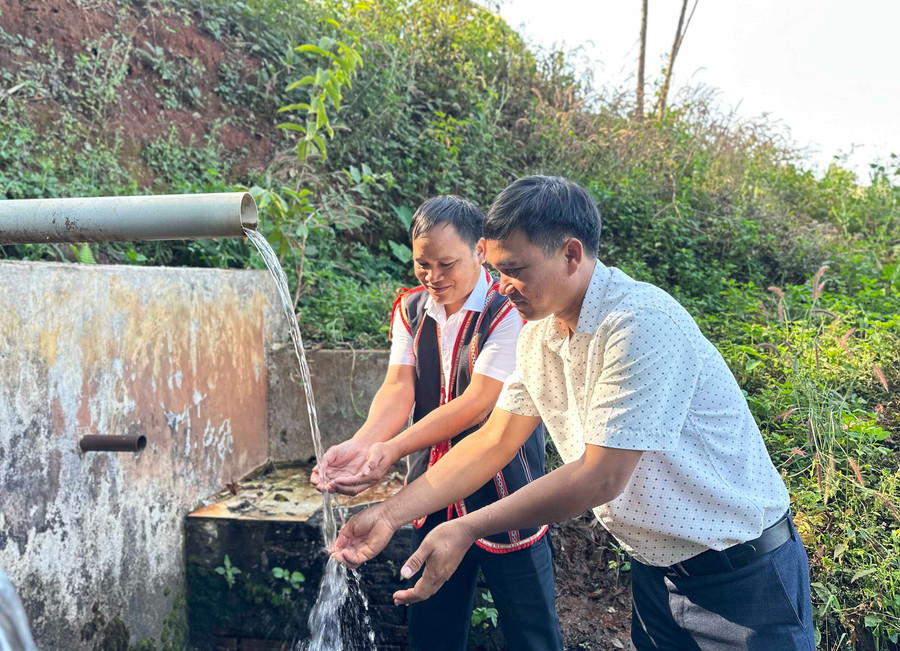
Mr. KVeo, the village elder and respected figure of Kep 2 village (Ia Ly commune), said: The village currently has 250 households with 927 inhabitants, of which about 95% are Jrai people. Recognizing the importance of water, the villagers have unanimously agreed to establish common rules to protect the groundwater source, regularly repairing, cleaning, and clearing pathways to keep the water clean and prevent pollution.
“Around March, the peak of the dry season in the Central Highlands, the village usually holds a ceremony to offer thanks to heaven, earth, and the spirits for providing clean water for daily life. Compared to the past, the offerings are now simpler, but still maintain solemnity and reverence. Through this ceremony, the elders want to remind their descendants to cherish water resources and protect them together as if protecting the life of the village,” Mr. KVeo shared.
Mr. Rơ Châm Mruych, Deputy Secretary of the Party Committee of Ia Ly commune, said: The commune currently has 16 hamlets, villages, and residential areas; in 13 of these villages, there are still 18 water sources that the people preserve and use. To ensure these water sources continue to flow and support daily life, the local authorities are strengthening propaganda and mobilizing people to work together to protect water sources, maintain environmental hygiene, and preserve the surrounding landscape.
Over the years, along with encouraging people to maintain hygiene around the water source, the Ia Pia commune government has focused on integrating conservation efforts into new rural development and landscape improvement programs. For the Jrai people, the water source is a source of daily water, a repository of community memories, a way of life, and a symbol of the connection between people and nature.
Deputy Chairman of the People's Committee of Nguyen Xuan Phung commune emphasized: "We have determined that preserving the water source must rely on the local community. The government only plays a supporting and guiding role, while the people are the direct agents of preservation. When people understand the cultural and spiritual value of the water source, the awareness of protecting it will become a natural and sustainable practice over time."
Source: https://baogialai.com.vn/giot-nuoc-mach-nguon-van-hoa-jrai-post578849.html






















































Comment (0)