

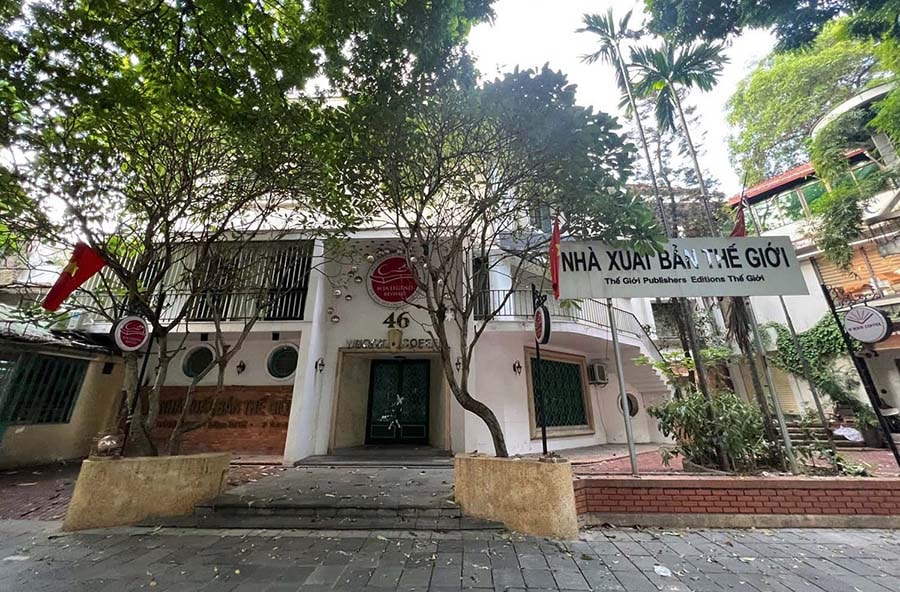
Just by slowing down at the corner of Hang Muoi and Tran Nhat Duat streets, or on Tran Hung Dao street, one will notice the round windows and pointed corners of the houses, like the bows of ships pointing towards the Red River. These "ships" have been anchored in the streets for a hundred years, silently preserving the memories of a time when Hanoi was a bustling port and trading center.
Nostalgia for the riverbanks
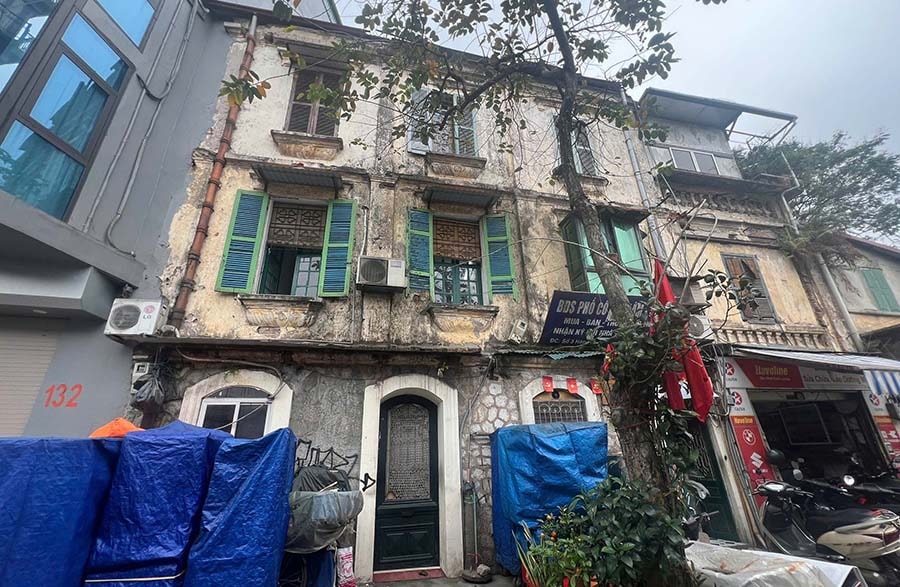
At the foot of houses number 1 and 3 on Hang Muoi Street (Hoan Kiem Ward), tire repairmen and car tire changers continue their daily work. When asked about the unique architecture of the houses with their round windows like those of a ship, or about the first owner, businessman Bach Thai Buoi, they just shake their heads. For many of the residents here, those stories seem to have faded into the past.
This is not too difficult to understand, as most of the old houses in Hanoi's Old Quarter have undergone changes of ownership over many generations. Initially, they were the property of a prosperous family. Over time, and with the changes of history, the house changed from one owner to multiple owners, from one family to multiple households. The stories about the people who built the house gradually faded away.
The house on Hang Muoi Street, once the headquarters of the Bach Thai Company, the "King of the Northern River Transport" Bach Thai Buoi, is no exception to this rule. Over time, the traces of a bustling trading port have gradually faded into the crowded urban life. Those memories are linked to a place name that now only exists in nostalgia – the Clock Tower intersection. Before the Chuong Duong Bridge roundabout was built, the intersection of Hang Muoi, Nguyen Huu Huan, Luong Ngoc Quyen, and Tran Nhat Duat streets once had a large clock tower, a familiar symbol of the old riverside area. Or like the house at 46 Tran Hung Dao Street, before becoming the headquarters of a publishing house, it was also believed to have been the private residence of a French seafarer. This man had a particular love for the ocean, so he designed the house with round windows like those of a ship battling the waves.
According to Dr. Dinh Duc Tien, a lecturer in the History Department (Faculty of Social Sciences and Humanities, Vietnam National University, Hanoi), Hanoi had quite a few public clocks in the early 20th century. However, the clock near Chuong Duong Bridge held a special place. At that time, there was no bridge over the Red River; this area was a large plot of land along the riverbank, serving as a gateway to the old quarter.
Right below the clock tower was a bustling dock. There were docks belonging to the French, the Chinese merchants, and the Giang Hai Lun Bach Thai Company's boat dock. The clock tower was erected to serve passengers boarding and disembarking from boats, helping them manage their time effectively so they wouldn't miss their journey.
Right next to the clock tower, towards what is now Hang Tre Street, was the headquarters of the Bach Thai Buoi shipping company, a three-story building, the ground floor constructed of sturdy blue stone. The building had beveled corners and round windows like those of a ship, leading many to imagine the shape of a ship heading out onto the Red River.
From here, walking a little further towards Long Bien Bridge will lead you to Cho Gao Street and O Quan Chuong Gate. Cho Gao Street used to be near the mouth of the To Lich River, where Giang Nguyen Wharf was located, meaning "river source." In the novel "Moonlight on Chuong Duong," writer Ha An mentioned this riverbank as a location associated with the Dong Bo Dau victory during the Tran Dynasty.
Today, the old riverside landing is gone. But if one looks closely, one can still discern traces of the past in the two white-flowered kapok trees standing silently at the intersection of Hang Chieu and Tran Nhat Duat streets, like remnants of the village and river entrance of yesteryear.
Stories about the clock tower, the house of Bach Thai Buoi, or the old waterfronts have gradually faded into the dust of time. They exist quietly in the memories of old Hanoians.
Lieutenant Colonel Le Duc Doan, a traffic police officer and outstanding citizen of Hanoi, spent decades working in the area near the Chuong Duong Bridge. For him, the Clock Tower intersection is a part of his youthful memories. He recalled: "Back in the 1960s, young people in the neighborhood used to jokingly say to each other: 'One-on-one to climb the clock tower.'" In his memory, the "Bach Thai Buoi house" clearly appears, shaped like a ship's bow pointing towards the Long Bien Bridge.
During the subsidy period, the ground floor of the house housed several shops specializing in tire repair. From old car tires, they made rubber sandals, water buckets, and many other items. Even now, the ground floor of the house still features tire repair and replacement shops, a remaining piece of memory from the old street.
Thinking about the future
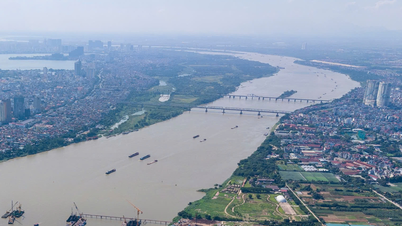
Over time, many of the wharves associated with Tran Nhat Duat Street have disappeared, partly due to changes in the Red River's course and partly due to urban expansion.
The people of the Old Quarter still remember Cho Gao Wharf as one of Hanoi's first bus stations. The Czechoslovakian Karosa buses of that era carried passengers from Tu Son (Bac Ninh province), bringing with them local liquor stored in inflated rubber tubes, and sacks of sweet potatoes and cassava from the outskirts of Tu Liem. And the Long Bien Bridge boat landing, with its glimpses of brown sails, a scene immortalized in the music of composers Nguyen Cuong and Trong Dai, is gradually fading into nostalgia.
Hanoi researcher Nguyen Ngoc Tien recounts that a few years ago, he participated in making a documentary about the house that once served as the headquarters of the Bach Thai Company's Giang Hai Luan shipyard. At that time, a descendant of businessman Bach Thai Buoi, a granddaughter, still lived in the third-floor room of the house. That room remained closed year-round, nestled under the lush foliage of a white-flowered kapok tree that cast its shade over the road leading to the Chuong Duong Bridge roundabout. Now, the old windows have been repainted and widened to welcome the breeze from the Red River. The old kapok tree has fallen after a major storm, revealing the house's distinctive shape more clearly.
The house stands like a ship anchored in the street, sometimes making those passing over the Chuong Duong Bridge feel as if they have just touched a piece of heritage. But in the hustle and bustle of life, not everyone stops to learn about the stories that haven't yet been covered in moss.
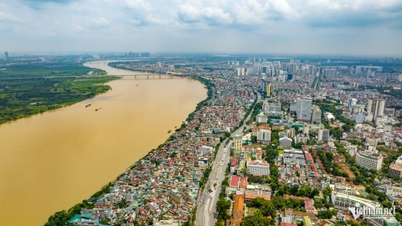
Mr. Nguyen Ngoc Tien believes that the aspiration to face the Red River has always been present in the thinking of Hanoians from ancient times to the present. The Red River – the mother river – is not only a source of water, but also a cultural space, a resource for economic development and the formation of urban identity. In the structure of the old "matchbox" houses of the Old Quarter, many windows still face the river, welcoming the breeze and listening to the train whistles echoing from the Long Bien Bridge.
Architect Nguyen Viet Anh, born and raised in the Old Quarter, belongs to the 70s generation and still maintains the habit of meeting friends for coffee at the corner of Nguyen Huu Huan and Hang Muoi streets. In the casual conversations of the locals, memories of the clock tower or the earthen dike along the Red River are often recalled. That earthen dike has now become the "ceramic road." But the house with its ship-shaped prow facing the Red River remains, like a piece of memory that has never left the neighborhood.
Architect Tran Ngoc Chinh, President of the Vietnam Urban Planning and Development Association, shared that in the new planning orientations, the Red River area is being identified as an important landscape axis and development space for Hanoi in the future. Exploiting the value of the Red River is being done in parallel with preserving the urban cultural sediments formed along both banks of the river.
Between the past and the future, these "ships anchored in the city" quietly persist. The round windows, slightly ajar high above, facing the Red River, seem to still be listening to the echoing ship whistles from the ancient docks. They tell the story of a Hanoi that once thrived on the river, that opened its doors to the river for trade and dreams. And from these shimmering fragments of memory, a Hanoi of tomorrow is gradually taking shape—more beautiful, more expansive, yet still carrying within it layers of accumulated history from the distant past.
Source: https://hanoimoi.vn/nhung-con-tau-neo-vao-pho-736696.html












































































Comment (0)