

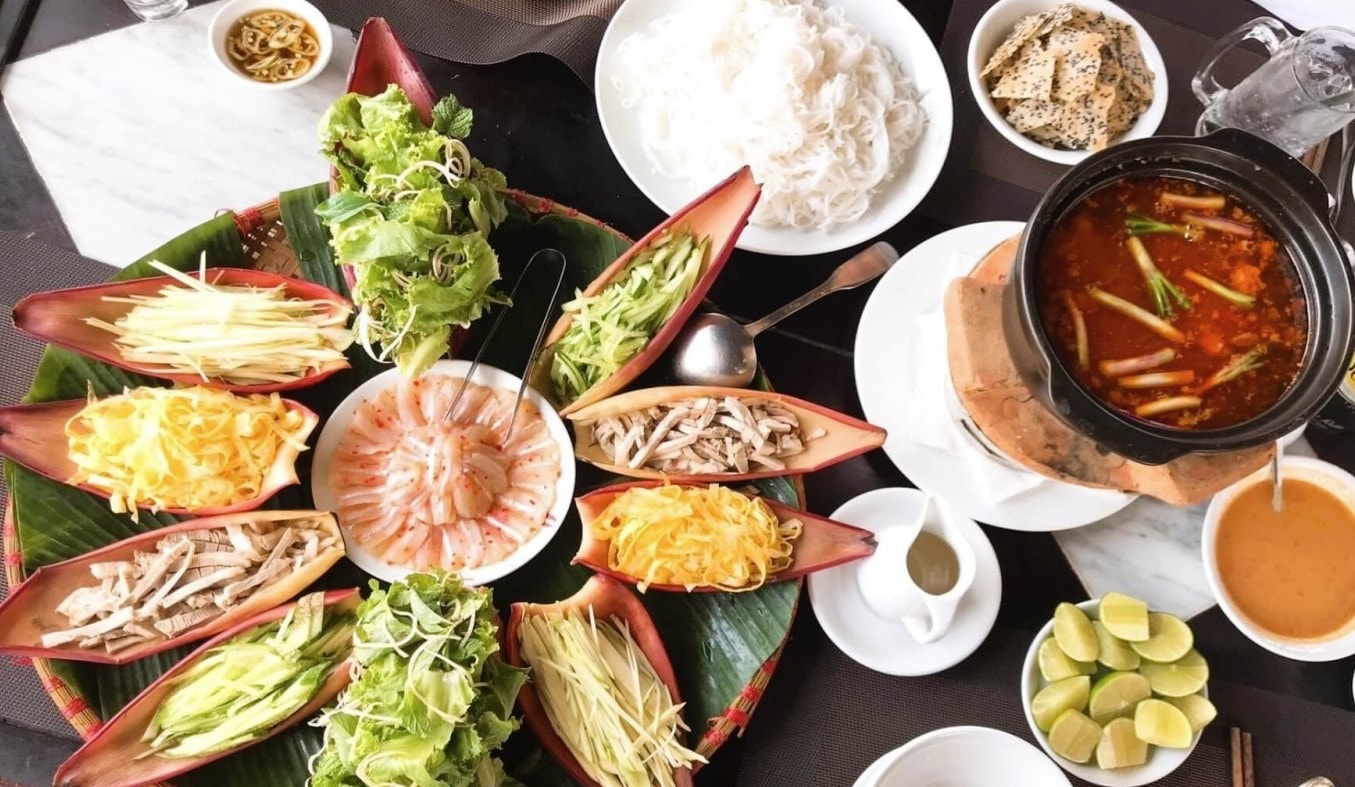
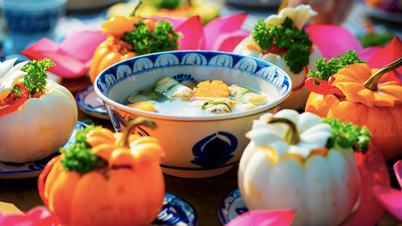
The "Lẩu thả" (Floating Hot Pot) makes a striking impression at first glance. The ingredients are elaborately arranged on a bamboo tray, forming a beautiful flower shape. The ingredients are layered in reddish-pink banana leaves, including shredded mango, cucumber, shredded fried duck eggs, finely chopped boiled pork belly, various herbs and spices, and the centerpiece: fresh scad fish. In addition, there are rice noodles, broth, sauce, fish sauce, etc. This presentation not only makes the dish more visually appealing but also symbolizes the small basket boats that are closely associated with the fishermen along the Mui Ne coast.
Mr. Nguyen Hoang Nghi, Vice Chairman of the Binh Thuan Chefs Association, said: “To make a delicious and authentic hot pot, chefs must select fresh scad fish as soon as the fishing boats dock. Although only the size of a finger, each fish is cleaned and processed quickly to maintain its freshness. After cleaning the fish, the chef uses a knife to fillet it and then briefly dips it in lemon water. This step helps remove the fishy smell… Unlike other hot pots, diners don't dip the fish into the pot. Instead, they arrange a few slices of scad fish, vegetables, vermicelli, meat, eggs, and crumbled rice paper in a bowl and pour the hot broth over them to enjoy. This creates a feeling of eating and experiencing, as if participating in the story of the seafaring people. If it's not to their liking, diners can eat it dry. Put the vermicelli and other ingredients into a bowl, then pour the sauce over them and mix well. This sauce is made from garlic, dried tamarind, chili, and roasted peanuts, mixed together in a balanced ratio and then blended until smooth. Each Each restaurant has its own secret recipe for sauces and broths, resulting in a unique and rich flavor.
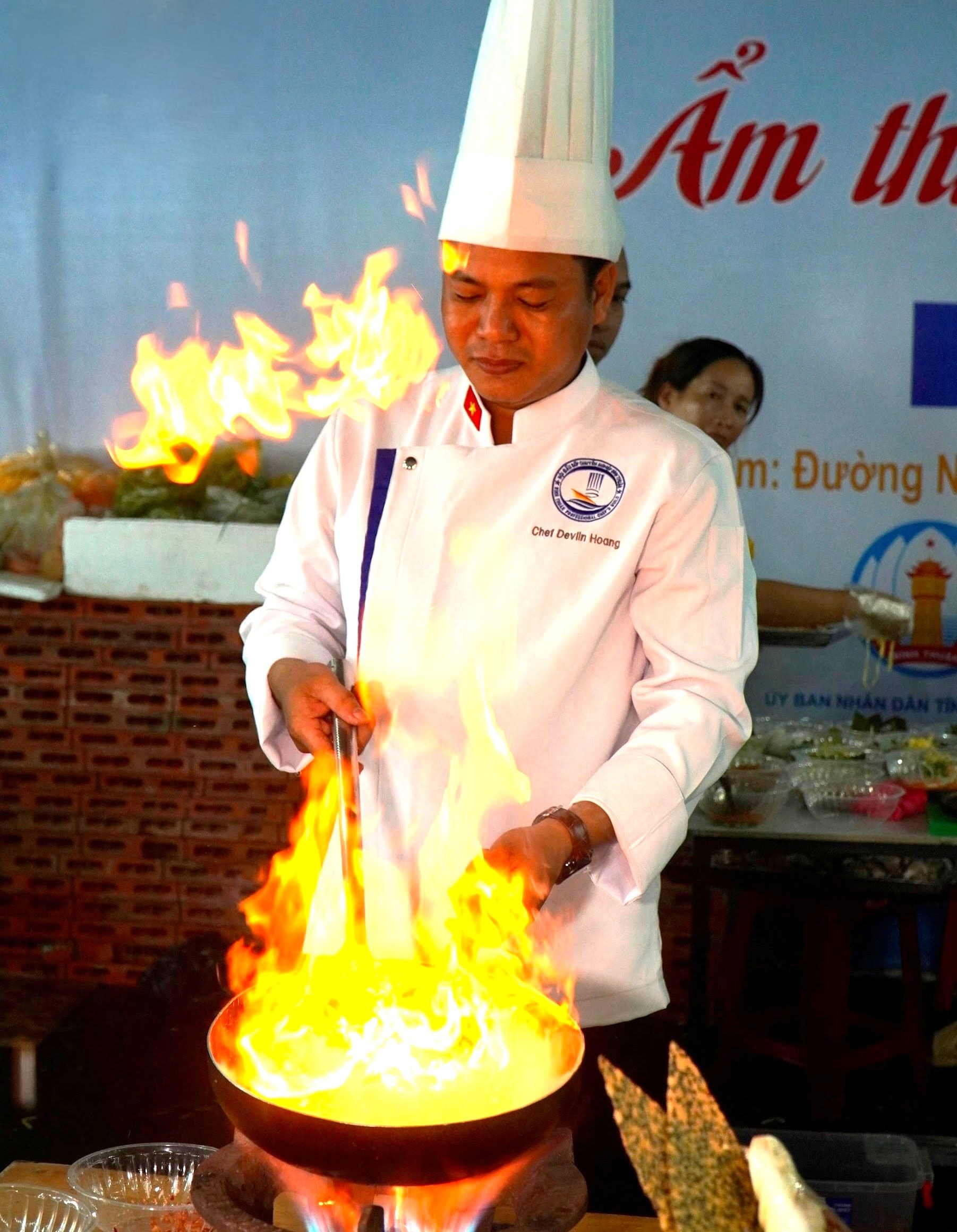
While enjoying the dish and listening to the story behind the name of the "Lẩu Thả" (Floating Hot Pot), visitors can feel the genuine warmth, thoughtfulness, care, and the taste of the sea in this region. It turns out that even the name itself is deeply rooted in the rustic nature of the people, reflecting the everyday language of the fishermen in Mũi Né: honest, open, and unpretentious.
Before tourism developed, fishermen would often throw their catch into a prepared broth, adding other ingredients to suit their taste. Over time, thanks to its unique flavor and the skillful hands of chefs, the "hot pot with added ingredients" dish has become more visually appealing, elevating it to a local specialty and contributing to the culinary brand of the southeastern part of the province.
Many restaurants in Mui Ne tourist area have added "hot pot" to their menus to serve tourists. Some places replace the scad with barracuda or mackerel, types of fish with fresh white flesh, which the locals often use for fish salad. With its unique combination of ingredients and eating style, this dish has satisfied most diners, even the most discerning ones.
Mr. Phan Manh Sat (a tourist from Ho Chi Minh City) shared: “In Mui Ne, the dish that best suits my family's taste is hot pot; both the elderly and children love it. It's not only delicious but also very beautiful, like a work of art.”
In the context of booming tourism, hot pot is not only a dish to satisfy culinary desires, but it is also becoming a bridge to introduce local culture to domestic and international tourists.
Source: https://baolamdong.vn/giu-hon-bien-trong-mon-lau-tha-431332.html



























































































Comment (0)