


Amidst economic development and urbanization, the community involved in the craft is striving to preserve and promote traditional values, aiming to have Phan Thiet fish sauce making included in the National List of Intangible Cultural Heritage.
The legacy of a 300-year-old traditional craft village on the South Central coast.
In the early days of the year, at the famous traditional fish sauce production area of Phu Hai, Phu Thuy ward (Lam Dong province), fish sauce production at many facilities continues steadily. The distinctive aroma of Phan Thiet fish sauce permeates the sunny, windy coastal air. Inside the production facilities, hundreds of earthenware jars and wooden barrels are arranged in rows, filled with fish and salt undergoing a months-long fermentation process to create the condiment that has been an integral part of meals for generations of Vietnamese people.
According to research documents, the fish sauce production industry in Phan Thiet originated in the late 17th century, when residents from the central region migrated south to exploit marine resources during the fishing season. Initially, fish sauce processing was only for household use. However, thanks to the abundant fish resources, high protein content, and the hot weather conditions suitable for fish sauce production, the production gradually expanded. This led to the formation of the Phan Thiet fish sauce industry, bearing a distinct local character.

By the mid-19th and early 20th centuries, Phan Thiet had many large-scale, professional fish sauce production facilities, which locals called "ham ho" (traditional fish sauce producers). At that time, traders from Central and Southern Vietnam would arrive in large boats, docking along the Ca Ty and Phu Hai rivers, waiting to buy the fish sauce for transport to various regions, especially the Southern part of Vietnam. This contributed to making Phan Thiet fish sauce a familiar condiment in Vietnamese cuisine .
Despite its long history of formation and development, and the impact of urbanization and the gradual decline of traditional crafts, Phan Thiet fish sauce is still preserved and produced by many establishments and households. The Phan Thiet fish sauce brand is not only famous domestically but is also exported worldwide.
According to traditional fish sauce producers, Phan Thiet fish sauce is made primarily from anchovies, scad, and coarse salt. The best quality fish sauce comes from anchovies caught between April and September of the lunar calendar. Fat, plump fish produce the best-tasting fish sauce with the highest protein content. Besides natural factors, the experience of the fish sauce makers also plays a crucial role in determining the quality of the fish sauce.

Mr. Huynh Thien Huan, owner of Hong Khanh fish sauce production facility in Phu Thuy ward, is the third generation in his family involved in the traditional fish sauce production business. Inheriting secrets from his ancestors, Mr. Huan still maintains the traditional method of fermenting fish in earthenware jars – a common practice in the past.
According to Mr. Huan, the fish sauce production process requires patience and years of experience, from selecting raw materials and fermenting the fish to extracting the final product. The secret to delicious fish sauce is mixing fresh fish and salt according to a traditional ratio, stirring thoroughly but not crushing the fish, forming a paste which is then placed in individual vats. The surface of the vats is covered with bamboo slats, a layer of salt is sprinkled on top, bamboo slats are placed, and stones are stacked down to hold it tightly. The difference is that the fish paste is fermented in sealed vats and exposed to sunlight, which increases the temperature inside the vats and speeds up the fermentation process. After 8 to 18 months, the fish sauce is formed, clear, with a color ranging from straw yellow to reddish-brown, emitting a characteristic aroma and no longer having a fishy smell. The first extract is called "nuoc mam nhi" (first fish sauce). After extracting the first extract, water is added to extract the second extract, called "nuoc mam ngang" (second fish sauce).

“Making fish sauce is extremely hard work. It's surrounded by the smell of fish and salt all year round, and sometimes you have to wait a whole year to get a good batch. Whether it's scorching hot or pouring rain, you have to constantly monitor the fermentation process, ensuring the right consistency and timing. Not everyone can endure such hardship and patience. But the rich aroma when you extract the first drop of fish sauce has kept me committed to the profession my ancestors built for so many years,” Mr. Huan shared.
Towards preserving and promoting the value of traditional crafts.
According to Mr. Truong Quang Hien, Chairman of the Phan Thiet Fish Sauce Association, the fish sauce making profession in Phan Thiet has been closely associated with the local people for about 300 years. Over many generations, the fish sauce making profession has not only provided livelihoods for the people but also contributed to shaping the distinctive cultural identity of the Phan Thiet region.
Amidst socio-economic development, the production of Phan Thiet fish sauce has undergone many changes. Many businesses have invested in expanding their scale and applying technology to improve productivity and product quality. However, traditional production methods are still maintained by many establishments, considering them the core element that creates the distinctive value of local fish sauce.

According to statistics from the Phan Thiet Fish Sauce Association, from 2021 to 2024, the fish sauce industry in Phan Thiet achieved a production volume of 20 million to 30 million liters per year; revenue reached 1,000 billion VND per year. Currently, there are about 200 households producing fish sauce in the province, concentrated in the wards of Phan Thiet, Phu Thuy, Mui Ne, etc. This industry creates jobs for hundreds of permanent workers and thousands of seasonal workers.
Furthermore, fish sauce production consumes a large amount of seafood, estimated at around 22,000 tons of fish annually, making a significant contribution to maintaining the livelihoods of fishermen and developing the local marine economic value chain. Alongside production, the fish sauce industry also contributes to tourism development. Many production facilities combine tours and experiences of the traditional fish sauce making process, attracting tourists interested in learning about the culinary culture and lives of coastal residents.
According to the Chairman of the Phan Thiet Fish Sauce Association, in recent years, due to urbanization and the development of tourism, some people involved in traditional fish sauce production have switched to other professions. The number of people with experience and who pass on the secrets and methods of traditional fish sauce making is gradually decreasing over time.

To preserve and promote the value of the traditional fish sauce making craft, the Phan Thiet Fish Sauce Association has proposed including "Phan Thiet Traditional Fish Sauce Making Craft" in the National List of Intangible Cultural Heritage.
According to the Department of Culture, Sports and Tourism of Lam Dong province, after reviewing the content regarding the history of formation, processing procedures, and value of the traditional fish sauce making craft of Phan Thiet as requested by the Phan Thiet Fish Sauce Association, and comparing it with the inventory of intangible cultural heritage documents "Traditional Phan Thiet Fish Sauce Making Craft" currently preserved at the Lam Dong Provincial Museum, it has been found that "Traditional Phan Thiet Fish Sauce Making Craft" meets the criteria and conditions for preparing a scientific dossier to be submitted to the Ministry of Culture, Sports and Tourism for appraisal and inclusion in the National List of Intangible Cultural Heritage as prescribed.
Based on that, the Department has sent a document to the People's Committee of Lam Dong province requesting approval for the Department of Culture, Sports and Tourism to take the lead and coordinate with relevant agencies and units to carry out the steps and procedures according to regulations to complete the scientific dossier "Traditional fish sauce making in Phan Thiet", and advise the People's Committee of the province to submit it to the Ministry of Culture, Sports and Tourism in 2026.
The recognition of fish sauce making as a heritage is expected to create a legal basis and impetus for localities to implement solutions to preserve and support the development of the traditional craft, while also enhancing the brand value of the product.
Mr. Nguyen Van Lau, a traditional fish sauce producer in Phu Thuy ward, believes that fish sauce is not only an economic activity but also a cultural symbol closely linked to the lives of local people. "I hope that the traditional fish sauce making craft in Phan Thiet will continue to be preserved and its value promoted, becoming a unique cultural highlight of the locality. From there, the aroma of Phan Thiet fish sauce will spread even further," Mr. Lau hoped.
Source: https://baotintuc.vn/kinh-te/giu-hon-lang-nghe-nuoc-mam-phan-thiet-20260222095005791.htm
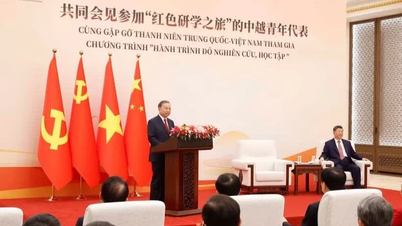
![[Photo] General Secretary and President To Lam and General Secretary and President Xi Jinping meet with youth from both countries.](https://vphoto.vietnam.vn/thumb/1200x675/vietnam/resource/IMAGE/2026/04/15/1776245687540_vna-potal-tong-bi-thu-chu-tich-nuoc-to-lam-va-tong-bi-thu-chu-tich-nuoc-tap-can-binh-gap-go-thanh-nien-hai-nuoc-8702371-jpg.webp)
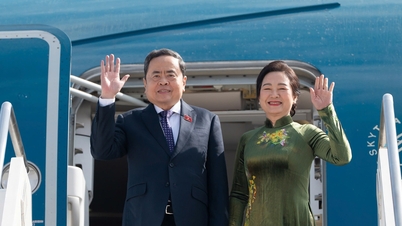
![[Photo] National Assembly Chairman Tran Thanh Man concludes official visit to Italy, departs for IPU-152](https://vphoto.vietnam.vn/thumb/1200x675/vietnam/resource/IMAGE/2026/04/15/1776253436109_vna-potal-chu-tich-quoc-hoi-ket-thuc-tham-chinh-thuc-italy-len-duong-du-ipu-152-tai-tho-nhi-ky-8702876-7969-jpg.webp)
![[Image] Current status of the land area of over 5.5 hectares that Ho Chi Minh City is considering reclaiming.](https://vphoto.vietnam.vn/thumb/1200x675/vietnam/resource/IMAGE/2026/04/15/1776245690095_1-3102-8409-jpg.webp)
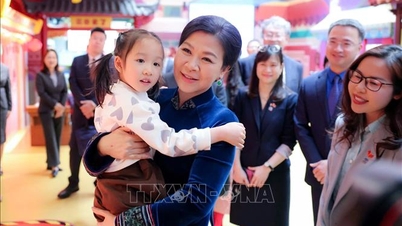
![[Photo] Mrs. Ngo Phuong Ly meets and exchanges views with Mrs. Peng Li Yuan](https://vphoto.vietnam.vn/thumb/1200x675/vietnam/resource/IMAGE/2026/04/16/1776277858080_phu-nhan-1-jpg.webp)
![[Image] Overview of the Tam Trinh-Giai Phong connecting road section after land clearance is completed.](https://vphoto.vietnam.vn/thumb/1200x675/vietnam/resource/IMAGE/2026/04/15/1776245679644_ndo_br_dji-0195-jpg.webp)
![[Photo] General Secretary and President To Lam and his wife, along with General Secretary and President Xi Jinping and his wife, attending a tea party.](https://vphoto.vietnam.vn/thumb/1200x675/vietnam/resource/IMAGE/2026/04/15/1776245678527_vna-potal-tong-bi-thu-chu-tich-nuoc-to-lam-va-phu-nhan-cung-tong-bi-thu-chu-tich-nuoc-tap-can-binh-va-phu-nhan-du-tiec-tra-8702812-9829-jpg.webp)













![[Photo] Capturing each moment at the "People We Meet" photography exhibition.](https://vphoto.vietnam.vn/thumb/1200x675/vietnam/resource/IMAGE/2026/04/15/1776245695648_1-8944-jpg.webp)
































Comment (0)